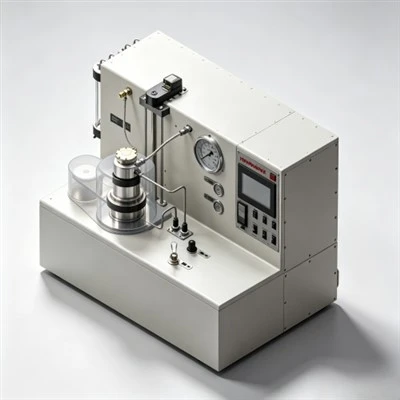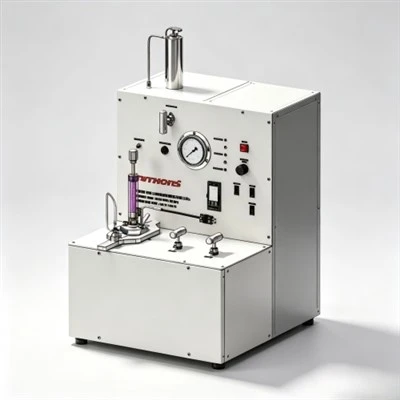

In oilwell cementing operations, controlling fluid loss is one of the most important requirements for achieving reliable zonal isolation and long-term well integrity. Excessive fluid loss during cement placement can lead to dehydration of cement slurry, premature thickening, poor displacement efficiency, and serious downhole cementing failures such as gas migration, channeling, or weak bonding strength.
For this reason, laboratory testing of fluid loss performance is a critical step in cement slurry design. The Fluid Loss Tester is the key instrument used to evaluate how much filtrate a cement slurry will lose under specific pressure and temperature conditions. In modern cement laboratories, the HTHP Fluid Loss Tester is considered an essential quality control tool because it can simulate downhole high-temperature and high-pressure environments more realistically than atmospheric testing equipment.
A reliable Fluid Loss Tester is not only important for research and development, but also for daily production quality control, batch verification, and customer technical support. For cement additive manufacturers and oilfield service companies, consistent and repeatable fluid loss test results are often required to meet API standards and field performance expectations.
This article explains why the HTHP Fluid Loss Tester is essential for cementing quality control, how it works, what problems it helps prevent, and what key parameters cement laboratories should focus on when performing fluid loss testing.

1. What Is Fluid Loss in Oilwell Cementing and Why Does It Matter?
Fluid loss refers to the filtration of liquid phase from cement slurry into a permeable formation when pressure is applied. During cementing operations, the slurry is pumped into the annulus between casing and formation. If the slurry loses too much water to the formation, several negative consequences can occur.
In oilwell cementing, uncontrolled fluid loss can lead to:
- Cement slurry dehydration and thickening acceleration
- Reduced pumpability time and early gelation
- Increased viscosity and displacement difficulties
- Poor slurry placement and incomplete annular fill
- Increased risk of gas migration and channeling
- Reduced cement strength development due to incorrect water-to-cement ratio
- Formation damage due to filtrate invasion
Fluid loss is especially critical when cementing highly permeable formations, fractured formations, or depleted reservoirs. In these cases, the pressure differential between the slurry and formation can cause rapid filtrate invasion, resulting in serious cementing failures.
This is why cement laboratories must evaluate fluid loss behavior before field application. The Fluid Loss Tester provides the only reliable method to quantify slurry filtrate volume under controlled conditions. Without a proper Fluid Loss Tester, it is impossible to accurately confirm whether a cement slurry design meets quality control requirements.
2. What Is a Fluid Loss Tester and How Does It Work?
A Fluid Loss Tester is a laboratory instrument used to measure the volume of filtrate that passes through a filter medium from a cement slurry under applied pressure. The test simulates the filtration process that occurs when cement slurry contacts a permeable formation during cementing operations.
The typical working principle of a Fluid Loss Tester includes the following steps:
Cement slurry is prepared according to standard mixing procedures
The slurry is placed inside a fluid loss cell
A filter paper or filter medium is installed to simulate formation permeability
Pressure is applied to force liquid filtrate through the filter medium
Filtrate volume is collected and measured over a fixed time period
Total fluid loss is calculated and reported as mL/30 min (or API standard units)
In an HTHP Fluid Loss Tester, the cell is designed to withstand high pressure and high temperature. Heating systems maintain test temperature, and pressure regulators ensure stable differential pressure conditions. The instrument allows cement laboratories to measure slurry fluid loss under conditions that are closer to real downhole environments.
The Fluid Loss Tester is widely used for evaluating the performance of fluid loss additives, spacer fluid filtration behavior, and cement slurry stability under pressure. It is an essential part of cement laboratory testing systems.
3. Why Is an HTHP Fluid Loss Tester More Important Than an Atmospheric Fluid Loss Tester?
An atmospheric Fluid Loss Tester is useful for basic testing and preliminary evaluation. However, real oilwell cementing operations often occur under high pressure and high temperature conditions. These conditions significantly affect slurry filtration behavior and additive performance.
An HTHP Fluid Loss Tester provides more realistic simulation by applying both high temperature and high pressure. This is critical because cement slurry fluid loss behavior changes as temperature increases. Additives that perform well at low temperature may fail at high temperature due to polymer degradation or viscosity changes.
Key advantages of an HTHP Fluid Loss Tester include:
- Better simulation of downhole cementing conditions
- More accurate evaluation of fluid loss additive performance at high temperature
- Reliable testing for deep wells, HPHT wells, and geothermal wells
- Improved quality control for cementing projects with strict requirements
- Higher confidence in slurry design approval before field application
In modern cementing operations, HTHP testing is becoming a standard requirement. Therefore, an HTHP Fluid Loss Tester is often considered more essential than an atmospheric unit for professional cement laboratories.
For cement additive manufacturers, using an HTHP Fluid Loss Tester is also critical for product development. Many high-performance fluid loss additives must be evaluated at elevated temperature conditions to confirm performance stability.
4. How Does an HTHP Fluid Loss Tester Support Cementing Quality Control?
Quality control in cementing operations requires consistent and repeatable testing data. Cement slurry designs are often approved based on laboratory test reports. The HTHP Fluid Loss Tester is one of the most important instruments used in these reports because fluid loss control is a key slurry requirement.
An HTHP Fluid Loss Tester supports cementing quality control in several ways:
Batch verification of additives
Fluid loss additive batches must meet performance requirements. The Fluid Loss Tester helps confirm that production batches provide stable filtration control.
Slurry design approval
Before cementing a well, laboratory engineers design a slurry formulation. The Fluid Loss Tester verifies whether the formulation meets fluid loss targets under planned temperature and pressure conditions.
Field troubleshooting support
If a cementing operation fails due to dehydration or channeling, the lab can retest slurry performance using the Fluid Loss Tester to identify root causes and improve the formulation.
Customer technical support
Cement additive suppliers often need to provide test reports to customers. Reliable HTHP Fluid Loss Tester results improve customer trust and demonstrate product performance professionally.
Without a stable and accurate Fluid Loss Tester, quality control becomes difficult because fluid loss cannot be quantified under realistic conditions. This is why HTHP testing equipment is essential for any cement laboratory supporting real cementing operations.
5. What Cementing Problems Can Be Prevented by Proper Fluid Loss Testing?
Fluid loss is directly linked to many cementing problems. By using an HTHP Fluid Loss Tester, cement laboratories can detect high filtration risk before slurry is pumped downhole. Proper fluid loss testing helps prevent major operational failures.
Cementing problems that can be prevented by fluid loss testing include:
Premature thickening and loss of pumpability
Excessive filtrate loss reduces free water in slurry, accelerating thickening and increasing viscosity. The Fluid Loss Tester helps identify this risk early.
Gas migration and channeling
Fluid loss can cause slurry dehydration, leading to early gelation and poor hydrostatic pressure maintenance. This increases the risk of gas migration. Using a Fluid Loss Tester helps optimize additive dosage to reduce this risk.
Poor cement bonding strength
If slurry loses too much water, the effective water-to-cement ratio decreases, leading to poor hydration development and reduced cement sheath quality. The Fluid Loss Tester ensures slurry retains sufficient water for proper hydration.
Formation damage
Filtrate invasion can damage permeable formations, especially in sensitive reservoirs. A well-designed slurry with low fluid loss can minimize formation damage. The Fluid Loss Tester helps quantify filtrate volume.
Lost circulation and slurry instability
Excessive filtration may contribute to slurry instability and bridging behavior. HTHP Fluid Loss Tester results help engineers adjust formulation for better stability.
By preventing these issues, the Fluid Loss Tester becomes an essential tool for safe and successful cementing operations.
6. Why Is Fluid Loss Control Critical for High-Temperature and High-Pressure Wells?
In deep wells and HPHT wells, cementing conditions are extreme. High temperature accelerates hydration reactions, while high pressure increases filtration driving force. Under such conditions, fluid loss can become much more severe if the slurry is not properly designed.
High temperature may degrade polymer-based fluid loss additives, reducing their effectiveness. At the same time, high pressure increases the differential pressure across the slurry and formation, forcing filtrate into the formation more aggressively.
This is why an HTHP Fluid Loss Tester is essential for HPHT cementing quality control. Testing at atmospheric conditions may give misleading results because additive performance changes dramatically under high temperature and high pressure.
Using an HTHP Fluid Loss Tester, laboratories can:
Evaluate additive performance stability at high temperature
Confirm slurry filtration control at realistic differential pressure
Optimize additive dosage for deep well conditions
Avoid field cementing failures caused by dehydration
In HPHT cementing projects, fluid loss requirements are often stricter. The HTHP Fluid Loss Tester provides the only practical method to confirm slurry meets these strict targets.
7. What Are the Key Testing Parameters in an HTHP Fluid Loss Tester?
To obtain reliable and repeatable test results, cement laboratories must control key testing parameters carefully. An HTHP Fluid Loss Tester allows operators to set temperature, pressure, and test time, but incorrect parameter selection may lead to inaccurate conclusions.
Key parameters in HTHP Fluid Loss Tester testing include:
Test temperature
Temperature strongly affects slurry viscosity, hydration rate, and additive performance. The Fluid Loss Tester must maintain stable temperature throughout the test.
Differential pressure
Fluid loss is driven by pressure difference. Higher pressure usually increases filtrate volume. The Fluid Loss Tester should provide stable pressure control without fluctuation.
Test duration
Most standard tests are measured over 30 minutes. The Fluid Loss Tester must provide accurate time control and consistent collection method.
Filter medium
Filter paper selection affects filtration behavior. Cement labs should use standardized filter media for consistent results.
Slurry preparation method
Mixing speed, mixing time, and additive sequence influence slurry properties. For quality control, slurry preparation must be consistent before using the Fluid Loss Tester.
Cell volume and sample amount
Correct slurry volume ensures stable test conditions. Incorrect filling may lead to inaccurate fluid loss results in the Fluid Loss Tester.
A high-quality HTHP Fluid Loss Tester must provide stable control of these parameters to ensure repeatable test performance.
8. How Do Fluid Loss Additives Affect Cement Slurry Performance in a Fluid Loss Tester?
Fluid loss additives are designed to reduce filtrate loss by creating a low-permeability filter cake and increasing slurry fluid retention. In cement slurry systems, fluid loss additives often consist of polymer-based materials that interact with cement particles and water phase.
When tested using a Fluid Loss Tester, fluid loss additives typically reduce filtrate volume significantly. However, additive performance depends on many factors, including temperature, salt concentration, cement type, and dispersant compatibility.
Key additive effects observed in a Fluid Loss Tester include:
Reduced filtrate volume over 30 minutes
Improved slurry stability under pressure
Formation of stronger filter cake on filter paper
Reduced risk of slurry dehydration under downhole conditions
However, fluid loss additives may also affect rheology. Some additives increase slurry viscosity, which can cause pumping challenges. Therefore, cement laboratories must evaluate fluid loss and rheology together. The HTHP Fluid Loss Tester helps engineers optimize additive dosage to achieve low filtration without excessive viscosity increase.
In quality control work, the Fluid Loss Tester is used to verify that fluid loss additives consistently meet performance targets from batch to batch. This ensures stable cementing performance in the field.
9. What API Standards and Industry Requirements Apply to HTHP Fluid Loss Tester Testing?
Oilwell cement testing is usually conducted according to API standards, particularly API Recommended Practices for cement slurry testing. Many oil companies require cement additive suppliers and service companies to provide test results based on API procedures.
The HTHP Fluid Loss Tester is often used to generate test reports for:
API fluid loss measurement at high temperature and high pressure
Cement slurry qualification reports
Customer acceptance documentation for cement additives
Quality control documentation for production batches
API-based testing requires strict control of temperature, pressure, and filter medium. A reliable HTHP Fluid Loss Tester ensures that laboratory results meet API repeatability requirements and can be trusted by customers.
If a laboratory uses an unstable Fluid Loss Tester, results may deviate from API acceptance criteria, leading to rejection of cement slurry designs or additive batches. This is another reason why professional cement labs must invest in a high-quality HTHP Fluid Loss Tester.
10. What Common Errors Occur During Fluid Loss Tester Operation and How to Avoid Them?
Even with a good HTHP Fluid Loss Tester, improper operation can cause test errors. Cement laboratories must standardize procedures and train technicians to reduce operational mistakes.
Common errors during Fluid Loss Tester operation include:
Incorrect slurry mixing procedure
If slurry is not mixed according to API standards, fluid loss results may not represent actual performance.
Improper filter paper installation
Wrinkles or misalignment can cause bypass leakage and inaccurate filtrate collection. Always ensure filter paper is properly seated before running the Fluid Loss Tester test.
Unstable pressure control
Pressure fluctuation causes inconsistent filtration rate. A high-quality Fluid Loss Tester should maintain stable pressure, but operators must also check regulators and valves.
Temperature not stabilized before test
Starting the test before temperature reaches target may cause inaccurate results. Always allow the HTHP Fluid Loss Tester cell to stabilize at target temperature before applying pressure.
Leakage from seals
Worn seals may cause filtrate leakage outside the collection path, reducing accuracy. Seal inspection is essential for every Fluid Loss Tester operation.
Incorrect filtrate measurement
Filtrate must be collected and measured accurately. Use calibrated cylinders and consistent measurement timing.
Avoiding these mistakes improves test repeatability and ensures the HTHP Fluid Loss Tester provides reliable quality control data.
11. Why Is Repeatability Important for Fluid Loss Tester Quality Control Testing?
Repeatability is the foundation of quality control. In cement additive manufacturing and cement slurry design, engineers must trust that test results represent real slurry performance rather than random equipment variation.
A professional HTHP Fluid Loss Tester must provide repeatable results across multiple tests of the same slurry formulation. If repeatability is poor, it becomes impossible to confirm whether fluid loss additive performance is stable from batch to batch.
Repeatability in Fluid Loss Tester testing depends on:
- Stable temperature control system
- Accurate and stable pressure regulation
- Reliable sealing and leak-free cell structure
- Standardized slurry preparation method
- Consistent filter medium quality
- Operator training and procedure consistency
For cement laboratories performing daily QC work, repeatability is not optional. It is the key factor that determines whether the Fluid Loss Tester can support real cementing project requirements. This is why high-quality HTHP Fluid Loss Tester systems are essential for professional cement labs.
12. How to Choose the Right HTHP Fluid Loss Tester for Cement Laboratories?
Choosing the right HTHP Fluid Loss Tester requires careful evaluation of instrument design, technical specifications, and supplier support capability. Many buyers focus only on price, but in cement laboratory testing, accuracy and long-term stability are more important than initial cost.
Key selection criteria for an HTHP Fluid Loss Tester include:
Pressure rating
The Fluid Loss Tester should support required test pressure range for HPHT cementing projects.
Temperature rating
The heating system must provide stable high temperature performance for long test durations.
Sealing reliability
A leak-free cell design is critical. Seal quality determines whether the Fluid Loss Tester can maintain stable pressure conditions.
Control system stability
Temperature and pressure controls should be stable and easy to operate.
Material quality
Stainless steel structure is preferred for corrosion resistance in cement slurry testing environments.
Ease of maintenance
A well-designed Fluid Loss Tester should allow easy disassembly, cleaning, and seal replacement.
Accessories and spare parts availability
Filter paper holders, seals, and spare parts must be available for long-term operation.
Supplier technical support
A reliable supplier should provide manuals, troubleshooting support, and spare part supply.
If a cement laboratory invests in a professional HTHP Fluid Loss Tester, it will benefit from stable testing results, improved QC efficiency, and reduced downtime.
Checklist Table: HTHP Fluid Loss Tester for Cementing Quality Control
| Quality Control Requirement | Why It Matters | HTHP Fluid Loss Tester Advantage |
| Stable Temperature Control | Temperature affects hydration and additive performance | Accurate simulation of downhole conditions |
| Stable Pressure Control | Pressure drives filtration and affects fluid loss volume | Repeatable high-pressure filtration testing |
| Leak-Free Cell Design | Leakage causes inaccurate filtrate measurement | Reliable sealing system for accurate results |
| API-Compatible Testing | Many customers require API-based test reports | Supports standardized fluid loss evaluation |
| Repeatability | QC requires consistent results for batch verification | Reliable performance for daily lab testing |
| Durable Materials | Cement slurry and additives can cause corrosion | Stainless steel structure improves service life |
| Easy Cleaning | Fast cleaning reduces downtime and labor cost | Optimized design for laboratory operation |
| Spare Parts Support | Seals and accessories are consumables | Ensures long-term stable operation |
Checklist Table (Quick Daily Checklist)
- Confirm correct slurry preparation before Fluid Loss Tester testing
- Ensure filter paper is installed correctly and seated properly
- Stabilize temperature before applying pressure in the Fluid Loss Tester
- Verify pressure regulator stability and avoid pressure fluctuation
- Inspect seals regularly to prevent leakage in the Fluid Loss Tester cell
- Record filtrate volume accurately using calibrated measuring cylinders
- Clean the Fluid Loss Tester cell immediately after testing
- Replace worn seals and maintain spare parts inventory for continuous operation
13. Conclusion: Why Every Cement Lab Needs a Reliable Fluid Loss Tester
In oilwell cementing, fluid loss control is a critical factor that determines slurry pumpability, placement quality, and long-term zonal isolation performance. Excessive filtration can cause slurry dehydration, premature thickening, poor bonding strength, and serious cementing failures such as gas migration or channeling.
The HTHP Fluid Loss Tester is essential for cementing quality control because it provides realistic simulation of downhole high temperature and high pressure conditions. It allows cement laboratories to evaluate fluid loss additive performance, verify slurry formulation stability, and generate API-based test reports for customer approval and field application support.
For cement additive manufacturers and oilfield cementing laboratories, investing in a professional and reliable Fluid Loss Tester is not only a laboratory equipment upgrade. It is a key step toward improving testing repeatability, ensuring product quality, reducing field cementing risks, and building stronger customer trust through accurate and professional cement slurry evaluation results.