



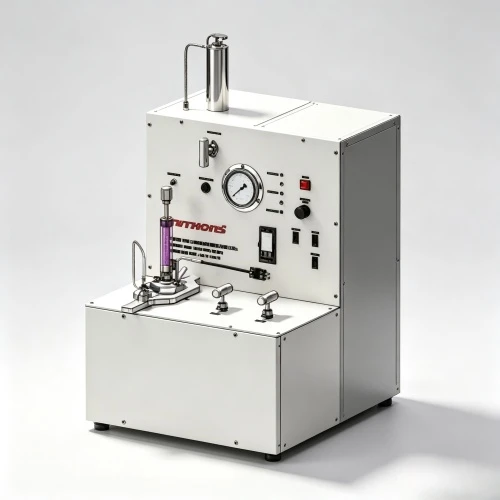
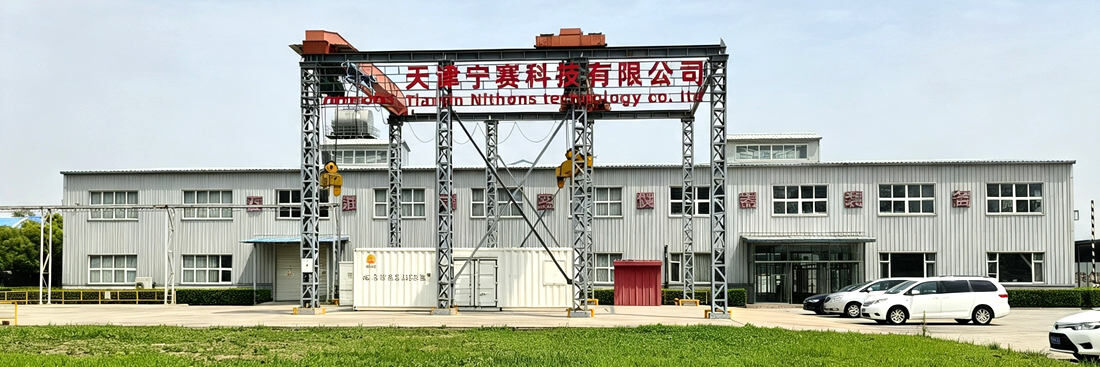
Tianjin Kelioil Engineering Material and Technology Co., Ltd. is one of the leading manufacturers and suppliers of cement shrinkage and expansion analyzer in China. Please feel free to buy high quality cement shrinkage and expansion analyzer at low price from our factory. If you have any enquiry about free sample, please feel free to email us.
NSPQ2022 Cement Shrinkage and Expansion Analyzer: HPHT Bulk Volume Integrity Metrology
1. Engineering Architecture for Downhole Zonal Isolation & Bulk Deformation
In ultra-deep HPHT exploration and high-pressure gas well completions, zonal isolation failure rarely stems from early slurry displacement defects alone. Instead, it frequently originates from micro-annulus development driven by bulk matrix contraction during downhole cement hydration. Under hydrostatic confinement and geothermal elevation, cement slurries transition through liquid, gelation, and solidifying skeleton phases. Uncompensated volumetric shrinkage generates radial debonding along the casing-cement-formation boundaries, opening sustained migration pathways for pressurized formation gas. The NSPQ2022 Cement Shrinkage and Expansion Analyzer engineered by Tianjin Nithons Technology Co., Ltd. resolves the industry-wide challenge of acquiring continuous, artifact-free volumetric deformation data under severe simulated borehole regimes.
Designed under a Sino-Japanese joint venture framework integrating structural methodologies from Tokyo's GEO industrial group and Osaka's Honeycomb engineering team, the NSPQ2022 represents an empirical breakthrough beyond fragile acoustic inference and manual boundary expansion molds. By locking operation metrics strictly at a rated 204°C (400°F) maximum working temperature and 69 MPa (10,000 psi) maximum working pressure, the instrument complies fully with API Spec 10A, API Spec 10B, and ISO 10426-5 standards. Rather than relying on intermittent spot checks or non-pressurized water bath cure metrics, the NSPQ2022 maintains total thermodynamic continuity throughout fluid-to-solid transition phases. Slurry systems formulated with expanding agents, microspheres, or gas-block polymers can now be rigorously evaluated against strict volumetric shrinkage caps and positive expansion thresholds, providing petroleum engineers with verifiable physical baselines before casing strings are committed downhole.
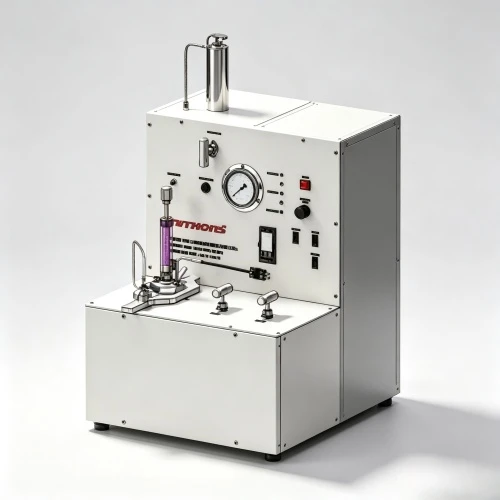
2. Metrological Breakthroughs: LVDT Precision & Pulse-Free Pressure Servo
Accurate measurement of sub-millimeter matrix shrinkage at 69 MPa has long been hindered by mechanical pulse shocks from reciprocating intensifier pumps, rod thermal bending, and hydraulic media invasion into the cement matrix. The NSPQ2022 overcomes these critical physical limitations through four dedicated engineering systems:
- Class 0.1 Short-Probe LVDT Linear Displacement Assembly: Volumetric deformation is tracked via an industrial-grade Linear Variable Differential Transformer featuring an ultra-short guided probe geometry. Shortening probe length mitigates high-temperature flexural bending and thermal elongation drift, maintaining linear signal stability across an overall displacement span of ±12.7 mm, covering a volume expansion range of +10% (up to 20 mL) and shrinkage down to -16% (up to 32 mL).
- Proportional Servo Valve Continuous Pressure Control: Traditional air-driven reciprocating pumps introduce violent hydraulic pressure spikes that mask early slurry plastic contraction and distort sensitive displacement curves. The NSPQ2022 utilizes closed-loop proportional valve regulation across dual-chamber drive cylinders, delivering flat, pulse-free pressure stability across the full 69 MPa operating profile.
- Membrane Phase-Isolated Measuring Cell: High-pressure water serving as the confining hydraulic medium is strictly separated from the cement slurry specimen by an engineered elastomer isolation membrane. This completely eliminates hydraulic media permeation into hydrating pore networks while translating true slurry bulk volumetric movement directly to the measuring core.
- Integrated Closed-Loop Oil Cooling: Rapid thermal turnover between consecutive test cycles is accomplished via an internal closed-loop oil-cooling radiator, liberating cementing laboratories from cumbersome external chilled-water plumbing networks.
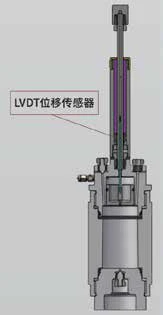
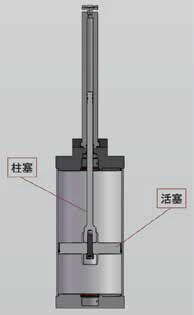
NSPQ2022 integrated high-pressure cell layout featuring proportional valve controls and LVDT coupling.
3. Standardized Laboratory Workflow & Experimental Execution
Step 1: Slurry Conditioning & Flexible Cell Encapsulation: Cement slurries blended according to API Spec 10A protocol using an automated constant speed mixer (such as the NHJQ2017) are transferred into the specialized elastomeric membrane cell. The top guide interface and bottom sealing anchors are wiped clean of particulate residues before insertion, ensuring zero initial mechanical friction along the primary displacement axis.
Step 2: Chamber Insertion & High-Pressure Coupling: The sealed cell assembly is seated coaxially within the forged alloy test autoclave. The short-probe LVDT sensor assembly is aligned over the primary contact pin, and high-pressure closures are secured. External manual pressure bias dials allow rapid initial hydrostatic balance prior to thermal ramp activation, eliminating hydraulic air pockets.
Step 3: Protocol Configuration & Closed-Loop Initiation: Operators set target borehole temperature profiles (up to 204°C) and confining hydrostatic pressure steps (up to 69 MPa) directly via the industrial touchscreen HMI. Temperature ramping is overseen by the UK Eurotherm precision PID controller, while proportional servo valves automatically compensate for fluid compression and volumetric fluctuations during heating.
Step 4: Continuous Hydration Acquisition: Throughout the dormant, setting, and hardened curing phases, the industrial PLC samples sensor displacement, chamber pressure, and slurry temperature at millisecond intervals. Dynamic real-time graphs trace the complete volumetric path-from initial plastic chemical shrinkage through secondary expansion additive activation-safeguarding raw datasets against digital corruption.
Step 5: Automated Thermal Quenching & Extraction: Upon test completion, the integrated internal oil-cooling circuit activates automatically, drawing autoclave heat down safely without thermal shock. Once pressure drops to ambient equilibrium, the cell is extracted. The solidified core can then be smoothly retrieved utilizing dedicated hydraulic demolding tools (such as the PCK002) without damaging sensor fixtures.
4. Definitive Technical Specifications
| Parameter | Specification |
|---|---|
| Product Model & Series | NSPQ2022 (Special Physical Property Analysis Series) |
| Maximum Working Pressure | 69 MPa (10,000 psi) |
| Maximum Working Temperature | 204°C (400°F) |
| Linear Displacement Range | ±12.7 mm |
| Volume Expansion Measuring Range | +10% (Maximum 20 mL) |
| Volume Shrinkage Measuring Range | -16% (Maximum 32 mL) |
| Displacement Sensor Class & Type | High-precision Class 0.1 Custom Short-Probe LVDT |
| Pressure Control Technology | Proportional valve closed-loop continuous regulation (pulse-free) |
| Temperature Control Instrumentation | UK Eurotherm 3-series PID intelligent digital controller |
| Auxiliary Cooling Architecture | Built-in internal circulation oil-cooling system |
| Main Heating Power | 2000 W |
| Total Input Electrical Power | 2.1 kW |
| Input Operating Power Supply | AC 100–110V 60Hz or AC 220–240V 50/60Hz |
| Net Equipment Weight | 77 kg |
| Overall Machine Dimensions (W × D × H) | 61 × 72 × 106 cm |
| Data Interfaces & Networking | Industrial Ethernet RJ45 and high-speed USB flash export |
5. Forged Alloy Pressure Vessel & Thermal Barrier Mechanics
The structural backbone of the NSPQ2022 consists of a vertical pressure vessel precision-forged from specialized nickel-chromium alloy steel, heat-treated to ensure deep metallurgical toughness and zero mechanical yield under continuous 69 MPa cyclic loads. In conventional volume change apparatus, repeated exposure to thermal ramps at 204°C induces vessel wall micro-expansion and uneven sensor seating stress, leading to artificial drift in displacement readings. Nithons engineers addressed this structural vulnerability by integrating an isolated kinematic sensor mounting platform that mechanically decouples the high-precision LVDT core from vessel thermal expansion axes.
Furthermore, the internal slurry containment utilizes an engineered composite membrane seal. This impermeable, chemically inert barrier prevents corrosive pore fluid ions from fouling hydraulic conduit paths, protecting internal valves and manifold fittings. The short-probe sensor core utilizes high-temperature magnetic shielding and low-friction sapphire bearings, ensuring micro-displacement transmission remains free from frictional stick-slip artifacts. The combination of finite-element-optimized chamber walls and frictionless displacement transmission guarantees that recorded dimensional variations reflect 100% of true cement matrix hydration behavior.
6. Closed-Loop Digital Control & Standalone HMI Processing
The operational intelligence of the NSPQ2022 is anchored by an industrial programmable logic controller (PLC) coupled with a vibrant color touchscreen Human-Machine Interface (HMI). Rather than requiring continuous tethering to an external commercial personal computer, the NSPQ2022 executes complete high-temperature, high-pressure test schedules as an autonomous, self-contained instrument station. The embedded architecture executes multivariable closed-loop algorithms, dynamically synchronizing electrical heating bands, proportional hydraulic valves, and displacement sensor feedback loops without operating system latency.
The real-time interface provides cement testing technicians with an intuitive graphical process schematic, displaying continuous status updates for chamber valves, actual pressure, target ramp sets, and instantaneous displacement values. Raw test datasets are buffered directly within industrial non-volatile solid-state memory, safeguarding critical long-term hydration records against accidental power disruptions. Data retrieval is straightforward, supporting automated high-resolution curve exports via USB storage media or direct LAN network streaming into centralized laboratory information management systems (LIMS).
7. Laboratory Ergonomics & Routine Maintenance Simplicity
Industrial testing equipment must be serviceable under demanding operational rhythms. The NSPQ2022 features an ergonomic physical profile developed in close consultation with active field laboratory chemists. The autoclave closure utilizes a balanced, quick-action mechanical lock system that eliminates repetitive manual torque strain. External hydraulic bias dials are situated directly on the front fascia, enabling rapid zero-point calibration and pre-test hydrostatic leveling without requiring operators to reach across high-temperature surfaces.
Post-test maintenance has been streamlined: the sample cell housing disassembles swiftly for slurry core removal, while internal fluid lines are protected by multi-stage particulate traps that capture abrasive cement dust. The internal closed-loop oil-cooling heat exchanger functions as a sealed system, requiring zero periodic water descaling or external drain plumbing. Heavy-duty lockable leveling casters beneath the structural steel cabinet permit smooth repositioning across busy lab floors, providing high mechanical stability during high-pressure cycles.
8. API Spec 10B Quality Control & Factory Acceptance Testing
Every NSPQ2022 manufactured at Nithons undergoes rigorous Factory Acceptance Testing (FAT) within our ISO 9001:2015, ISO 14001:2015, and ISO 45001:2018 certified production facilities. Adhering strictly to API Spec 10B and ISO 10426-5 metrological protocols, each instrument undergoes comprehensive calibration routines prior to international dispatch:
- Hydrostatic Proof Testing: The forged pressure autoclave is hydrostatically proof-tested to 1.25 times rated working pressure (86.2 MPa), confirming elastic resilience and zero micro-fissure development under prolonged hold cycles.
- Multi-Point LVDT Precision Metrology: Linear displacement sensors are calibrated across their full ±12.7 mm mechanical span using certified micrometer staging blocks, achieving certified linearity within ±0.1% of full scale.
- Dynamic Thermal Hold Stability: The heating chamber and UK Eurotherm PID loop are verified across stepped thermal plateaus up to 204°C, requiring temperature field uniformity within ±1.0°C across the active sample matrix.
- Pulse-Free Hydraulic Pressure Certification: Proportional valve stability is audited across pressure ramp transitions, verifying complete suppression of hydraulic ripple artifacts.
9. Volume Change Instrumentation Selection Framework
Selecting the optimal volumetric characterization system depends upon specific downhole pressure regimes, dimensional measurement objectives, and slurry setting states. The selection framework below illustrates the technical positioning of the NSPQ2022 relative to companion Nithons evaluation units:
| Model Code | Working Limits | Measurement Focus | Primary Advantage |
|---|---|---|---|
| NSPQ2022 | 204°C / 69 MPa | Continuous Bulk Volume Change (-16% to +10%) | Class 0.1 LVDT, pulse-free proportional valve, standalone HMI |
| NHPQ3020 | Water Bath Curing Compatible | Cured Post-Hydration Ring Expansion Strain | Static slotted ring geometry, manual digital micrometer verification |
| NCKQ2022 | 204°C / 138 MPa | Ultrasonic Compressive Strength & SGS Development | Non-destructive continuous acoustic transit-time tracking |
10. Downhole Zonal Isolation & Specialized Energy Applications
The NSPQ2022 serves as a pivotal analytical asset across high-stakes energy extraction sectors:
- Deep Natural Gas Well Annular Seal Verification: Gas migration through microscopic annular channels remains an operational threat. Evaluating bulk shrinkage under downhole conditions allows cementing engineers to qualify gas-block and expansive additives that prevent micro-annular debonding.
- High-Temperature Geothermal Well Completions: Severe geothermal thermal swings cause matrix expansion-contraction fatigue. The NSPQ2022 characterizes silica-stabilized slurry volume evolution under high-temperature regimes up to 204°C.
- CO2 Sequestration & CCUS Storage Barrier Integrity: Supercritical carbon dioxide storage requires zero-defect annular barriers. Volumetric data ensures cement formulations withstand carbonation shrinkage and maintain permanent seal integrity.
- Offshore Deepwater Riserless & Conductor Strings: Rapid transitions from cold seabed conditions to warm hydration peaks demand continuous volume stability monitoring throughout the gelation phase.
11. Heavy-Duty Export Packaging & Global Transit Protection
Every NSPQ2022 unit is prepared for global dispatch following Category 2 of the Nithons Comprehensive Packaging and Shipping Standards: Heavy-Duty Plywood Crate with Integrated Pallet Base. Engineered to meet strict ISPM 15 international phytosanitary standards, the packaging system guarantees flawless instrument arrival regardless of maritime, air, or overland routing conditions.
The instrument body is secured to a heavy-duty plywood pallet base equipped with 4-way mechanical forklift channels. Machine feet are locked using high-tensile anchor bolts and fitted timber dunnage to eliminate transit shifting. The equipment is hermetically sealed within a heavy-gauge aluminum foil moisture-barrier barrier bag containing calculated quantities of industrial desiccant. The enclosure is lined with high-density expanded polyethylene (EPE) foam dampeners shaped to protect the LVDT sensor bridge, touchscreen housing, and hydraulic controls against shock and vibrations. The outer crate is assembled with perimeter steel banding and galvanized corner impact guards, ensuring complete field readiness upon uncrating.
12. Frequently Asked Questions (FAQ)
Q1: How does the NSPQ2022 eliminate pressure pump noise from micro-shrinkage displacement curves?
A1: Conventional testing setups use reciprocating intensifier pumps that create cyclic pressure pulses, obscuring small displacement readings. The NSPQ2022 replaces mechanical intensifier pumping with closed-loop proportional servo valve regulation across dual-chamber drive cylinders, delivering flat, pulse-free hydraulic pressure stability at 69 MPa.
Q2: Why is continuous HPHT volume measurement superior to post-cure atmospheric ring expansion tests?
A2: Post-cure tests (such as NHPQ slotted rings) only capture net dimensional outcomes after cement solidification at ambient pressure. The NSPQ2022 tracks true volumetric changes continuously across the critical fluid-to-solid transition under simulated downhole temperature and confining pressure, precisely identifying early plastic shrinkage windows.
Q3: How does the membrane separation mechanism protect the sample from fluid contamination?
A3: The NSPQ2022 houses the slurry specimen within an impermeable, chemically resilient elastomeric membrane cell. Confining hydraulic pressurization fluid acts uniformly against this flexible barrier without penetrating the porous cement matrix, ensuring that only actual matrix volumetric change is registered by the LVDT probe.
Q4: Can the NSPQ2022 execute testing without a dedicated laboratory computer?
A4: Yes. The NSPQ2022 is equipped with an onboard industrial PLC and a dedicated color touchscreen HMI. Temperature ramps, pressure schedules, and continuous curve generation are executed autonomously on the instrument, with full datasets exportable via USB flash drives or laboratory network Ethernet.
Q5: What technical support and calibration services are available for international NSPQ2022 deployments?
A5: Nithons provides comprehensive technical onboarding, offering remote diagnostics via Ethernet, complete calibration kits, and responsive engineering support. All core wear components, seals, and sensor replacements adhere to universal international dimensions, guaranteeing rapid servicing worldwide.
13. International Industry Partnerships & Global Exhibition Footprint
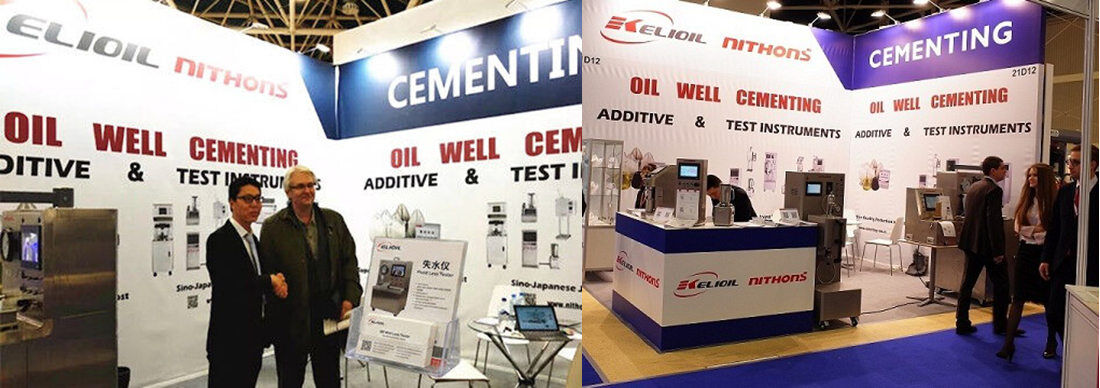
Nithons cementing testing instruments are trusted by energy operators, technical research academies, and service companies across the globe. Our advanced testing systems actively support laboratory programs for major energy corporations, including CNPC, Sinopec, CNOOC, Rosneft, Tatneft, and SOCAR, alongside academic programs at China University of Petroleum, Tsinghua University, and Southwest Petroleum University. Through consistent participation at leading international technical conventions-including ADIPEC in Abu Dhabi, KIOGE in Kazakhstan, and Rio Oil & Gas in Brazil-Nithons continually advances downhole testing integrity alongside international petroleum research leaders.
14. Engineering Consultation & Technical Inquiries

Request Custom Technical Specifications & Official Quotation
For detailed engineering inquiries, laboratory integration schemes, or factory quotation proposals regarding the NSPQ2022 Cement Shrinkage and Expansion Analyzer, please direct your technical requirements to our international application engineering team. We provide tailored technical assessments and comprehensive FAT documentation within 24 hours.
Telephone / WeChat / WhatsApp: +86 185 2680 5985
Headquarters: Tianjin Nithons Technology Co., Ltd., Xiqing District, Tianjin, China
Hot Tags: cement shrinkage and expansion analyzer, China cement shrinkage and expansion analyzer manufacturers, suppliers, factory


