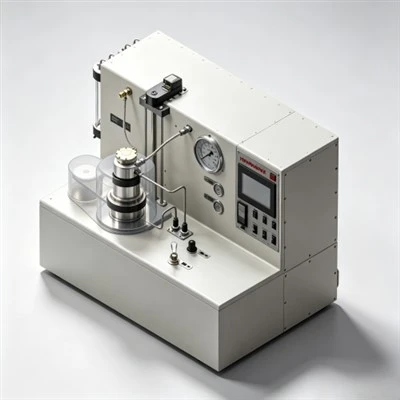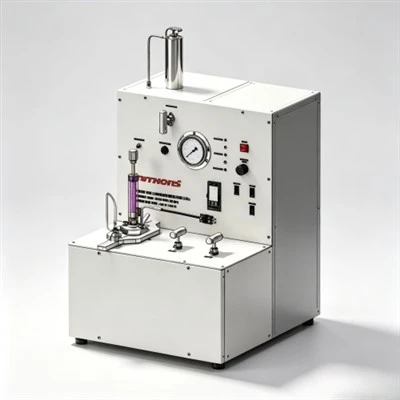

The Kolio Group is a Chinese company specializing in the research and development and production of cementing additives and cementing testing instruments.
Quick response
We promise to respond to your inquiries within 24 hours to ensure that you receive the information and support you need in a timely manner.
Strong production capacity
Koli Petroleum has added four new production lines, including vacuum drying powder production line and liquid polymer synthesis production line, all of which are fully automated with human-machine interactive control, with a total production capacity of 10,000 tons/year.
Complete qualifications
It has passed ISO14001, ISO9000 and GB/T28001 certifications, and the powdered AMPS polymer fluid loss reducer has won the "National Key New Product" certificate.
Rich experience
The company has nearly 20 years of experience in this field.
-
![HPHT Consistometer]() HPHT ConsistometerMinimum order quantity: 1 pieceview more
HPHT ConsistometerMinimum order quantity: 1 pieceview more
Customization: Supported
Warranty: 1 Year
Origin Country: China -
![NCCQ2220 Atmospheric Consistometer (Dual Cell Cement Thickening Time Tester)]() NCCQ2220 Atmospheric Consistometer (Dual Cell Cement Thic...●Maximum Temperature: 200ºF / 93ºCview more
NCCQ2220 Atmospheric Consistometer (Dual Cell Cement Thic...●Maximum Temperature: 200ºF / 93ºCview more
●Maximum Pressure: Atmospheric pressure
●Heater Power: 2400W
●Slurry Cup Rotation Speed: 150+-15 rpm
●Slurry Cup Volume: 28 cubic inches / 470 mL
●Consistency Range: 0 to... -
![NBCQ2120 Portable HTHP Consistometer (Portable HPHT Cement Thickening Time Tester)]() NBCQ2120 Portable HTHP Consistometer (Portable HPHT Cemen...●Maximum Temperature: 204℃(400℉)view more
NBCQ2120 Portable HTHP Consistometer (Portable HPHT Cemen...●Maximum Temperature: 204℃(400℉)view more
●Maximum Pressure: 138MPa(20000psi)
●Input Voltage: 100-110V,60Hz/220V,50Hz
●Slurry Cup Rotation Speed: 150 rpm
●API 10 Specification /ISO 10426-1
●Pressure Of Cooling... -
![NZCJ2225R Dual Cell HTHP Consistometer (Standard Version)]() NZCJ2225R Dual Cell HTHP Consistometer (Standard Version)●Maximum Temperature: 315℃(600℉)view more
NZCJ2225R Dual Cell HTHP Consistometer (Standard Version)●Maximum Temperature: 315℃(600℉)view more
●Maximum Pressure: 275MPa(40000psi)
●Rotation Speed:0-300 rpm
●Viscosity Range:0-100Bc
●Input Voltage: 100-110V,60Hz/220V,50Hz
●API 10 Specification
●Pressure Of... -
![NZCJ2125R Single Cell HTHP Consistometer (Standard Version)]() NZCJ2125R Single Cell HTHP Consistometer (Standard Version)●Maximum Temperature: 315℃(600℉)view more
NZCJ2125R Single Cell HTHP Consistometer (Standard Version)●Maximum Temperature: 315℃(600℉)view more
●Maximum Pressure: 275MPa(40000psi)
●Rotation Speed:0-300 rpm
●Viscosity Range:0-100Bc
●Input Voltage: 100-110V,60Hz/220V,50Hz
●API 10 Specification
●Pressure Of... -
![NZCQ2220R Dual Cell HTHP Consistometer (Flagship Ultimate Version)]() NZCQ2220R Dual Cell HTHP Consistometer (Flagship Ultimate...●Maximum Temperature: 315℃(600℉)view more
NZCQ2220R Dual Cell HTHP Consistometer (Flagship Ultimate...●Maximum Temperature: 315℃(600℉)view more
●Maximum Pressure: 275MPa(40000psi)
●Rotation Speed:0-300 rpm
●Viscosity Range:0-100Bc
●Input Voltage: 100-110V,60Hz/220V,50Hz
●API 10 Specification
●Pressure Of... -
![NZCQ2120R Single Cell HTHP Consistometer (Flagship Ultimate Version)]() NZCQ2120R Single Cell HTHP Consistometer (Flagship Ultima...●Maximum Temperature: 315℃(600℉)view more
NZCQ2120R Single Cell HTHP Consistometer (Flagship Ultima...●Maximum Temperature: 315℃(600℉)view more
●Maximum Pressure: 275MPa(40000psi)
●Rotation Speed:0-300 rpm
●Viscosity Range:0-100Bc
●Input Voltage: 100-110V,60Hz/220V,50Hz
●API 10 Specification
●Pressure Of... -
![Oil Well Cement Lab HPHT Consistometer]() Oil Well Cement Lab HPHT Consistometer●Model: Nithons NZCQ2120view more
Oil Well Cement Lab HPHT Consistometer●Model: Nithons NZCQ2120view more
●Maximum Temperature: 315℃(600℉)
●Maximum Pressure: 275MPa(40000psi)
●Slurry Cup Rotational Speed:150±15 rpm
●Viscosity Range:0-100Bc ●Input Voltage: 110V,60Hz/220V,50Hz
●API 10... -
![Atmospheric Consistometer Cementing Laboratory]() Atmospheric Consistometer Cementing LaboratoryMax. Temperature to 200℉(93℃)view more
Atmospheric Consistometer Cementing LaboratoryMax. Temperature to 200℉(93℃)view more
Maximum pressure: atmospheric
Number of cells: 2
Consistency Range:0– 100 Bc
Cup rotation speed: 150 ± 15 rpm
Input Voltage: 220V, 50Hz
API Spec 10A... -
![Cementing Lab HPHT Consistometer]() Cementing Lab HPHT Consistometer●Maximum Temperature: 315℃(600℉)view more
Cementing Lab HPHT Consistometer●Maximum Temperature: 315℃(600℉)view more
●Maximum Pressure: 275MPa(40000psi)
●Slurry Cup Rotational Speed:150±15 rpm
●Viscosity Range:0-100Bc ●Input Voltage: 110V,60Hz/220V,50Hz ●API 10 Specification ●Weight:... -
![Cement Slurry Atmospheric Consistometer]() Cement Slurry Atmospheric ConsistometerMax. Temperature to 200℉(93℃)view more
Cement Slurry Atmospheric ConsistometerMax. Temperature to 200℉(93℃)view more
Maximum pressure: atmospheric
Number of cells: 2
Consistency Range:0– 100 Bc
Cup rotation speed: 150 ± 15 rpm
Input Voltage: 220V, 50Hz
API standard
Temperature... -
![HTHP HPHT Cement Consistometer]() HTHP HPHT Cement Consistometer●Maximum Temperature: 315℃(600℉)view more
HTHP HPHT Cement Consistometer●Maximum Temperature: 315℃(600℉)view more
●Maximum Pressure: 275MPa(40000psi)
●Slurry Cup Rotational Speed:150±15 rpm
●Viscosity Range:0-100Bc ●Input Voltage: 110V,60Hz/220V,50Hz ●API 10 Specification ●Weight:...


Features of Consistometer
High Accuracy
Consistometers provide high-precision consistency measurements, helping users accurately assess fluid performance.
Fast Response
Instruments are often designed to respond quickly to changes in fluid flow, making them suitable for experimental and industrial applications that require fast feedback.
Versatility
Some Consistometers can adjust different test conditions, such as temperature and shear rate, to meet diverse testing needs.
Easy Operation
Modern Consistometers often feature a user-friendly interface, allowing for simple and intuitive operation that allows users to easily perform consistency measurements.
Adaptability
The instrument can be applied to different types of fluids, including non-Newtonian fluids, making it widely used in different industrial fields.
Durability
Usually ruggedly constructed to withstand the harsh conditions of a laboratory or industrial environment.
Application of Consistometer
Cement and Concrete Testing
Consistometers help evaluate the consistency and workability of various types of cement, concrete mixes, and cementitious materials, providing essential data for quality control and material selection.
Research and Development
In the development of new cement formulations or additives, consistometers are used to study the effects of different materials on the flow properties, helping optimize compositions for specific applications.
Field Testing
In some cases, consistometers can be taken to construction sites to assess the consistency of fresh concrete mixes, helping to ensure that they are suitable for the intended application.
Comparative Studies
Consistometers allow for comparative analysis of different cement types or mixes by providing consistent and reliable measurements of their flow characteristics.
Additive Development
When developing new chemical admixtures or modifiers, consistometers can determine their impact on the consistency and workability of concrete or cement pastes.
Training and Education
In academic settings, consistometers can be used in educational programs to teach students about the properties of materials and their behavior in concrete mixes.
Types of Consistometer


Static Consistomete
Measures the viscosity or consistency of a fluid at rest without any movement. This type is useful for determining the yield point of materials.
Rotational Consistometer
This type employs a rotating mechanism to evaluate the viscosity of the material under controlled shear rates. It provides a more dynamic assessment of the fluid properties.
Dynamic Consistometer
Similar to rotational consistometers, but often designed to mimic actual drilling conditions more closely. They can simulate the movement of fluids and provide data on how the material will behave in the field.
Funnel Consistometer
A simpler device that measures the flow time of a fluid through a funnel. This can provide a basic idea of the consistency but lacks the precise control and measurement that other types can offer.
Pressure Consistometer
This measures consistency under pressure, which can be important for understanding how cement or mud will behave in certain downhole conditions, such as when under the pressure of overlying geological layers.
Field Consistometer
Portable devices designed for use in field conditions to provide quick and reliable measurements of fluid properties on-site.
Laboratory Consistometer
More sophisticated and controlled setups typically used in labs to conduct thorough analyses and develop formulations for various drilling and cementing fluids.
Cement Consistometer
Specifically designed for testing the consistency of cement slurries, often used to assess the performance of the cementing process in well construction.
Material of Consistometer
Stainless Steel
Often used for the main body and components due to its resistance to corrosion, strength, and durability.
High-Temperature Alloys
These may be used in specific components where high temperatures are expected to ensure structural integrity.
Glass or Transparent Polycarbonate
Sometimes used for windows in the device to allow for visual inspection of the fluid without exposure to harmful chemicals.
Sealing Materials
Various rubber or polymer compounds that can withstand the chemical environment and provide a reliable seal.
Electronic Components
If the consistometer includes digital sensors or displays, components may be made from various plastics and metals that suit the electronic environment.
Maintenance precautions of Consistometer
Regular Calibration
Ensure that the consistometer is calibrated regularly according to the manufacturer’s guidelines. Use standard calibration fluids to confirm accuracy.
Proper Cleaning
Clean the consistometer after each use to prevent contamination of samples. Use appropriate cleaning agents that won't damage the equipment.
Check for Wear and Tear
Regularly inspect all components, such as blades, mixing chambers, and electrical connectors, for signs of wear or damage. Replace worn-out parts promptly to avoid further damage.
Storage
Store the consistometer in a clean, dry, and controlled environment to prevent dust, moisture, and temperature fluctuations from affecting its performance. Use protective covers if necessary.
Regular Maintenance Checks
Schedule periodic maintenance checks by qualified personnel who can identify and rectify potential issues. Maintain records of maintenance activities for reference.
Avoid Overloading
Do not exceed the specified capacity of the consistometer, as this could lead to malfunctions or damage.
Follow Manufacturer's Instructions
Adhere to the operating and maintenance guidelines provided in the user manual. Ensure that any adjustments or repairs are performed based on these guidelines.
Electrical Safety
Ensure that all electrical components are properly insulated and free from moisture.Regularly check power cords and connections to prevent electrical faults.
Monitor Environmental Conditions
Be aware of the operational environment's temperature and humidity, as extreme conditions can affect the performance and longevity of the consistometer..
Certificate

Tianjin Kelioil Engineering Material and Technology Co., Ltd. is one of the most professional consistometer manufacturers and suppliers in China, featured by quality products and low price. Please rest assured to buy consistometer for sale here from our factory. Contact us for free sample.
consistometer for viscosity measurement, consistometer for laboratory use, consistometer reseller