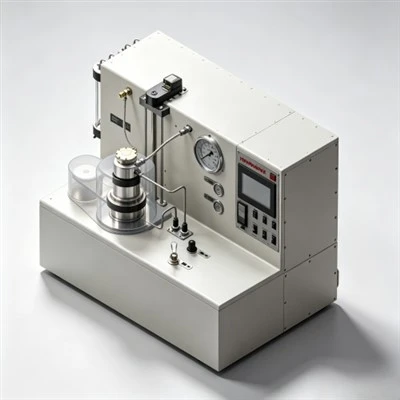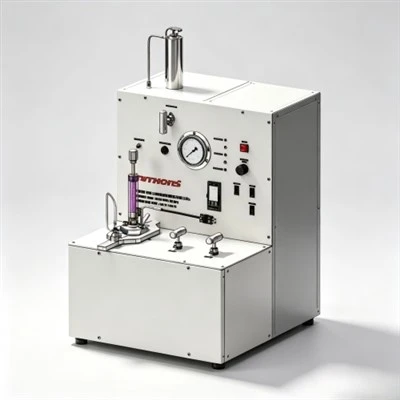

Nithons factory, the Sino-Japanese Joint venture,
specializing in the development and production of cementing testing instruments.
-
![HPHT Consistometer]() HPHT ConsistometerMinimum order quantity: 1 pieceview more
Customization: Supported
Warranty: 1 Year
Origin Country: China -
![Ultrasonic Static Gel Strength Tester]() Ultrasonic Static Gel Strength TesterType no.: NCKQ 2022view more
Minimum order quantity: 1 piece
Customization: Supported
Warranty: 1 Year
Origin Country: China -
![HPHT Rheometer NCLQ2125]() HPHT Rheometer NCLQ2125Product Name: NCLQ2125 HPHT Rheometerview more
Product Series: Special Rheological Property Analysis Series
Standard Compliance: API Spec 10A, API Spec 10B, ISO 10426, API RP... -
![Cement Shrinkage And Expansion Analyzer]() Cement Shrinkage And Expansion AnalyzerProduct Name: NSPQ2022 Cement Shrinkage and Expansion Analyzerview more
Product Series: Special Physical Property Analysis Series
Standard Compliance: API Spec 10A, API Spec 10B, ISO... -
![High Precision Thermostatic Water Bath For Cement Testing Laboratories]() High Precision Thermostatic Water Bath For Cement Testing...• Product Name: NHSQ Thermostatic Water Bathview more
• Keyword: Thermostatic Water Bath
• Model: NHSQ-110 / NHSQ-220
• Type: Laboratory Constant Temperature Water Bath
• Application: Oil Well Cement Testing, Cement... -
![NHSQ Thermostatic Water Bath For Oil Well Cement Testing Laboratory]() NHSQ Thermostatic Water Bath For Oil Well Cement Testing ...• Product Name: NHSQ Thermostatic Water Bathview more
• Keyword: Thermostatic Water Bath
• Model: NHSQ-110 / NHSQ-220
• Type: Laboratory Constant Temperature Water Bath
• Application: Oil Well Cement Testing, Cement... -
![NZYQ2222 Dual Cell HTHP Curing Chamber]() NZYQ2222 Dual Cell HTHP Curing Chamber• Product Name: HTHP Curing Chamberview more
• Keyword: Dual Cell HTHP Curing Chamber
• Model: NZYQ2222
• Type: Ultimate Version with Dual Cell
• Application: Oil Well Cement Specimen Curing Under HTHP Conditions... -
![NZYQ2122 Single Cell HTHP Curing Chamber]() NZYQ2122 Single Cell HTHP Curing Chamber• Product Name: HTHP Curing Chamberview more
• Keyword: HTHP Curing Chamber
• Model: NZYQ2122
• Type: Single Cell HTHP Curing Chamber
• Application: Oil Well Cement Specimen Curing Under HTHP Conditions
• Maximum... -
![NXNJ0020 Rotational Viscometer For Oil Well Cement Slurry Rheology Testing]() NXNJ0020 Rotational Viscometer For Oil Well Cement Slurry...• Fully automatic NXNJ Rotational Viscometer designed for oil well cement slurry rheology testingview more
• Supports automatic mode, manual mode, and gel strength test mode for flexible laboratory operation
• Automatically... -
![Rotational Viscometer For Oil Well Cement Slurry Testing]() Rotational Viscometer For Oil Well Cement Slurry Testing• Fully automatic Rotational Viscometer designed for oil well cement slurry rheology testingview more
• Supports automatic mode, manual mode, and automatic gel strength testing mode
• Automatically changes rotational speeds and... -
![Constant Speed Mixer For Oil Well Cement Slurry Preparation]() Constant Speed Mixer For Oil Well Cement Slurry Preparation• High-speed Constant Speed Mixer designed for oil well cement slurry preparationview more
• Rotation speed range from 1000 to 18000 rpm for stable and efficient slurry mixing
• Dual-seal blending assembly reduces slurry leakage... -
![Ultrasonic Static Gel Strength Analyzer UCA Cement Test Instrument]() Ultrasonic Static Gel Strength Analyzer UCA Cement Test I...• Product Name: Ultrasonic Static Gel Strength Analyzerview more
• Keyword: UCA Cement Test
• Model: NCKQ2022
• Type: Ultrasonic Cement Analyzer (UCA) / Static Gel Strength Tester
• Series: Ultrasonic Series
•...


Reliable Quality, Lower Maintenance
Nithons cementing testing instruments are more economical in daily maintenance, while maintaining consistently stable and reliable quality. We hope they can be a more hassle-free choice for you.
Quick response
We promise to respond to your inquiries within 24 hours to ensure that you receive the information and support you need in a timely manner.
Sino-Japanese technical teams
Industrial design by Sino-Japanese technical teams: safe and aesthetically pleasing
API Standards
Our equipment is fully compliant with API 10A &10B standards.
Complete qualifications
It has passed ISO45001, ISO9001, ISO24001 and HSE certifications
Exported Globally
Exported to the Middle East, Indonesia, Nigeria, Russia, Canada, etc. Include CNPC, CNOOC, SINOOEC etc.
Features of Cementing Testing Instrument
Performance Monitoring
It can monitor various physical and chemical properties of cement slurry in real time, including fluidity, consistency and setting time.
Versatility
It usually has multiple test functions, such as density test, consistency test, compressive strength test, etc., which can meet different experimental needs.
Data Recording and Analysis
It has data recording function, which can automatically record test results and provide data analysis reports to help engineers make evaluations.
High temperature and high pressure resistance
Most cement testing instruments are designed to withstand high temperature and high pressure environments to simulate the working conditions of underground wellbores.
Ease of operation
The instruments are usually designed to be easy to operate and equipped with a friendly user interface, so that even non-professionals can perform basic tests.
Portability
Some instruments are designed to be portable, which is convenient for quick testing on site.
Safety
The design takes into account operational safety to prevent hazards caused by factors such as high temperature and high pressure.
Application of Cementing Testing Instrument
Oil and Gas Industry
Curing test instruments can evaluate the performance of cement slurry to ensure that it can effectively seal the wellbore and prevent fluid leakage.
Construction Engineering
In construction engineering, the strength and curing properties of cement directly affect the safety and durability of the structure. Test instruments are used to evaluate the quality of cement used in construction to ensure that construction materials meet standards.
Geological Engineering
In civil engineering and underground engineering, test instruments can be used to analyze the interaction between cement and soil and its performance under different environmental conditions.
Water Conservancy Engineering
In water conservancy projects such as dams and bridges, the curing properties of cement affect the durability and stability of the project. Test instruments are used to evaluate the water resistance and durability of cement.
Environmental Engineering
In solid waste treatment and landfill construction, cement can be used to solidify and stabilize hazardous materials. Test instruments can detect the performance of cement in these applications to ensure environmental safety.
Research and Education
In the field of materials science and engineering research, cement curing test instruments are used to conduct relevant experiments to help researchers better understand the properties of cement and its applications.
Types of Cementing Testing Instrument


Thickening time tester
Measure the thickening time of cement slurry under high temperature and high pressure conditions to evaluate its pumpability and curing characteristics.
Rheometer
Measure the rheological parameters of cement slurry, such as plastic viscosity, yield stress, thixotropy, etc., to optimize the cement slurry formula and improve its pumping performance.
Water loss tester
Measure the water loss of cement slurry under a certain pressure, optimize the cement slurry formula to reduce filtration and improve cementing quality.
Anti-gas channeling tester
Evaluate the ability of cement slurry to block gas flow during the solidification process to prevent oil and gas from entering the annulus and affecting the integrity of the wellbore.
Compressive strength tester
Measure the compressive strength of cement stone to evaluate its mechanical properties after curing and ensure the long-term stability of the wellbore.
Free water tester
Measure the free water content of cement slurry to prevent uneven settlement of cement slurry caused by water separation.
Expansion tester
Measure the volume change of cement slurry during the solidification process to evaluate its isolation and crack resistance.
Density Tester
Measures the density of cement slurry to ensure its stability underground and avoid cementing failure caused by too high or too low density.
High-temperature and high-pressure aging reactor
Used for the maintenance of cement stone in high-temperature and high-pressure environment, simulating the actual working conditions underground to evaluate its long-term performance.
Material of Cementing Testing Instrument
Stainless Steel
Many components are made from stainless steel due to its corrosion resistance, strength, and durability. It can withstand high temperatures and pressures, making it suitable for downhole conditions.
High-Strength Alloys
Certain parts may be constructed from high-strength alloys to provide additional strength and resistance to wear and tear.
Polymer Composites
Some components might use advanced polymer composites for insulation or housing to provide lightweight yet strong materials that can resist chemical attack.
Ceramics
In some cases, ceramics may be used for specific applications, particularly where high wear resistance is needed.
Glass
For certain testing windows or chambers that need transparency, specialized glass or quartz may be used, particularly for visual inspections or monitoring.
Rubber Seals and Gaskets
Various types of rubber or elastomeric materials are used for seals and gaskets to ensure pressure integrity and prevent leaks.
Borosilicate Glass
In laboratory equipment like viscometers, borosilicate glass is often used for its thermal shock resistance and chemical durability.
Maintenance precautions of Cementing Testing Instrument
General Maintenance
Regular Cleaning
Clean the instruments after each use to remove any residual cement or other materials. Use appropriate cleaning agents that do not damage the instrument.
Storage
Store instruments in a dry, clean, and temperature-controlled environment. Use protective cases or covers to prevent dust accumulation and physical damage.
Calibration
Regularly calibrate the instruments according to manufacturer specifications. Keep a log of the calibration dates and results for record-keeping.
Inspections
Conduct routine visual inspections to check for signs of wear or damage. Look for cracks, corrosion, or loose parts and address these issues promptly.
Safety Precautions
Personal Protective Equipment (PPE)
Always wear appropriate PPE when operating or maintaining equipment.
Handling Hazardous Materials
Follow proper procedures for handling and disposing of cement and other materials. Be aware of material safety data sheets (MSDS) for safety protocols.
Certificate

Tianjin Kelioil Engineering Material and Technology Co., Ltd. is one of the most professional cementing testing instrument manufacturers and suppliers in China, featured by quality products and low price. Please rest assured to buy cementing testing instrument for sale here from our factory. Contact us for free sample.