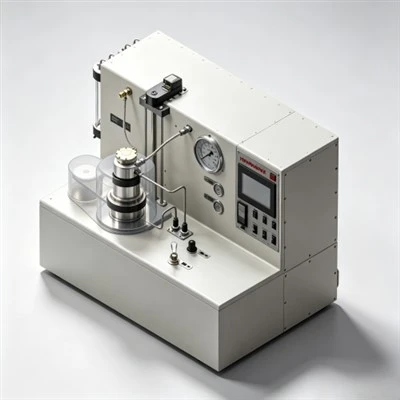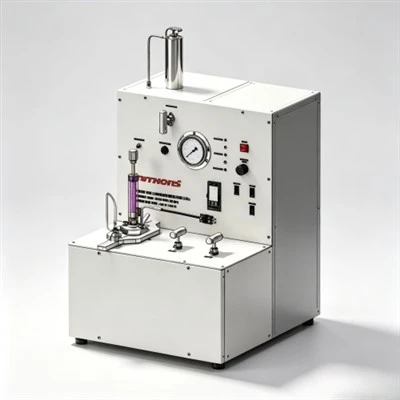

Koliou Group is a Chinese company specializing in the development and production of cementing additives and cementing testing instruments.
Quick response
We promise to respond to your inquiries within 24 hours to ensure that you receive the information and support you need in a timely manner.
Strong production capacity
Koli Petroleum has added four new production lines, including vacuum drying powder production line and liquid polymer synthesis production line, all of which are fully automated with human-machine interactive control, with a total production capacity of 10,000 tons/year.
Complete qualifications
It has passed ISO14001, ISO9000 and GB/T28001 certifications, and the powdered AMPS polymer fluid loss reducer has won the "National Key New Product" certificate.
Rich experience
The company has nearly 20 years of experience in this field.
-
![Well Cementing Retarder]() Well Cementing Retarder*Cost-effective.view more
Well Cementing Retarder*Cost-effective.view more
*Easy to mix.
*Stable performance up to 400°F.
*Applicable to low, normal and high-density cement slurries.
*Compatible with fresh water to seawater.
*Good compatibility with other... -
![Setting Time Controller Cementing Retarder]() Setting Time Controller Cementing Retarder●Accurately targets working temperature below 400℉(204.4℃,BHCT)view more
Setting Time Controller Cementing Retarder●Accurately targets working temperature below 400℉(204.4℃,BHCT)view more
●Good adjustability of the dosage, extended pumpable period.
●Good temperature sensitivity, stable performance during temperature fluctuations.
●Excellent... -
![Oilfield Drilling Cementing Retarder]() Oilfield Drilling Cementing Retarder●Accurately targets working temperature below 400℉(204.4℃,BHCT)view more
Oilfield Drilling Cementing Retarder●Accurately targets working temperature below 400℉(204.4℃,BHCT)view more
●Good adjustability of the dosage, extended pumpable period.
●Good temperature sensitivity, stable performance during temperature fluctuations.
●Excellent... -
![Oilfield Chemicals Oil Well Cementing Retarder]() Oilfield Chemicals Oil Well Cementing Retarder●Accurately targets working temperature below 400℉(204.4℃,BHCT)view more
Oilfield Chemicals Oil Well Cementing Retarder●Accurately targets working temperature below 400℉(204.4℃,BHCT)view more
●Good adjustability of the dosage, extended pumpable period.
●Good temperature sensitivity, stable performance during temperature fluctuations.
●Excellent... -
![Oilfield Oil Well Cementing Retarder]() Oilfield Oil Well Cementing Retarder●Accurately targets working temperature below 400℉(204.4℃,BHCT)view more
Oilfield Oil Well Cementing Retarder●Accurately targets working temperature below 400℉(204.4℃,BHCT)view more
●Good adjustability of the dosage, extended pumpable period.
●Good temperature sensitivity, stable performance during temperature fluctuations.
●Excellent... -
![Cementing Fluid Loss Control Additive]() Cementing Fluid Loss Control AdditiveComposition and Appearance: It is made mainly of inorganic salts and appears as a yellowish-brown liquid.view more
Cementing Fluid Loss Control AdditiveComposition and Appearance: It is made mainly of inorganic salts and appears as a yellowish-brown liquid.view more
Density: The specific gravity is approximately 1-1.5g/cm³.
Dosage: The general dosage is 1.5%-4.0% (BWOC), and a... -
![Oil Well Cement Retarder Additives]() Oil Well Cement Retarder Additives●Accurately targets working temperature below 194℉(90℃,BHCT)view more
Oil Well Cement Retarder Additives●Accurately targets working temperature below 194℉(90℃,BHCT)view more
●The applicable mixing water includes water ranging from fresh water to half-saturated salt water.
●Mixed with water when applied, and water quality is not... -
![Oil Well Cementing Retarder Additives]() Oil Well Cementing Retarder Additives●Accurately targets working temperature below 194℉(90℃,BHCT)view more
Oil Well Cementing Retarder Additives●Accurately targets working temperature below 194℉(90℃,BHCT)view more
●The applicable mixing water includes water ranging from fresh water to half-saturated salt water.
●Mixed with water when applied, and water quality is not... -
![Oil Cementing Retarder Additives]() Oil Cementing Retarder Additives●Accurately targets working temperature below 194℉(90℃,BHCT)view more
Oil Cementing Retarder Additives●Accurately targets working temperature below 194℉(90℃,BHCT)view more
●The applicable mixing water includes water ranging from fresh water to half-saturated salt water.
●Mixed with water when applied, and water quality is not... -
![High Temperature Retarder Oil Cementing]() High Temperature Retarder Oil Cementing●Accurately targets working temperature below 400℉(204.4℃,BHCT).view more
High Temperature Retarder Oil Cementing●Accurately targets working temperature below 400℉(204.4℃,BHCT).view more
●Thickening time has a linear relation with the added amount. The Right-Angle thickening curve can be achieved, and mutation of slurry consistency is... -
![Liquid Mid Temperature Retarder Oil Cementing]() Liquid Mid Temperature Retarder Oil Cementing●Accurately targets working temperature below 194℉(90℃,BHCT)view more
Liquid Mid Temperature Retarder Oil Cementing●Accurately targets working temperature below 194℉(90℃,BHCT)view more
●The applicable mixing water includes water ranging from fresh water to half-saturated salt water.
●Mixed with water when applied, and water quality is not... -
![High Temperature HT Retarder]() High Temperature HT Retarder●Accurately targets working temperature below 400℉(204.4℃,BHCT).view more
High Temperature HT Retarder●Accurately targets working temperature below 400℉(204.4℃,BHCT).view more
●Thickening time has a linear relation with the added amount. The Right-Angle thickening curve can be achieved, and mutation of slurry consistency is...


Features of Cementing Retarder
Prolong setting time
Cement retarders can significantly prolong the initial and final setting time of cement slurry, allowing enough time for mixing, transportation and pouring during construction.
Improve fluidity
By adjusting the rheological properties of cement slurry, retarders can improve the fluidity of cement slurry, facilitate filling pores and form a good annular seal.
Adapt to a variety of environments
It is suitable for construction under different environmental conditions such as high temperature and low temperature, and can be effectively used in different cement systems.
Improve strength
When the retarder is used appropriately, it helps to improve the final strength of cement and enhance the durability of cement.
Reduce stratification and bleeding
Retarder can help reduce stratification and bleeding of cement slurry during mixing and pouring, and improve mixing uniformity.
Promote work convenience
Effective retarders can make the construction team more convenient during operation and reduce construction risks.
Application of Cementing Retarder
Oil and gas exploration and production
During the drilling process, retarders can extend the setting time of cement slurry to ensure good cementing operations in high temperature and high pressure environments.
Groundwater wells
During the cementing process of groundwater wells, the use of retarders can ensure that the cement slurry can be smoothly poured and maintain proper fluidity under long construction time.
Geothermal energy development
In the cementing of geothermal wells, retarders can help adjust the setting time of cement slurry to adapt to high temperature environments.
Mine cementing
During the mining process, cement retarders can be used for cementing to ensure the stability and safety of the structure.
Construction industry
In some special projects, such as large civil engineering projects, retarders can be used to adjust the performance of concrete and provide appropriate working time.
Fast construction projects
In projects that need to be completed in a short time, retarders can be used to ensure that the concrete can maintain full workability during construction.
Types of Cementing Retarder


Starch-based Retarders
Derived from natural sources such as corn or potato starch, these are biodegradable and environmentally friendly. They slow the hydration of cement and are often used in water-based systems.
Lignosulfonates
These are byproducts of the wood pulp industry and act as effective retarders. They work well at various temperatures and are often used in combination with other additives.
Polymeric Retarders
These are synthetic organic compounds that provide extended setting times and can be formulated for various temperature and pressure conditions. They are often more consistent than natural alternatives.
Calcium Sulfate Compounds
Gypsum and other calcium sulfate compounds can act as retarders by forming calcium aluminate hydrates that delay the hydration process.
Hydroxyethylidene Diphosphonic Acid (HEDP)
This is a phosphonic acid derivative that serves as a retarder and also helps in controlling the setting time and improving the quality of cement.
Amine-based Retarders
Certain amines can be used as cementing retarders, particularly in high-temperature applications. They can effectively prolong the workability of cement slurries.
Acidic Retarders
Some acidic compounds can also serve as retarders when used in specific mixtures, offering control over the setting time based on pH levels.
Process of Cementing Retarder
Selection of Retarders
- Types of Retarders: Common retarders include lignosulfonates, modified polycarboxylates, and other organic additives. The choice depends on the specific requirements of the job, such as temperature and expected setting time.
- Compatibility Testing: It’s important to test the compatibility of the selected retarder with the cement and other additives.
Preparing the Cement Slurry
- Cement and Additive Mixing: The retarder is mixed with the cement powder and other additives (if required) to form a slurry. The proportions must be accurately measured based on the desired setting time.
- Water Addition: Water is added to the mixture to achieve the desired fluidity and consistency.
Mixing and Homogenization
- Mechanical Mixing: The cement, water, and retarder are mixed using a suitable mixer to ensure a uniform slurry.
- Quality Control: The mixture should be checked for consistency and viscosity. Laboratory tests can also be performed to determine the actual setting time in controlled conditions.
Transporting the Cement Slurry
- Pump and Delivery: The prepared cement slurry is then transported to the well site using cementing trucks or directly pumped from the mixing facility.
- Maintaining Suspension: Continuous agitation may be required in the transport system to prevent the settling of solids.
Placement in the Wellbore
- Displacement: The cement slurry is pumped into the wellbore. This may involve displacing drilling mud or other fluids present in the borehole.
- Monitoring: The pressure and volume of the cement slurry are monitored during the operation to ensure proper placement.
Curing and Setting
- Setting Time Management: The retarder controls the setting time, ensuring that the cement does not set prematurely. Monitoring the time is essential to moving to the next phase of the operation.
- Heat and Pressure Impact: The actual performance of the retarder will depend on the well conditions such as temperature and pressure, which can influence the setting time of the cement.
Finalization
- Testing and Verification: Once the cement has set, tests may be conducted to verify its integrity and bonding to the casing and formation.
- Documentation: It is crucial to document the performance of the cementing operation, including the behavior of the retarder.
Packaging and Shipping of Cementing Retarder
Packaging Materials
- Containers: Use durable, waterproof packaging materials such as plastic containers, drums, or bags, depending on the product form (liquid or powder).
- Labeling: Clearly label containers with the product name, usage instructions, hazard warnings, and safety data sheet (SDS) references.
- Compatibility: Ensure that the packaging material is compatible with the chemical nature of the retarder, preventing any reactions or contamination.
Packaging Design
- Sealing: Ensure that all containers are properly sealed to prevent leaks and exposure to moisture, which may interfere with the product's effectiveness.
- Desiccants: For powder retarders sensitive to humidity, consider including desiccants within the packaging to keep the contents dry.
Shipping Guidelines
- Regulatory Compliance: Follow all local, national, and international regulations for shipping chemical products, including those set by the Department of Transportation (DOT), International Air Transport Association (IATA), and other relevant regulatory bodies.
- Classifying Hazardous Materials: Cementing retarders may be classified as hazardous materials. Make sure to properly classify and label them according to the appropriate hazard classification system.
- Transportation Mode: Determine the best shipping method (ground, air, sea) based on delivery timelines, costs, and the specific requirements for handling hazardous materials.
Storage and Handling
- Temperature Control: Store and ship the retarder under suitable temperature conditions to prevent degradation. If necessary, use temperature-controlled vehicles or facilities.
- Training for Handlers: Personnel involved in handling and shipping should be trained in safe handling practices, including the use of personal protective equipment (PPE).
Documentation
- Shipping Papers: Prepare all required shipping documents, including the bill of lading, safety data sheets (SDS), and any permits needed for transportation of hazardous materials.
- Tracking: Implement tracking systems to monitor shipments and ensure timely delivery.
Emergency Procedures
- Spill Response: Provide guidelines for dealing with spills or incidents during transportation, including emergency contact information and procedures for containment and cleanup.
- First Aid Information: Include first aid instructions for exposure to the cementing retarder or any of its components.
Certificate

Tianjin Kelioil Engineering Material and Technology Co., Ltd. is one of the most professional cementing retarder manufacturers and suppliers in China, featured by quality products and low price. Please rest assured to buy cementing retarder for sale here from our factory. Contact us for free sample.
colorless cementing retarder, large diameter well cementing retarder, environmentally friendly cementing retarder