
Kelioi Group is a Chinese company specializing in the development and production of cementing additives and cementing testing instruments.
Quick response
We promise to respond to your inquiries within 24 hours to ensure that you receive the information and support you need in a timely manner.
Strong production capacity
Koli Petroleum has added four new production lines, including vacuum drying powder production line and liquid polymer synthesis production line, all of which are fully automated with human-machine interactive control, with a total production capacity of 10,000 tons/year.
Complete qualifications
It has passed ISO14001, ISO9000 and GB/T28001 certifications, and the powdered AMPS polymer fluid loss reducer has won the "National Key New Product" certificate.
Rich experience
The company has nearly 20 years of experience in this field.
-
![Salt Resistant Fluid Loss Additive]() Salt Resistant Fluid Loss Additive*Control fluid loss in normal density cement slurries, lightweight or high density cement slurries.view more
Salt Resistant Fluid Loss Additive*Control fluid loss in normal density cement slurries, lightweight or high density cement slurries.view more
*Used below temperature of 204.4℃(400℉, BHCT).
*Applicable mixing water: from fresh water to salt-saturated... -
![Fluid Loss Additive for Cementing Well]() Fluid Loss Additive for Cementing Well*Cost-effective.view more
Fluid Loss Additive for Cementing Well*Cost-effective.view more
*Easy to mix.
*Stable performance up to 400°F.
*Applicable to low, normal and high-density cement slurries.
*Compatible with fresh water to seawater.
*Good compatibility with other... -
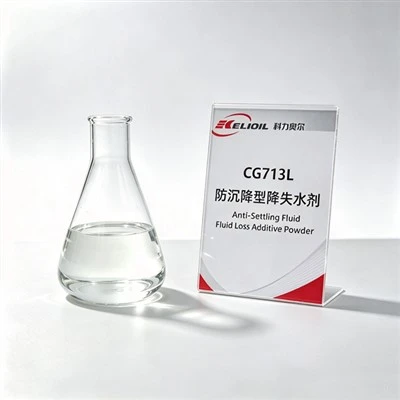
![CG713L Anti-Settling Fluid Loss Additive Liquid Bulk Supply & Factory Wholesale]() CG713L Anti-Settling Fluid Loss Additive Liquid Bulk Supp...Product Model: CG713L (Standard Liquid) / CG713L-A (Anti-Freeze Liquid)view more
CG713L Anti-Settling Fluid Loss Additive Liquid Bulk Supp...Product Model: CG713L (Standard Liquid) / CG713L-A (Anti-Freeze Liquid)view more
Product Name: Anti-settling Type Fluid Loss Additive Liquid
Procurement Focus: Slurry suspension... -
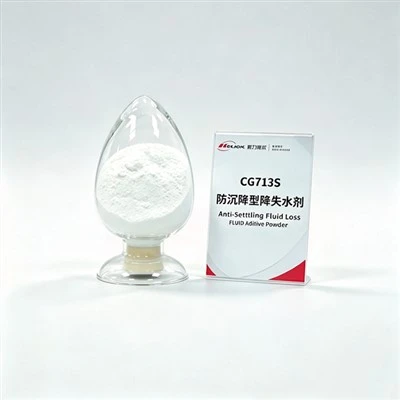
![CG713S-P Anti-Settling Fluid Loss Additive Powder Bulk Supply]() CG713S-P Anti-Settling Fluid Loss Additive Powder Bulk Su...Product Model: CG713S-Pview more
CG713S-P Anti-Settling Fluid Loss Additive Powder Bulk Su...Product Model: CG713S-Pview more
Product Name: Anti-settling Type Fluid Loss Additive Powder
Procurement Focus: Slurry suspension stability, prevents particle settling in lightweight... -
![Low-Temperature Cementing Accelerator Powder CG910S]() Low-Temperature Cementing Accelerator Powder CG910SProduct Model: CG910Sview more
Low-Temperature Cementing Accelerator Powder CG910SProduct Model: CG910Sview more
Product Name: Low-Temperature Cementing Accelerator Powder
Procurement Focus: Low-temperature early strength acceleration, shortens WOC time,... -
![Anti-Inversion Fluid Loss Additive Liquid CG613L]() Anti-Inversion Fluid Loss Additive Liquid CG613LProduct Model: CG613L / CG613L-Aview more
Anti-Inversion Fluid Loss Additive Liquid CG613LProduct Model: CG613L / CG613L-Aview more
Product Name: Anti-inversion Type Fluid Loss Additive Liquid
Procurement Focus: Direct liquid dosing, eliminates thickening/strength... -
![Anti-Inversion Fluid Loss Additive Powder CG613S]() Anti-Inversion Fluid Loss Additive Powder CG613SProduct Model: CG613S-Pview more
Anti-Inversion Fluid Loss Additive Powder CG613SProduct Model: CG613S-Pview more
Product Name: Anti-inversion Type Fluid Loss Additive Powder
Procurement Focus: 10,000-ton capacity, eliminates thickening/strength reversal, direct... -
![Seawater Resistant Fluid Loss Additive Liquid CG117L]() Seawater Resistant Fluid Loss Additive Liquid CG117LProduct Model: CG117L (Standard Liquid) / CG117L-A (Anti-Freeze Liquid)view more
Seawater Resistant Fluid Loss Additive Liquid CG117LProduct Model: CG117L (Standard Liquid) / CG117L-A (Anti-Freeze Liquid)view more
Product Name: Seawater-resistant Type Fluid Loss Additive Liquid
Procurement Focus: 10,000-ton... -
![Seawater Resistant Fluid Loss Additive Powder CG117S]() Seawater Resistant Fluid Loss Additive Powder CG117SProduct Model: CG117S-Pview more
Seawater Resistant Fluid Loss Additive Powder CG117SProduct Model: CG117S-Pview more
Product Name: Seawater-resistant Type Fluid Loss Additive Powder
Procurement Focus: 10,000-ton capacity, bulk export shipping, OEM/ODM packaging,... -
![Dispersed Type Fluid Loss Additive Liquid]() Dispersed Type Fluid Loss Additive LiquidProduct Model: CG116Lview more
Dispersed Type Fluid Loss Additive LiquidProduct Model: CG116Lview more
Product Name: Dispersed Type Fluid Loss Additive Liquid
Field Application Focus: Continuous liquid metering, on-site rheology control, anti-gas... -
![Dispersed Type Fluid Loss Additive Powder]() Dispersed Type Fluid Loss Additive PowderProduct Model: CG116S-Pview more
Dispersed Type Fluid Loss Additive PowderProduct Model: CG116S-Pview more
Product Name: Dispersed Type Fluid Loss Additive Powder
Field Application Focus: On-site mixing, anti-gas migration, rheology control, rapid strength... -
![CG212 Anti-Settling Fluid Loss Additive For Lightweight Cement Slurry Systems]()


Features of Fluid Loss Additive
Reduce fluid loss
Fluid loss additives can effectively reduce the loss of fluid through pores during construction and maintain the stability and performance of the fluid.
Improve fluid performance
These additives can usually improve the viscosity, fluidity and suspension of the fluid, making the fluid perform better in drilling or cementing operations.
Temperature adaptability
Many fluid loss additives can remain effective in high temperature and high pressure environments and are suitable for various deep well operations.
Compatibility
Most fluid loss additives are compatible with other commonly used additives (such as clay, polymers, etc.) and will not cause adverse effects on the fluid system.
Environmental protection
With the increase in environmental protection needs, many fluid loss additives have begun to focus on environmental friendliness and develop non-toxic and biodegradable products.
Versatility
In addition to reducing fluid loss, some fluid loss additives also have other functions, such as thickening, anti-precipitation, anti-foaming, etc., providing more use value.

Application of Fluid Loss Additive
Oil and gas drilling
During the drilling process, fluid loss additives are used to improve the performance of drilling fluids, reduce the penetration of fluids into the surrounding rock formations, prevent well wall collapse, and ensure the safety and effectiveness of drilling operations.
Cement cementing
Adding fluid loss additives to cement slurry can reduce the interaction between cement slurry and groundwater or rock during the curing process, ensure good cement sealing, and improve cementing quality.
Geothermal energy development
During the drilling and construction of geothermal wells, fluid loss additives can also help control fluid leakage and ensure smooth drilling.
Groundwater resource development
In groundwater extraction and management, fluid loss additives can be used to maintain the stability of the formation and the sustainable development of water sources.
Mining
In some mining processes, fluid loss additives may also be used to control the flow of flushing fluids and reduce fluid losses.
Types of Fluid Loss Additive
Film-forming Agents
These additives create a barrier on the surface of the formation, reducing permeation and fluid loss. Examples include polyacrylamides and starches.
Thickeners
These materials increase the viscosity of the fluid, thereby reducing the fluid loss rate. Common thickeners include xanthan gum and cellulose derivatives.
Sealants
Certain additives, like synthetic or natural rubber particles, help to seal microfractures and reduce the permeability of the formation.
Solid Particles
Materials such as bentonite or other clays can be added to create a gel-like substance that limits fluid movement.
Swellable Polymers
These additives can expand when they come into contact with water, helping to fill voids and reduce fluid loss.
Fibrous Additives
Fibers, like those derived from cellulose or other organic materials, can be used to plug pores and help maintain the fluid in the desired zone.
Control Agents
Some additives are designed to chemically react with the native formation or other materials in the fluid to reduce fluid loss, often through precipitating or creating gels.
Cement Additives
In cementing operations, specific additives can be incorporated to promote fluid retention within the cement and minimize the loss to surrounding formations.
Clay Stabilizers
These additives help stabilize clays in the mud to prevent them from swelling and increasing fluid loss.
Process of Fluid Loss Additive
Selection of Fluid Loss Additive
- Assessment of Environment: Evaluate the well conditions, including temperature, pressure, and the characteristics of the formation (e.g., permeability, porosity).
- Compatibility Testing: Ensure that the selected fluid loss additive is compatible with other components in the drilling or cementing fluid.
- Performance Criteria: Define the necessary performance parameters such as desired fluid loss reduction, viscosity, and stability.
Formulation
- Concentration Determination: Determine the appropriate concentration of the fluid loss additive to be added to the base fluid (water-based mud, oil-based mud, or cement).
- Mixing Procedure: Depending on the physical state of the additive (liquid, powder, etc.), a specific mixing procedure is adopted. This typically involves:
- Sequential addition of components.
- High-shear mixing to ensure uniform dispersion and hydration.
- Allowing the mixture to stabilize.
Field Application
- Additive Introduction: Introduce the formulated fluid loss additive into the drilling or cementing fluid system, either at the surface or down the wellbore.
- Monitoring: Continuously monitor the fluid loss rate during drilling or cementing operations to evaluate the effectiveness of the additive.
Testing and Evaluation
- Laboratory Testing: Assess the performance of the fluid loss additive in controlled laboratory settings to determine its effectiveness in reducing fluid loss under various conditions.
- Field Trials: Conduct field trials to gather real-time data regarding the additive's performance and make necessary adjustments.
Adjustments and Optimization
- Performance Analysis: Analyze the data collected during field operations and compare them against the targeted performance criteria.
- Modification of Formulation: If the performance is suboptimal, adjust the formulation, concentration, or mixing procedure of the additive. Additional additives may also be included to enhance the overall performance.
Packaging and Shipping of Fluid Loss Additive
Packaging Considerations
Type of Packaging
- Bags or Drums: Choose between plastic bags, multi-wall paper bags, or drums depending on the quantity and nature of the additive (powder, liquid, or slurry).
- Tightly Sealed Containers: Ensure containers are properly sealed to prevent contamination and moisture ingress.
Material Compatibility
Ensure that the packaging materials are chemically compatible with the fluid loss additives to avoid reactions or degradation of the product.
Labeling
Clearly label all packages with the product name, chemical identification, hazard warnings (if applicable), and handling instructions. Include relevant information such as batch number, manufacturing date, and expiration date.
Safety Data Sheets (SDS)
Provide an SDS with each shipment to inform of potential hazards, safety precautions, and emergency measures for handling the additive.
Bulk vs. Bagged
For large quantities, consider bulk powder tanks or bulk bags. Smaller quantities may be better served in individual bags or smaller drums.
Shipping Considerations
Compliance with Regulations
- Ensure compliance with local, national, and international shipping regulations regarding hazardous materials if applicable.
- Check for any specific regulations related to the transport of chemical products that may apply in different regions.
Temperature Control
Be aware of temperature sensitivity. If the fluid loss additive is sensitive to heat or cold, consider using insulated containers or temperature-controlled shipping methods.
Shipping Method
Choose an appropriate shipping method (ground, air, sea) based on urgency, cost, and destination.
When shipping overseas, be aware of customs regulations and ensure all documentation is prepared.
Handling Precautions
Train personnel who will be handling the fluid loss additives on safety practices.
Use appropriate Personal Protective Equipment (PPE) during the packaging and shipping process.
Emergency Procedures
Have a clear plan in place in case of spills or leaks during transit, including containment measures and emergency contacts.
Tracking and Documentation
Maintain accurate records of shipments, including tracking information to monitor the transportation process and ensure delivery.
Certificate

Tianjin Kelioil Engineering Material and Technology Co., Ltd. is one of the most professional fluid loss additive manufacturers and suppliers in China, featured by quality products and low price. Please rest assured to buy fluid loss additive for sale here from our factory. Contact us for free sample.
fluid loss quality, fluid loss advantage, High Temperature Cementing Fluid Loss Additive