
-
![Salt Resistant Fluid Loss Additive]() Salt Resistant Fluid Loss Additive*Control fluid loss in normal density cement slurries, lightweight or high density cement slurries.view more
*Used below temperature of 204.4℃(400℉, BHCT).
*Applicable mixing water: from fresh water to salt-saturated... -
![Fluid Loss Additive for Cementing Well]() Fluid Loss Additive for Cementing Well*Cost-effective.view more
*Easy to mix.
*Stable performance up to 400°F.
*Applicable to low, normal and high-density cement slurries.
*Compatible with fresh water to seawater.
*Good compatibility with other... -
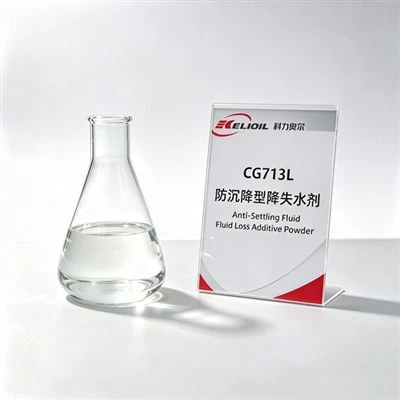
![CG713L Anti-Settling Fluid Loss Additive Liquid Bulk Supply & Factory Wholesale]() CG713L Anti-Settling Fluid Loss Additive Liquid Bulk Supp...Product Model: CG713L (Standard Liquid) / CG713L-A (Anti-Freeze Liquid)view more
Product Name: Anti-settling Type Fluid Loss Additive Liquid
Procurement Focus: Slurry suspension... -
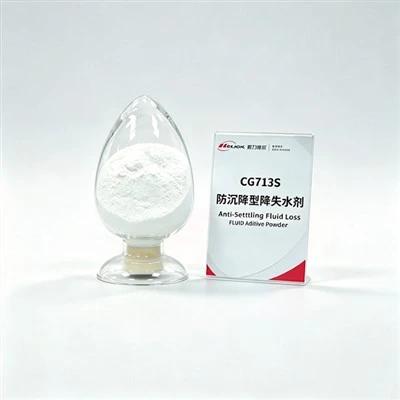
![CG713S-P Anti-Settling Fluid Loss Additive Powder Bulk Supply]() CG713S-P Anti-Settling Fluid Loss Additive Powder Bulk Su...Product Model: CG713S-Pview more
Product Name: Anti-settling Type Fluid Loss Additive Powder
Procurement Focus: Slurry suspension stability, prevents particle settling in lightweight... -
![CW210L Wellbore Mud Cleaning Agent & Flushing Spacer Liquid]() CW210L Wellbore Mud Cleaning Agent & Flushing Spacer LiquidProduct Model: CW210Lview more
Product Name: Wellbore Mud Cleaning Agent / Flushing Spacer Liquid
Procurement Focus: High-efficiency mud cake stripping, wetting reversal from oil-wet... -
![Low-Temperature Cementing Accelerator Powder CG910S]() Low-Temperature Cementing Accelerator Powder CG910SProduct Model: CG910Sview more
Product Name: Low-Temperature Cementing Accelerator Powder
Procurement Focus: Low-temperature early strength acceleration, shortens WOC time,... -
![Anti-Inversion Fluid Loss Additive Liquid CG613L]() Anti-Inversion Fluid Loss Additive Liquid CG613LProduct Model: CG613L / CG613L-Aview more
Product Name: Anti-inversion Type Fluid Loss Additive Liquid
Procurement Focus: Direct liquid dosing, eliminates thickening/strength... -
![Anti-Inversion Fluid Loss Additive Powder CG613S]() Anti-Inversion Fluid Loss Additive Powder CG613SProduct Model: CG613S-Pview more
Product Name: Anti-inversion Type Fluid Loss Additive Powder
Procurement Focus: 10,000-ton capacity, eliminates thickening/strength reversal, direct... -
![Seawater Resistant Fluid Loss Additive Liquid CG117L]() Seawater Resistant Fluid Loss Additive Liquid CG117LProduct Model: CG117L (Standard Liquid) / CG117L-A (Anti-Freeze Liquid)view more
Product Name: Seawater-resistant Type Fluid Loss Additive Liquid
Procurement Focus: 10,000-ton... -
![Seawater Resistant Fluid Loss Additive Powder CG117S]() Seawater Resistant Fluid Loss Additive Powder CG117SProduct Model: CG117S-Pview more
Product Name: Seawater-resistant Type Fluid Loss Additive Powder
Procurement Focus: 10,000-ton capacity, bulk export shipping, OEM/ODM packaging,... -
![Dispersed Type Fluid Loss Additive Liquid]() Dispersed Type Fluid Loss Additive LiquidProduct Model: CG116Lview more
Product Name: Dispersed Type Fluid Loss Additive Liquid
Field Application Focus: Continuous liquid metering, on-site rheology control, anti-gas... -
![Dispersed Type Fluid Loss Additive Powder]() Dispersed Type Fluid Loss Additive PowderProduct Model: CG116S-Pview more
Product Name: Dispersed Type Fluid Loss Additive Powder
Field Application Focus: On-site mixing, anti-gas migration, rheology control, rapid strength...


Quick response
We promise to respond to your inquiries within 24 hours to ensure that you receive the information and support you need in a timely manner.
Strong production capacity
KELIOIL Petroleum has added four new production lines, including vacuum drying powder production line and liquid polymer synthesis production line, all of which are fully automated with human-machine interactive control, with a total production capacity of 10,000 tons/year.
Complete qualifications
It has passed ISO14001, ISO9000 and GB/T28001 certifications, and the powdered AMPS polymer fluid loss reducer has won the "National Key New Product" certificate.
Rich experience
The company has nearly 20 years of experience in this field.
Features of Cementing Additive
Enhance cement strength
Additives can improve the compressive and flexural strength of cement, thereby improving the overall performance of concrete.
Improve fluidity
Certain additives can improve the fluidity of concrete, reduce the water-cement ratio, and facilitate construction and pumping.
Accelerate hardening
Fast-hardening additives can shorten the curing time of concrete and are suitable for projects that require rapid construction.
Improve durability
Certain additives can enhance the resistance of concrete to chemical attack and freeze-thaw cycles, extending its service life.
Adjust working time
Additives can control the initial and final setting time of concrete to meet different construction needs.
Reduce shrinkage
Some special additives can reduce the shrinkage of concrete and improve the stability of the structure.
Reduce water evaporation
Certain additives can form a protective film on the surface of concrete to reduce water evaporation, especially under hot and dry conditions.
Environmental characteristics
In recent years, many cement additives have also been environmentally friendly, such as using industrial waste as raw materials to reduce environmental impact.
Application of Cementing Additive
Oil and Gas Field Drilling Engineering
Cementing additives are an important part of oil and gas field drilling operations, ensuring that cement slurry can effectively isolate the formation, prevent fluid crossflow, and improve wellbore integrity.
Geothermal Wells
Due to the extremely high temperature of geothermal wells, high-temperature resistant cementing additives (such as silica fume) are often used to improve the stability of cement stone.
Shale Gas and Unconventional Oil and Gas Wells
Shale gas development requires low-density cement slurry and anti-pollution additives to reduce the impact on shale formations.
Deepwater and Ultra-deepwater Wells
Deepwater wells require special de-densification agents (such as glass microspheres) to adjust the density of cement slurry to prevent excessive hydrostatic pressure from damaging the formation.
CO₂ Storage Wells (CCS, Carbon Capture and Storage)
Use anti-CO₂ corrosion cement additives (such as silica fume, slag) to prevent cement stone from deteriorating in acidic environments.
Mining and Underground Storage Wells
In mine filling and underground gas storage wells, specially formulated cement additives are used to enhance durability and corrosion resistance. Applicable to underground natural gas storage, salt cavern gas storage, etc.
Special Function Applications
- Smart cementing: Self-healing cement technology can automatically repair cracks after they are formed, improving the long-term integrity of the well.
- Anti-sulfate cementing: Applicable to wells rich in H₂S and acidic environments, using anti-sulfate corrosion agents.
- Conductive cement: In smart wells and monitoring wells, materials such as carbon nanotubes and graphite are used to make cement conductive, which can be used for formation pressure monitoring and sensor embedding.
Types of Cementing Additive


Fluid Loss Additives
These additives reduce the loss of water from the cement slurry into the surrounding formations, helping to maintain slurry viscosity and prevent the formation of weak zones.
Retarders
Used to delay the setting time of cement, allowing for longer workability. Retarders are particularly useful in high-temperature environments.
Accelerators
These additives speed up the setting time of cement, allowing for quicker cementing operations. They are often used in cold temperatures to combat prolonged set times.
Dispersants
Improve the flowability and reduce the viscosity of the cement slurry, helping to achieve better placement and reducing the risk of segregation.
Weighting Agents
Added to increase the density of the cement slurry, which is essential in balancing formation pressures and preventing unwanted fluid influx.
Extenders
Substances like fly ash, silica fume, or pozzolans that improve the properties of the cement by enhancing workability, reducing permeability, and increasing strength.
Air-Entraining Agents
These introduce tiny air bubbles into the cement slurry, improving its resistance to freeze-thaw cycles and enhancing overall durability.
Corrosion Inhibitors
These additives protect steel-containing materials, such as casing and tubing, from corrosion through chemical reactions that inhibit corrosive processes.
Synthetic Polymers
Used to improve the physical and chemical properties of cement slurries, including enhancing adhesion, reducing permeability, or promoting specific rheological characteristics.
Plasticizers and Superplasticizers
Used to improve workability and reduce water content in the slurry without losing flowability, allowing for stronger and more durable cement.
Thermal Stabilizers
Additives that enhance the thermal stability of the cement, ensuring effectiveness in high-temperature environments.
Filler Materials
Including materials like barite, calcium carbonate, or pumice which are often added to enhance the physical size and property of the cement slurry.
Process of Cementing Additive
Selection of Cement Type
Determine the appropriate type of cement (e.g., Ordinary Portland Cement, Class A, Class G, etc.) based on the specific application and conditions.
Identifying Requirements
Assess the specific needs for the cementing job, including desired setting time, temperature conditions, pressure requirements, and any specific mechanical properties.
Choosing Additives
Select suitable additives based on the identified requirements. Common categories of cementing additives include:
- Accelerators: Speed up the setting time (e.g., calcium chloride).
- Retarders: Delay setting time for extended workability (e.g., lignosulfonates).
- Fluid Loss Agents: Reduce the loss of water to surrounding formations (e.g., bentonite, polymers).
- Weighting Agents: Increase density (e.g., barite, hematite).
Preparation of Cement Slurry
Mix the selected cement and additives in precise proportions. The mixing process usually involves:
- Measuring and batching the cement.
- Mixing water, additives, and cement in a controlled environment to ensure uniform distribution.
- It’s crucial to follow the manufacturer's specifications for mixing times and ratios.
Quality Control
Conduct tests to ensure the quality of the slurry, including:
1. Consistency and density checks: Using a Marsh funnel or similar device.
2. Thickening time tests and compressive strength tests to evaluate performance.
Placement
The cement slurry is then pumped into the required location (e.g., annulus of a wellbore) using a cementing unit. Proper placement ensures that the cement effectively fills the space and seals any voids.
Setting and Hardening
After placement, the cement begins to set and harden. The curing environment (temperature, hydration) can affect the final strength and durability.
Post-Cementing Evaluation
Once the cement has cured, evaluation methods (e.g., ultrasonic testing, pressure testing) may be used to ensure that the cement bond is intact and that there are no leaks or failures.
Documentation
Proper documentation of the cementing process, including the types and amounts of additives used, environmental conditions, and test results, is essential for future reference and compliance with regulations.
Packaging and Shipping of Cementing Additive
Types of Packaging
- Bulk Bags (FIBC): Flexible Intermediate Bulk Containers are often used for large quantities. They are designed to hold up to 2,000 kg (4,400 lbs) and provide robust protection against moisture.
- Sacks: Usually 25 kg (55 lbs) or 50 kg (110 lbs) bags made from polyethylene, paper, or woven polypropylene. They are suitable for smaller quantities.
- Drums: Commonly used for liquid additives, typically 200-liter (about 52-gallon) drums, which are suitable for storage and transport.
- Totes: Intermediate bulk containers (IBCs) can be used for liquid additives, holding up to 1,000 liters (about 264 gallons).
Labeling Requirements
- Product Information: Each package must clearly indicate the product name, batch number, and expiration date.
- Hazard Identification: Any hazardous materials must be labeled according to appropriate regulations (e.g., OSHA, GHS).
- Handling Instructions: Include any necessary handling and safety instructions, including PPE (Personal Protective Equipment) requirements.
Shipping Considerations
- Regulatory Compliance: Adhere to local and international regulations for the transport of hazardous materials.
- Temperature Control: Some additives may require temperature-controlled shipping to maintain their properties.
- Protection from Moisture: Use moisture-resistant packaging to prevent clumping or degradation.
- Weight Limits: Consider the weight limits for transportation, especially if using flatbed trucks or container shipments.
Safety and Handling
- Training: Ensure personnel handling the additives are trained in safe handling and emergency procedures.
- Storage Guidance: Provide guidelines for storage conditions, including temperature and humidity controls.
Logistics and Distribution
- Supplier Coordination: Work closely with suppliers and logistics providers to ensure timely delivery and inventory management.
- Shipping Routes: Plan the most efficient routes to minimize transit times while ensuring safe transport.
- Tracking Systems: Implement systems to track shipments in real time to ensure visibility in the supply chain.
Certificate

Tianjin Kelioil Engineering Material and Technology Co., Ltd. is one of the most professional cementing additive manufacturers and suppliers in China, featured by quality products and low price. Please rest assured to buy cementing additive for sale here from our factory. Contact us for free sample.
cementing additive, cementing accelerator, cost effective cementing additive