



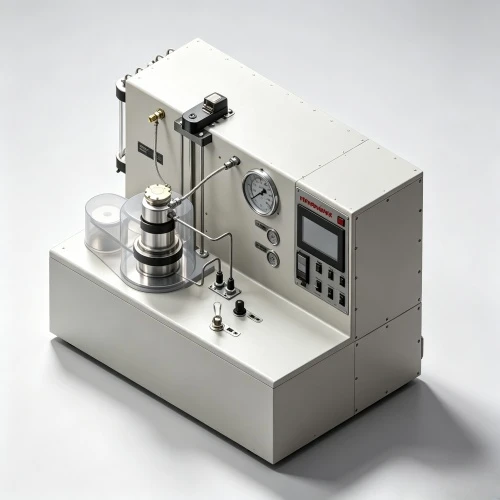
Tianjin Kelioil Engineering Material and Technology Co., Ltd. is one of the leading manufacturers and suppliers of hpht rheometer nclq2125 in China. Please feel free to buy high quality hpht rheometer nclq2125 at low price from our factory. If you have any enquiry about free sample, please feel free to email us.
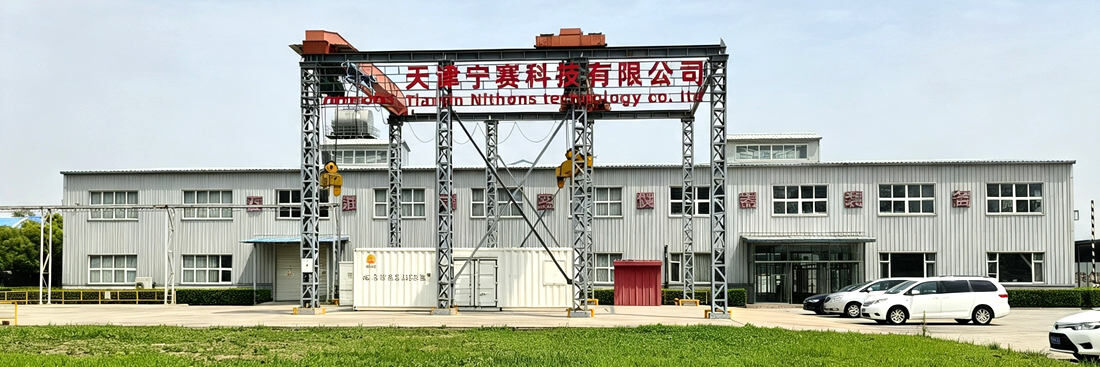
NCLQ2125 HPHT Rheometer: Extreme 315°C & 276 MPa Non-Magnetic Fluid Metrology
1. Deep-Well Rheological Integrity & Ultra-HPHT Non-Magnetic Architecture
In ultra-deep exploratory wells, deepwater drilling, and high-pressure geothermal formations, drilling muds and cementing slurries encounter extreme physical boundaries. Elevated downhole temperatures break down polymeric fluid-loss additives, while hydrostatic pressures exceeding 200 MPa drastically compress carrier fluids, completely restructuring fluid flow curves. Standard benchtop viscometers operating at atmospheric or moderate pressures fail completely to simulate the actual equivalent circulating density (ECD), yield stress, and dynamic plastic viscosity experienced under true reservoir conditions. The NCLQ2125 HPHT Rheometer, engineered by Tianjin Nithons Technology Co., Ltd., redefines high-pressure rheology by delivering continuous, artifact-free shear measurements strictly locked at a certified maximum working temperature of 315°C (600°F) and maximum working pressure of 276 MPa (40,000 psi).
Forged within a collaborative Sino-Japanese engineering framework, the structural design of the NCLQ2125 merges industrial architecture from Tokyo's GEO design office with advanced fluid-solid mechanics from Osaka's Honeycomb engineering team. The fundamental technical breakthrough of the NCLQ2125 lies in its non-magnetic metallurgy and drive geometry. Conventional high-pressure rheometers frequently suffer from magnetic particle accumulation when testing slurries weighted with iron ore powder, barite, or industrial slag. Magnetized solids adhere to internal sensor surfaces and rotor walls, creating severe artificial drag that invalidates API Spec 10A, API Spec 10B, and ISO 10426 rheological models. By constructing all internal wetted assemblies and pressure housing cores from non-magnetic, erosion-resistant alloys, the NCLQ2125 eliminates magnetic solid adhesion and resists harsh abrasion from crystalline silica and quartz flour additives. Combined with its top-mounted magnetic coupling drive, the instrument isolates driving magnetic fields entirely from the sample core, ensuring downhole fluid formulations are qualified with absolute metrological fidelity before pumping operations commence.
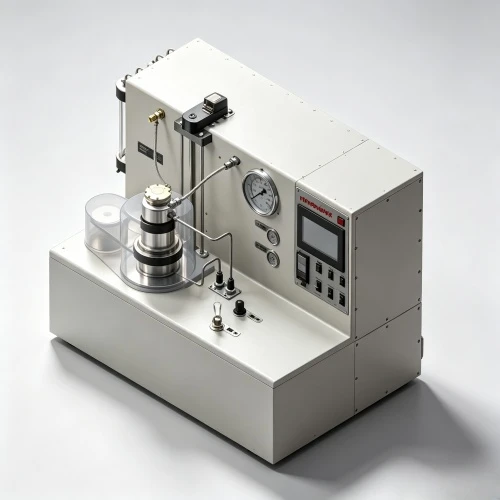
2. Metrological Architecture: Frictionless Drive & Electric Lift Automation
To overcome mechanical friction, seal leakage, and sample handling risks associated with high-pressure rotational viscometry, the NCLQ2125 integrates four proprietary mechanical and sensing breakthroughs:
- Top-Mounted Magnetic Coupling Drive: The rotating drive power is transmitted through a hermetically sealed alloy pressure boundary via high-flux permanent magnetic fields. This completely eliminates dynamic shaft packing seals, mechanical o-ring drag, and high-pressure fluid leaks, maintaining absolute zero-friction transmission across 0 to 600 rpm.
- External Optical Magnetic Encoder Integration: Torque measurement is isolated from downhole pressure and thermal cycles. An external optical-magnetic rotary encoder tracks inner bob deflections with zero drift, delivering angular precision capable of resolving ultra-low shear stress down to 0.17 s⁻¹.
- Electric Smooth-Lift Slurry Chamber Platform: Manual lifting of heavy, scalding high-pressure slurry cups often causes operator burns, fluid spillage, and axial rotor misalignment. The NCLQ2125 incorporates an automated motorized lifting platform with programmable velocity control, ensuring seamless concentric alignment and zero slurry splashing.
- Fully Non-Magnetic Wear-Resistant Metallurgy: The entire sample vessel, coaxial rotor, and bob assembly are CNC-machined from proprietary non-magnetic alloys. Heavyweight slurries containing up to 2.4 g/cm³ iron ore powder or abrasive silica sand flow without magnetic bias, eliminating false yield point spikes.
3. Standardized Laboratory Workflow & Experimental Execution
Conducting high-temperature, high-pressure rheological profiling on the NCLQ2125 requires adherence to standardized laboratory operating procedures. Following rigorous API Spec 10B testing regimens ensures total reproducibility across challenging cement and drilling mud matrices:
Step 1: Slurry Preparation & Homogenization: Cement slurry is formulated strictly according to API Spec 10A specifications using an automated constant-speed mixer (such as the Nithons NHJQ2017). After mixing, the fluid is preheated or transferred immediately into the precision non-magnetic slurry cup. The fluid meniscus is adjusted to the scribed fill line, ensuring accurate immersion geometry for the B1 rotor bob without risk of overflow.
Step 2: Motorized Loading & Axial Seating: The loaded sample cup is positioned onto the automated motorized elevator platform. The operator initiates the elevation sequence via the software interface or control fascia. The platform ascends at a regulated, smooth speed, centering the coaxial bob into the sample matrix with zero turbulence or air entrainment. Once the autoclave vessel reaches the sealing plane, the quick-locking collar is torqued to primary pre-load specifications.
Step 3: Hydraulic Pressurization & Leak Audit: High-pressure hydraulic isolation fluid is introduced via the continuous dual-pump pressurization system. The system automatically bleeds micro air pockets from the upper drive housing before raising the confining pressure to the target test plateau (up to 276 MPa). The embedded PLC executes an automatic 60-second pressure hold to confirm total seal integrity before thermal power is enabled.
Step 4: Thermal Ramp & Dynamic Rheology Sweeps: The 3000 W high-output heating system activates, governed by precision PID algorithms to match downhole geothermal heating gradients up to 315°C. Throughout the conditioning cycle, the supervisory PC software executes user-programmed shear rate schedules. The instrument seamlessly steps through standard API rotational speeds (600, 300, 200, 100, 60, 30, 6, and 3 rpm), continuously logging true shear stress, apparent viscosity, Bingham plastic yield point, and Herschel-Bulkley flow indices without operator intervention.
Step 5: Automated Gel Strength Cycling & Quenching: To evaluate static structure formation, the software automatically transitions into 10-second and 10-minute Static Gel Strength (SGS) routines, rotating at 3 rpm to detect peak breakthrough resistance. Following test completion, internal high-flow cooling lines rapid-quench the vessel safely. Once ambient equilibrium is achieved, the motorized platform lowers the cup smoothly for demolding and thorough ultrasonic cleaning.
4. Definitive Technical Specifications
| Parameter | Specification |
|---|---|
| Product Model & Series | NCLQ2125 (Special Rheological Property Analysis Series) |
| Maximum Working Pressure | 276 MPa (40,000 psi) |
| Maximum Working Temperature | 315°C (600°F) |
| Drive Mechanism | Top-mounted magnetic coupling drive (friction-free transmission) |
| Rotational Speed Range | 0–600 rpm continuously adjustable |
| Speed Control Precision | 0.003 rpm (at rotational speeds >200 rpm) |
| Shear Rate Range | 0.17–1022 s⁻¹ (API B1/R1 standard geometry) |
| Wetted Metallurgy Compatibility | Non-magnetic anti-wear alloy (anti-adhesion for barite and iron ore powder) |
| Torque Sensor Architecture | External non-contact magnetic coupling optical encoder (zero-drift) |
| Slurry Cup Elevation | Electric smooth automated vertical lift platform (anti-splash velocity curve) |
| Heating Power | 3000 W heavy-duty external heating assembly |
| Automated Gel Testing | Built-in automated 10-second and 10-minute Static Gel Strength (SGS) cycles |
| Input Operating Power Supply | AC 100–110V 60Hz or AC 220–240V 50/60Hz |
| Overall Equipment Dimensions (W × D × H) | 102 × 71 × 73 cm |
| Data Interfaces & Remote Access | Industrial Ethernet RJ45, USB data export, and remote OTA diagnostics |
| Standard Compliance | API Spec 10A, API Spec 10B, ISO 10426, API RP 13B-1, API RP 13B-2 |
5. Forged Pressure Vessel Metallurgy & Frictionless Magnetic Core
The mechanical core of the NCLQ2125 HPHT Rheometer is constructed from a custom-melted, nickel-chromium-cobalt based superalloy, forged under tight metallurgical quality controls to guarantee structural integrity up to 276 MPa. Standard martensitic stainless steels commonly used in laboratory autoclaves exhibit residual ferromagnetism. Under high thermal flux, this magnetic characteristic interacts strongly with weighted muds and cement slurries laden with iron oxide, ilmenite, or hematite. Such magnetic attraction causes heavy weighting particles to pull toward the outer wall or inner bob, creating severe frictional drag that invalidates experimental torque calculations. The NCLQ2125 completely circumvents this issue by ensuring all wetted autoclave components maintain magnetic permeability values equivalent to air, ensuring absolute zero magnetic interference.
To withstand abrasive wear from crystalline silica, microsilica, and quartz sand additives commonly used in high-temperature cementing slurries, the internal rotor and stator are treated with a specialized ceramic diffusion layer. This surface treatment yields an ultra-hard boundary (hardness rating exceeding HRC 62) that prevents surface grooving and gap distortion during thousands of hours of high-shear rotation. The outer pressure jacket incorporates multi-zone finite-element-modeled stress relief grooves, eliminating mechanical bulging and uneven wall deformation under 276 MPa hydrostatic loading. Dynamic mechanical friction is completely excluded through the top-mounted magnetic isolation drive, where external driving magnets transmit rotational torque through a sealed, non-magnetic pressure containment shell directly to the internal rotor shaft. By eliminating mechanical through-shaft seals and rotating O-rings, the system removes the largest source of torque error found in older rheological instruments, ensuring pure mathematical conversion of inner bob deflection into genuine fluid shear stress.
6. Industrial PLC Architecture & Automated Rheological Modeling
The operational intelligence of the NCLQ2125 is governed by a dedicated industrial programmable logic controller (PLC) working in seamless real-time coordination with high-speed mathematical processing software on a connected supervisory workstation. Unlike conventional laboratory viscometers that require manual speed stepping and paper calculation charts, the NCLQ2125 fully automates API Spec 10B and API RP 13B test protocols. The system executes complex multi-step shear profiles across a wide speed spectrum from 0 to 600 rpm, achieving remarkable velocity control precision of 0.003 rpm at operational speeds above 200 rpm.
During live testing, the data acquisition software continuously captures raw torque signals, fluid temperatures, and autoclave pressures at sub-millisecond rates. The platform features an embedded mathematical engine that instantly fits experimental data to industry-standard rheological models, automatically calculating Bingham Plastic yield point (YP) and plastic viscosity (PV), Power Law flow behavior index (n) and consistency coefficient (K), as well as Herschel-Bulkley three-parameter curves. Built-in automation programs also manage 10-second and 10-minute Static Gel Strength (SGS) acquisitions, determining peak gelation forces with high sensitivity. Experimental profiles are stored within relational databases, preventing data loss in the event of workstation rebooting. Automated PDF test certificates and CSV datasets can be exported instantly via USB or streamed via Ethernet into centralized Laboratory Information Management Systems (LIMS), providing cementing chemists with complete digital traceability.
7. Laboratory Ergonomics & Routine Maintenance Simplicity
Operating an ultra-HPHT laboratory apparatus requires an uncompromising focus on technician safety and physical ergonomics. The NCLQ2125 eliminates the heavy manual lifting characteristic of older autoclaves through its integrated motorized cup platform. Operators simply position the prepared slurry cup on the platform, and dual guided screw drives lift the assembly into the high-pressure head smoothly, eliminating manual strain, slurry spills, and mechanical alignment errors.
Cleaning and routine maintenance have been engineered for rapid operational turnaround. The quick-disconnect coupling allows the non-magnetic B1 rotor and bob assembly to be removed without specialized wrenches, facilitating swift core cleaning between tests. The top magnetic drive head is permanently lubricated and completely sealed from corrosive vapors, preventing slurry mist or acidic condensates from fouling the high-precision bearings. Furthermore, fluid lines are safeguarded by inline high-pressure particulate filters that intercept abrasive solids during depressurization. Heavy-duty vibration-damping feet ensure smooth, whisper-quiet motor operation during high-shear sweeps, maintaining quiet, stable laboratory environments.
8. API Spec 10B Quality Control & Factory Acceptance Testing
Every NCLQ2125 manufactured at Nithons undergoes rigorous Factory Acceptance Testing (FAT) within our ISO 9001:2015, ISO 14001:2015, and ISO 45001:2018 certified assembly facility. Designed to meet the stringent demands of API Spec 10B, ISO 10426, and API RP 13B standards, each unit completes strict qualification protocols before international shipment:
- Hydrostatic Proof Testing: The forged superalloy pressure autoclave is hydrostatically proof-tested to 1.25 times rated working pressure (345 MPa), confirming elastic resilience, zero pressure drop, and absence of micro-fissuring.
- Certified Multi-Viscosity Oil Calibration: Torque sensors undergo multi-point calibration using certified NIST-traceable standard calibration oils across varied shear rates, verifying absolute measurement linearity within ±1% of full scale.
- Dynamic 315°C Thermal Stability Verification: The 3000 W heating system is tested through prolonged multi-step thermal ramps up to 315°C, ensuring dynamic temperature uniformity within ±1.0°C across the active measurement gap.
- Non-Magnetic Permeability Certification: All wetted rotor and autoclave components undergo magnetic permeability screening to verify total magnetic neutrality, guaranteeing zero drag when processing hematite-weighted formulations.
9. Rheological Instrumentation Selection Framework
Selecting the appropriate rheological testing system depends on operational temperature regimes, confining pressure demands, and the physical state of the fluid. The comparative matrix below outlines the positioning of the NCLQ2125 relative to other specialized fluid characterization units within the Nithons instrument lineup:
| Model Code | Working Limits | Measurement Focus | Primary Advantage |
|---|---|---|---|
| NCLQ2125 | 315°C / 276 MPa | Ultra-HPHT Rheology & Static Gel Strength | Top magnetic drive, non-magnetic metallurgy, electric auto-lift |
| NXNQ2025 | 93°C / Atmospheric | API 12-Speed Benchtop Viscometry & GEL | Integrated 500W heating cup, direct servo motor, compact footprint |
| NXNJ0020 | 93°C / Atmospheric | Standard API Rotational Viscometry | 9 kg ultra-portable body, AC 100–240V wide voltage compatibility |
10. Deep Zonal Isolation & Specialized Energy Applications
The NCLQ2125 serves as an indispensable analytical system across high-consequence energy development sectors:
- Ultra-Deep Gas Well Drilling & Cementing: Ultra-deep wells feature high downhole hydrostatic heads that compress fluid matrices. The NCLQ2125 simulates real-time annular friction pressures and dynamic circulating temperatures, optimizing mud displacement and cementing spacer design.
- Heavyweight Mud & Slurry Optimization: Deep formation overpressure demands high-density slurries weighted with hematite or barite. Non-magnetic vessel architecture allows reliable rheology profiling without magnetic solid drag.
- High-Temperature Geothermal Well Completions: In severe geothermal settings up to 315°C, silica-stabilized slurry formulations experience rapid thermal gelation. The NCLQ2125 measures fluid thinning and premature gelation, ensuring pumpability.
- Static Gel Strength (SGS) Transition Profiling: The instrument accurately measures gel strength development from 100 lbf/100ft² to 500 lbf/100ft², providing vital input data for gas-migration risk assessments.
11. Heavy-Duty Export Packaging & Global Transit Protection
Every NCLQ2125 instrument is prepared for global transport adhering strictly to Category 2 of the Nithons Packaging and Shipping Standards: Heavy-Duty Plywood Crate with Integrated Pallet Base. Built to satisfy international ISPM 15 phytosanitary requirements, the packaging design guarantees complete protection during international ocean freight, air transport, or remote overland transit.
The instrument chassis is bolted securely to a multi-ply hardwood skid base featuring integrated four-way forklift entries. Heavy-duty anchoring brackets lock the frame rigidly to prevent any lateral or vertical movement inside the crate. The entire apparatus is encapsulated within a heavy-gauge aluminum-foil vacuum barrier bag with calculated industrial desiccant charges, creating a moisture-proof sealed microclimate against oceanic salt spray and humidity. The interior is protected by customized, high-density expanded polyethylene (EPE) foam dampening blocks shaped to cradle the top magnetic drive head, optical encoder, and motorized elevator columns. The external crate utilizes high-strength plywood reinforced with perimeter structural steel strapping and galvanized corner edge protectors, ensuring pristine condition upon arrival at customer facilities.
12. Frequently Asked Questions (FAQ)
Q1: Why is non-magnetic metallurgy essential when conducting HPHT rheological testing with the NCLQ2125?
A1: High-density drilling muds and cementing slurries frequently utilize weighting agents like iron ore powder, hematite, or slag. In conventional magnetic autoclaves, magnetic fields attract these metallic particles to rotor walls and bob surfaces, creating artificial drag and severely skewing torque readings. The non-magnetic construction of the NCLQ2125 completely eliminates magnetic solid adhesion, ensuring true measurement accuracy.
Q2: How does the top-mounted magnetic coupling drive in the NCLQ2125 improve test repeatability compared to conventional direct-drive viscometers?
A2: Traditional direct-drive systems require mechanical rotating shaft seals to hold 276 MPa pressure, which introduces significant friction and risks leakage at high temperatures. The top-mounted magnetic coupling of the NCLQ2125 transmits motor torque through a solid hermetic alloy boundary without through-shaft seals, completely eliminating dynamic friction errors and high-pressure fluid leaks.
Q3: How does the motorized lift system of the NCLQ2125 improve laboratory safety and precision?
A3: Handling heavy, hot high-pressure slurry cups manually can lead to operator injuries, accidental fluid spills, and rotor misalignment. The automated electric lift platform of the NCLQ2125 raises and lowers the cup smoothly at programmable speeds, ensuring perfect concentric alignment, zero sample splashing, and improved laboratory safety.
Q4: Can the NCLQ2125 automatically determine Static Gel Strength (SGS) according to API standards?
A4: Yes. The supervisory software incorporates automated API 10-second and 10-minute Static Gel Strength routines. It controls the rotational drive down to 0.003 rpm accuracy to measure peak static shear resistance without disturbing premature gel structures, generating automated SGS buildup curves.
Q5: What international technical support and remote calibration services are available for the NCLQ2125?
A5: Nithons provides full global technical onboarding, including remote diagnostic support via Ethernet, pre-calibrated replacement modules, and comprehensive FAT documentation. All electrical fittings, heating elements, and standard B1 bob geometries comply with universal API guidelines, ensuring straightforward maintenance worldwide.
13. International Industry Partnerships & Global Exhibition Footprint
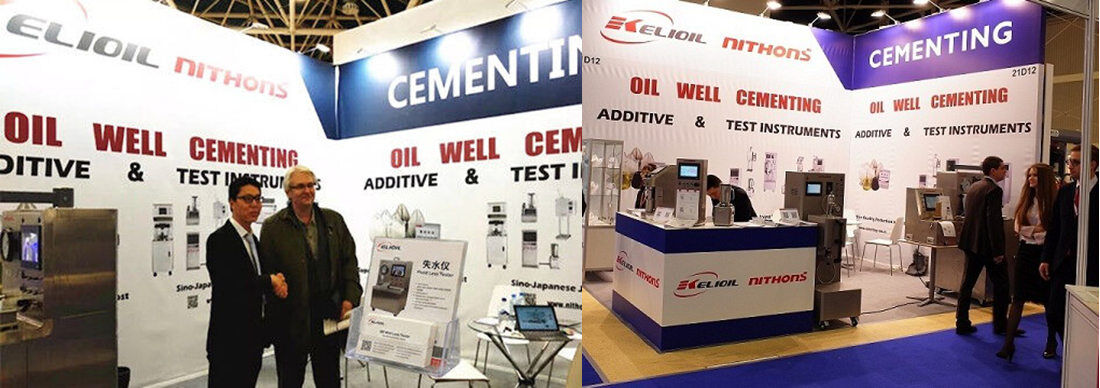
Nithons cementing testing instrumentation is deployed across global energy enterprises, petroleum research institutes, and multinational oilfield service laboratories. Our advanced characterization systems support demanding exploration programs for prominent energy corporations, including CNPC, Sinopec, CNOOC, Rosneft, Tatneft, and SOCAR, alongside academic collaborations with Southwest Petroleum University, China University of Petroleum, and Tsinghua University. Through consistent technical participation at premier international energy conferences-such as ADIPEC in Abu Dhabi, KIOGE in Almaty, and Rio Oil & Gas in Rio de Janeiro-Nithons actively helps establish modern downhole fluid rheology benchmarks with global industry partners.
14. Engineering Consultation & Technical Inquiries
Request Custom Technical Specifications & Official Quotation
For technical inquiries, bespoke laboratory configuration schemes, or official pricing proposals for the NCLQ2125 HPHT Rheometer, please contact our international technical support department. Our engineering specialists are available to review your fluid testing requirements and supply comprehensive technical proposals within 24 hours.
Telephone / WeChat / WhatsApp: +86 185 2680 5985
Headquarters: Tianjin Nithons Technology Co., Ltd., Xiqing District, Tianjin, China
Hot Tags: hpht rheometer nclq2125, China hpht rheometer nclq2125 manufacturers, suppliers, factory


