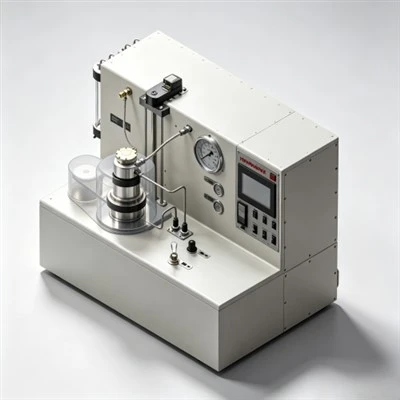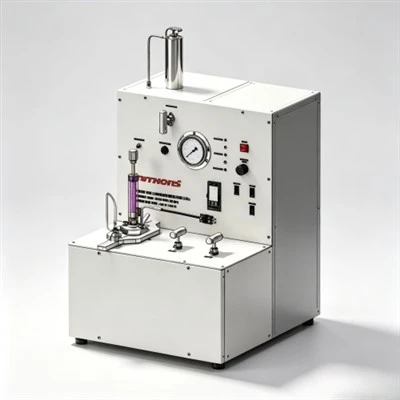

When petroleum laboratory technicians and cementing engineers evaluate what is a cement consistometer, they define it as an engineered laboratory instrument manufactured to simulate downhole temperature, hydrostatic confining pressure, and dynamic rotational shear, continuously measuring slurry consistency evolution to determine thickening time across complex plays in the Middle East, the Gulf of Mexico, and deepwater frontiers. Exploring what is a cement consistometer reveals that because Portland cement clinker minerals hydrate rapidly under geothermal heat, measuring torque resistance inside a pressurized chamber provides the only reliable method to establish safe pumping margins before slurry reaches the critical 70 Bearden units of Consistency (Bc) threshold. By understanding what is a cement consistometer under API Spec 10A and API RP 10B-2 testing standards, cementing teams calibrate chemical retarder concentrations, prevent premature annular flash setting, eliminate equivalent circulating density (ECD) pressure surges, and safeguard multidecade wellbore barrier containment.

The Operational Significance of Thickening Time Measurement in Primary Cementing
In petroleum exploration and borehole completion, primary cementing represents the physical and hydraulic barrier that anchors casing strings, isolates porous hydrocarbon formations, protects potable groundwater aquifers from contamination, and shields tubular steel from corrosive downhole fluids such as hydrogen sulfide (H₂S) and carbon dioxide (CO₂). However, after cement slurry is mixed on surface batching equipment, it must be displaced down thousands of meters of casing tubulars and circulated upward into the subterranean annulus. Throughout this transit, the fluid column encounters steep geothermal gradients and confining hydrostatic pressure.
Under downhole thermal exposure, uninhibited Portland cement clinker minerals-primarily tricalcium silicate (C₃S) and tricalcium aluminate (C₃A)-hydrate according to Arrhenius chemical kinetics. As temperatures climb, the dissolution of calcium and aluminate ions accelerates, promoting the nucleation of interlocking calcium silicate hydrate (C-S-H) gel fibers. If a cement slurry begins to set prematurely while still in motion, its apparent viscosity surges. This sudden gelation increases frictional pressure losses, driving equivalent circulating density (ECD) beyond formation fracture breakdown limits. The resulting formation breakdown causes massive lost circulation, drops the top of cement (TOC) far below target depths, and frequently locks casing tubulars off-bottom, resulting in multimillion-dollar well sidetracking operations.
Investigating what is a cement consistometer illustrates how precision laboratory simulation bridges surface chemical formulation and downhole reality. A consistometer continuously monitors the rheological resistance of a rotating slurry under matched geothermal heating schedules and hydrostatic overbalance pressures. Establishing what is a cement consistometer allows well engineers to verify that the slurry remains pumpable throughout displacement, incorporates an engineered 90 to 120-minute safety buffer, and transitions into a rigid, impermeable barrier once static in the annulus.
1. Engineering Fundamentals: Defining What a Cement Consistometer Is
To thoroughly understand what is a cement consistometer, technicians examine its mechanical design and operational purpose. A cement consistometer is a specialized testing apparatus that subjects a cement slurry sample to programmed thermodynamic ramps replicating downhole wellbore conditions. The instrument continuously records the torque required to shear the fluid, establishing the time window during which the cement remains in a fluid state.
In petroleum cementing, consistency is expressed in dimensionless Bearden units of Consistency (Bc). Bearden units are calibrated against standardized Newtonian calibration oils on a scale from 0 to 100 Bc. A freshly mixed, low-viscosity slurry typically measures between 10 and 25 Bc. As hydration progresses and crystalline networks interlock, torque increases. API RP 10B-2 defines 70 Bc as the practical limit of pumpability; beyond 70 Bc, slurry viscosity increases exponentially, creating flow resistance that exceeds standard field pump capabilities. A reading of 100 Bc indicates complete solid setting.
2. Mechanical Architecture and Working Principle
A high-pressure high-temperature (HPHT) consistometer incorporates four integrated mechanical and electronic subsystems designed to deliver precise environmental control:
- Forged Alloy Autoclave Chamber: A cylindrical pressure vessel forged from high-tensile nickel-chromium alloy, engineered to withstand internal pressures up to 275 MPa (40,000 psi) and temperatures up to 315°C (600°F). Internal electric band heaters provide uniform thermal conduction.
- Rotational Slurry Cup Assembly: A cylindrical slurry container rotated at a standardized speed of 150 rpm ± 15 rpm by an external electric motor driven through a magnetic coupling drive, eliminating high-pressure dynamic shaft seals.
- Stationary Paddle and Calibrated Torsion Spring: A multi-bladed paddle positioned inside the rotating cup. As the slurry shears against the paddle, fluid friction generates rotational torque against a precision-machined potentiometer and torsion spring mechanism.
- Automated Pneumatic-Hydraulic Pumping System: An air-driven hydraulic intensifier pump that injects mineral oil into the vessel, pressurizing the test fluid according to programmed depth-pressure schedules.

3. Atmospheric vs. Pressurized HPHT Consistometers
Selecting the appropriate testing instrument depends on target well depth, thermal exposure, and operating pressure regimes. Laboratories utilize two primary categories of consistometers:
While atmospheric consistometers are suitable for pre-conditioning slurries prior to measuring ambient fluid loss, they cannot replace pressurized HPHT consistometers for deepwell qualification. Hydrostatic pressure compresses entrained micro-air bubbles and accelerates ionic dissolution rates, causing slurries tested under atmospheric conditions to exhibit inaccurate thickening times compared to pressurized environments.

4. Consistency Curve Analysis: Evaluating Slurry Setting Morphology
Evaluating what is a cement consistometer requires looking beyond the final 70 Bc timestamp to analyze consistency curve morphology. The shape of the recorded curve reveals how chemical additives interact with hydrating clinker grains:
- The "Right-Angle Set" Profile: Slurry consistency remains flat and low (<25 Bc) throughout dynamic placement, followed by an abrupt transition from 30 Bc to 70 and 100 Bc in under 15 minutes. This profile maximizes placement safety while shortening the static gel strength transition window, preventing gas from permeating the setting slurry.
- Sluggish or Creeping Set Profile: Consistency climbs gradually from 25 Bc to 70 Bc over 60 to 90 minutes. This sluggish behavior prolongs the vulnerable transition window where hydrostatic pressure transmission decays, allowing high-pressure formation gas to invade the slurry column.
- Premature Viscosity Peaks (False Setting): A transient spike in consistency during initial thermal ramping, often caused by uninhibited tricalcium aluminate (C₃A) hydration or polymer incompatibility. Viscosity peaks elevate surface pumping pressures and risk fracturing weak formations.

Regional Application Case: Deep Carbonate Sour Gas Production Liner Cementing in the Ahwaz Field, Khuzestan Province, Iran
Case Application: Ahwaz Oilfield, Khuzestan Province, Southwestern Iran

Target Formation: Deep HPHT Khami Sour Gas Carbonates (High Pressure, High H₂S & Narrow ECD Window)
Regional Cementing Background in Khuzestan Carbonate Plays
In the Ahwaz field of southwestern Iran, drilling operations penetrate overpressured gas-bearing carbonate reservoirs within the Cretaceous-Jurassic Khami Group. Well measured depths regularly exceed 4,900 to 5,300 meters (16,000 to 17,400 feet). Downhole conditions are severe: bottom-hole static temperatures (BHST) climb to 165°C to 175°C (329°F to 347°F) with formation pressures exceeding 12,000 psi (82.7 MPa). The formations produce sour gas containing H₂S (up to 6%) and CO₂ (up to 8%). Cementing 7-inch production liners across the Khami interval requires heavy Class G slurry systems (1.98 to 2.10 g/cm³) weighted with barite and stabilized by high-temperature polymers.
Regional Cementing Challenges in Extreme HPHT Formations
Operators cementing deep production liners across the Khami formation encounter critical technical hurdles:
- Severe Retarder Sensitivity: At temperatures above 160°C, minor variations of 0.05% BWOC in chemical retarder concentration cause large swings in thickening time, risking premature flash setting or multi-day setting delays.
- Narrow Equivalent Circulating Density (ECD) Windows: Close margins between formation pore pressure and fracture breakdown pressure demand low-viscosity slurries that maintain steady rheology without premature gelation spikes.
- Risk of Sour Gas Channeling: An extended transition time during slurry phase changes allows sour gas invasion into the decaying hydrostatic column, creating sustained casing pressure (SCP).
Technical Requirements for Slurry Qualification
To qualify a heavy 1.98 g/cm³ (16.5 ppg) Class G cement system across the Khami gas zone, the operator established strict performance criteria:
- Thickening time validation on an HPHT consistometer confirming a pumpability window of 5 hours and 30 minutes to 70 Bc under simulated dynamic ramp schedules.
- API fluid loss control strictly below 35 mL/30 min at 165°C using an automated high-temperature stirred fluid loss cell to prevent dehydration.
- Static gel strength (SGS) transition window (from 100 to 500 lbf/100 ft²) of less than 30 minutes, with 24-hour compressive strength exceeding 3,500 psi (24.1 MPa).
How HPHT Consistometer Diagnostics Resolved the Field Challenge
Resolving these deepwell operational constraints required applying an exact laboratory understanding of what is a cement consistometer. During pilot tests for Well Ahwaz-412, the laboratory evaluated conventional lignosulfonate retarders. HPHT consistometer testing revealed severe thermal degradation at 165°C: slurry consistency spiked erratically past 50 Bc within 115 minutes, leaving zero placement safety buffer.
The laboratory reformulated the slurry using KELIOIL synthetic AMPS-based high-temperature retarders (0.85% BWOC) paired with KELIOIL salt-resistant fluid loss additives (1.8% BWOC), sulfonated dispersants, and 35% BWOC silica flour. Testing on the HPHT consistometer under full temperature and pressure ramps confirmed an ideal right-angle set profile, maintaining baseline consistency at 18 Bc for 4 hours and 30 minutes before rising cleanly to 70 Bc at 5 hours and 38 minutes. Ultrasonic testing on a UCA verified that the slurry developed 500 psi compressive strength in 9 hours and reached 3,850 psi at 24 hours.
During field execution, the slurry placed smoothly across the 1,050-meter liner without surface pressure surges or ECD spikes. Post-job radial acoustic cement bond logs (CBL-VDL) confirmed 100% circumferential bonding across the Khami sour gas pay zone. Subsequent negative pressure testing recorded zero sustained annular casing pressure, proving that establishing what is a cement consistometer provides the empirical foundation required to eliminate cementing failures in extreme HPHT plays.
Quality Standards for Selecting a Dependable Laboratory Consistometer
When equipping oilfield laboratories, cementing managers evaluate core engineering features to ensure measurement accuracy and operational reliability:
- Thermal and Pressure Control Stability: The unit must maintain heating ramp linearity within ±1°C and pressure ramping within ±0.5 MPa of programmed API schedules.
- Torque Measurement Precision: Calibration using certified Newtonian reference oils must verify torque reproducibility within ±2 Bc across the full measurement spectrum.
- Full API Spec 10A and API RP 10B-2 Compliance: The vessel geometry, cup rotation speed (150 rpm), and paddle dimensions must strictly conform to API manufacturing tolerances.
- Automated Data Acquisition: High-resolution digital recording systems should capture consistency, vessel pressure, slurry temperature, and bath temperature at 1-second sampling intervals.
Frequently Asked Questions (FAQ) Regarding Cement Consistometers
1. Why is 70 Bc defined as the thickening time endpoint instead of 100 Bc?
A consistency of 70 Bc represents the maximum pumpability threshold for standard triplex field pumps. Above 70 Bc, slurry viscosity surges exponentially, causing extreme friction pressures that pumps cannot overcome without exceeding wellhead pressure ratings. A reading of 100 Bc indicates complete solid setting.
2. How does an HPHT consistometer simulate wellbore shear during pumping?
The slurry cup rotates at a constant 150 rpm around a stationary multi-bladed paddle. This rotational motion generates continuous annular shear stress equivalent to fluid movement through casing tubulars, preventing static gelation while hydration kinetics develop.
3. Why must actual rig mix water be used during consistometer qualification?
Dissolved salts, divalent calcium (Ca²⁺) and magnesium (Mg²⁺) ions, and pH variations in rig water alter retarder chelation efficiency and polymer adsorption. Testing with deionized water in the laboratory produces inaccurate thickening time predictions that can lead to downhole flash setting during field execution.
Strategic Recommendations for Slurry Placement and Well Integrity
In modern energy development, achieving multidecade well integrity depends directly on understanding what is a cement consistometer. Integrating precision laboratory formulation, HPHT dynamic testing, and real-time consistency tracking eliminates downhole flash setting, prevents formation breakdown, and guarantees complete hydraulic containment.
KELIOIL remains committed to manufacturing high-performance oilfield cementing additives and testing instrumentation under strict ISO 9001 and API Spec 10A quality control standards. By combining state-of-the-art polymer synthesis with advanced laboratory testing equipment, KELIOIL empowers operating companies and service contractors worldwide to optimize chemical additive packages, eliminate downhole cementing failures, and ensure life-of-well asset integrity.
Equip Your Laboratory with KELIOIL Testing Instrumentation
Our technical specialists provide customized consistometer calibration services, API Spec 10A laboratory testing equipment, and reliable bulk chemical supply of premium cementing additives tailored to demanding onshore and offshore drilling operations.