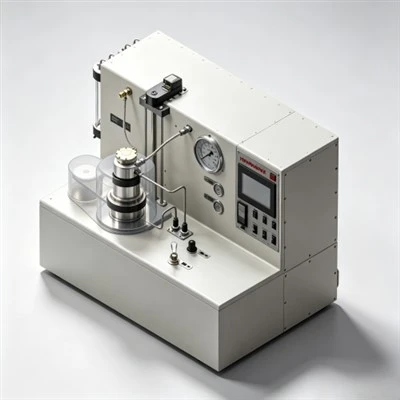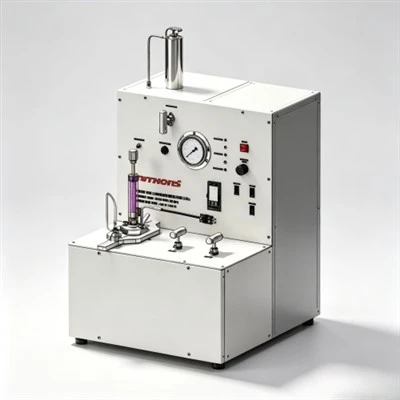

Deploying high-performance cementing additives in oil and gas well construction is essential because neat Portland cement systems cannot endure the complex thermodynamic gradients, narrow hydraulic fracture windows, corrosive downhole fluids, and gas migration risks encountered in demanding reservoirs across the Middle East, North America, and offshore basins. Specialized cementing additives in oil and gas operations-including synthetic polymer fluid loss reducers, high-temperature retarders, multi-functional dispersants, gas migration blockers, and chemical preflushes-transform basic Class G and Class H cement slurries into highly resilient, impermeable barriers. By tailoring slurry density, rheological mobility, thickening schedules, and mechanical elasticity, engineered cementing additives in oil and gas development eliminate premature slurry dehydration, prevent sustained casing pressure (SCP), and safeguard casing strings against lifelong mechanical failure.

The Fundamental Role of Chemical Additives in Modern Well Construction
In the upstream petroleum industry, cementing represents the definitive operational safeguard that isolates hydrocarbon zones, prevents cross-flow between subsurface formations, protects freshwater aquifers, and structurally anchors the casing pipe inside the drilled wellbore. However, as drilling targets extend deeper into high-pressure high-temperature (HPHT) horizons, deepwater frontiers, and highly depleted mature reservoirs, base cement slurries exhibit severe physical limitations. In these severe downhole conditions, the systematic application of cementing additives in oil and gas engineering becomes mandatory.
Without the incorporation of specialized cementing additives in oil and gas operations, cement slurries suffer rapid water loss against porous sands, experience thermal thinning followed by abrupt flash setting, and display high permeability that allows gas to percolate through the setting column. Advanced cementing additives in oil and gas formulations modify hydration reaction kinetics at the molecular level, enabling precise control over fluid rheology, static gel strength development, slurry density variation, and set-cement mechanical resilience under cyclic thermal and tectonic stresses.
Selecting the appropriate package of cementing additives in oil and gas projects requires a comprehensive understanding of downhole thermodynamics, geological pore pressure regimes, formation rock mineralogy, and drilling fluid compatibility. By formulating slurry systems compliant with API Specification 10A and API Recommended Practice 10B-2, cementing engineers achieve predictable placement hydraulics and permanent zonal containment throughout the multi-decade producing lifecycle of the well.
Primary Functional Categories of Oil and Gas Cementing Chemicals
A comprehensive oilfield cementing formulation incorporates multiple specialized chemical agents working in synergy. The primary classes of cementing additives in oil and gas applications perform distinct physical and chemical functions during slurry mixing, annular displacement, and downhole curing:
1. Fluid Loss Control Additives (Filtration Reducers)
Controlling filtration loss is critical to prevent slurry dehydration against permeable sandstones and carbonates. Uncontrolled fluid loss increases slurry density and viscosity prematurely, causing annular bridging and incomplete displacement. Modern cementing additives in oil and gas utilize synthetic 2-acrylamido-2-methylpropane sulfonic acid (AMPS) copolymers, modified polyvinyl alcohol (PVA) compounds, and high-purity cellulose derivatives. These polymer chains build a compact, micro-impermeable filter cake across the formation face, maintaining API fluid loss below 50 mL/30 min even under severe HPHT differential pressures.

2. High-Temperature and Deep-Well Cement Retarders
In deep wellbores, elevated bottom-hole circulating temperatures (BHCT) accelerate the hydration of tricalcium silicate (C₃S) and tricalcium aluminate (C₃A). Retarder cementing additives in oil and gas temporarily suppress crystal nucleation and hydrate growth. Formulations utilize AMPS-based synthetic terpolymers, organic phosphonate salts, refined lignosulfonates, and hydroxycarboxylic acids to provide linear, predictable thickening times, ensuring a safe operational pumping buffer of 90 to 120 minutes during deep liner displacements.

3. Polymeric Dispersants and Friction Reducers
Friction-reducing dispersants are essential cementing additives in oil and gas operations to lower apparent slurry viscosity and break up cement particle agglomerations. Utilizing sulfonated naphthalene formaldehyde (SNF) condensates, polycarboxylate ethers, and sulfonated melamine compounds, these additives impart negative electrostatic repulsion and steric hindrance onto cement grains. This allows slurries with low water-to-cement ratios to be pumped in efficient laminar or turbulent flow regimes without generating excessive equivalent circulating densities (ECD) that could fracture weak formations.
4. Anti-Gas Migration and Micro-Matrix Gas Blockers
During the slurry transition phase from liquid hydraulic fluid to rigid set stone, static gel strength (SGS) increases. This causes hydrostatic pressure to decay below pore pressure. Gas-block cementing additives in oil and gas-such as styrene-butadiene latex emulsions and sub-micron colloidal silica-form an impermeable elastomeric network within the setting pores, shortening the transition time (from 100 to 500 lbf/100 ft²) and permanently blocking hydrocarbon micro-channeling.
5. Chemical Preflushes, Spacers, and Washing Surfactants
Drilling mud and cement slurries are chemically incompatible. Contact between them leads to severe viscous fingering and poor casing bonding. Preflush and spacer cementing additives in oil and gas establish a rheologically stable barrier that scours synthetic and oil-based mud (OBM) filter cakes, completely water-wetting casing steel and rock formations to guarantee maximum acoustic bond strength.
6. Density Modifiers: Lightweight Microspheres and Heavyweight Weighting Materials
Controlling wellbore pressure requires precise density adjustments. Lightweight cementing additives in oil and gas-including hollow glass beads, ceramic microspheres, and expanded perlite-enable slurry densities down to 1.15 g/cm³ (9.6 ppg) across low-fracture-gradient zones. Conversely, heavyweight additives such as micronized barite, hematite, and manganese tetroxide elevate slurry densities up to 2.40 g/cm³ (20.0 ppg) to balance severe overpressured gas zones.
7. Early Strength Accelerators, Defoamers, and Expanding Agents
In shallow surface casing jobs or low-temperature seafloor environments, early strength accelerator cementing additives in oil and gas (such as calcium chloride CaCl₂ and sodium silicate) accelerate hydration to reach 500 psi compressive strength in under 6 to 8 hours. Concurrently, silicone defoamers eliminate entrained air during high-energy mixing, and expanding additives compensate for volumetric hydration shrinkage to eliminate micro-annuli.
Technical Matrix of Key Cementing Additive Chemistries
Engineering high-reliability slurry systems requires matching chemical functionality with wellbore physical properties. The table below outlines core cementing additives in oil and gas categories, typical active chemistries, and operational design ranges:
Regional Application Case: Deep High-Pressure Gas Well Cementing in the Zagros Fold Belt, Southern Iraq
Case Application: Southern Iraq, Zagros Basin Foreland Plays

Target Formation: Deep Mishrif Carbonates & Overlying Massive Fatha (Lower Fars) Evaporite Salts
Regional Cementing Background in Southern Iraqi Carbonate Plays
In the Basra region and southern foreland basins of Iraq, petroleum operators drill deep exploration and production wells penetrating complex carbonate and massive evaporite salt horizons. Total vertical depths (TVD) often reach 4,500 to 5,200 meters (14,700 to 17,000 feet), where bottom-hole static temperatures climb to 155°C to 170°C (311°F to 338°F) and formation pore pressures reach 11,500 psi (79.3 MPa). The geology features interbedded shale, reactive halite (NaCl), anhydrite (CaSO₄), and sour gas-bearing carbonate reservoirs with moderate H₂S and CO₂ concentrations, requiring advanced cementing additives in oil and gas programs.
Regional Cementing Challenges in Multi-Layered Formations
Operators in southern Iraq face major operational challenges during intermediate and production casing cementing:
- Severe Salt Dissolution and Slurry Contamination: Drilling through thick Fatha evaporites causes brine influx into cement slurries, destabilizing conventional cellulosic fluid loss agents and causing severe slurry gelation.
- Narrow Mud Weight Operating Window: Weak shale beds adjacent to overpressured carbonate intervals restrict allowable ECDs, requiring low-viscosity slurries with excellent anti-settling stability.
- High Risk of Sour Gas Channeling: Gas percolation during the hydration transition period frequently leads to sustained annular casing pressure at the wellhead.
Technical Requirements for High-Salinity Slurry Qualification
To qualify a robust 1.95 g/cm³ (16.3 ppg) Class G cement system across the salt and gas intervals, the technical program required specialized cementing additives in oil and gas testing to verify:
- API filtration loss maintained below 40 mL/30 min in 18% BWOW (by weight of water) NaCl salt-saturated mix water at 160°C.
- A stable thickening time window of 5 hours and 30 minutes to 70 Bc on an HPHT consistometer with zero early viscosity peaking.
- A static gel strength transition window (100 to 500 lbf/100 ft²) of less than 30 minutes to eliminate gas channeling.
How Specialized Cementing Additives Addressed the Regional Challenge
Cementing specialists engineered an advanced formulation combining KELIOIL salt-resistant AMPS fluid loss polymer, high-temperature synthetic retarder, sulfonated dispersant, and 35% BWOC silica flour. The salt-tolerant cementing additives in oil and gas formulation maintained complete polymer chain solubility in the presence of high calcium and sodium electrolytes, holding API fluid loss at 34 mL/30 min at 160°C. The synthetic retarder delivered a smooth thickening curve of 5 hours and 40 minutes, providing a reliable 2-hour placement safety cushion.
Ultrasonic cement analyzer (UCA) logging confirmed that the slurry achieved a 24-hour compressive strength of 3,650 psi (25.2 MPa) under simulated downhole curing conditions. When mixed on site and pumped into the wellbore, the cement slurry placed cleanly across the 1,100-meter casing interval without pressure spikes. Post-job radial acoustic bond logs (CBL-VDL) confirmed superior 360-degree bonding across both the salt formation and the underlying carbonate pay zone, recording zero sustained casing pressure after perforating.
Best Practices for Field Quality Assurance and Slurry Blending
Achieving consistent results with cementing additives in oil and gas field execution requires strict adherence to quality control and operational standards:
- Pre-Job Pilot Testing with Field Mix Water: Always conduct API rheology, thickening time, and fluid loss tests using actual field mix water and the exact batch of cement delivered to the rig. Dissolved mineral variations and pH shifts significantly alter how cementing additives in oil and gas perform downhole.
- Pneumatic Dry Blending Homogeneity: When utilizing dry powdered cementing additives in oil and gas operations, verify uniform bulk silo aeration and multi-stage transfer cycles to prevent chemical segregation during transportation.
- Rigorous Liquid Additive Metering: In continuous liquid additive systems (LAS), calibrate chemical metering pumps prior to every job to prevent over-dosing retarders or under-dosing fluid loss reducers.
- Preflush and Spacer Compatibility Testing: Perform multi-ratio compatibility checks between drilling mud, chemical spacer, and cement slurry on rotational viscometers to confirm zero inter-fluid gelation spikes.
Frequently Asked Questions (FAQ) Regarding Oilfield Cementing Chemicals
1. Why are synthetic polymer fluid loss additives preferred over cellulosic derivatives in deep wells?
Cellulose-based additives like carboxymethyl hydroxyethyl cellulose (CMHEC) undergo thermal chain scission at temperatures above 115°C (239°F) and are highly sensitive to salt contamination. Synthetic AMPS-based cementing additives in oil and gas maintain polymer backbone stability up to 220°C (428°F) and perform reliably in saturated brine environments.
2. How do dispersants improve mud displacement efficiency in narrow annuli?
By deflocculating cement grain clusters, dispersant cementing additives in oil and gas lower plastic viscosity and yield point. This allows slurries to be pumped at higher annular velocities within turbulent or efficient plug flow regimes, maximizing mud cake removal without exceeding the fracture gradient.
3. What is the role of silica flour in high-temperature cement formulations?
At temperatures above 110°C (230°F), Portland cement undergoes compressive strength retrogression due to the transformation of C-S-H gel into porous alpha-dicalcium silicate hydrate (α-C₂SH). Blending 30% to 40% BWOC silica flour (SiO₂) promotes the formation of crystalline tobermorite and xonotlite, preserving high strength and low permeability.
Strategic Chemical Solutions for Complex Wellbore Environments
As well drilling profiles become deeper, hotter, and operationally more challenging, successful zonal isolation relies fundamentally on the advanced chemical engineering of cementing additives in oil and gas projects. From controlling fluid loss across high-permeability sands to preventing gas migration and mitigating severe salt contamination, tailored additive formulations protect valuable wellbore infrastructure.
KELIOIL remains committed to supplying premium-grade cementing additives in oil and gas applications manufactured under strict ISO and API quality control protocols. By combining cutting-edge polymer synthesis with extensive oilfield laboratory expertise, KELIOIL provides operators and cementing contractors worldwide with dependable chemical solutions that ensure wellbore stability, environmental protection, and maximum asset productivity.
Optimize Your Wellbore Cementing Formulations with KELIOIL
Our technical chemical specialists provide customized slurry formulation designs, HPHT laboratory testing verification, and reliable bulk supply of premium cementing additives tailored to demanding onshore and offshore drilling operations.