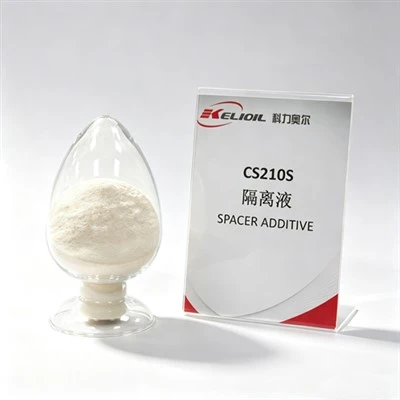

In the demanding theater of ultra-deep oil and gas exploration, executing a flawless primary cementing operation requires chemical systems to withstand intense downhole environments. As operators drill past vertical depths of 20,000 feet to reach sub-salt reservoirs, wellbore conditions degrade rapidly. These geological horizons present dual engineering hazards: extreme static temperatures frequently exceeding 180°C (356°F) and massive, complex evaporite salt sheets composed of saturated sodium chloride, magnesium chloride, and calcium chloride matrices. Maintaining fluid design parameters under these conditions is critical. If a cement slurry loses its isolation capabilities during placement, high-pressure formation brines or volatile hydrocarbons will bypass the setting matrix, destroying zonal isolation and threatening the lifecycle of the entire multi-million dollar drilling asset.
The single most critical variable in mitigating these subterranean risks is the fluid filtration rate, which is managed by specialized synthetic polymers. However, when standard fluid loss additives are exposed to the combined stresses of extreme thermal loads and high salinity, they undergo rapid structural failure. The precise molecular structures designed to restrict fluid movement degrade, causing an immediate spike in fluid filtration, premature slurry dehydration, and severe bridging within the narrow casing annulus. To overcome these deepwater and sub-salt cementing challenges, chemical engineers must investigate the underlying degradation kinetics of polymer chains. This comprehensive technical analysis explores the chemical mechanisms of thermal degradation in hostiles zones, analyzes the impacts of salt-induced polymer chain coiling, and outlines laboratory testing protocols using high-precision HPHT fluid loss cells to validate resilient slurry designs.
The Molecular Kinetics of Thermal and Hydrolytic Degradation
To design a chemical additive package capable of enduring sub-salt horizons, engineers must analyze the precise molecular degradation pathways that destroy traditional water-soluble polymers. When exposed to deep downhole conditions, polymers experience structural changes that eliminate their water-retention capabilities.
1. Thermal Back-Bone Cleavage and Chain Scission
Standard fluid loss polymers typically rely on long, high-molecular-weight carbon-to-carbon backbones. At ambient and moderate temperatures, these extended molecular chains physically block water pathways within the porous cement matrix, restricting fluid loss. However, when internal slurry temperatures surpass 150°C, the thermal kinetic energy injected into the fluid begins to vibrate the polymer backbone. This intense thermal stress breaks the covalent bonds along the carbon chain, splitting the high-molecular-weight polymer into short, low-molecular-weight fragments. These degraded fragments lack the physical length required to bridge the pore spaces between hydrating cement grains, causing fluid retention performance to drop sharply.
2. Hydrolytic Cleavage of Functional Groups
Beyond physical chain breaking, high-temperature downhole environments drive severe chemical hydrolysis. Traditional fluid loss agents often utilize amide or ester functional groups attached along the primary carbon chain to provide hydrophilic properties. At high temperatures, the surrounding water molecules actively attack these specific functional linkages. This hydrolytic degradation converts highly effective amide groups into carboxylate groups, releasing free ammonia gas as a reaction byproduct. This alteration fundamentally changes the chemical charge distribution across the polymer molecule, converting an efficient water-binding additive into a highly sensitive ionic chain that precipitates out of solution when it encounters downhole cement minerals.
The Electrolyte Crisis: Salt-Induced Polymer Chain Coiling
The technical challenge increases when intense thermal degradation combines with the high salinity common in sub-salt formations. Saturated salt environments present a hostile chemical field that neutralizes the mechanism polymers use to trap fluid.
Under normal conditions in fresh water, high-performance synthetic polymers expand into long, open structures due to electrostatic repulsion between the negative charges along their chains. This open structure allows the polymer to capture and bind large volumes of water molecules within its molecular net. However, when the slurry enters a sub-salt horizon saturated with $Na^+$, $Ca^{2+}$, or $Mg^{2+}$ ions, these positive charge clouds instantly surround the negatively charged functional groups on the polymer. This charge neutralization eliminates the electrostatic repulsion forces, causing the extended polymer chain to instantly collapse and coil into a tight, dense sphere. Once coiled, the additive can no longer trap water or bridge pore structures, leading to a sudden surge in fluid loss that can quickly dehydrate the cement matrix.
Evaluating Performance Under Combined Thermal and Ionic Load
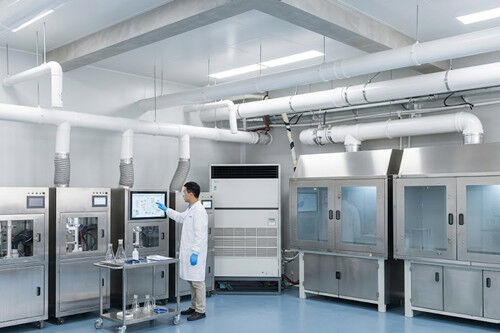
Developing resilient, salt-tolerant formulations requires laboratory facilities to utilize specialized instrumentation capable of simulating combined high-temperature and high-salinity environments.
The comparative evaluation table below contrasts the behavioral performance of legacy polymer additives against advanced, multi-monomer synthetic polymers under extreme downhole conditions:
| Chemical & Mechanical Parameter | Legacy Cellulosic Polymers (HEC / CMHEC) | Advanced High-Temperature AMPS Co-Polymers |
|---|---|---|
| Thermal Stability Limits | Rapid chain scission occurs above 120°C (248°F); experiences complete loss of fluid filtration control. | Maintains core carbon backbone integrity at extreme temperatures up to and exceeding 200°C (392°F). |
| Saturated Salt Tolerance | Suffers severe charge neutralization and instant coiling; precipitates out in presence of $CaCl_2$ or $MgCl_2$. | Highly resistant to ionic charge shielding; contains bulky sulfonate groups that maintain open chain structures. |
| Slurry Rheology Interferences | Causes massive initial viscosity spikes; thins uncontrollably as temperatures rise, leading to solids settling. | Provides stable, flat rheological profiles; compatible with advanced constant speed mixers during preparation. |
| Laboratory Validation Method | Tested on low-pressure equipment; cannot provide accurate filtration metrics for ultra-deep well designs. | Validated using automated HPHT fluid loss cells utilizing certified high-pressure nitrogen configurations. |
| Thickening Compatibility | Degradation byproducts cause unpredictable acceleration or deceleration on standard HPHT consistometers. | Exhibits excellent compatibility with high-temperature retarders, ensuring smooth, predictable thickening transitions. |
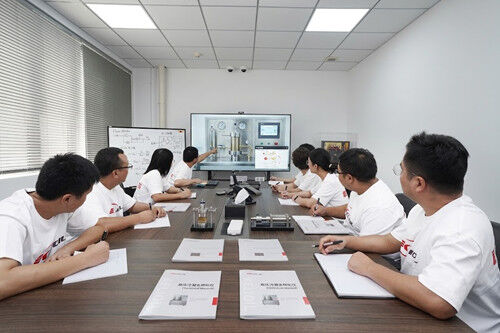
To successfully prevent polymer failure in sub-salt formations, modern chemical designs rely heavily on multi-monomer synthetic architectures, specifically utilizing 2-acrylamido-2-methylpropane sulfonic acid (AMPS) chemistry. The AMPS monomer features a bulky, rigid sulfonate group that is highly resistant to hydrolysis and carries a strong negative charge that positive downhole ions cannot easily shield. By combining AMPS with temperature-stable monomers like acrylic acid or N-vinyl amides, chemical manufacturers synthesize robust co-polymers that remain expanded even in saturated brine solutions. Validating these advanced formulations requires strict laboratory workflows supported by precise instrumentation. Technicians utilize digital touchscreen HMI control panels to execute exact heating profiles, ensuring that the slurry's fluid loss control remains stable throughout long placement windows.
Downstream Hazards of Polymer Failure in Deep Formations
Allowing a fluid loss polymer to degrade during an ultra-deep primary cementing operation triggers an immediate series of downhole failures that can completely ruin the cementing job.
First, sudden fluid loss causes rapid slurry dehydration within the casing annulus, a dangerous condition known as "flash dehydration." As water escapes into permeable rock layers, the local concentration of cement solids increases instantly. This change causes a severe viscosity spike that drastically increases equivalent circulating densities (ECD). The resulting pressure surge can quickly exceed the formation's fracture limit, driving the remaining slurry into the rock and causing extensive wellbore leakage. This failure leaves long casing sections completely unprotected by cement, exposing the steel to corrosive downhole brines.
Second, poor fluid loss control directly compromises the slurry's thickening profile. When a sample loses its water phase prematurely, the fluid dynamics inside the annulus break down, distorting the thickening curves tracked on laboratory PLC intelligent control consistometers. The slurry can experience rapid dynamic gelation, setting before it reaches the designed depth. This leaves the lower sections of the wellbore completely unsealed, exposing the operator to severe gas migration, sustained casing pressure (SCP), and risking complete loss of well control.
The Technical Blueprint for Testing Fluid Loss Additives in Saturated Brines
Use this comprehensive laboratory workflow and auditing checklist to evaluate your polymer additive packages, verify salt tolerance, and ensure full compliance with international API frameworks.
✔ Step 1: Execute High-Shear Slurry Preparation Protocols
• Prepare all salt-saturated cement samples using advanced constant speed mixers to ensure uniform polymer dispersion.
• Set the automated mixer loops to execute exact 4,000 RPM and 12,000 RPM cycles, preventing human operational error from altering initial shear energy.
• Add salt compounds to the mix water completely before introducing the synthetic polymers to evaluate true salt-tolerance under realistic conditions.
✔ Step 2: Conduct High-Temperature Fluid Filtration Audits
• Transfer the conditioned sample into an automated HPHT fluid loss cells assembly rated for the target reservoir temperature and pressure.
• Apply a continuous 1,000 psi differential pressure utilizing high-purity nitrogen gas lines, ensuring all safety valves are fully operational.
• Track filtration volumes continuously over a 30-minute test window, logging the calculated API fluid loss metrics into a permanent digital ledger.
✔ Step 3: Validate Thickening Profiles and Slurry Consistency
• Run parallel testing campaigns on certified high-pressure consistometers to ensure the polymer does not cause dynamic gelation spikes.
• Verify that the consistency curve remains flat and predictable during the initial pumping window, avoiding right-angle anomalies before the target depth is reached.
• Calibrate all primary pressure transducers and internal heating elements regularly to eliminate data drift and maintain system compliance.
✔ Step 4: Ensure Complete Regulatory Quality Standards
• Sourcing all primary 외加剂 and testing hardware from an instrumentation manufacturer operating under certified ISO9001 and HSE quality systems.
• Maintain a complete log of all testing runs, sensor adjustments, and batch numbers to provide a clear, auditable trail for external compliance reviews.
• Confirm that your equipment provider maintains a reliable stock of authentic consumables, high-pressure seals, and replacement filters to avoid laboratory downtime.
Conclusion
Securing zonal isolation across ultra-deep sub-salt formations requires fluid loss control polymers that can resist combined thermal and ionic stresses. Understanding the exact chemical mechanisms behind polymer backbone cleavage and salt-induced chain coiling allows chemical engineers to optimize multi-monomer synthetic designs that maintain water-retention properties in harsh environments. Validating these complex formulations requires modern laboratory testing infrastructure equipped with advanced closed-loop speed regulators and high-precision fluid loss cells. Investing in certified testing hardware built to strict international criteria allows operators to eliminate data variance, evaluate additive performance with total confidence, and ensure successful primary cementing operations across the world's most demanding oilfield environments.