
When petroleum completions engineers and renewable energy drilling directors evaluate geothermal well cementing, they define it as the specialized engineering discipline of placing chemically stabilized cement matrices capable of enduring bottom-hole static temperatures (BHST) exceeding 250°C to 350°C alongside severe cyclic thermal expansion across high-enthalpy geothermal reservoirs worldwide. Investigating the physics of geothermal well cementing reveals that conventional Portland cement formulations suffer catastrophic compressive strength retrogression and matrix cracking when exposed to extreme thermal shocks during alternating steam production and cold-water injection cycles. By adapting testing frameworks for geothermal well cementing under API Spec 10A and API RP 10B-2 standards, laboratories utilize specialized curing chambers and HPHT consistometers to calibrate silica flour ratios, optimize flexible elastomeric polymers, eliminate casing debonding, and safeguard multi-decade geothermal barrier integrity.
1. The Physics of High-Temperature Cement Degradation and Strength Retrogression
To design an annular barrier capable of surviving the multi-decade lifespan of a high-enthalpy energy asset, engineers executing geothermal well cementing must master the solid-state mineralogical transformations occurring within Portland cement systems. When hydrated under ambient or moderate conditions, standard Class G or Class H cement develops an amorphous calcium silicate hydrate (C-S-H) gel structure. This gel constitutes the primary binding phase responsible for low permeability and high unconfined compressive strength.
However, when bottom-hole temperatures exceed 110°C (230°F), the metastable C-S-H gel undergoes an irreversible crystallographic phase transformation. High thermodynamic energy drives the conversion of amorphous C-S-H into a dense, crystalline dicalcium silicate hydrate known as alpha-dicalcium silicate hydrate (α-C₂S-H). Because α-C₂S-H possesses a significantly higher specific density than the original gel phase, this crystallization causes massive volumetric shrinkage within the solid matrix. The resulting internal contraction increases matrix porosity, reduces compressive strength by up to 60%, and increases water and gas permeability by several orders of magnitude. In an uninhibited geothermal well, this degraded cement sheath allows acidic geothermal brines containing dissolved carbon dioxide (CO₂) and hydrogen sulfide (H₂S) to bypass the annular seal and corrode the casing steel.
Mitigating strength retrogression in geothermal well cementing requires altering the bulk calcium-to-silica (CaO/SiO₂) molar ratio. Standard Portland cement features an initial CaO/SiO₂ ratio of approximately 1.7 to 3.0. By adding high-purity crystalline silica flour (typically 35% to 40% by weight of cement, BWOC), the CaO/SiO₂ ratio is shifted downward to an optimal range between 0.8 and 1.0. At temperatures between 110°C and 150°C, this silica-rich chemical environment drives the formation of tobermorite (C₅S₆H₅). As temperatures exceed 150°C and reach up to 300°C+, tobermorite recrystallizes into xonotlite (C₆S₆H), a fibrous crystalline mineral that provides high compressive strength and low permeability under continuous thermal loads.
2. Testing Framework Comparison: Standard Oilfield vs. Geothermal Thermal Cycling
While standard petroleum wells typically maintain relatively stable geothermal temperatures after placement, wells subjected to geothermal well cementing experience aggressive, cyclical thermal swings throughout their commercial lifespans. During cold-water stimulation or periodic shut-ins, annular temperatures can plummet rapidly from 300°C to below 60°C, causing steel tubulars to contract away from the cement sheath. When production resumes, superheated steam causes rapid thermal expansion, imparting cyclic radial and tangential stresses onto the surrounding sheath.
Standard API RP 10B-2 oilfield testing procedures evaluate cement under static, isothermal curing conditions, which cannot predict mechanical fatigue under dynamic temperature swings. The comparative matrix below outlines the critical differences between standard oilfield testing and geothermal barrier qualification:
3. Essential Laboratory Instrumentation for Geothermal Slurry Validation
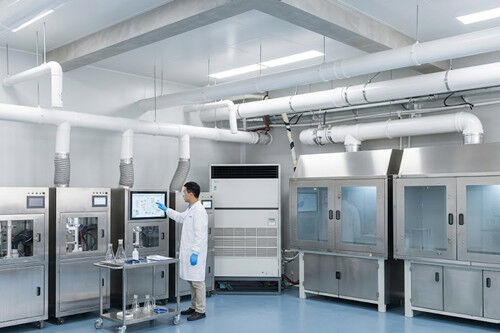
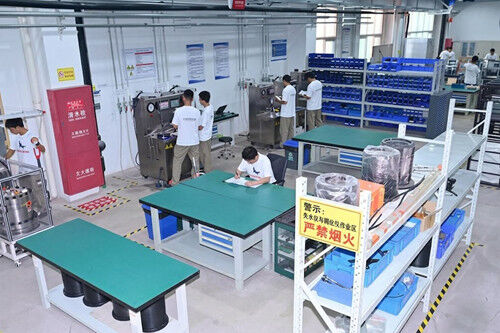
Executing reliable geothermal well cementing designs requires laboratory instrumentation engineered to recreate downhole thermodynamic extremes without mechanical failure:
- Constant Speed Atmospheric Mixers: Uniform additive hydration begins with high-shear mixing. API-compliant constant speed blenders operate at 4,000 rpm for 15 seconds followed by 12,000 rpm for 35 seconds, ensuring complete dispersion of silica flour, synthetic polymers, and reinforcing fibers without air entrainment.
- High-Pressure High-Temperature Consistometers: Automated HPHT consistometers evaluate slurry pumpability under simulated depth, pressure, and thermal ramps. Equipped with PLC closed-loop control, these units maintain linear heating ramps to determine exact thickening time to 70 and 100 Bc, ensuring the slurry remains pumpable throughout placement.
- Pressurized Curing Chambers (Autoclaves): Because water boils at 100°C under atmospheric conditions, curing geothermal cement at 250°C to 350°C requires confining hydraulic pressures up to 207 MPa (30,000 psi). Pressurized curing chambers keep mix water in the liquid phase, enabling proper hydration kinetics and the formation of crystalline xonotlite phases.
- Triaxial Mechanical Load Frames and Core Permeameters: Post-curing evaluation requires measuring mechanical properties under confining stress. Core load frames quantify Young's modulus, compressive strength, and tensile strength, while pulse-decay permeameters confirm that gas permeability remains below 0.1 mD after cyclic thermal exposure.
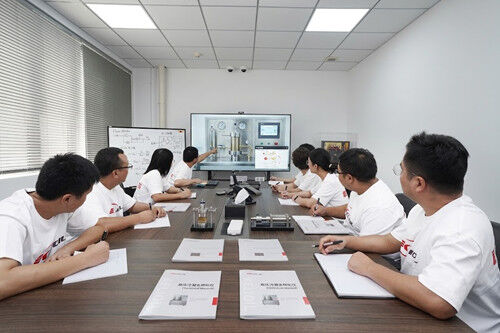
4. Technical Blueprint for Geothermal Slurry Testing and Mechanical Qualification
To qualify formulations for geothermal well cementing, laboratory personnel should follow this systematic four-step technical testing blueprint:
Step 1: Slurry Formulation and High-Temperature Retardation
Blend API Class G cement with 35% to 40% BWOC silica flour, 1.5% to 2.5% BWOC synthetic AMPS fluid loss additives, and thermally stable synthetic retarders. For high-temperature wells subject to severe thermal expansion, incorporate reinforcing carbon fibers or flexible elastomeric additives to reduce Young's modulus and improve fatigue resistance.
Step 2: Dynamic Thickening Time Profiling on HPHT Consistometers
Load the prepared slurry into an automated HPHT consistometer. Program the thermal ramp to match the calculated bottom-hole circulating temperature (BHCT) and pressure schedule. Validate that the slurry maintains pumpability below 30 Bc throughout the planned placement duration, followed by a sharp right-angle transition to 70 and 100 Bc.
Step 3: High-Pressure Autoclave Curing and Thermal Cycling
Cast the cement slurry into standardized cylindrical molds and transfer them into a pressurized curing chamber. Apply confining pressure (typically 3,000 to 5,000 psi) to suppress water boiling, then ramp temperature to static reservoir conditions (250°C to 300°C). Apply programmed thermal cycles (swinging between 80°C and 260°C) to simulate operational production and injection cycles.
Step 4: Post-Cure Mechanical and Permeability Testing
Demold the cured cores and inspect the specimens for macro-fractures and surface defects. Conduct destructive triaxial mechanical testing to evaluate compressive strength, tensile strength, and Young's modulus. Measure liquid and gas permeability to ensure the matrix remains impermeable after thermal cycling.
5. Regional Case: Supercritical Geothermal Wellbore Barrier Isolation in Volcanic Formations
Case Application: High-Enthalpy Deep Geothermal Energy Wellbore Isolation

Target Formation: Deep Basaltic & Granitic Horizons (3,800 m Depth, 310°C BHST, Severe Thermal Cycling)
Geothermal Reservoir Background and Operating Conditions
A deep exploratory geothermal well drilled in a fractured volcanic rift zone targeted supercritical steam reserves at a true vertical depth of 3,800 meters (12,467 feet). Downhole logging indicated a bottom-hole static temperature (BHST) of 310°C (590°F) with reservoir pressures reaching 5,200 psi (35.8 MPa). The geothermal fluid contained dissolved CO₂ (up to 8%), corrosive hydrogen sulfide (H₂S), and high silica-saline brine mineralization. Cementing the 9-5/8 inch production casing across this high-temperature basaltic interval presented severe mechanical and chemical integrity challenges.
Technical Challenges in Supercritical Thermal Regimes
The project engineering team faced three interrelated failure mechanisms:
- Severe Compressive Strength Retrogression: Unmodified Portland cement would convert rapidly into crystalline α-C₂S-H at 310°C, causing matrix shrinkage, micro-channeling, and loss of structural support.
- Thermal Fatigue and Casing Debonding: Production cycles producing 300°C steam followed by cold-water injection (60°C) generate large casing expansions and contractions. Brittle cement would suffer radial shear cracking and interfacial debonding.
- Slurry Flash Setting: High geothermal heat transfer across long open-hole sections risked premature hydration during pumping operations.
Engineering Solution and Laboratory Qualification
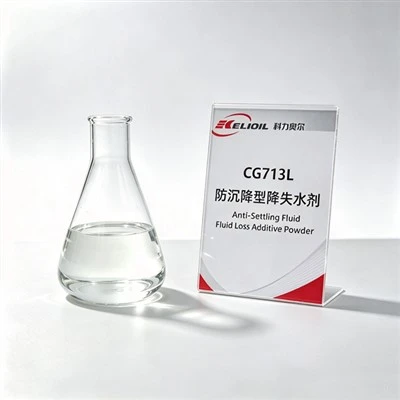
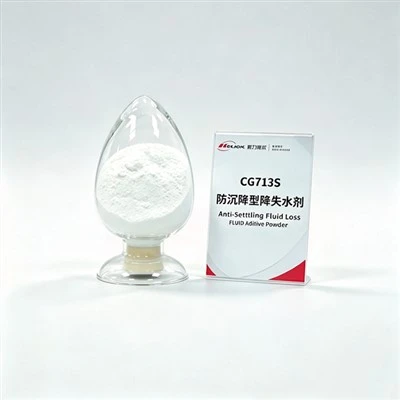
Addressing these extreme operating conditions required formulating a specialized cement slurry for geothermal well cementing. The engineering team deployed an API Class G cement system stabilized with 40% BWOC silica flour, 2.0% BWOC KELIOIL synthetic AMPS fluid loss additives, 1.2% BWOC high-temperature synthetic retarders, and flexible elastomeric micro-particles.
The formulation was qualified using NITHONS HPHT consistometers and automated pressurized curing chambers. On the consistometer, the slurry maintained a stable consistency below 20 Bc for 4 hours and 45 minutes under simulated dynamic circulating temperatures (135°C BHCT) before transitioning cleanly to 70 Bc at 5 hours and 20 minutes, providing an adequate safety margin for placement. Test specimens were then cured in an autoclave at 310°C and 4,500 psi. Following initial curing, the samples underwent 25 rapid thermal cycles between 80°C and 280°C.
Execution Performance and Multi-Year Integrity Verification
Post-cycling mechanical testing verified that the matrix formed dense, interlocking xonotlite crystals. The set cement achieved a 28-day compressive strength of 3,650 psi (25.2 MPa), maintained a low Young's modulus (6.2 GPa), and showed a tensile strength of 420 psi (2.9 MPa), with gas permeability remaining below 0.02 mD.
During field execution, the slurry was pumped and displaced to surface across the 3,800-meter casing string without pressure anomalies or ECD surges. Ultrasonic and radial cement bond logs (CBL-VDL) confirmed 100% circumferential bonding. Over subsequent years of commercial steam production and cyclical maintenance shut-ins, the well has maintained complete barrier containment with zero sustained casing pressure (SCP), confirming that tailored chemical design and rigorous autoclave testing eliminate barrier failures in geothermal well cementing.
Frequently Asked Questions (FAQ) Regarding Geothermal Cementing
1. Why is standard oilfield Portland cement unsuitable for deep geothermal wells?
Standard Portland cement hydrates into amorphous C-S-H gel, which converts to crystalline α-C₂S-H at temperatures above 110°C (230°F). This phase transformation causes volumetric shrinkage, matrix cracking, and severe compressive strength loss (retrogression), allowing geothermal brines to attack the casing steel.
2. How does silica flour prevent strength retrogression in high-temperature environments?
Adding 35% to 40% BWOC silica flour adjusts the calcium-to-silica (CaO/SiO₂) molar ratio from ~1.7 down to ~0.8 to 1.0. Under elevated temperatures, this promotes the formation of tobermorite and xonotlite instead of α-C₂S-H, preserving compressive strength and maintaining low matrix permeability up to 350°C.
3. Why must curing chambers maintain high pressure during geothermal cement evaluation?
At geothermal temperatures (200°C to 350°C), water boils rapidly unless maintained under hydrostatic confining pressure. Pressurized curing chambers apply confining pressures of 3,000 to 5,000 psi to keep mix water in the liquid phase, allowing complete hydration and proper crystal development.
Strategic Recommendations for Geothermal Barrier Integrity
As global energy systems expand into deep, supercritical geothermal resources, achieving multi-decade wellbore integrity depends directly on deploying specialized geothermal well cementing technologies. Moving beyond static oilfield tests to dynamic thermal cycling evaluations provides the empirical data required to formulate ductile, heat-resistant barrier systems.
Through the integration of NITHONS automated laboratory testing systems-including HPHT consistometers and pressurized curing chambers-and KELIOIL high-performance cementing additives, operators and testing facilities worldwide secure the certified equipment and specialized chemistry needed to ensure lifelong zonal isolation across high-temperature geothermal wells.
Equip Your Facility with NITHONS Geothermal Testing Systems & KELIOIL Chemistry
Our technical specialists deliver advanced API Spec 10A curing chambers, HPHT consistometers, and premium high-temperature cementing additives engineered to secure complex geothermal energy assets worldwide.