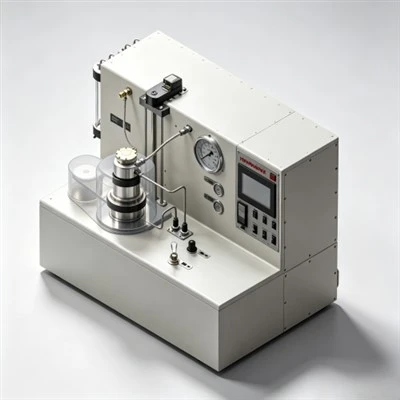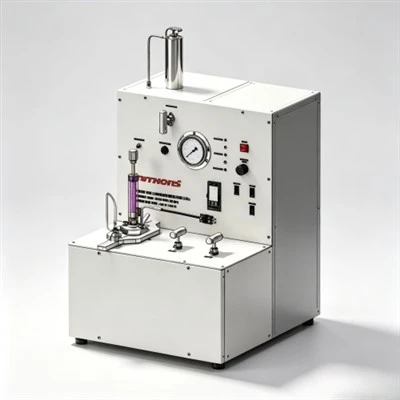

The viscometer is mainly composed of a measuring part and a control part. The measuring part includes a rotor, a rotor driver, a sensor and a temperature controller. The rotor is the most basic component of the viscometer and is usually divided into a rotating cylindrical type and a turbine type. Its speed and shape determine the measuring range of the viscometer. The rotor driver consists of a motor, a reducer and a clutch. The motor generates driving force, the reducer reduces the speed and increases the torque, and the clutch controls the rotation speed of the rotor. The sensor converts the rotational motion of the rotor into an electrical signal, usually using magnetic induction or piezoelectric effect. After amplification and filtering, these signals can be used to calculate the viscosity of the liquid. The temperature controller is used to maintain a constant measurement temperature because the viscosity of the liquid is greatly affected by temperature.
The control part includes a circuit controller and a display. The circuit controller is the core component of the viscometer and is responsible for calculating the viscosity value and controlling the output of the display. The circuit controller is usually composed of a microprocessor or DSP chip, an analog-to-digital converter, an amplifier and a filter. The display presents the measurement results to the user in digital or graphical form, usually using technologies such as LCD, LED or VFD.
In addition, viscometers can be divided into various types according to the measurement principle and accuracy requirements, such as rotational type, vibration type, and pressure type. For example, a rotational viscometer consists of a motor, a constant speed device, a speed change device, a measuring device, and a support box. It calculates the viscosity value by measuring the resistance of the fluid in the rotating rotor.