



Fluid loss control additives preserve slurry stability and isolate gas reservoirs by creating a tight, low-permeability polymer-particle filter cake across porous formations, restricting the aqueous phase from prematurely escaping the annular space under high downhole differential pressures. When drilling through permeable depleted sands or naturally fractured carbonate formations, high pressure forces water out of unconditioned slurry, causing sudden fluid loss that alters density, disrupts slurry rheology, causes premature flash setting, and destroys hydrostatic balance. By incorporating specialized synthetic polymers such as 2-acrylamido-2-methylpropanesulfonic acid (AMPS) co-polymers, a high-performance fluid loss control additive binds water molecules, maintains predictable thickening time schedules, and guarantees long-term annular zonal isolation across challenging downhole thermal environments. To explore our full portfolio of slurry stabilization chemistries, visit our
Fluid Loss Additives category.
Uncontrolled fluid loss during oil well cementing operations is one of the primary drivers of job failure, casing corrosion, and costly remedial squeeze jobs. As slurry flows down the casing string and rises into the narrow annular clearance between the pipe and the formation wall, it encounters permeable rock matrices subjected to extreme hydrostatic heads. Without proper filtration control, aqueous filtrate rapidly leaks out of the slurry column into the surrounding pore space. This localized dehydration drastically accelerates hydration rates, creates localized cement nodes, increases friction pressure during placement, and leads to incomplete displacement of drilling mud.
The primary mechanism of modern fluid loss control additives involves dual-action steric hindrance and adsorption kinetics. High-molecular-weight polymers dissolve into the continuous aqueous phase, increasing micro-viscosity while simultaneously clinging onto hydration products like C₃S, C₂S, and calcium silicate hydrate gel phases. This creates a dense, non-porous filter cake along the borehole face, reducing matrix fluid loss to well within strict API thresholds (typically below 50 mL/30 min under high-temperature, high-pressure testing standards). Consequently, maintaining precise fluid loss additive concentration remains indispensable for field engineers designing slurries for deep, high-salinity, and elevated-temperature wells.
Why Is Filtration Control Critical in High-Temperature Deep-Well Cementing?
Deep-well cementing operations present harsh downhole environments where circulating temperatures frequently exceed 120°C and static bottom-hole temperatures can top 180°C. Under these thermal conditions, standard organic cellulosic fluid loss additives undergo rapid thermal degradation, breaking polymer chains and causing a catastrophic loss of filtration control. When a fluid loss control additive decomposes prematurely, the cement slurry loses its fluid loss control capabilities, leading to rapid fluid loss into surrounding formations.
Furthermore, uncontrolled fluid loss during the transition phase-when the slurry transforms from a pumpable liquid to a rigid solid-causes severe annular pressure reduction. As filtrate escapes into permeable beds, the hydrostatic pressure of the cement column drops below the pore pressure of adjacent gas-bearing intervals. This pressure differential permits high-pressure formation gas to enter the slurry column, forming continuous gas channels and micro-annuli. Preventing gas migration requires a resilient fluid loss control additive that maintains low filtration rates and preserves constant hydrostatic head throughout the entire hydration and setting process.
Advanced synthetic fluid loss control additive chemistry utilizes sulfonate and amide functional groups capable of enduring extreme thermal stresses. The AMPS monomer provides exceptional hydrolytic and thermal stability, ensuring that the polymer chain retains its structural integrity and water-binding capability even after prolonged exposure to high temperatures. Incorporating a synthetic fluid loss control additive prevents fluid loss, delays premature gelation, and stabilizes slurry density, allowing slurry displacement across extensive vertical and horizontal casing strings without excessive equivalent circulating density spikes.
Classification and Operational Performance of Specialized Fluid Loss Additives
Oilfield operations encompass diverse geological environments ranging from shallow low-temperature formations to deep, highly saline offshore structures. Consequently, engineers rely on customized fluid loss control additive categories designed to address specific technical challenges. Below is a detailed technical comparison of the primary fluid loss additive classes used across global cementing projects:
| Additive Classification | Core Polymer Chemistry | Temperature Range | Primary Application Field | Key Operational Advantage |
|---|---|---|---|---|
| General-Purpose Fluid Loss Additive | Synthetic AMPS / Acrylamide Co-polymer | Up to 180°C | Medium to deep oil & gas wells | High salt tolerance; stable filtration control across broad density ranges |
| Anti-Reversal Fluid Loss Additive | Modified Sulfonated Polymer System | Up to 180°C (Critical 70°C–90°C) | Multi-stage casing strings with temperature gradients | Eliminates top-set thickening reversal; protects upper casing segments |
| Anti-Settling Fluid Loss Additive | Rheology-Modifying Polymer Blend | Up to 150°C | Low-density & lightweight slurry systems | Enhances suspension ability; prevents solid particles from settling out |
| Dispersive Fluid Loss Additive | Low-Molecular Synthetic Polymer | Up to 160°C | Seawater & high-calcium (CaCl₂) slurries | Reduces slurry viscosity while maintaining strict filtration control |
| Low-Temperature Accelerating Fluid Loss Additive | Nano-Nucleating Polymer Complex | -30°C to 60°C | Surface casing, permafrost & shallow offshore wells | Reduces initial set time while preventing rapid water loss |
General-purpose fluid loss additives offer wide application across conventional, low-density, and heavy-weight slurry systems. These synthetic polymer systems maintain fluid loss control in freshwater, brackish, and saturated saltwater environments without requiring complex secondary dispersants. By controlling fluid loss, a general-purpose fluid loss control additive prevents mud displacement channeling, ensuring complete mud removal and strong bonding at both casing-cement and cement-formation interfaces.
In complex multi-stage cementing jobs where a wide temperature gradient exists between the top of the cement column and the bottom hole, anti-reversal fluid loss additives prove vital. Standard synthetic polymers can exhibit "thickening reversal" around 70°C to 90°C, causing the cooler upper portion of the slurry to set faster than the hotter lower slurry. An anti-reversal fluid loss control additive mitigates this phenomenon, protecting against gas migration and ensuring uniform strength development throughout the annular space.
In low-density or lightweight cementing systems, solid particles tend to settle out of solution during extended placement times. Utilizing an anti-settling fluid loss control additive increases matrix yield stress and enhances suspension capabilities. This ensures that lightweight microspheres, bentonite extender particles, and Portland cement grains remain uniformly distributed, eliminating free fluid separation and preventing density segregation along horizontal borehole sections.
Offshore cementing frequently requires mixing slurries using local seawater containing high concentrations of sodium chloride, magnesium, and calcium chloride (CaCl₂). Dispersive fluid loss additives are engineered specifically to tolerate high ionic strengths without coagulating or causing extreme slurry viscosity spikes. A dispersive fluid loss control additive reduces liquid phase loss while imparting mild dispersibility, improving flow properties and allowing pumpability at reduced surface pumping pressures.
Surface casing strings set through shallow permafrost or low-temperature formations face slow cement hydration kinetics. Applying a low-temperature accelerating fluid loss control additive resolves this dilemma by integrating nano-nucleation technology into the polymer structure. This unique formulation controls fluid loss while dramatically shortening initial setting times, allowing rapid compressive strength development and reducing waiting-on-cement (WOC) time.
What Is the Impact of Salt Concentration and Slurry Chemistry on Fluid Loss Performance?
Salinity presents a major obstacle to fluid loss additive performance during oilfield cementing operations. High concentrations of dissolved inorganic salts-such as NaCl, KCl, and CaCl₂-alter the hydration behavior of Portland cement and severely impact polymer chain conformation. In freshwater environments, synthetic polymers extend their molecular chains due to electrostatic repulsion between negative functional groups. This fully extended state maximizes water entrapment and creates a thick, impermeable filter cake.
However, when salt ions contaminate the slurry matrix, divalent cations (such as Ca²⁺ and Mg²⁺) and high monovalent ionic strength shield the polymer charges. This screening effect causes the polymer chains to coil tightly into compact spheres, drastically reducing their hydrodynamic radius and water-binding capacity. Consequently, an unconditioned fluid loss control additive loses its efficacy in high-salinity slurries, leading to sudden fluid loss, elevated pump pressure, and severe annular gas channeling.
To overcome ionic screening, modern synthetic fluid loss additives incorporate AMPS monomers featuring strongly acidic sulfonate groups (-SO₃⁻). Unlike traditional carboxylate groups, sulfonate groups remain fully ionized across extreme pH levels and high salt concentrations. This structural feature prevents polymer coiling, ensuring that the fluid loss control additive maintains consistent filtration control even in saturated saltwater slurries containing up to 37% NaCl or 2% to 4% CaCl₂.
Furthermore, fluid loss additives must demonstrate excellent compatibility with secondary cementing chemicals, including retarding agents, lignosulfonate dispersants, defoamers, and heavy weighting agents like barite or hematite. A well-engineered fluid loss control additive does not interfere with thickening time development or retard early compressive strength acquisition, allowing precise slurry design tailored to specific formation pressures and temperature profiles.
Technical Requirements for Cementing Deep Carbonate Formations in the Middle East
The Middle East region, particularly the Eastern Province of Saudi Arabia and the southern onshore basins of the United Arab Emirates, contains vast hydrocarbon reserves within deep, highly fractured carbonate reservoirs. Cementing casing strings across these prolific fields presents severe technical challenges, including bottom-hole static temperatures exceeding 165°C, high formation pore pressures, and thin, highly permeable thief zones. Drilling through these formations requires cement slurries with extreme thermal endurance and precise fluid loss control to prevent catastrophic loss of circulation or severe gas migration from gas-bearing formations.
In these deep carbonate plays, standard slurry formulations experience immediate filtrate leakage into porous matrix blocks. As liquid phase water escapes into the formation, the remaining cement slurry experiences a rapid increase in density and consistency. This elevated rheology causes severe equivalent circulating density (ECD) spikes, exceeding the fracture gradient of fragile carbonate rocks and inducing full-scale circulation losses. Therefore, operators in this region enforce strict technical standards requiring API fluid loss rates below 30 mL/30 min for gas-tight production casing jobs.
To satisfy these stringent operational criteria, cementing engineers utilize specialized synthetic fluid loss additives capable of forming ultra-thin, low-permeability filter cakes without altering slurry rheology or causing slurry settling. The fluid loss control additive must remain stable at elevated temperatures while demonstrating total compatibility with high-density weighting materials like micronized barite. Preventing fluid loss ensures that hydrostatic pressure remains above reservoir pore pressure throughout the placement and static curing phases, successfully sealing gas zones and protecting the casing against corrosive hydrogen sulfide (H₂S) and carbon dioxide (CO₂) fluids.
Below is an illustrative map placeholder representing the deep carbonate oilfield operational environment in the Middle East region:
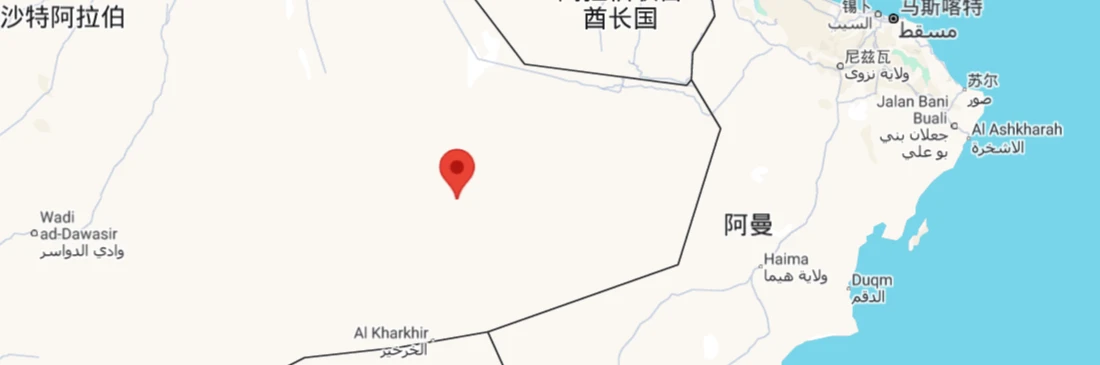
Regional Application Case: Deep High-Temperature Gas Well Isolation in Saudi Arabia
In a major gas development field located in the Eastern Province of Saudi Arabia, an operator scheduled a 7-inch production liner cementing job across a deep carbonate formation at a vertical depth of 4,800 meters. The bottom-hole static temperature measured 168°C, with a bottom-hole circulating temperature of 138°C. The formation presented dual operational hazards: a tight high-pressure gas zone located immediately above a highly permeable, low-pressure depleted carbonate layer. Controlling fluid loss was paramount to prevent gas channeling while avoiding ECD spikes that would fracture the weak formation below.
The operator specified a high-density (2.15 g/cm³) weighting cement slurry incorporating barite, silica flour to prevent high-temperature compressive strength retrogression, a retarder, and a synthetic AMPS-based polymer fluid loss control additive. The primary fluid loss control additive selected for this critical operation was CG610 Fluid Loss Additive. Field laboratory testing confirmed that CG610 achieved an API fluid loss value of 28 mL/30 min under simulated downhole conditions of 140°C and 6.9 MPa differential pressure.
During execution, the slurry was mixed continuously at the surface and pumped into the hole at a rate of 1.2 m³/min. CG610 maintained excellent slurry dispersibility and low plastic viscosity, keeping surface pumping pressures well within safe operational limits. The low API fluid loss rate prevented premature dehydration as the slurry passed through the depleted carbonate interval. Following displacement, full mud returns were observed at the surface with zero circulation loss. Ultrasonic cement bond logging (CBL/VDL) conducted 48 hours post-cementing confirmed a continuous, high-integrity cement bond across the entire gas-bearing interval, with complete absence of gas channeling or micro-annular leaks.
Key Considerations for Selecting Fluid Loss Additives in Complex Well Operations
Selecting the optimal fluid loss control additive requires a thorough evaluation of downhole well parameters, slurry chemistry, and operational logistics. Field engineers must analyze bottom-hole temperatures, circulating pressures, and anticipated job duration to ensure the chosen polymer remains structurally intact during placement. Choosing an unsuitable fluid loss control additive can result in premature slurry flash setting, excessive slurry viscosity, or severe fluid loss into permeable strata.
Mix water chemistry represents another critical evaluation factor. Engineers must determine whether freshwater, technical water, seawater, or produced water will be utilized on site. When utilizing high-salinity water or adding early-strength accelerators such as CaCl₂, selecting a salt-tolerant fluid loss control additive prevents polymer precipitation and guarantees stable filtration performance. Pre-job laboratory testing should always measure API fluid loss, rheological properties, free fluid separation, and thickening curves using actual field water and cement samples.
Finally, environmental regulations and handling logistics must guide product selection. Modern offshore and environmentally sensitive onshore operations increasingly demand eco-friendly cementing additives with low toxicity and high biodegradability profiles. Utilizing high-purity, low-dosage synthetic fluid loss additives minimizes bulk storage requirements on offshore rigs while ensuring compliance with stringent environmental standards. Partnering with established cementing chemical manufacturers guarantees consistent quality control, reliable technical support, and tailored slurry solutions for the most challenging oilfield environments.
Frequently Asked Questions About Cementing Fluid Loss Additives
Q1: What is the ideal API fluid loss rate for deep gas well cementing operations?
For gas well isolation, API fluid loss rates should typically be maintained below 30 to 50 mL/30 min. Controlling fluid loss within this range prevents aqueous filtrate leakage, maintains hydrostatic pressure above formation gas pressure, and eliminates gas migration channels during the critical setting transition period.
Q2: How does temperature affect synthetic AMPS fluid loss additives compared to cellulosic polymers?
Cellulosic additives undergo thermal chain degradation at temperatures above 90°C to 110°C, leading to sudden loss of filtration control. Synthetic AMPS-based fluid loss additives feature heat-resistant sulfonate functional groups that maintain chemical stability and filtration control at temperatures up to 180°C.
Q3: Can fluid loss additives be used in high-density barite-weighted cement slurries?
Yes. Advanced fluid loss control additives like CG610 are specifically designed to perform in high-density slurries weighted with barite or hematite. They maintain uniform solids suspension, prevent barite sag, and control fluid loss without causing excessive slurry gelation.
Q4: Why does salt concentration cause some fluid loss control additives to lose efficiency?
High salt concentrations shield the electrical charges along polymer chains, causing them to coil tightly and lose their water-binding capacity. AMPS-based synthetic additives utilize strongly acidic sulfonate groups that resist charge screening, maintaining full chain extension and performance in saturated saltwater environments.


