
When drilling and completion engineers evaluate how do you choose the right fluid loss additive for a well, they analyze circulating bottom-hole temperatures, differential hydrostatic pressures, formation lithologies, mix-water salinities, and placement schedules across demanding plays in the Middle East, the Gulf of Mexico, and the Tarim Basin. Exploring how do you choose the right fluid loss additive for a well demonstrates that a single chemical formulation cannot satisfy all wellbore regimes; shallow low-temperature strings require rapid hydration control without setting retardation, whereas ultra-deep HPHT intervals demand thermally stable AMPS synthetic terpolymers capable of withstanding temperatures exceeding 200°C. By applying a systematic selection framework centered on how do you choose the right fluid loss additive for a well under API Spec 10A and API RP 10B-2 testing standards, operators control API filtration below 50 mL/30 min, prevent premature slurry desiccation, eliminate micro-annular gas channeling, and ensure lifelong zonal isolation.

The Operational Significance of Tailored Filtration Control
In petroleum well construction, primary cementing represents the primary structural and hydraulic barrier that anchors the casing string within the drilled wellbore, isolates permeable hydrocarbon zones, prevents cross-flow into drinking water aquifers, and shields tubular steel from corrosive downhole fluids such as hydrogen sulfide (H₂S) and carbon dioxide (CO₂). However, once cement slurry exits surface batching tanks and travels thousands of meters into the subterranean annulus, it encounters severe thermodynamic, chemical, and hydraulic gradients.
Across permeable formations, the hydrostatic pressure of the cement column exceeds formation pore pressure. Under this differential pressure gradient, water escapes from the slurry into the surrounding rock. If filtrate escape is unmanaged, the slurry dehydrates rapidly, leading to solids concentration, viscosity spikes, and equivalent circulating density (ECD) surges that fracture weak formations and trigger severe lost circulation. Furthermore, rapid fluid loss collapses the hydrostatic pressure head during early hydration, allowing high-pressure gas to permeate the setting matrix and create sustained casing pressure (SCP) at surface.
Addressing these operational hazards requires engineers to determine how do you choose the right fluid loss additive for a well. Rather than applying a single generic chemical across an entire drilling campaign, technical teams must evaluate downhole temperature profiles, formation characteristics, mix-water chemistry, and thickening time requirements. Selecting the appropriate polymer backbone ensures that the cement slurry remains stable, pumpable, and gas-tight throughout displacement and setting.
1. Downhole Thermal Regimes: Matching Circulating Temperatures to Chemical Backbones
Temperature is the primary driver of polymer degradation downhole. When evaluating additives, engineers distinguish between bottom-hole static temperature (BHST) and bottom-hole circulating temperature (BHCT). Conventional organic polymers that perform well at surface temperatures undergo thermal hydrolysis as temperatures climb, causing molecular chain scission and complete loss of filtration control.
For low-temperature surface casings (<80°C), modified starch, polyvinyl alcohol (PVA), or hydroxyethyl cellulose (HEC) derivatives provide cost-effective water retention without inducing unwanted setting delays. For intermediate zones (80°C to 150°C), carboxymethyl hydroxyethyl cellulose (CMHEC) and moderate-molecular-weight AMPS copolymers provide stable filtration control. In deep ultra-HPHT wellbores (>150°C to 230°C), high-molecular-weight AMPS/NVP synthetic terpolymers are mandatory to resist thermal chain scission and maintain API fluid loss below 35 mL/30 min.
Thermal Operating Range and Additive Selection
2. Formation Lithology and Reservoir Gas-Channeling Risk
The physical characteristics of the target formation dictate the required filtration control threshold:
- High-Permeability Unconsolidated Sands: Large pore throats absorb aqueous filtrate rapidly. These formations require high-molecular-weight polymers that adsorb across clinker minerals and compact into an impermeable cake with permeability below 10⁻⁴ mD.
- Low-Permeability Shales and Carbonates: Tight rock matrices require low-viscosity polymer systems that deposit a micro-thin filter cake without creating a thick skin that interferes with casing standoff or displacement efficiency.
- High-Pressure Gas-Bearing Formations: Hydrocarbon gas can channel through hydrating cement slurries when static gel strength rises from 100 to 500 lbf/100 ft². In these intervals, synthetic AMPS polymers must be paired with styrene-butadiene rubber (SBR) latex emulsions. The coalescing latex spheres form a flexible elastomeric barrier that blocks gas micro-channels.
3. Slurry Chemistry and Salinity Tolerance
Slurry design parameters-including mix-water salinity, slurry density, and solid weighting agents-strongly influence polymer performance. In offshore cementing or operations across massive evaporite salt zones, mix water contains high concentrations of sodium chloride (NaCl), potassium chloride (KCl), or calcium chloride (CaCl₂).
Standard polyacrylamides and unmodified biopolymers precipitate in high-salinity brines because divalent and monovalent cations compress the electrical double layer, causing polymer chains to collapse. In contrast, synthetic AMPS copolymers feature rigid sulfonate groups (–SO₃⁻) that resist cationic screening, maintaining molecular coil expansion and filtration control in saturated brines.
Slurry System and Additive Architecture Matrix
4. Thickening Time Dynamics and Operational Pumping Schedules
In extended-reach horizontal laterals or deep casing strings, slurry displacement can take 3 to 5 hours. Throughout this duration, the fluid loss additive must maintain filtration control without breaking down under continuous shear.
However, fluid loss polymers can influence cement setting kinetics. While high-molecular-weight AMPS polymers provide stable filtration control, excessive dosages can coat clinker grains and retard hydration, prolonging the transition period. Conversely, short surface jobs require additives that leave early compressive strength development unaffected. Laboratory thickening-time testing on an HPHT consistometer ensures that the additive maintains pumpability without causing excessive wait-on-cement (WOC) downtime.
5. Laboratory Qualification Protocols (API RP 10B-2)
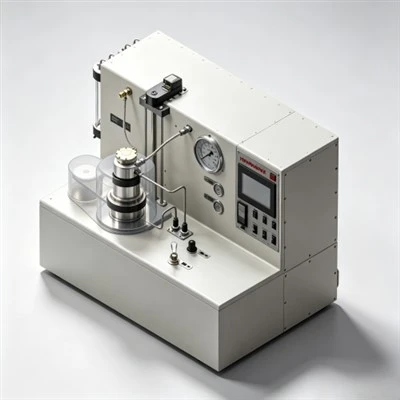
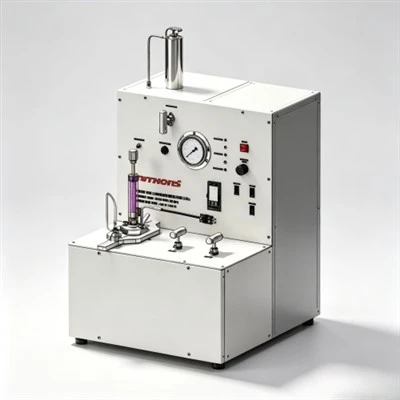
Final additive selection must be confirmed through laboratory testing using actual rig mix water and delivered cement batches. The primary qualification tests include:
Regional Application Case: Deep Carbonate Sour Gas Production Liner Cementing in the Ahwaz Field, Khuzestan Province, Iran
Case Application: Ahwaz Oilfield, Khuzestan Province, Southwestern Iran
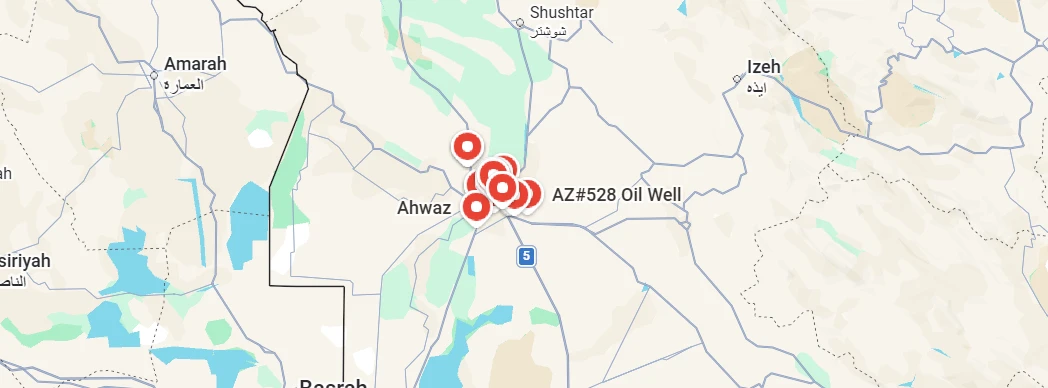
Target Formation: Deep HPHT Khami Sour Gas Carbonates (High Pressure, High H₂S & Narrow ECD Window)
Regional Cementing Background in Khuzestan Carbonate Plays
In the Ahwaz field of southwestern Iran, drilling operations penetrate overpressured gas-bearing carbonate reservoirs within the Cretaceous-Jurassic Khami Group. Well measured depths regularly exceed 4,900 to 5,300 meters (16,000 to 17,400 feet). Downhole conditions are severe: bottom-hole static temperatures (BHST) climb to 165°C to 175°C (329°F to 347°F) with formation pressures exceeding 12,000 psi (82.7 MPa). The formations produce sour gas containing H₂S (up to 6%) and CO₂ (up to 8%). Cementing 7-inch production liners across the Khami interval requires heavy Class G slurry systems (1.98 to 2.10 g/cm³) weighted with barite and stabilized by high-temperature polymers.
Regional Cementing Challenges in Extreme HPHT Formations
Operators cementing deep production liners across the Khami formation encounter critical technical hurdles:
- Severe Retarder Sensitivity: At temperatures above 160°C, minor variations of 0.05% BWOC in chemical retarder concentration cause large swings in thickening time, risking premature flash setting or multi-day setting delays.
- Narrow Equivalent Circulating Density (ECD) Windows: Close margins between formation pore pressure and fracture breakdown pressure demand low-viscosity slurries that maintain steady rheology without premature gelation spikes.
- Risk of Sour Gas Channeling: An extended transition time during slurry phase changes allows sour gas invasion into the decaying hydrostatic column, creating sustained casing pressure (SCP).
Technical Requirements for Slurry Qualification
To qualify a heavy 1.98 g/cm³ (16.5 ppg) Class G cement system across the Khami gas zone, the operator established strict performance criteria:
- API fluid loss control strictly below 35 mL/30 min at 165°C using an automated high-temperature stirred fluid loss cell to prevent dehydration.
- Thickening time validation on an HPHT consistometer confirming a pumpability window of 5 hours and 30 minutes to 70 Bc under simulated dynamic ramp schedules.
- Static gel strength (SGS) transition window (from 100 to 500 lbf/100 ft²) of less than 30 minutes, with 24-hour compressive strength exceeding 3,500 psi (24.1 MPa).
How Advanced Polymer Selection Resolved the Field Challenge
To resolve these downhole risks, the engineering team applied the operational screening framework of how do you choose the right fluid loss additive for a well. Recognizing that high temperatures and dissolved salts would degrade cellulosic polymers, the team selected KELIOIL synthetic AMPS salt-resistant fluid loss additives (1.8% BWOC) paired with high-temperature synthetic retarders, sulfonated dispersants, and 35% BWOC silica flour. The AMPS terpolymer formed an impermeable filter cake across the porous carbonate faces, maintaining API filtration loss at 32 mL/30 min under 165°C and 1,000 psi differential pressure.
Consistometer test curves confirmed a stable thickening time of 5 hours and 38 minutes to 70 Bc with zero early viscosity peaking. During field execution at Well Ahwaz-412, the slurry was pumped across the 1,050-meter liner without surface pressure surges or ECD spikes. Post-job radial acoustic cement bond logs (CBL-VDL) confirmed 100% circumferential bonding across the Khami sour gas pay zone. Subsequent negative pressure testing recorded zero sustained annular pressure, proving that precision chemical selection based on how do you choose the right fluid loss additive for a well provides the empirical foundation required to eliminate cementing failures in extreme HPHT plays.
Frequently Asked Questions (FAQ) Regarding Fluid Loss Additive Selection
1. What happens if a fluid loss additive is incompatible with the slurry dispersant?
Incompatible dispersant-polymer combinations cause competitive adsorption on cement grain surfaces. Overdosing dispersants can displace fluid loss polymers from mineral faces, impairing filter cake formation and increasing API filtration rates. Conversely, certain anionic polymers can induce slurry flocculation, increasing plastic viscosity and causing surface pumping pressure spikes.
2. Can high dosages of fluid loss additives delay compressive strength development?
Yes. Overdosing fluid loss polymers can encapsulate cement clinker particles, delaying early hydration kinetics and extending thickening times. Specialized AMPS-copolymer and non-retarding PVA systems are engineered to provide tight filtration control without causing secondary retardation, allowing slurries to reach 500 psi compressive strength rapidly.
3. Why is API fluid loss measured under 1,000 psi differential pressure for HPHT wells?
In deep wellbores, the hydrostatic overbalance between the cement column and formation pore pressure frequently exceeds 500 to 1,000 psi. Standard low-pressure filtration tests (100 psi) underestimate downhole fluid escape. Testing under 1,000 psi (6.89 MPa) differential pressure in an HPHT stirred fluid loss cell provides realistic evaluation of filter cake compaction and polymer resilience under true wellbore loads.
Strategic Chemical Selection for Reliable Wellbore Zonal Isolation
In modern well construction, achieving permanent zonal isolation depends directly on empirical laboratory precision and chemical formulation science. Understanding how do you choose the right fluid loss additive for a well enables drilling and completion teams to prevent slurry dehydration, maintain hydrostatic pressure transmission, and eliminate gas channeling.
KELIOIL remains committed to manufacturing high-performance oilfield cementing additives under strict ISO 9001 and API Spec 10A quality control standards. By combining state-of-the-art polymer synthesis with comprehensive laboratory testing support, KELIOIL provides operators and cementing service contractors worldwide with dependable fluid loss additives that guarantee wellbore integrity, protect the environment, and ensure long-term hydrocarbon asset productivity.
Protect Your Slurry Integrity with KELIOIL Fluid Loss Additives
Our technical chemical specialists provide customized slurry formulation designs, API Spec 10A laboratory testing verification, and reliable bulk supply of premium cementing additives tailored to demanding onshore and offshore drilling operations.