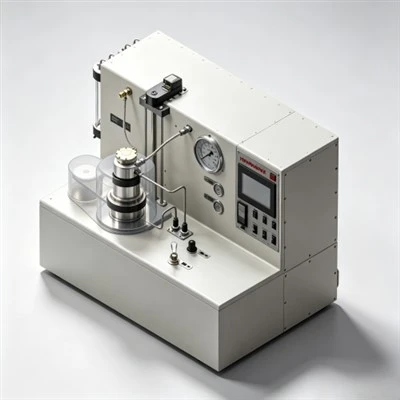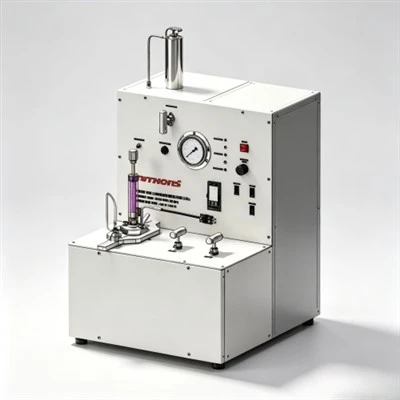

When petroleum laboratory chemists and field specialists calculate how much retarder should you add in a cementing job, they establish an empirical optimization workflow based on bottom-hole circulating temperature (BHCT), static geothermal gradients, hydraulic displacement time, and cement clinker mineralogy across high-risk operations in the Middle East, the Gulf of Mexico, and the Tarim Basin. Determining how much retarder should you add in a cementing job requires precise dosage balancing: under-treating causes premature slurry flash setting, casing blockages, and lost circulation, whereas over-treating leads to severe compressive strength delays, prolonged waiting-on-cement (WOC) downtime, and annular gas migration. By evaluating how much retarder should you add in a cementing job through pressurized HPHT consistometer testing adhering to API Spec 10A and API RP 10B-2 standards, engineering teams establish an optimized chemical concentration (typically 0.1% to 2.5% BWOC) that guarantees an engineered 90 to 120-minute safety cushion, flat rheological consistency, and reliable life-of-well zonal isolation.

The Operational Significance of Chemical Retarder Concentration in Primary Cementing
In hydrocarbon well engineering, primary cementing represents the primary physical barrier that anchors casing tubulars within the drilled borehole, isolates porous hydrocarbon formations, prevents cross-contamination into shallow potable aquifers, and shields steel casing from corrosive subterranean brines containing hydrogen sulfide (H₂S) and carbon dioxide (CO₂). However, when cement slurry exits surface batching tanks and travels thousands of meters into the subterranean annulus, it encounters severe thermodynamic, barometric, and lithological gradients. Bottom-hole circulating temperatures (BHCT) frequently exceed 150°C to 180°C (302°F to 356°F), accompanied by hydrostatic confining pressures exceeding 80 to 120 MPa (11,600 to 17,400 psi).
Under these intense thermal and pressure conditions, Portland cement clinker minerals-primarily tricalcium silicate (C₃S) and tricalcium aluminate (C₃A)-hydrate through accelerated chemical reaction mechanisms. If the chemical retarder dosage is insufficient, the rapid dissolution of calcium and aluminate ions accelerates the crystallization of calcium silicate hydrate (C-S-H) gel fibers. This uninhibited hydration causes slurry consistency to surge prematurely during annular placement. Frictional pressure drop elevates equivalent circulating density (ECD) beyond formation fracture breakdown limits, inducing severe lost circulation, dropping the top of cement (TOC) far below target depths, and risking pipe sticking that results in multimillion-dollar well sidetracking operations.
Conversely, adding an excessive chemical concentration introduces equally dangerous operational risks. Overdosing retarder molecules encapsulates clinker surfaces and chelates calcium ions to such an extent that cement hydration is completely arrested for days. This extended fluid-to-solid transition window allows hydrostatic pressure transmission to decay, leaving the wellbore vulnerable to formation gas invasion and creating sustained casing pressure (SCP) at the wellhead. Furthermore, prolonged waiting-on-cement (WOC) downtime inflates offshore rig spread costs by hundreds of thousands of dollars per day. These operational realities demonstrate why laboratory specialists must rigorously calculate how much retarder should you add in a cementing job, ensuring an exact chemical balance that provides adequate placement safety without sacrificing early compressive strength development.
1. Downhole Temperature Dynamics: Calibrating Retarder Dosages to Thermal Gradients
When designing cement slurries, wellbore temperature represents the primary independent variable governing chemical kinetics. Chemical reaction rates double approximately every 10°C rise according to Arrhenius principles. Therefore, determining retarder concentration requires an exact distinction between bottom-hole circulating temperature (BHCT) and bottom-hole static temperature (BHST).
Slurry thickening time on a consistometer must be tested at dynamic BHCT, whereas static compressive strength development is evaluated at undisturbed BHST. As well depth and thermal exposure increase, chemical retarder requirements shift non-linearly:
2. Displacement Time and the Pumping Safety Window
Pumping duration is the decisive operational parameter when answering how much retarder should you add in a cementing job. Total placement time represents the sum of surface batch blending, slurry injection, casing displacement down tubulars, and landing the top wiper plug. Industry standards under API RP 10B-2 mandate that measured laboratory thickening time to 70 Bearden units of Consistency (Bc) must equal total placement time plus an engineered safety factor of 90 to 120 minutes.
This safety window provides operational insurance against unexpected surface rig shutdowns, mechanical pump failures, manifold valve blockages, or downhole flow restrictions. If a job requires 3 hours of dynamic pumping, the slurry must be dosed to achieve an exact thickening time between 4 hours and 30 minutes to 5 hours. Over-retarding beyond this envelope prolongs the vulnerable phase transition period, increasing gas channeling risks, while under-retarding risks catastrophic flash setting inside casing strings.
3. Cement Mineralogy and Clinker Sensitivity Profiles
Chemical retarder effectiveness is governed by the physical and mineralogical characteristics of the base cement powder. Manufactured cements conforming to API Spec 10A exhibit distinct chemical reactivities that dictate dosage adjustments:
4. Additive Synergies: Balancing Retarders with Fluid Loss and Dispersants
A cementing retarder must be calibrated within the complete slurry system. When combined with other chemical additives, competitive adsorption and chemical cross-interactions shift effective thickening times:
- Interaction with Polymeric Fluid Loss Additives: High-molecular-weight AMPS-based fluid loss additives contain sulfonate functional groups that exhibit secondary retarding capabilities. When paired with synthetic fluid loss agents, the required retarder dosage typically decreases by 10% to 25%. Failure to account for this synergy leads to severe over-retardation downhole.
- Dispersant Balancing: Polymeric dispersants deflocculate cement clusters, exposing more clinker surface area for retarder adsorption. While this enhances fluid workability, overdosing dispersants can strip retarder molecules from mineral faces, triggering sudden consistency spikes during high-temperature thermal ramps.
- Mix-Water Chemistry and Salinity: Hard water containing dissolved divalent calcium (Ca²⁺) and magnesium (Mg²⁺) ions reduces the chelation efficiency of organic acid retarders. Similarly, seawater or saturated sodium chloride (NaCl) brines compress polymer coils, requiring dosage adjustments of 20% to 30% compared to fresh water recipes.
Regional Application Case: Deep Carbonate Sour Gas Production Liner Cementing in the Ahwaz Field, Khuzestan Province, Iran
Case Application: Ahwaz Oilfield, Khuzestan Province, Southwestern Iran

Target Formation: Deep HPHT Khami Sour Gas Carbonates (High Pressure, High H₂S & Narrow ECD Window)
Regional Cementing Background in Khuzestan Carbonate Plays
In the Ahwaz field of southwestern Iran, drilling operations penetrate overpressured gas-bearing carbonate reservoirs within the Cretaceous-Jurassic Khami Group. Well measured depths regularly exceed 4,900 to 5,300 meters (16,000 to 17,400 feet). Downhole conditions are severe: bottom-hole static temperatures (BHST) climb to 165°C to 175°C (329°F to 347°F) with formation pressures exceeding 12,000 psi (82.7 MPa). The formations produce sour gas containing H₂S (up to 6%) and CO₂ (up to 8%). Cementing 7-inch production liners across the Khami interval requires heavy Class G slurry systems (1.98 to 2.10 g/cm³) weighted with barite and stabilized by high-temperature polymers.
Regional Cementing Challenges in Extreme HPHT Formations
Operators cementing deep production liners across the Khami formation encounter critical technical hurdles:
- Severe Retarder Sensitivity: At temperatures above 160°C, minor variations of 0.05% BWOC in chemical retarder concentration cause large swings in thickening time, risking premature flash setting or multi-day setting delays.
- Narrow Equivalent Circulating Density (ECD) Windows: Close margins between formation pore pressure and fracture breakdown pressure demand low-viscosity slurries that maintain steady rheology without premature gelation spikes.
- Risk of Sour Gas Channeling: An extended transition time during slurry phase changes allows sour gas invasion into the decaying hydrostatic column, creating sustained casing pressure (SCP).
Technical Requirements for Slurry Qualification
To qualify a heavy 1.98 g/cm³ (16.5 ppg) Class G cement system across the Khami gas zone, the operator established strict performance criteria:
- Thickening time validation on an HPHT consistometer confirming a pumpability window of 5 hours and 30 minutes to 70 Bc under simulated dynamic ramp schedules.
- API fluid loss control strictly below 35 mL/30 min at 165°C using an automated high-temperature stirred fluid loss cell to prevent dehydration.
- Static gel strength (SGS) transition window (from 100 to 500 lbf/100 ft²) of less than 30 minutes, with 24-hour compressive strength exceeding 3,500 psi (24.1 MPa).
How Laboratory Dosage Optimization Resolved the Field Challenge
To resolve these downhole uncertainties, the operator's central laboratory executed a systematic screening matrix to optimize how much retarder should you add in a cementing job under extreme thermal stress. Initial formulation trials tested KELIOIL synthetic AMPS-based high-temperature retarders across an incremental concentration ladder: 0.65%, 0.85%, and 1.10% BWOC. At 0.65% BWOC, thickening time reached only 3 hours and 40 minutes, failing to provide the mandatory 120-minute safety cushion over planned displacement. At 1.10% BWOC, the slurry was over-retarded, remaining fluid for over 8 hours and delaying 500 psi compressive strength development to 28 hours.
The laboratory established 0.85% BWOC as the precise optimum dosage. Paired with 1.8% BWOC salt-resistant fluid loss additives, sulfonated dispersants, and 35% BWOC silica flour, the 0.85% formulation delivered an ideal right-angle set profile on an HPHT consistometer. Consistency remained at 18 Bc for 4 hours and 30 minutes before rising sharply to 70 Bc at 5 hours and 38 minutes. Ultrasonic testing on a UCA verified that the slurry developed 500 psi compressive strength in 9 hours and surpassed 3,800 psi at 24 hours.
During field execution at Well Ahwaz-412, the slurry placed smoothly across the 1,050-meter liner without surface pressure anomalies or ECD spikes. Post-job radial acoustic cement bond logs (CBL-VDL) confirmed 100% circumferential bonding across the Khami sour gas pay zone. Subsequent negative pressure testing recorded zero sustained annular casing pressure, proving that precision laboratory calibration of how much retarder should you add in a cementing job provides the empirical foundation required to eliminate cementing failures in extreme HPHT plays.

Standardized Laboratory Protocols for Retarder Dosage Optimization
Achieving reliable field performance requires adhering to standardized API RP 10B-2 laboratory workflows when formulating chemical retarders:
- Testing with Actual Rig Mix Water and Delivered Cement Batches: Dissolved salts, divalent calcium (Ca²⁺) and magnesium (Mg²⁺) ions, and sulfates in rig mix water alter retarder chelation efficiency and surface adsorption. Always test retarders using actual rig water samples rather than laboratory deionized water.
- Consistometer Thickening Time Profiling: Measure thickening time on calibrated HPHT consistometers under simulated geothermal temperature and pressure ramp schedules in strict accordance with API RP 10B-2. Verify that consistency remains flat (<30 Bc) throughout dynamic placement.
- Compressive Strength Development on UCA: Evaluate strength development non-destructively using an Ultrasonic Cement Analyzer (UCA) under bottom-hole static temperature (BHST). Verify that the retarder does not prevent the slurry from reaching 500 psi within 12 to 16 hours.
- Chemical Addition Sequence in Batch Mixing: Liquid retarders should be thoroughly homogenized into mix water prior to introducing dry cement powder. This ensures uniform chemical distribution and prevents localized flash setting during surface mixing.
Frequently Asked Questions (FAQ) Regarding Retarder Dosage Calibration
1. What are the operational symptoms of an under-dosed retarder in the field?
Field indicators of an under-dosed retarder include unexpected surface pumping pressure surges during displacement, rapid loss of slurry fluidity in surface lines, early plug bump occurrences before full volumetric displacement, and equivalent circulating density (ECD) spikes that trigger severe lost circulation downhole.
2. Can temperature fluctuations during mixing affect required retarder dosage?
Yes. Variations in surface water temperature (e.g., between daytime heat and nighttime cold in desert or offshore environments) alter initial cement dissolution rates. In extreme climates, mix water chilling or continuous thermal monitoring is required to prevent uncalibrated thickening time shifts.
3. Why is thickening time measured to 70 Bc rather than 100 Bc to determine dosage?
A consistency of 70 Bc represents the practical pumpability limit for standard triplex field pumps. Above 70 Bc, slurry viscosity increases exponentially, creating flow resistance that pumps cannot overcome without exceeding allowable wellhead working pressures. A reading of 100 Bc indicates complete fluid solidification into stone.
Strategic Chemical Selection for Reliable Slurry Placement
As well drilling programs navigate deeper formations, narrower hydraulic margins, and higher geothermal gradients, achieving permanent zonal isolation depends directly on understanding how much retarder should you add in a cementing job. Precision chemical design prevents catastrophic premature setting, protects weak formations from hydraulic pressure surges, and ensures complete annular displacement across demanding well trajectories.
KELIOIL remains dedicated to manufacturing high-performance oilfield cementing retarders under strict ISO 9001 and API Spec 10A quality control standards. By combining advanced polymer synthesis with comprehensive laboratory testing support, KELIOIL empowers operating companies and service contractors worldwide to optimize chemical additive packages, eliminate downhole cementing failures, and maximize hydrocarbon asset longevity.
Optimize Your Slurry Pumping Windows with KELIOIL Cement Retarders
Our technical chemical specialists provide customized retarder formulation design, HPHT thickening-time laboratory testing verification, and reliable bulk supply of premium cementing additives tailored to demanding onshore and offshore drilling operations.