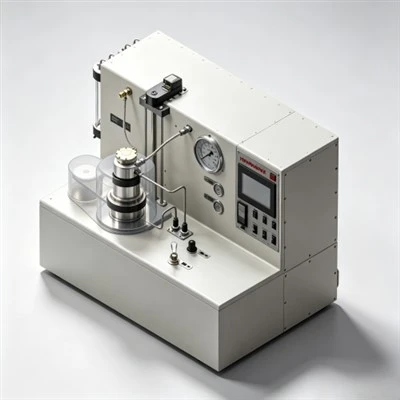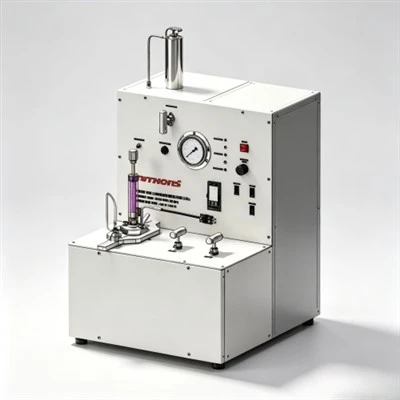

When petroleum engineers evaluate what is a cementing retarder, they define it as an engineered chemical additive formulated to delay the hydration reactions of Portland cement clinker minerals, extending slurry pumpability and thickening time under elevated bottom-hole circulating temperatures (BHCT) and hydrostatic pressures across deep onshore and offshore plays in the Middle East, the Gulf of Mexico, and the Tarim Basin. Exploring what is a cementing retarder reveals that downhole temperatures exceeding 150°C accelerate tricalcium silicate (C₃S) and tricalcium aluminate (C₃A) dissolution, threatening premature slurry flash setting inside casing strings. By integrating chemical formulations tailored around what is a cementing retarder-such as modified lignosulfonates, synthetic AMPS copolymers, and hydroxycarboxylic acids-operators control the dormant induction period, suppress premature gelation, establish an adequate placement safety buffer, and ensure permanent annular zonal isolation.

The Operational Significance of Hydration Retardation in Well Construction
In petroleum exploration and well construction, primary cementing serves as the foundational barrier that anchors casing strings, isolates permeable hydrocarbon zones, protects shallow freshwater aquifers from cross-contamination, and shields casing steel from corrosive downhole brines. However, once mixed at surface ambient temperatures, cement slurry must travel thousands of meters through narrow casing tubulars before circulating upward into the subterranean annulus. Throughout this dynamic journey, the slurry encounters steep geothermal gradients and confining hydrostatic pressure columns.
Under downhole thermal stress, uninhibited Portland cement slurries hydrate rapidly. The dissolution of calcium and aluminate ions into the aqueous pore solution accelerates according to Arrhenius kinetics, triggering early nucleation of calcium silicate hydrate (C-S-H) gel fibers. If a slurry begins to set prematurely during pumping, its apparent viscosity surges. This uncontrolled gelation causes equivalent circulating density (ECD) to exceed the formation fracture breakdown gradient, inducing severe lost circulation and leaving pay zones un-cemented. In worst-case scenarios, flash setting inside tubulars locks casing strings off-bottom, resulting in multi-million-dollar well abandonment and sidetracking operations.
Investigating what is a cementing retarder highlights how chemical retardation provides drilling engineers with operational control. By selectively adsorbing onto mineral surfaces and chelating dissolved calcium ions, a retarder extends the dormant induction phase of the slurry. Understanding what is a cementing retarder allows operational planners to design an engineered pumping window-typically incorporating a 90 to 120-minute safety cushion beyond total displacement duration-ensuring safe placement across deep vertical, horizontal, and high-pressure high-temperature (HPHT) wellbores.
Physicochemical Mechanisms: How Retarders Delay Cement Hydration
To thoroughly analyze what is a cementing retarder, engineers examine the surface chemistry occurring between organic retarder molecules and hydrating cement grains. Standard oilwell Portland cements (Class G and Class H) consist primarily of tricalcium silicate (C₃S), dicalcium silicate (C₂S), tricalcium aluminate (C₃A), and tetracalcium aluminoferrite (C₄AF). Chemical retarders intervene through four coordinated physical and chemical mechanisms:
1. Surface Adsorption and Nucleation Poisoning
Organic retarders containing hydroxyl (–OH), carboxyl (–COOH), or sulfonate (–SO₃⁻) functional groups adsorb directly onto the surfaces of unhydrated C₃S and C₃A particles via electrostatic attraction and hydrogen bonding. This adsorbed polymer layer coats reactive mineral sites, physically preventing water molecules from contacting the clinker surface. Furthermore, retarder molecules adsorb onto newly formed C-S-H crystal growth centers, poisoning the nucleation sites and halting rapid crystal propagation.
2. Calcium Ion Chelation in Pore Solution
Hydroxycarboxylic acids (such as citric, tartaric, and gluconic acids) and phosphonate compounds possess strong multidentate ligand structures. These molecules chelate free calcium cations (Ca²⁺) released into the aqueous pore solution during early C₃S dissolution. By binding Ca²⁺ into stable organometallic complexes, the retarder suppresses the ion-activity product, preventing the pore solution from reaching the critical supersaturation threshold required to precipitate solid crystalline calcium hydroxide (Ca(OH)₂) and C-S-H gel.
3. Precipitation of Semi-Permeable Protective Barriers
Certain inorganic and organic retarders react with high concentrations of calcium and hydroxyl ions in alkaline pore water (pH 12 to 13) to form insoluble, semi-permeable gelatinous coatings around cement grains. This boundary layer impedes the outward diffusion of silicate and aluminate ions and restricts the inward diffusion of free water. Osmotic pressure eventually ruptures this membrane as hydration forces build up, triggering the delayed onset of setting.
4. Modification of Hydration Crystal Morphology
Retarder molecules selectively alter the crystalline habit of hydration products. In aluminate hydration, retarders inhibit the rapid conversion of needle-like ettringite into monosulfate hydrates. By stabilizing ettringite morphology and preventing early plate-like crystal agglomeration, the slurry maintains fluid, non-dilatant rheology throughout high-temperature wellbore placement.
Primary Chemical Families of Oilfield Cementing Retarders
Selecting the proper chemical agent requires evaluating circulating temperature, well depth, mix-water salinity, and slurry density. The primary chemical families utilized across the petroleum industry include:
1. Lignosulfonate-Based Retarders
Purified calcium and sodium lignosulfonates, derived as by-products of the wood pulping industry, represent the most widely used and economical retarders for intermediate casing jobs. They function effectively from ambient temperatures up to 120°C (248°F). Lignosulfonates provide dual functionality: they act as mild dispersants while retarding hydration. However, at temperatures above 135°C, unmodified lignosulfonates decompose thermally, losing retardation stability.
2. Hydroxycarboxylic Acids and Carbohydrate Derivatives
Citric acid, tartaric acid, gluconic acid, and sodium glucoheptonate are potent low-to-medium temperature retarders. Operating up to 140°C (284°F), these organic acids exhibit strong calcium chelation. They are widely deployed in salt-saturated slurries and lightweight systems. However, their dosage-response curve is steep; slight over-dosing can cause severe slurry gelation delays and extend waiting-on-cement time.
3. Synthetic AMPS-Based Copolymer Retarders
For deep, ultra-HPHT wellbores, synthetic polymers synthesized from 2-acrylamido-2-methylpropane sulfonic acid (AMPS), acrylic acid (AA), and maleic acid represent the state of the art. Capable of operating up to 230°C (446°F), these polymers possess a thermally stable carbon-carbon backbone that resists hydrolysis under severe geothermal stress. They provide predictable, linear thickening curves without early viscosity peaking.
4. Inorganic and Organophosphonate Compounds
Inorganic salts such as sodium tetraborate (borax) and zinc oxide, alongside synthetic amino-phosphonates, are deployed in specialized HPHT slurries. Borate ions cross-link with polysaccharides to extend retardation up to 200°C+, making them valuable synergistic intensifiers when blended with synthetic polymer retarders.

Comparative Technical Specifications of Core Cementing Retarders
To assist operational planning, laboratory chemists align retarder chemistry with wellbore thermal and mechanical parameters. The table below compares the active chemistry, operational ranges, and technical characteristics of primary oilfield retarders:
Regional Application Case: Deep Carbonate Sour Gas Production Liner Cementing in the Ahwaz Field, Khuzestan Province, Iran
Case Application: Ahwaz Oilfield, Khuzestan Province, Southwestern Iran

Target Formation: Deep HPHT Khami Sour Gas Carbonates (High Pressure, High H₂S & Narrow ECD Window)
Regional Cementing Background in Khuzestan Carbonate Plays
In the Ahwaz field of southwestern Iran, drilling operations penetrate overpressured gas-bearing carbonate reservoirs within the Cretaceous-Jurassic Khami Group. Well measured depths regularly exceed 4,900 to 5,300 meters (16,000 to 17,400 feet). Downhole conditions are severe: bottom-hole static temperatures (BHST) climb to 165°C to 175°C (329°F to 347°F) with formation pressures exceeding 12,000 psi (82.7 MPa). The formations produce sour gas containing H₂S (up to 6%) and CO₂ (up to 8%). Cementing 7-inch production liners across the Khami interval requires heavy Class G slurry systems (1.98 to 2.10 g/cm³) weighted with barite and stabilized by high-temperature polymers.
Regional Cementing Challenges in Extreme HPHT Formations
Operators cementing deep production liners across the Khami formation encounter critical technical hurdles:
- Severe Retarder Sensitivity: At temperatures above 160°C, minor variations of 0.05% BWOC in chemical retarder concentration cause large swings in thickening time, risking premature flash setting or multi-day setting delays.
- Narrow Equivalent Circulating Density (ECD) Windows: Close margins between formation pore pressure and fracture breakdown pressure demand low-viscosity slurries that maintain steady rheology without premature gelation spikes.
- Risk of Sour Gas Channeling: An extended transition time during slurry phase changes allows sour gas invasion into the decaying hydrostatic column, creating sustained casing pressure (SCP).
Technical Requirements for Slurry Qualification
To qualify a heavy 1.98 g/cm³ (16.5 ppg) Class G cement system across the Khami gas zone, the operator established strict performance criteria:
- Thickening time validation on an HPHT consistometer confirming a pumpability window of 5 hours and 30 minutes to 70 Bc under simulated dynamic ramp schedules.
- API fluid loss control strictly below 35 mL/30 min at 165°C using an automated high-temperature stirred fluid loss cell to prevent dehydration.
- Static gel strength (SGS) transition window (from 100 to 500 lbf/100 ft²) of less than 30 minutes, with 24-hour compressive strength exceeding 3,500 psi (24.1 MPa).
How Advanced Retarder Technology Resolved the Field Challenge
To resolve these downhole uncertainties, the operator's central laboratory applied the chemical principles of what is a cementing retarder to formulate an optimized HPHT slurry. Conventional lignosulfonate retarders degraded thermally during pilot consistometer runs, causing early consistency spikes above 50 Bc at 120°C. The laboratory replaced them with KELIOIL synthetic AMPS high-temperature retarders (0.85% BWOC) paired with salt-resistant fluid loss polymers, sulfonated dispersants, and 35% BWOC silica flour.
Consistometer test curves confirmed a stable right-angle set profile, maintaining a baseline consistency of 18 Bc for 4 hours and 30 minutes before rising sharply to 70 Bc at 5 hours and 38 minutes. This delivered an engineered 120-minute safety cushion over planned displacement operations. During field execution at Well Ahwaz-412, the slurry placed cleanly across the 1,050-meter liner without surface pressure surges or ECD spikes. Post-job radial acoustic cement bond logs (CBL-VDL) confirmed 100% circumferential bonding across the Khami sour gas pay zone. Subsequent negative pressure testing recorded zero sustained annular pressure, proving that understanding what is a cementing retarder provides the empirical precision required to eliminate cementing failures in extreme HPHT plays.

Pre-Job Laboratory Evaluation and Quality Assurance Standards
Achieving reliable field performance requires that cementing retarders undergo standardized laboratory verification prior to rig deployment:
- Testing with Actual Field Mix Water and Delivered Cement Batches: Always evaluate retarder performance using actual rig mix water and representative samples of delivered Class G or Class H cement. Dissolved sulfates, calcium ions, and pH variations in local mix water significantly alter polymer adsorption efficiency.
- Consistometer Thickening Time Profiling: Measure thickening time on calibrated HPHT consistometers under simulated geothermal temperature and pressure ramp schedules in strict accordance with API RP 10B-2. Verify that the consistency remains flat (<30 Bc) throughout dynamic placement.
- Compressive Strength Development on UCA: Evaluate strength development non-destructively using an Ultrasonic Cement Analyzer (UCA) under bottom-hole static temperature (BHST). Verify that the retarder does not prevent the slurry from reaching 500 psi within 12 to 16 hours.
- Chemical Addition Sequence in Batch Mixing: Liquid retarders should be thoroughly homogenized into mix water prior to introducing dry cement powder. This ensures uniform chemical distribution and prevents localized flash setting during surface mixing.
Frequently Asked Questions (FAQ) Regarding Cementing Retarders
1. What happens if an oilfield cement slurry is overdosed with retarder?
Overdosing a cementing retarder causes severe hydration delays, leaving the cement column in a fluid or gelled state for 24 to 48+ hours. This prolonged liquid state allows hydrostatic pressure transmission to decay, leaving the wellbore vulnerable to formation gas channeling. Furthermore, excessive retardation inflates rig waiting-on-cement (WOC) downtime costs.
2. How does bottom-hole circulating temperature (BHCT) differ from static temperature (BHST) when designing retarders?
BHST is the undisturbed geothermal temperature of the formation, whereas BHCT is the cooler temperature experienced by the slurry during dynamic pumping due to the cooling effect of circulating fluid. Thickening time testing in an HPHT consistometer is conducted at BHCT, whereas static compressive strength curing on a UCA is conducted at BHST.
3. Can a cementing retarder impact slurry rheology and plastic viscosity?
Yes. Many retarders-particularly lignosulfonates and low-molecular-weight polymers-exhibit mild dispersing properties that lower plastic viscosity and yield point. However, in high-density slurries under high temperatures, incompatible retarders can interact with fluid loss polymers to cause transient viscosity peaks. Slurry rheology must be verified on rotational viscometers across all API shear rates.
Strategic Chemical Selection for Reliable Slurry Placement
As well drilling profiles become deeper, hotter, and operationally more complex, achieving successful primary cementing rests fundamentally on recognizing what is a cementing retarder and selecting the proper polymer chemistry. Precise hydration control eliminates premature setting risks, protects weak formations from equivalent circulating density surges, and ensures complete annular displacement across long horizontal laterals and narrow liners.
KELIOIL remains dedicated to manufacturing high-performance oilfield cementing retarders under strict ISO 9001 and API Spec 10A quality control standards. By combining cutting-edge synthetic polymer chemistry with comprehensive laboratory testing support, KELIOIL provides operators and cementing service contractors worldwide with dependable chemical solutions that guarantee wellbore integrity, environmental safety, and maximum asset productivity.
Optimize Your Slurry Pumping Windows with KELIOIL Cement Retarders
Our technical chemical specialists provide customized retarder formulation design, HPHT thickening-time laboratory testing verification, and reliable bulk supply of premium cementing additives tailored to demanding onshore and offshore drilling operations.