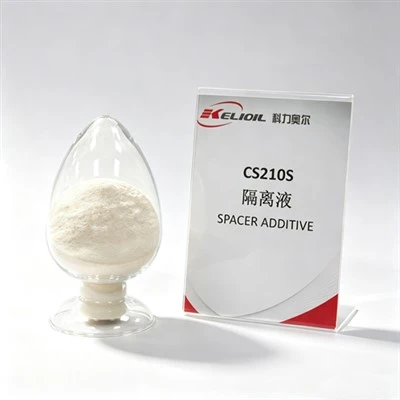


An anti-settling fluid loss additive such as CG214 Anti-Settling Fluid Loss Additive is specifically formulated for high-temperature cementing operations in Saudi Arabia, where extreme downhole heat and solid sedimentation threaten primary zonal isolation. Elevated bottomhole static temperatures cause conventional polymer additives to break down rapidly, leading to lost filtration control, barite sag, free water separation, and hazardous gas migration pathways. Incorporating a high-performance chemical system enables drilling engineers to maintain precise fluid loss control, ensure static particle suspension, and sustain continuous hydraulic seals across long horizontal and vertical casing intervals in challenging deep formations.
When engineering high-density cement slurries for deep reservoirs in Middle Eastern basins, maintaining long-term slurry stability requires advanced synthetic polymer technology. The application of high-quality oil well fluid loss additives ensures that the aqueous phase remains bound within the cement slurry matrix under severe pressure differentials. Integrating specialized slurry chemistry optimizes rheological behavior, prevents fluid loss to sensitive permeable formations, and delivers uniform slurry density profiles from bottomhole static temperature conditions to top of cement during extended placement schedules.
Case Application: Rub' al Khali Basin (Empty Quarter), Saudi Arabia
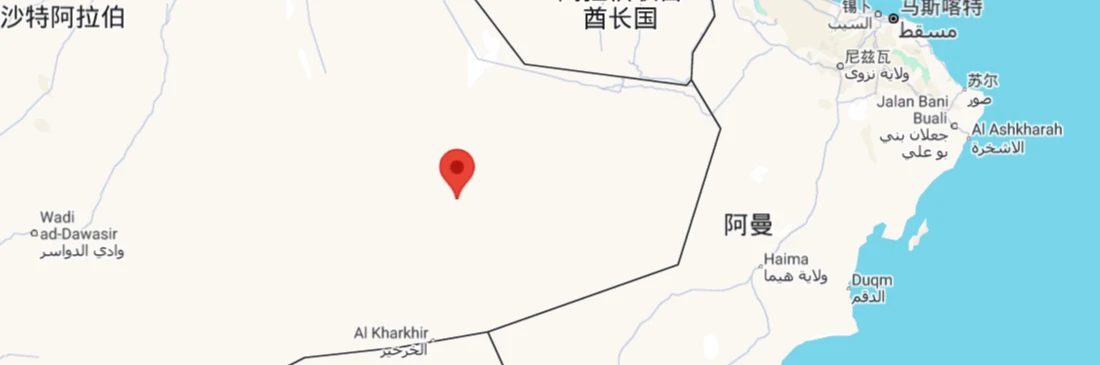
Deep gas drilling across the Rub' al Khali Basin in southern Saudi Arabia presents extreme technical demands during casing cementing operations. Well constructions in this desert region encounter static bottomhole temperatures exceeding 160°C (320°F) alongside narrow drilling pressure windows. Drilling through depleted sandstone reservoirs adjacent to high-pressure gas zones requires heavy slurry formulations weighted up to 2.15 g/cm³ (18 lb/gal) using barite and hematite. Under such severe conditions, standard organic additives suffer rapid thermal breakdown, leading to barite sag, excessive free fluid separation, and unmanaged filtration loss. Deploying a thermally stable additive formulation becomes vital to preventing post-cementing annular gas leaks and ensuring structural wellbore integrity.
Deep-well cementing operations in desert regions encounter severe operational risks due to thermal breakdown and density separation. Extended static periods before cement hydration allow heavy weighting agents to settle toward the lower side of horizontal or deviated wellbores, while free aqueous fluids migrate toward the high side. This structural separation creates micro-annuli, degrades long-term compressive strength, and increases the potential for sustained casing pressure. Field operators require high-performance chemical solutions that deliver dual functionality: precise fluid loss mitigation and robust physical particle suspension during extended slurry displacement.
To withstand severe downhole thermal degradation, modern cement slurry designs in Saudi Arabia rely on modified copolymer structures. The field deployment of CG214 Anti-Settling Fluid Loss Additive empowers engineers to formulate slurries that maintain chemical stability under extreme thermal stress without experiencing premature viscosity spikes or filtration failure. Extended laboratory and field tests verify that this specialized additive holds heavy weighting materials in suspension, eliminating density stratification along complex wellbore profiles.
Technical Mechanics of Thermal Stabilization and Particle Suspension
Maintaining complete slurry homogeneity under high bottomhole static temperatures demands robust polymer molecular design. Conventional water-soluble polymers often experience bond scission above 130°C, causing sudden fluid loss and rapid solid particle sedimentation. Advanced anti-settling chemistry utilizes high-molecular-weight synthetic copolymers modified with temperature-resistant sulfonic and amide functional groups. These functional groups adsorb onto hydrated cement particles to form a durable, low-permeability filter cake on formation faces while establishing a dynamic internal network that physically suspends dense weighting materials.
Rigorous laboratory validation is necessary before executing deep-well cementing jobs in Middle Eastern oilfields. Prior to job pumping, slurry formulations undergo rigorous evaluation using API Spec 10A Laboratory Equipment to accurately measure thickening time, API fluid loss, free fluid volume, and rheological parameters under simulated temperature and pressure profiles. Laboratory procedures confirm that specialized filtration control agents maintain API fluid loss below 50 mL/30 min without excessively retarding compressive strength development or creating excessive gel strength that impedes pumpability.
In addition, the static suspension capability established by synthetic polymers prevents barite or hematite particles from dropping out during slurry placement. Laboratory testing using vertical cylinder tests demonstrates that cement slurries modified with CG214 retain a uniform density profile across the entire column. Maintaining consistent density prevents high-pressure gas invasion from gas-bearing zones while protecting fragile, low-pressure formations against hydraulic fracturing caused by excessive hydrostatic pressure.
High-temperature filtration control relies on the steric layer thickness established by adsorbed polymers on cement particle surfaces. In high-salinity and elevated-temperature environments, modified copolymers preserve a hydrated surface film that restricts interstitial water loss into permeable formations. This steric hindrance effect minimizes filtrate migration without increasing yield point or plastic viscosity beyond pump capacity limits. As a result, the cement slurry maintains predictable flow behavior during displacement, supporting effective mud removal and clean casing-to-formation bonding.
How CG214 Solves Downhole Challenges in Heavy Slurry Systems
The field application of CG214 Anti-Settling Fluid Loss Additive directly resolves the operational risks associated with excessive fluid loss and particle settling in high-temperature wellbores. Manufactured as a synthetic water-soluble polymer, CG214 maintains its chemical integrity under high thermal loads. By controlling aqueous phase migration out of the slurry matrix, this additive ensures predictable hydration kinetics, smooth surface mixing, and consistent pumpability during long liner cementing jobs.
In heavy cement slurries weighted with barite or hematite, CG214 forms a temporary, delicate static yield structure within the aqueous phase. This structural network prevents particle settling during prolonged static placement periods without raising plastic viscosity during high-shear pumping. Field personnel utilizing CG214 observe low fluid loss rates, zero free water formation, and excellent slurry stability across complex geological sequences.
Furthermore, selecting optimized chemical systems from comprehensive cementing additive solutions allows drilling operators to tailor slurry properties for specific well conditions. CG214 displays broad chemical compatibility with lignosulfonate retarders, inorganic salts, dispersants, and defoamers. This compatibility ensures seamless integration into multi-component slurry formulations without causing chemical interference or unpredicted thickening times.
The molecular structure of CG214 incorporates thermally stable monomers designed to resist alkaline hydrolysis at elevated temperatures. In deep gas wells where static temperatures exceed 150°C, traditional cellulosics or unmodified acrylics hydrolyze rapidly, causing uncontrolled fluid loss and flash dehydration. CG214 maintains functional performance over extended static placement periods, ensuring the cement slurry remains workable during displacement and transitions quickly to set cement with high compressive strength.
Field Implementation and Performance in Saudi Arabian Formations
During intermediate and production liner operations in the Rub' al Khali Basin, cementing crews encounter static temperatures reaching 165°C and bottomhole static pressures exceeding 10,000 psi. Achieving continuous zonal isolation demands absolute slurry stability throughout pumping and hydration. Adding specialized filtration control agents into the slurry design eliminates free water separation and retains water binding capacity throughout displacement.
In a field-proven 7-inch liner cementing application, a 2.00 g/cm³ slurry formulated with CG214 maintained an API fluid loss rate of 34 mL/30 min under simulated bottomhole static conditions. The additive successfully prevented weighting agent sag over a 9-hour job duration, delivering consistent slurry density at both top and bottom sampling points. Subsequent cement bond logs verified complete annular sealing and superior structural bonding across all targeted hydrocarbon zones.
By eliminating free fluid migration and solid particle separation, CG214 fosters rapid compressive strength development across variable temperature profiles. The reliable performance delivered by this additive minimizes the need for expensive remedial squeeze cementing, reduces overall well construction costs, and extends the operational lifespan of high-temperature gas wells in severe desert environments.
Long-term evaluation of completed wells treated with CG214 shows excellent resistance to sustained casing pressure. The dense, low-permeability filter cake produced by the additive prevents micro-annuli formation, protecting production casing from exposure to corrosive formation fluids. This durability validates CG214 as a core chemical component for high-temperature field developments across Middle Eastern reservoirs.
In deep horizontal production sections where gravity exacerbates particle settling on the low side of the hole, CG214 provides structural slurry reinforcement. The even distribution of solid particles prevents channel formation along the top side of the pipe, ensuring complete circumferential coverage. This uniform cement sheath eliminates migration pathways for corrosive hydrogen sulfide and carbon dioxide gases, preserving asset value over extended production lifecycles.
Laboratory Mixing Protocols and Field Preparation Procedures
Maximizing the performance of CG214 in high-temperature cementing operations requires strict adherence to quality assurance procedures during laboratory formulation and rig-site execution. Laboratory technicians should dissolve synthetic additives thoroughly or add them slowly into the mixing water prior to dry cement blending. This technique promotes uniform polymer dispersion, preventing localized gellation and maximizing water-binding efficiency throughout the slurry volume.
During surface batch mixing at the rig site, re-circulating the cement slurry through high-shear mixing equipment ensures complete hydration of chemical components prior to pumping downhole. Standard field procedures involve continuous monitoring of slurry density using pressurized mud balances to verify that weighting materials remain evenly distributed. Utilizing CG214 simplifies batch mixing operations by maintaining predictable rheology that resists shear degradation and foaming during surface holding intervals.
Testing compatibility with site-specific mixing water is equally crucial. Water containing high concentrations of dissolved calcium or magnesium ions can impact polymer hydration. CG214 exhibits excellent resistance to divalent cations, preserving consistent filtration control in brackish or recycled water supplies commonly used in remote desert operations. This operational versatility reduces freshwater haulage requirements and optimizes field logistics.
Frequently Asked Questions Regarding Slurry Stability
How does a specialized fluid loss additive prevent barite sag in heavy cement slurries?
Specialized fluid loss additives create a subtle structural matrix within the liquid phase under static conditions. This matrix provides sufficient static shear strength to hold heavy weighting agents like barite in suspension, preventing gravity settling without generating excessive friction pressure during displacement.
What is the maximum temperature limit for CG214 in high-temperature applications?
CG214 is thermally engineered to function effectively at bottomhole static temperatures up to 180°C (356°F). Its synthetic copolymer backbone resists thermal degradation, providing sustained filtration control and solids suspension during long placement schedules.
Is CG214 effective in salt-saturated or high-salinity mixing waters?
Yes, CG214 demonstrates high salt tolerance due to its non-ionic and modified anionic functional groups. It retains its fluid loss control and anti-settling capabilities in seawater, NaCl, and KCl slurry formulations widely used in Middle Eastern onshore and offshore fields.
Why is pre-job testing with API Spec 10A Laboratory Equipment required?
Pre-job testing using API Spec 10A Laboratory Equipment ensures that the selected dosage of chemical additives yields the required fluid loss rate, thickening time, and slurry suspension stability under real wellbore pressure and temperature conditions.
Actionable Technical Guidance for Field Slurry Design
Achieving reliable zonal isolation in high-temperature, high-pressure wells across Saudi Arabia necessitates careful slurry formulation, thorough laboratory testing, and precise field quality control. To optimize slurry performance and long-term well integrity in demanding deep well environments, implement the following operational practices:
- Formulate heavy cement slurries with CG214 Anti-Settling Fluid Loss Additive at recommended concentrations between 1.0% and 2.5% BWOC based on bottomhole temperature and slurry weight.
- Verify filtration control rates and particle suspension stability under simulated downhole temperature and pressure profiles using standardized testing procedures.
- Combine high-temperature additives with compatible dispersants to maintain low plastic viscosity during surface mixing and initial pumping phases.
- Optimize pre-flushes and washing spacers to thoroughly displace drilling mud, enabling the cement slurry to form an unbroken bond along the formation face.
- Explore our complete selection of fluid loss control additives to select the optimal chemical system for your specific reservoir requirements.