

Executive Summary: Selecting the Ideal Additive for High-Temperature African Reservoirs
For deep oil and gas wells in Sub-Saharan Africa featuring bottom-hole static temperatures exceeding 180°C (356°F), the CG811 Ultra High Temperature Fluid Loss Additive is the most suitable specialized chemical solution to ensure complete zonal isolation and prevent formation damage. In high-temperature deep drilling across West Africa, conventional water-soluble polymers quickly break down due to thermal hydrolysis, causing uncontrolled filtrate loss into permeable formations, flash setting, and severe gas channeling. By utilizing synthetic thermally stable copolymers engineered with AMPS monomers, CG811 maintains strict fluid loss control, maintains slurry pumpability, and protects formation integrity under extreme high-pressure high-temperature (HPHT) downhole conditions. When combined with comprehensive slurry testing using standardized API Spec 10A Laboratory Equipment, operators can reliably design high-density cement slurries for deep offshore and onshore reservoirs. Exploring high-performance
Fluid Loss Additives provides drilling engineers with predictable rheology and continuous hydrostatic pressure during critical primary cementing jobs.
Case Application: Niger Delta Basin, Nigeria (Sub-Saharan Africa)
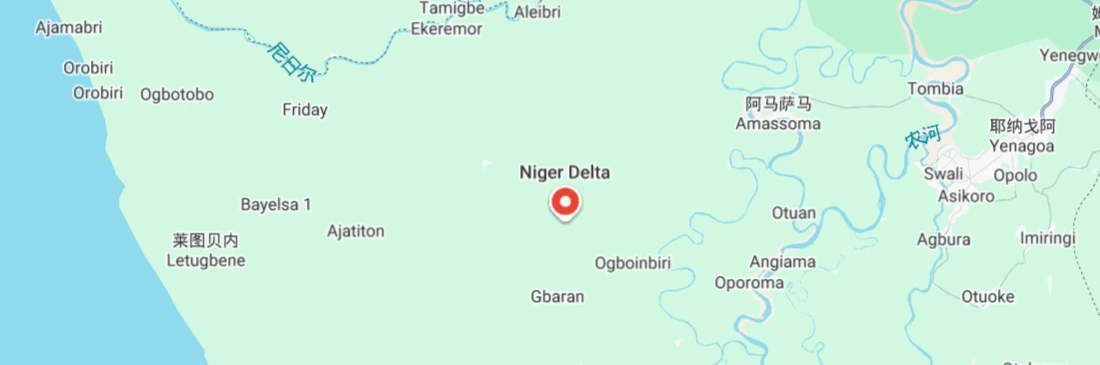
[CASE LOCATION MAP IMAGE: Niger Delta Basin, Sub-Saharan Africa Regional Cementing Scenario]
Regional Cementing Background in Sub-Saharan Africa
Sub-Saharan Africa represents one of the most dynamic oil and gas producing regions globally, characterized by deep onshore formations and complex offshore deepwater basins. Geologically, major hydrocarbon producing zones-such as the Niger Delta Basin in Nigeria, the Kwanza Basin in Angola, and the deepwater blocks off the coast of Ghana-present formidable technical challenges for well construction. Drilling operators continuously target deeper, high-pressure reservoirs to maximize hydrocarbon recovery. As well depths push beyond 4,000 meters, bottom-hole static temperatures frequently surpass 180°C to 200°C, creating a severe operational environment for primary cementing slurries.
In these deep African formations, achieving durable zonal isolation is paramount. The geologic column often consists of interbedded marine shales, highly permeable sandstone reservoirs, and weak depleted formations. When pumping cement slurries across these varied strata under elevated geothermal gradients, maintaining precise physical and chemical properties of the slurry becomes extremely complicated. A key engineering requirement is maintaining slurry density and hydration rates while preventing the aqueous phase of the cement from escaping into the surrounding rock matrix.
Without adequate filtration control, the high differential pressures encountered in deep wells force liquid water out of the slurry. This alters the designed water-cement ratio, drastically increases slurry viscosity, and accelerates gel strength development before the slurry reaches its intended height behind the casing. Therefore, selecting an effective Ultra High Temperature Fluid Loss Additive tailored for the severe thermal conditions of Sub-Saharan Africa is an essential step in engineering robust oil well cement formulations.
Downhole Cementing Challenges in Deep High-Temperature Wells
Operating in deep reservoirs across Sub-Saharan Africa involves managing intersecting operational hazards. Deep well cementing under HPHT conditions requires balancing narrow hydraulic pressure windows while mitigating rapid chemical degradation of drilling and cementing fluids. Engineers face several distinct challenges during primary slurry placement:
- Thermal Hydrolysis of Standard Polymers: Traditional cellulosic or basic acrylamide-based additives suffer severe backbone cleavage when exposed to temperatures above 120°C (248°F). Thermal degradation renders these polymers incapable of filtering water loss, resulting in immediate loss of slurry fluid loss control.
- Formation Damage and Permeability Loss: Uncontrolled filtrate invasion into sensitive hydrocarbon-bearing sandstones causes clay hydration, particle swelling, and chemical scaling. This invasion leaves a thick, loose cement filter cake on the formation wall, restricting future oil and gas flow into the wellbore.
- Annular Gas Migration: In deep gas-bearing formations, high fluid loss causes quick volume shrinkage and hydrostatic pressure loss within the cement column. If hydrostatic pressure drops below pore pressure before the cement sets, formation gas invades the annulus, forming micro-annuli pathways and compromising long-term well integrity.
- High Salinity and Ion Interference: Offshore cementing operations in West Africa often rely on seawater or produced brines for mixing cement slurries. High concentrations of divalent cations, such as calcium and magnesium, cause standard polymers to precipitate, rendering them ineffective.
Technical Requirements for Ultra High Temperature Fluid Loss Additive Performance
To overcome these harsh downhole conditions, an Ultra High Temperature Fluid Loss Additive must satisfy rigorous chemical and physical criteria. Chemical design must focus on thermal resilience, salt tolerance, and minimal interference with secondary slurry parameters such as thickening time and compressive strength development.
First, the polymer backbone must contain heat-resistant functional groups. Monomers like 2-acrylamido-2-methylpropanesulfonic acid (AMPS) provide exceptional resistance to thermal degradation, maintaining polymer chain integrity up to and beyond 200°C (392°F). The strongly acidic sulfonate groups in AMPS also impart high tolerance to dissolved salts, preventing polymer collapse in high-salinity brine environments.
Second, the Ultra High Temperature Fluid Loss Additive must effectively adsorb onto the surface of hydrating cement particles. As filtration pressure pushes liquid toward the formation, the expanded polymer chains bridge interstitial spaces between cement grains. This creates a thin, low-permeability dynamic filter cake along the wellbore wall, restricting API fluid loss values to less than 50 mL/30 min under HPHT test conditions.
Third, the additive should exhibit neutral rheological behavior. It must not impart excessive low-shear yield stress or plastic viscosity to the slurry, which could elevate equivalent circulating density (ECD) and fracture fragile formations during pumping. Furthermore, it must be fully compatible with high-temperature retarders, dispersants, defoamers, and weighting agents, such as hematite or barite, ensuring slurry stability across extended placement times.
Technical Solution: The Performance Advantage of CG811
The CG811 Ultra High Temperature Fluid Loss Additive is specifically engineered to meet the extreme technical demands of deep HPHT cementing in regions like Sub-Saharan Africa. Developed as a synthetic, water-soluble terpolymer featuring advanced sulfonate, amide, and carboxylic functional monomers, CG811 delivers superior filtration control at temperatures exceeding 180°C (356°F).
Unlike conventional additives that break down rapidly under heat, the molecular architecture of CG811 resists thermal scission and chemical hydrolysis. When incorporated into Class G or Class H oil well cement formulations, CG811 hydrates rapidly in the mixing water, providing predictable fluid loss control across both fresh water and high-salinity mixing fluids. Its synthetic polymer network forms a flexible, highly impermeable barrier at the formation face, limiting filtrate volume loss and preventing liquid migration into permeable reservoir zones.
In addition to outstanding filtration performance, CG811 offers excellent dispersion properties. It works synergistically with high-temperature retarders, allowing cement engineers to extend thickening times for deep liner cementing without causing slurry settling, free fluid separation, or strength retrogression. By preserving slurry homogeneity and maintaining hydrostatic pressure throughout placement, CG811 eliminates gas channeling risks and protects sensitive hydrocarbon structures from invasive filtrate damage.
Regional Application Case: Deep High-Temperature Cementing in the Niger Delta
In the Niger Delta Basin of Sub-Saharan Africa, a representative deep oil well drilling scenario presents typical HPHT operational conditions. The target interval is located at a vertical depth of 4,800 meters, with a bottom-hole static temperature (BHST) of 185°C (365°F) and a bottom-hole pressure exceeding 9,500 psi. The formation comprises high-permeability, gas-bearing sandstone sequences interbedded with reactive shale sections, where fluid loss control is vital to prevent severe wellbore instability and gas migration.
During preliminary laboratory evaluation, standard fluid loss control additives failed to meet operational requirements, showing thermal degradation, rapid fluid loss exceeding 280 mL/30 min at 180°C, and severe slurry gelation. To address these technical limitations, engineers formulated a heavy-weight cement slurry (1.98 g/cm³) incorporating the CG811 Ultra High Temperature Fluid Loss Additive at a dosage of 2.5% BWOC (By Weight of Cement), alongside high-temperature retarders and silica flour to prevent compressive strength retrogression.
Laboratory testing performed in accordance with API practices demonstrated the exceptional capabilities of the slurry system:
- API Fluid Loss Control: HPHT filtration testing at 185°C and 1,000 psi differential pressure yielded an API fluid loss value of 36 mL/30 min, well within the target threshold of 50 mL/30 min.
- Rheological Stability: The slurry exhibited predictable plastic viscosity and yield point values, enabling low ECD during placement without fracturing the fragile sandstone formation.
- Thickening Time Predictability: Consistometer evaluation showed a right-angle set profile with a pumpable time of 5 hours and 30 minutes, allowing a comfortable safety margin for deep liner placement.
- Zonal Isolation Integrity: Post-job cement evaluation logs confirmed 100% continuous bond quality across the productive pay zone, with zero evidence of gas entry or annular pressure accumulation.
Optimizing Cement Laboratory Evaluation with Standardized Equipment
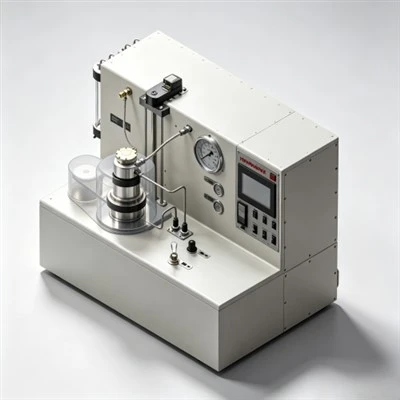
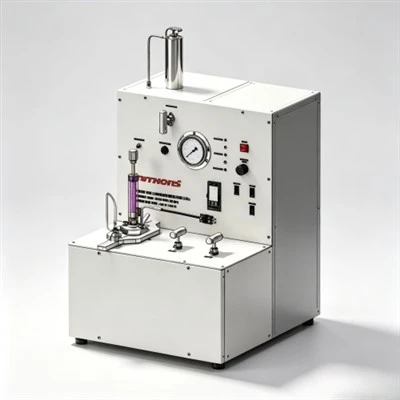
Designing reliable cement slurries for deep HPHT wells requires rigorous, standardized laboratory qualification before field execution. Cement testing laboratories supporting oilfield operations in Sub-Saharan Africa must utilize specialized testing systems to simulate downhole pressure, temperature, and shear conditions accurately. Utilizing reliable API Spec 10A Laboratory Equipment ensures that every additive dosage is calibrated for maximum field effectiveness.
Key laboratory evaluation procedures using API Spec 10A Laboratory Equipment include:
- HPHT Consistometers: Essential for measuring slurry thickening time under simulated bottom-hole temperature and pressure schedules up to 250°C and 25,000 psi.
- HPHT Filter Presses: Used to measure the exact volume of filtrate collected under high differential pressure (1,000 psi) at elevated reservoir temperatures, confirming the performance of the Ultra High Temperature Fluid Loss Additive.
- Ultrasonic Cement Analyzers (UCA): Provide non-destructive real-time measurement of compressive strength development as the cement cures under HPHT conditions.
- Atmospheric and HPHT Viscometers: Measure slurry yield point, plastic viscosity, and gel strength to optimize displacement hydraulics and mud removal efficiency.
By pairing high-performance chemical additives like CG811 with precise measurements from standard API Spec 10A Laboratory Equipment, drilling service providers can eliminate slurry design uncertainties, reduce non-productive time (NPT), and guarantee long-term casing support in challenging deepwell environments.
Frequently Asked Questions (FAQ)
Q1: What temperature limit can CG811 Ultra High Temperature Fluid Loss Additive withstand?
CG811 is specially designed for extreme thermal conditions, maintaining exceptional fluid loss control at bottom-hole static temperatures up to 200°C (392°F) and higher when formulated with appropriate thermal stabilizers.
Q2: How does an Ultra High Temperature Fluid Loss Additive prevent formation damage?
By forming a dense, low-permeability polymer-cement filter cake at the wellbore boundary, the additive limits the migration of high-pH aqueous filtrate into permeable sandstones. This prevents clay swelling, pore throat plugging, scale precipitation, and phase trapping within the reservoir matrix.
Q3: Is CG811 compatible with high-salinity mixing fluids in offshore cementing?
Yes. The synthetic polymer structure of CG811 contains sulfonate monomers (AMPS) that exhibit high tolerance to divalent ions, making it fully effective in seawater, salt-saturated mixing water, and heavy brine systems.
Q4: Why is precise fluid loss control critical for gas well cementing in Sub-Saharan Africa?
Excessive fluid loss leads to premature slurry volume contraction and rapid hydrostatic pressure loss. Maintaining fluid loss below 50 mL/30 min prevents high-pressure formation gas from invading the settling slurry column and creating continuous micro-annuli gas leaks.
Conclusion and Actionable Next Steps
Deep well primary cementing across Sub-Saharan Africa presents complex technical hurdles driven by extreme bottom-hole temperatures, high formation pressures, and delicate reservoir rocks. Mitigating these hazards requires a specialized chemical strategy built around robust high-temperature additives. Selecting the CG811 Ultra High Temperature Fluid Loss Additive ensures superior filtration control, prevents formation damage, maintains stable slurry rheology, and eliminates gas migration risks in critical deep wells.
Integrating advanced synthetic additives with rigorous slurry qualification using standardized laboratory apparatus guarantees repeatable field execution and long-term well integrity. Drilling operators, service companies, and cementing specialists are invited to enhance their HPHT well outcomes by exploring advanced chemical formulations and laboratory testing solutions.
To learn more about optimizing your cement slurry performance for severe downhole environments, explore our high-performance product page for the CG811 Ultra High Temperature Fluid Loss Additive, or visit our specialized product category section for complete details on our advanced chemical portfolio.