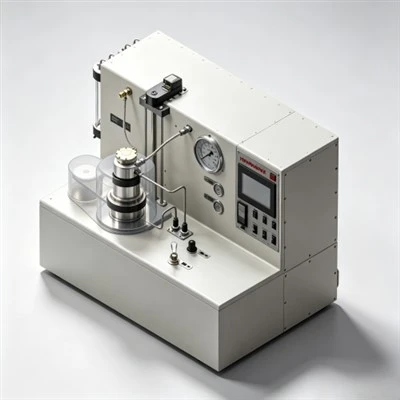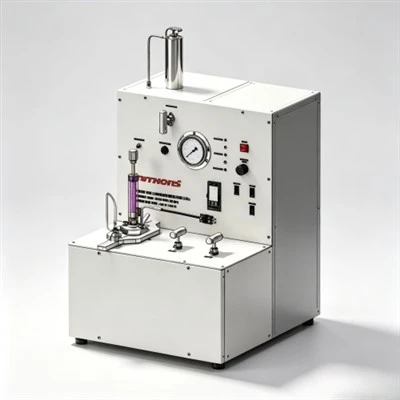

When petroleum laboratory specialists evaluate why is temperature control important in an hpht consistometer, they recognize that Portland cement hydration kinetics are governed by Arrhenius thermal activation, where a minor temperature deviation of merely 3°C to 5°C can shift thickening time curves by over 45 to 60 minutes across deep wellbores in the Middle East, the Gulf of Mexico, and the Tarim Basin. Exploring why is temperature control important in an hpht consistometer demonstrates that without automated proportional-integral-derivative (PID) heating algorithms capable of simulating downhole geothermal heating gradients up to 260°C, laboratory data produces distorted pumpability predictions. By executing testing programs centered on why is temperature control important in an hpht consistometer in compliance with API Spec 10A and API RP 10B-2, engineers ensure accurate chemical retarder calibration, prevent premature casing flash setting, eliminate prolonged waiting-on-cement downtime, and secure permanent annular zonal isolation.

The Chemical Thermodynamics of Portland Cement Hydration Under Thermal Stress
In the engineering of oil and gas well barriers, primary cementing is the critical operational phase that establishes mechanical support for the casing string, isolates permeable hydrocarbon formations, protects shallow aquifers from contamination, and shields tubular steel from corrosive downhole fluids. However, unlike ambient civil concrete applications, an oilwell cement slurry must be pumped through thousands of meters of narrow casing before circulating upward into the annular space. As the slurry descends, it transitions from surface ambient temperatures to bottom-hole circulating temperatures (BHCT) that can exceed 180°C to 220°C (356°F to 428°F).
Portland cement clinker minerals-primarily tricalcium silicate (C₃S), dicalcium silicate (C₂S), tricalcium aluminate (C₃A), and tetracalcium aluminoferrite (C₄AF)-hydrate through complex, dissolution-precipitation mechanisms governed by temperature. At elevated downhole temperatures, the dissolution rate of calcium and aluminate ions accelerates exponentially. The dormant induction period, during which the slurry remains fluid and pumpable, collapses rapidly under geothermal heating. If downhole thermal conditions are not replicated with absolute precision during pre-job laboratory testing, the predicted operational pumping window becomes completely invalid.
Investigating why is temperature control important in an hpht consistometer reveals that temperature fluctuations inside the testing autoclave distort the rate of calcium silicate hydrate (C-S-H) gel nucleation. An unmanaged heating overshoot of only a few degrees triggers premature chemical setting in the testing cup, prompting engineers to over-retard the field recipe. Conversely, thermal lag produces artificially prolonged thickening times, risking catastrophic flash setting downhole during field placement. Precise thermal control is therefore the foundational requirement for repeatable and dependable slurry design.
Engineering Architecture: How Modern HPHT Consistometers Regulate Thermal Gradients
To achieve the thermal stability required by API Spec 10A standards, modern HPHT consistometers incorporate advanced heating, sensing, and thermal dissipation systems. The primary engineering components include:
1. Microprocessor-Driven PID Heating Control
Modern consistometers utilize multi-stage Proportional-Integral-Derivative (PID) algorithms to modulate electrical power delivered to high-wattage cylindrical internal heating bands. Rather than employing simple on-off switching, PID controllers continuously calculate the error value between the measured slurry temperature and the programmed API thermal ramp. By dynamically adjusting power output, the system prevents thermal overshooting and maintains heating ramp linearity within ±0.5°C across temperatures up to 315°C (600°F).
2. Mineral Oil Heat-Transfer Medium
Inside the forged alloy autoclave vessel, high-dielectric synthetic mineral oil surrounds the rotating slurry cup. Mineral oil serves a dual purpose: it acts as the hydraulic fluid for pressure containment up to 275 MPa (40,000 psi) and functions as an efficient convective heat-transfer medium. Continuous mechanical shearing from the rotating slurry container (150 rpm) promotes convective thermal circulation throughout the oil bath, eliminating localized cold spots and ensuring uniform heat flux across the walls of the slurry cup.
3. Dual Thermocouple Feedback Arrays
Accurate thermal measurement requires direct sensing within the slurry itself. A premium HPHT consistometer positions a mineral-insulated, metal-sheathed Type J or Type K thermocouple directly inside the stationary paddle shaft, placing the sensing junction in continuous contact with the moving cement sample. A secondary external thermocouple monitors the surrounding mineral oil bath, enabling the PID controller to calculate differential thermal gradients and adjust heating rates in real time.
4. Integrated Internal Cooling Coils
Simulating cold subsea wellbores or executing complex multi-temperature shut-in schedules requires rapid, controlled cooling. Internal stainless steel cooling coils wrap around the perimeter of the autoclave vessel. Controlled solenoid valves introduce chilled water or coolant into the coils to simulate circulating temperature drops during pumping pauses, or to rapidly quench the vessel post-test, reducing turnaround cycle time while preventing thermal stress on mechanical pressure seals.
Impact of Temperature Inaccuracy on Chemical Additive Performance
A primary justification for why is temperature control important in an hpht consistometer centers on the extreme thermal sensitivity of specialized cementing chemical additives. Modern deepwell formulations incorporate high-performance retarders, synthetic fluid loss polymers, and dispersants whose chemical behavior shifts dramatically under thermal variances:
Regional Application Case: Ultra-Deep HPHT Production Liner Cementing in the Tarim Basin, Xinjiang, China
Case Application: Tarim Basin, Xinjiang Uygur Autonomous Region, Northwest China

Target Formation: Ultra-Deep Ordovician Fault-Controlled Fractured Carbonate Oil & Gas Reservoirs
Regional Cementing Background in Tarim Basin Ultra-Deep Frontiers
In the Tarim Basin of Northwest China, energy exploration targets ultra-deep Ordovician fractured carbonate formations at depths surpassing 8,000 to 8,500 meters (26,200 to 27,900 feet). Downhole thermodynamic conditions represent one of the most severe drilling environments in the global petroleum sector: bottom-hole static temperatures (BHST) reach 175°C to 190°C (347°F to 374°F), with bottom-hole circulating temperatures (BHCT) climbing to 155°C to 165°C under confining pressures exceeding 115 MPa (16,700 psi). Cementing 5-inch production liners across these extreme intervals requires heavy Class G cement slurries (2.15 to 2.25 g/cm³) weighted with micronized barite, where precise temperature control during laboratory testing is essential to avoid catastrophic failure.
Regional Cementing Challenges in Extreme HPHT Formations
Cementing operations in the Tarim Basin encounter severe operational challenges:
- Extreme Retarder Temperature Sensitivity: At temperatures above 150°C, chemical retarders exhibit non-linear response curves. A minor temperature discrepancy of 2°C between laboratory testing and wellbore reality alters thickening time by more than 50 minutes.
- Narrow Equivalent Circulating Density (ECD) Windows: The margin between formation pore pressure and fracture breakdown pressure is less than 0.05 g/cm³. Slurries must maintain flat, low consistency (<25 Bc) throughout placement to prevent lost circulation.
- Prolonged Placement Schedules: Displacing cement across an 8,000-meter casing string requires over 4.5 hours of continuous pumping. Any premature viscosity increase leads to stuck pipe and multimillion-dollar sidetracking operations.
Technical Requirements for High-Temperature Slurry Qualification
To qualify a heavy 2.20 g/cm³ (18.3 ppg) Class G slurry system for the ultra-deep liner, the operator established uncompromising testing criteria:
- Consistometer testing programmed to follow an exact multi-step geothermal ramp to 160°C BHCT and 110 MPa pressure, verifying 6 hours of pumpability to 70 Bc with a mandatory 120-minute safety cushion.
- Thermal control precision maintaining slurry temperature within ±0.5°C of the API ramp schedule throughout the entire 6-hour test duration.
- API fluid loss strictly controlled below 30 mL/30 min at 160°C, with zero free fluid breakout.
How NITHONS HPHT Consistometers Resolved the Field Challenge
The operator's central laboratory deployed NITHONS automated dual-cell HPHT consistometers featuring advanced microprocessor PID temperature controllers. Operating the apparatus demonstrated why is temperature control important in an hpht consistometer during deepwell simulation. The PID heating algorithm tracked the 160°C ramp schedule without thermal overshoot, while the internal paddle thermocouple captured real-time slurry temperature shifts.
Testing confirmed that blending KELIOIL synthetic AMPS high-temperature retarders with fluid loss polymers and 35% BWOC silica flour produced an optimal right-angle set profile. The slurry maintained a flat consistency of 19 Bc for 4 hours and 40 minutes, before rising sharply to 70 Bc at 5 hours and 52 minutes. During field execution at Well Fuman-902, the slurry placed smoothly across the 1,100-meter deep liner at 8,120 meters depth without surface pressure surges or ECD spikes. Post-job radial acoustic cement bond logs (CBL-VDL) confirmed 100% circumferential bonding across the Ordovician pay zone, proving that recognizing why is temperature control important in an hpht consistometer provides the empirical precision required to eliminate cementing failures in ultra-deep wells.
Laboratory Calibration Protocols and Thermal Verification Standards
To ensure thermal accuracy and compliance with API Spec 10A and API RP 10B-2, laboratory technicians must execute standardized maintenance and calibration procedures:
- Dry-Block Thermocouple Calibration: Calibrate internal paddle and oil bath thermocouples monthly using NIST-traceable dry-block temperature calibrators across the operational range (20°C to 260°C). Thermocouples exhibiting deviations greater than ±1.0°C must be replaced immediately.
- PID Controller Loop Tuning: Perform periodic auto-tuning of the PID controller parameters (gain, reset, and rate) whenever changing mineral oil brands or replacing heating elements to maintain critical damping without thermal oscillation.
- Heating Jacket Resistance Audits: Inspect cylindrical electric heating elements quarterly using precision multimeters. Uneven resistance across heater segments causes localized hot spots, leading to premature thermal degradation of mineral oil.
- Slurry Cup Drive Speed Verification: Confirm container rotation at 150 rpm ± 15 rpm using an optical digital tachometer. Proper rotational velocity maintains the convective heat transfer necessary for uniform sample heating.
Frequently Asked Questions (FAQ) Regarding Consistometer Temperature Control
1. What is the difference between BHST and BHCT in consistometer testing?
Bottom-Hole Static Temperature (BHST) is the undisturbed geothermal temperature of the formation. Bottom-Hole Circulating Temperature (BHCT) is the cooler temperature experienced by the slurry during dynamic pumping due to circulating fluid cooling. Thickening time testing in an HPHT consistometer is always conducted at BHCT, whereas static curing for compressive strength is conducted at BHST.
2. How does thermal overshoot affect laboratory thickening time curves?
Thermal overshoot occurs when the consistometer heating system exceeds the programmed target temperature before stabilizing. Even a brief 5°C overshoot accelerates early C₃A and C₃S hydration, causing premature viscosity spikes that artificially shorten the measured thickening time and prompt unnecessary retarder overdosing.
3. Why is internal paddle thermocouple measurement superior to external oil bath sensing?
Due to the thermal resistance of the slurry cup wall and the heat capacity of cement, the slurry temperature lags behind the external oil bath by 5°C to 15°C during rapid thermal ramps. Measuring temperature directly inside the slurry via the paddle shaft ensures that the recorded consistency corresponds to the actual thermodynamic state of the hydrating cement.
Strategic Recommendations for Cement Testing Laboratories
As well construction programs navigate deeper formations, narrower hydraulic margins, and higher thermodynamic gradients, achieving reliable zonal isolation depends directly on empirical laboratory precision. Understanding why is temperature control important in an hpht consistometer enables drilling and completion teams to formulate dependable slurries, optimize chemical additive packages, and eliminate downhole cementing failures.
NITHONS engineers and manufactures high-performance HPHT consistometers, dual-cell testing apparatus, and API-compliant calibration systems under strict Sino-Japanese joint venture quality standards. By integrating robust digital data logging with precision thermal and pressure controls, NITHONS equips operating companies and service contractors worldwide with dependable laboratory hardware that ensures wellbore safety, prevents non-productive rig time, and maximizes hydrocarbon asset productivity.
Upgrade Your Cement Testing Precision with NITHONS Consistometers
Our technical instrument specialists provide complete laboratory equipment audits, automated HPHT consistometer packages, API calibration fixtures, and interchangeable spare parts engineered for high-pressure high-temperature testing operations.