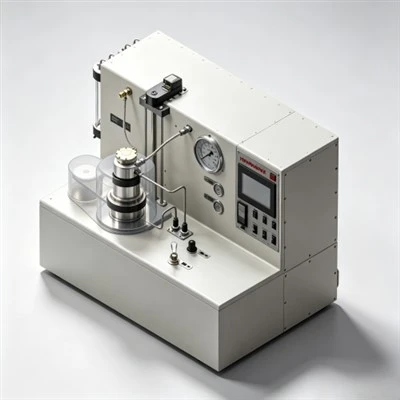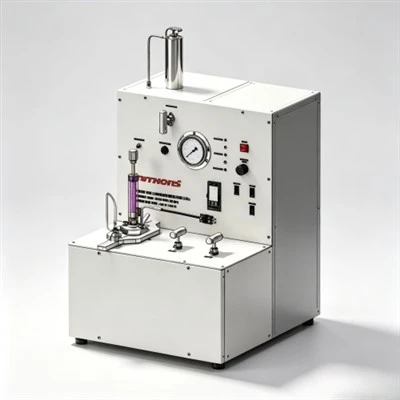

When cementing engineers define thickening time measured by an hpht consistometer, they refer to the precise duration during which an oilwell cement slurry remains pumpable under simulated downhole temperatures and pressures before its consistency reaches 70 or 100 Bearden units of Consistency (Bc). In deep, high-pressure high-temperature (HPHT) reservoirs across the Middle East, the Gulf of Mexico, and the Tarim Basin, evaluating the thickening time measured by an hpht consistometer is vital because geothermal heating and hydrostatic pressure accelerate clinker hydration, threatening premature slurry gelation. By systematically analyzing the thickening time measured by an hpht consistometer in strict accordance with API Spec 10A and API RP 10B-2 protocols, engineers optimize chemical retarder concentrations, establish an adequate placement safety buffer, prevent catastrophic flash setting inside casing strings, and ensure lifelong zonal isolation.
The Operational Significance of Thickening Time in Well Construction
In petroleum well construction, primary cementing represents the primary structural barrier that anchors casing tubulars, isolates permeable hydrocarbon zones, protects shallow freshwater aquifers, and shields steel pipe from corrosive formation brines. However, unlike surface construction concrete, oilwell cement slurries must be mixed on the rig floor and pumped through thousands of meters of narrow tubulars before circulating upward into the subterranean annulus. Throughout this dynamic journey, the slurry encounters steep geothermal gradients and massive hydrostatic fluid columns.
Under these conditions, slurry pumpability is governed by a finite operational window. If the cement slurry begins to hydrate prematurely while still being displaced, its apparent viscosity spikes rapidly. This uncontrolled gelation leads to severe frictional pressure drops, driving equivalent circulating density (ECD) beyond formation fracture breakdown gradients. The resulting formation fracturing causes severe lost circulation, leaves production intervals exposed without cement, and risks trapping the drill string or casing off-bottom.
Conversely, an excessively delayed slurry creates operational and financial burdens. Extended thickening times inflate rig waiting-on-cement (WOC) costs, which can reach hundreds of thousands of dollars per day on deepwater drillships. More critically, a prolonged fluid-to-solid transition period allows hydrostatic pressure transmission to decay, enabling formation gas or brine to channel through the setting matrix and cause sustained casing pressure (SCP). Tracking the thickening time measured by an hpht consistometer provides drilling engineers with empirical control, ensuring that the slurry stays pumpable for the exact duration of the job plus a calibrated safety cushion.
How an HPHT Consistometer Measures Consistency and Defines Thickening Time
The measurement of slurry pumpability under downhole conditions relies on precise rotational shear mechanics, thermal simulation, and torque transduction. The diagnostic sequence encompasses four interrelated engineering functions:
1. Pressurized Autoclave Containment
The cement slurry is sealed inside a cylindrical cup equipped with a stationary paddle and submerged in a forged alloy autoclave chamber. Mineral oil fills the chamber, transmitting hydraulic pressures up to 275 MPa (40,000 psi) via air-driven intensifier pumps. Applying pressure is critical: it prevents aqueous mix water from vaporizing into steam above 100°C and compresses entrained micro-air bubbles, replicating downhole hydrostatic confinement.
2. Dynamic Geothermal Ramp Simulation
Microprocessor-based PID controllers heat the mineral oil bath using high-wattage internal heating elements. The temperature rises according to standardized API temperature schedules that match the depth, geothermal gradient, and pumping velocity of the specific well. This automated ramp eliminates thermal lag, ensuring that clinker mineral dissolution kinetics in the laboratory match real wellbore fluid transit.
3. Constant Rotational Shearing at 150 RPM
An external drive motor rotates the slurry cup around the stationary paddle at a constant speed of 150 rpm ± 15 rpm. This continuous agitation imparts fluid shear rates that replicate the mechanical shearing experienced by the slurry during pipe transit, preventing artificial static gelation from distorting pumpability measurements.
4. Torque Transduction into the Bearden Consistency Scale
As cement minerals hydrate, interlocking calcium silicate hydrate (C-S-H) gel structures form, increasing fluid drag against the paddle. The torque deflects a calibrated helical potentiometer spring. This deflection sweeps a precious-metal contact wiper across a precision resistance winding, converting mechanical torque into Bearden units of Consistency (Bc). The API defines thickening time as the elapsed test time from initial pressurization until the consistency reaches 70 Bc or 100 Bc.
Curve Morphology: Interpreting Consistometer Graphs and Hydration Kinetics
The graphical plot of Bearden consistency versus elapsed time generated by an HPHT consistometer serves as the primary diagnostic fingerprint of a cement slurry. Laboratory engineers classify these curves into distinct behavioral categories:
Chemical Additive Synergy: How Retarders, Dispersants, and Fluid Loss Agents Shape Pumping Time
A cement slurry's thickening time is rarely fixed; it is actively tailored using specialized chemical additives. Laboratory testing with an HPHT consistometer allows chemists to balance chemical interactions under simulated wellbore conditions:
- High-Temperature Polymer Retarders: Synthetic AMPS terpolymers and modified lignosulfonates adsorb onto hydrating silicate surfaces, chelating calcium ions and extending the dormant induction phase. By testing incremental dosages (e.g., 0.3%, 0.5%, and 0.7% BWOC), technicians plot dosage-response curves to match the desired placement window.
- Polymeric Dispersants (Friction Reducers): Dispersants break up cement particle clusters via electrostatic repulsion and steric hindrance. On the consistometer graph, effective dispersants keep initial consistency below 20 Bc, preventing early friction pressure buildup.
- Fluid Loss Additives (Filtration Controllers): High-performance AMPS copolymers retain mix water within the slurry. Consistometer verification confirms that fluid loss polymers maintain consistent rheology throughout the thermal ramp without triggering unexpected viscosity peaks.
- Setting Accelerators: In shallow surface strings or cold-water marine environments, inorganic accelerators like calcium chloride (CaCl₂) accelerate C₃S dissolution, shortening thickening time to under 2 hours to speed up casing setting.
Regional Application Case: Deep Carbonate Gas Liner Cementing in the Ahwaz Oilfield, Khuzestan Province, Iran
Case Application: Ahwaz Oilfield, Khuzestan Province, Southwestern Iran

Target Formation: Deep HPHT Khami Sour Gas Carbonates (High Pressure, High H₂S & Narrow ECD Window)
Regional Cementing Background in Khuzestan Carbonate Plays
In the Ahwaz field of southwestern Iran, drilling operations penetrate overpressured gas-bearing carbonate reservoirs within the Cretaceous-Jurassic Khami Group. Well measured depths regularly exceed 4,900 to 5,300 meters (16,000 to 17,400 feet). Downhole conditions are severe: bottom-hole static temperatures (BHST) climb to 165°C to 175°C (329°F to 347°F) with formation pressures exceeding 12,000 psi (82.7 MPa). The formations produce high concentrations of sour gas (H₂S up to 6% and CO₂ up to 8%). Cementing 7-inch production liners across the Khami interval requires heavy Class G slurry systems (1.98 to 2.10 g/cm³) weighted with barite and stabilized by high-temperature polymers.
Regional Cementing Challenges in Extreme HPHT Formations
Operators cementing deep production liners across the Khami formation encounter critical technical hurdles:
- Severe Retarder Sensitivity: At temperatures above 160°C, minor variations of 0.05% BWOC in chemical retarder concentration cause large swings in thickening time, risking premature flash setting or multi-day setting delays.
- Narrow Equivalent Circulating Density (ECD) Windows: Close margins between formation pore pressure and fracture breakdown pressure demand low-viscosity slurries that maintain steady rheology without premature gelation spikes.
- Risk of Sour Gas Channeling: An extended transition time during slurry phase changes allows sour gas invasion into the decaying hydrostatic column, creating sustained casing pressure (SCP).
Technical Requirements for Slurry Qualification
To qualify a heavy 1.98 g/cm³ (16.5 ppg) Class G cement system across the Khami gas zone, the operator established strict performance criteria:
- Thickening time validation on an HPHT consistometer confirming a pumpability window of 5 hours and 30 minutes to 70 Bc under simulated dynamic ramp schedules.
- API fluid loss control strictly below 35 mL/30 min at 165°C using an automated high-temperature fluid loss cell to prevent dehydration.
- Static gel strength (SGS) transition window (from 100 to 500 lbf/100 ft²) of less than 30 minutes, with 24-hour compressive strength exceeding 3,500 psi (24.1 MPa).
How Consistometer Testing Resolved the Field Challenge
To resolve these downhole uncertainties, the operator's central laboratory deployed NITHONS automated HPHT consistometers. The testing program focused on evaluating the thickening time measured by an hpht consistometer across multiple additive formulations. Technicians evaluated combinations of KELIOIL synthetic AMPS high-temperature retarders, fluid loss additives, and 35% BWOC silica flour. The consistometer recorded a stable consistency of 18 Bc for 4 hours and 30 minutes, before rising cleanly to 70 Bc at 5 hours and 38 minutes, providing an engineered 120-minute safety buffer.
During field execution at Well Ahwaz-412, the slurry was pumped across the 1,050-meter liner without surface pressure surges or ECD spikes. Post-job radial acoustic cement bond logs (CBL-VDL) confirmed 100% circumferential bonding across the Khami sour gas pay zone. Subsequent negative pressure testing recorded zero sustained annular pressure, proving that precision evaluation of the thickening time measured by an hpht consistometer provides the empirical foundation required to eliminate cementing failures in extreme HPHT plays.
Standardized Calibration, Maintenance, and Quality Control Workflows
Because an HPHT consistometer operates under extreme pressures and temperatures, laboratory technicians must institutionalize strict quality assurance protocols:
- Potentiometer Deadweight Calibration: Calibrate potentiometer mechanisms monthly using certified deadweight fixtures across 0 to 100 Bc. Confirm linear resistance response to prevent measurement drift.
- Thermocouple Calibration: Verify thermocouple probes monthly against certified dry-block calibrators. Ensure thermal readings remain within ±1°C of certified standards across the operational range.
- Autoclave Seal and Rupture Disc Inspection: Inspect high-pressure elastomeric O-rings, backup rings, and copper seals before every test run. Replace pressure rupture discs annually or immediately following any overpressure release.
- Slurry Cup Paddle Dimensional Audits: Measure paddle blade thickness and container inner wall tolerances using precision calipers. Replace paddles exhibiting more than 10% wear from abrasive weighted slurries to maintain API shear geometry.
Frequently Asked Questions (FAQ) Regarding HPHT Thickening Time
1. Why is 70 Bc the standard consistency limit for thickening time instead of 100 Bc?
While 100 Bc represents a completely solidified, unpumpable stone, 70 Bearden units of Consistency (Bc) represents the upper practical limit of fluid pumpability for high-pressure field triplex pumps. Beyond 70 Bc, frictional flow resistance rises exponentially, creating excessive pumping pressures that risk pipe rupture and formation fracturing.
2. How does temperature ramp speed influence measured thickening time?
Cement hydration is an endothermic-to-exothermic chemical reaction catalyzed by heat. If an HPHT consistometer heats the sample faster than the actual fluid heating rate in the wellbore, the measured thickening time will be artificially short. Conversely, thermal lag produces artificially long thickening time curves, risking downhole flash setting during field pumping.
3. What is the standard safety buffer added to thickening time for job planning?
Industry best practice mandates that the measured laboratory thickening time to 70 Bc must equal the total job placement time (slurry mixing, displacement, and plug landing) plus an additional safety margin of 90 to 120 minutes to account for unforeseen surface equipment shutdowns or downhole circulation restrictions.
Strategic Recommendations for Slurry Placement and Laboratory Testing
As well construction programs navigate deeper formations, narrower hydraulic margins, and higher thermodynamic gradients, achieving reliable zonal isolation depends directly on empirical laboratory precision. Mastering the evaluation of the thickening time measured by an hpht consistometer enables drilling and completion teams to formulate dependable slurries, optimize chemical additive packages, and eliminate downhole cementing failures.
NITHONS engineers and manufactures high-performance HPHT consistometers, dual-cell testing apparatus, and API-compliant calibration systems under strict Sino-Japanese joint venture quality standards. By integrating robust digital data logging with precision thermal and pressure controls, NITHONS equips operating companies and service contractors worldwide with dependable laboratory hardware that ensures wellbore safety, prevents non-productive rig time, and maximizes hydrocarbon asset productivity.
Upgrade Your Cement Testing Precision with NITHONS Consistometers
Our technical instrument specialists provide complete laboratory equipment audits, automated HPHT consistometer packages, API calibration fixtures, and interchangeable spare parts engineered for high-pressure high-temperature testing operations.