
The primary cementing lessons from the deepwater horizon blowout demonstrate that catastrophic barrier failure occurs when unstable slurry formulations, compromised mud displacement, inadequate acoustic logging, and insufficient laboratory validation allow pressurized hydrocarbons to channel through a decaying cement sheath in high-risk deepwater basins like the Gulf of Mexico and offshore Brazil. To address these critical cementing lessons from the deepwater horizon disaster, modern well engineering integrates API Spec 10A certified High-Pressure High-Temperature (HPHT) testing instruments with advanced chemical solutions-specifically AMPS-based synthetic polymer fluid loss additives, high-temperature retarders, surfactant preflushes, and gas-migration blockers-ensuring that annular slurry columns maintain complete hydrostatic overbalance, prevent gas percolation, and establish long-term well integrity.

Technical Anatomy of the 2010 Macondo Blowout and Annular Barrier Breakdown
On April 20, 2010, the Deepwater Horizon drilling rig operating on the Macondo exploration well in Mississippi Canyon Block 252 experienced a catastrophic blowout, leading to the loss of 11 lives, the sinking of the drilling platform, and the discharge of nearly 4.9 million barrels of crude oil into the Gulf of Mexico. Subsequent technical investigations by the U.S. Chemical Safety Board (CSB), the National Commission, and major engineering bodies confirmed that the primary physical event permitting high-pressure hydrocarbons to enter the wellbore was the total failure of the shoe-track cement barrier. Analyzing these historical events reveals core cementing lessons from the deepwater horizon that continue to redefine offshore drilling safety standards worldwide.
The Macondo well was completed with a long production casing string terminating in an ultra-deep, overpressured sandstone reservoir. To overcome narrow fracture gradient margins, the operator pumped a low-density nitrogen-foamed cement slurry. However, comprehensive post-incident laboratory testing demonstrated that the nitrogen-foamed cement formulation was inherently unstable under simulated bottom-hole temperature and pressure conditions. The nitrogen gas broke out of the slurry matrix, creating density stratification, severe channeling, and permeable pathways that completely compromised the barrier.
Furthermore, operational shortcuts compounded the chemical instability. Only six centralizers were installed instead of the recommended twenty-one, leaving the casing decentralized against the borehole wall. This eccentricity caused the cement slurry to bypass heavy synthetic-based drilling mud on the narrow side of the annulus, leaving behind thick channels of un-displaced mud cake. When the well was placed in an underbalanced condition during negative pressure testing, hydrocarbon gas easily migrated through the contaminated cement sheath, bypassing the shoe track and entering the production casing.
Core Vulnerabilities Identified in Deepwater Slurry Placement
The investigations surrounding Macondo underscored that well integrity is an integrated physical, chemical, and procedural discipline. Among the principal cementing lessons from the deepwater horizon incident are four distinct vulnerabilities that must be rigorously addressed during slurry engineering:
1. Slurry Matrix Instability and Gas Bubble Coalescence
When formulating lightweight slurries for low fracture gradient formations, foam stability is critical. At Macondo, the surfactant foaming package was inadequate to stabilize nitrogen under elevated downhole static temperatures (BHST) of 116°C (240°F) and pressures exceeding 9,000 psi (62.1 MPa). As the cement column stood static, nitrogen bubbles coalesced, rising toward the surface and creating large internal voids. Modern offshore engineering mandates that whenever foamed or multi-phase systems are evaluated, laboratory testing must confirm long-term bubble suspension without coalescence.
2. Incomplete Non-Aqueous Mud (NAF) Displacement
Drilling fluids and cement slurries are chemically incompatible. In offshore operations utilizing non-aqueous fluids (NAF) or synthetic-based muds (SBM), contact between the mud and cement leads to extreme viscous gelation, leaving high-viscosity mud channels that do not set. Without specialized surfactant preflushes, weighted spacers, and high pipe standoff, the cement cannot water-wet the casing steel or the rock face. This mechanical failure allows gas to breach the annular interface regardless of cement compressive strength.

3. Hydrostatic Pressure Decay During the Gel Strength Transition Period
During the hydration process, cement slurry transitions from a true liquid exerting full hydrostatic pressure to a rigid, permeable solid stone. As static gel strength (SGS) increases from 100 lbf/100 ft² to 500 lbf/100 ft², the slurry column supports its own weight, causing effective hydrostatic pressure at the bottom of the well to decay rapidly. If fluid loss is poorly controlled or if the SGS transition window exceeds 35 to 45 minutes, downhole formation gas pressure exceeds remaining hydrostatic head, driving gas fingers through the porous gelled matrix.
4. Inadequate Negative Pressure Testing and Omission of Bond Logging
Another crucial operational takeaway involves barrier verification. At Macondo, the negative pressure test-intended to verify shoe-track integrity by displacing heavy mud with seawater-showed abnormal pressure anomalies on the drill pipe, which were misinterpreted as a "bladder effect." Furthermore, the planned cement bond log (CBL-VDL) was canceled due to cost and schedule pressures. The disaster reinforced that mechanical barrier testing and ultrasonic acoustic bond logs are mandatory diagnostic requirements that can never be bypassed.
Modern Chemical Solutions: Engineering Gas-Tight, Resilient Slurry Systems
To eliminate the vulnerabilities highlighted by historical blowouts, chemical engineering has evolved rapidly. Today, operators implement advanced cementing lessons from the deepwater horizon by deploying high-performance additives from KELIOIL that reinforce slurry stability and barrier durability:
Laboratory Instrumentation: Standardized Testing Protocols with NITHONS Equipment
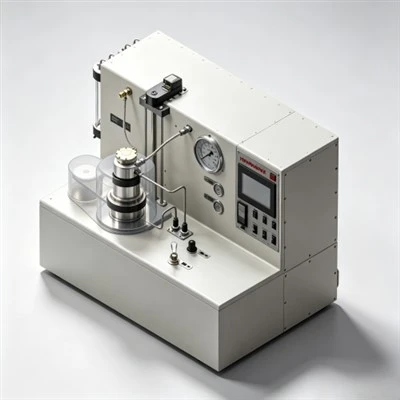
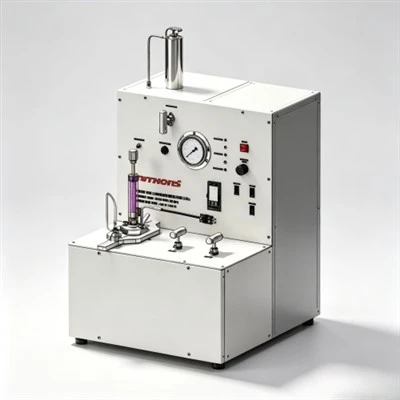
Modern offshore safety regulations require that slurry formulations be subjected to rigorous pre-job simulation on API Spec 10A compliant equipment. NITHONS manufactures precision testing instruments that validate barrier reliability:
- Automated HPHT Consistometers: Replicating dynamic bottom-hole circulating temperatures (BHCT) up to 315°C (600°F) and pressures up to 275 MPa (40,000 psi), NITHONS consistometers plot real-time Bearden consistency (Bc) curves to guarantee pumpability windows without premature gelation.
- Ultrasonic Cement Analyzers (UCA): Non-destructively logging continuous acoustic transit velocity, the UCA charts real-time compressive strength and measures the static gel strength (SGS) transition period, confirming the critical window remains under 30 minutes to prevent gas percolation.
- Pressurized Stirred Fluid Loss Cells: Testing slurry filtration under 1,000 psi differential nitrogen pressure ensures polymer additives maintain API fluid loss below 30 to 50 mL/30 min across permeable formation interfaces.
- Multi-Speed Rotational Viscometers: Evaluating shear stress across six standard speeds ensures laminar or plug flow displacement modeling prevents formation breakdown and lost circulation.
Regional Application Case: Deepwater HPHT Production Liner Cementing in the Mississippi Canyon, Gulf of Mexico, USA
Case Application: Mississippi Canyon, Deepwater Gulf of Mexico, USA

Target Formation: Deep Lower Tertiary Subsalt HPHT Turbidite Sandstones (Narrow Pore/Frac Margin)
Regional Cementing Background in Deepwater Gulf of Mexico Plays
In the deepwater sectors of the Gulf of Mexico, including the Mississippi Canyon and Green Canyon protraction areas, exploration targets ultra-deep subsalt Paleogene reservoirs. Well total vertical depths (TVD) regularly exceed 8,500 meters (28,000 feet) beneath water depths surpassing 1,800 meters (6,000 feet). Downhole conditions are exceptionally severe, with bottom-hole static temperatures reaching 145°C to 165°C (293°F to 329°F) and formation pressures exceeding 15,000 psi (103.4 MPa). Executing production liner cementing under these extreme marine conditions demands direct application of the cementing lessons from the deepwater horizon blowout.
Regional Cementing Challenges in Deep Subsalt Horizons
Offshore operators in the Mississippi Canyon face severe operational constraints:
- Ultra-Narrow Hydraulic Drilling Margin: The pressure window between pore pressure and fracture breakdown gradient is often narrower than 0.4 ppg equivalent mud weight, requiring low-viscosity slurries to prevent lost circulation.
- Severe Thermal Contrast: Slurry components encounter near-freezing seabed temperatures (4°C) before rapid heating in the deep borehole, demanding temperature-stable retarders that do not cause flash setting.
- High-Pressure Gas Permeation: Deep subsalt gas sands exhibit high permeability and severe overpressure, making the wellbore exceptionally vulnerable to gas influx during slurry setting.
Technical Requirements for High-Pressure Slurry Qualification
To qualify a high-density 16.4 ppg (1.97 g/cm³) Class H cement system for the deep 7-5/8 inch production liner, the operator established uncompromising testing criteria:
- Thickening time validation on an HPHT consistometer confirming 6 hours of pumpability to 70 Bc at 155°C and 14,000 psi, with a 120-minute safety cushion.
- API fluid loss control strictly maintained below 25 mL/30 min at 155°C to prevent slurry dehydration.
- Ultrasonic cement analyzer verification of an SGS transition window (from 100 to 500 lbf/100 ft²) under 25 minutes, with 24-hour compressive strength exceeding 3,500 psi.
- Surfactant spacer qualification achieving 100% water-wetting on steel casing coupons contaminated with synthetic oil-based mud.
How Modern Engineering Solutions Addressed the Challenge
The offshore engineering team formulated an advanced Class H slurry integrating KELIOIL synthetic AMPS fluid loss additives, high-temperature polymer retarders, styrene-butadiene latex gas blockers, and 35% BWOC silica flour. The formulation was pre-screened on NITHONS automated HPHT consistometers, confirming a smooth, non-peaking consistency profile with a thickening time of 6 hours and 15 minutes to 70 Bc.
Pre-job mud displacement modeling optimized spacer volume, achieving 95% casing standoff with rigid solid centralizers. During field execution, the surfactant spacer and cement slurry were pumped cleanly across the 1,200-meter deep liner. Ultrasonic radial cement bond logs (CBL-VDL) confirmed 100% circumferential bonding across both the reservoir pay and the shoe track. Subsequent negative pressure testing showed zero pressure buildup on the drill pipe, confirming total barrier integrity and validating that applying modern cementing lessons from the deepwater horizon prevents deepwater blowouts.
Comprehensive Quality Control Protocols for Deepwater Zonal Isolation
Translating historical industry lessons into operational safety requires institutionalizing strict quality management protocols across offshore cementing operations:
- Rigorous Batch Pilot Testing: Always test cement slurries using actual rig mix water and representative samples of the dry bulk cement delivered to the offshore rig, verifying that dissolved trace minerals do not alter thickening kinetics.
- Full Dynamic Mud Displacement Simulation: Perform 3D hydraulic modeling to ensure annular velocities, fluid densities, and spacer contact times (minimum 10 minutes) achieve 100% mud displacement efficiency.
- Dual Mechanical Barrier Redundancy: Install certified float equipment with dual-flapper backpressure valves, and verify positive seal closure before commencing plug displacement.
- Mandatory Negative Pressure Verification: Execute negative pressure testing using low-density fluids (such as seawater or base oil) for a minimum of 30 minutes, ensuring zero flow or pressure buildup before unlatching blowout preventers.
Frequently Asked Questions (FAQ) Regarding Deepwater Well Integrity
1. Why did the nitrogen-foamed cement fail at the Macondo well?
The nitrogen-foamed cement failed because the chemical surfactant package was inadequate to stabilize the nitrogen bubbles under downhole temperature and pressure. The unstable foam broke out into separate gas and slurry phases, creating large gas channels and low-density voids that allowed reservoir hydrocarbons to breach the shoe track.
2. How do modern AMPS fluid loss additives prevent gas migration?
AMPS-based synthetic polymer fluid loss additives form an ultra-thin, impermeable filter cake across permeable formations, keeping slurry water within the cement column. This maintains full hydrostatic pressure transmission during the static gelation phase, preventing gas from entering the setting cement matrix.
3. What is the role of an Ultrasonic Cement Analyzer (UCA) in deepwater safety?
An Ultrasonic Cement Analyzer continuously logs acoustic transit time through a single cement sample under simulated downhole temperature and pressure, charting real-time compressive strength and measuring the Static Gel Strength (SGS) transition window without destroying the sample.
Strategic Engineering Recommendations for Safe Offshore Operations
The industry's collective memory of the Macondo blowout reinforces that well integrity cannot be compromised. The technical insights gained from deepwater investigations prove that successful zonal isolation requires scientific slurry design, precision chemical additives, robust API laboratory validation, and strict barrier verification protocols.
By combining high-performance fluid loss additives and gas-block polymers from KELIOIL with API Spec 10A compliant testing instruments from NITHONS, energy operators and cementing contractors can achieve absolute zonal isolation. Integrating advanced chemistry with automated laboratory diagnostics ensures that global offshore drilling operations remain safe, environmentally sound, and protected against catastrophic downhole barrier failures.
Enhance Your Offshore Well Integrity with KELIOIL and NITHONS
Our technical engineering specialists provide customized slurry formulation designs, API Spec 10A laboratory testing validation, and reliable bulk supply of premium cementing additives tailored to demanding offshore and deepwater drilling operations.