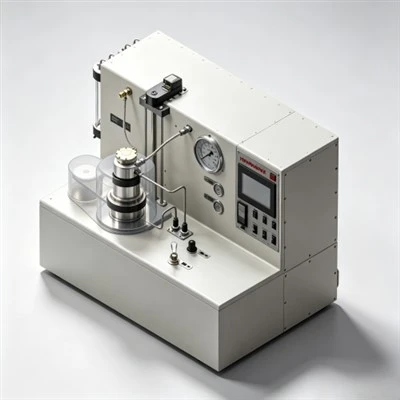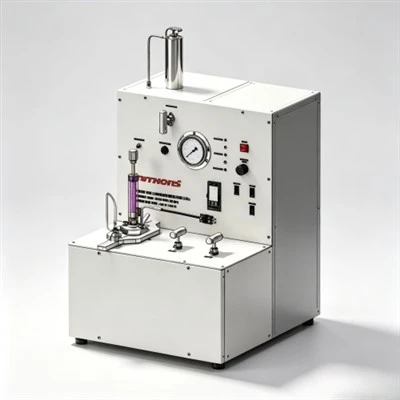

Oilwell cementing guarantees long-term structural wellbore stability, zonal fluid isolation, tubular corrosion protection, and environmental safety by pumping an engineered cement slurry into the casing-formation annulus. As an essential operational milestone in well construction, oilwell cementing acts as the primary hydraulic barrier throughout the lifecycle of oil and gas assets, preventing uncontrolled gas or liquid migration between geological formations and supporting heavy casing strings against intense downhole tectonic stress. Primary oilwell cementing seals open-hole formations immediately after casing installation, while remedial oilwell cementing addresses micro-annular gas leaks, casing corrosion breaches, or formation cross-flow during field production or plug and abandonment (P&A) phases. Modern oilwell cementing relies heavily on advanced chemical additives-such as synthetic fluid loss additives, high-temperature retarders, dispersants, defoamers, and gas-tight latex polymers-alongside rigorous laboratory qualification using HTHP consistometers, rotational viscometers, and fluid loss cells to verify slurry rheology, thickening time, and static gel strength before operational pumping.
Explore High-Performance Cementing Solutions:
Explore High-Temperature Fluid Loss Additive Solutions
Why Is Oilwell Cementing Crucial for Long-Term Well Integrity and Asset Safety?
Oilwell cementing creates a durable, impermeable hydraulic seal between outer steel casing strings and heterogeneous subsurface rock formations. Without effective oilwell cementing, high-pressure natural gas, sour crude oil, and corrosive formation brines migrate unchecked behind the casing sheath. This interzonal fluid communication can pollute shallow freshwater aquifers, accelerate structural casing corrosion, cause sustained casing head pressure (SCP), and introduce catastrophic well control hazards such as subsurface blowouts. Achieving high-integrity oilwell cementing requires complete displacement of drilling mud from the annulus, precise rheological control, zero cement shrinkage, and early compressive strength development under dynamic bottom-hole static and circulating temperatures.
The execution of oilwell cementing commences immediately following the completion of drilling operations to target depth. Field crews pull the drill string out of the hole (POOH) and run the steel casing string equipped with specialized mechanical centralizers, float collars, and guide shoes. Casing centralizers maintain pipe standoff in vertical, directional, or extended-reach horizontal wellbores, ensuring an even annular gap around the tubulars. Proper centralization is vital during oilwell cementing because off-center casing creates narrow channels where drilling fluid remains trapped, resulting in mud channels, incomplete cement coverage, and subsequent gas migration paths behind the casing.
To isolate drilling fluids from the incoming slurry column, operators inject engineered chemical pre-flushes and high-viscosity spacer fluids ahead of the cement. Spacer fluids wash filter cake off permeable rock faces, wet casing surfaces, and prevent direct mud-cement gelation. During displacement, engineers incorporate high-performance fluid loss additives into slurry formulations to restrict filtrate leakage into permeable formations, preserving hydrostatic pressure column height and eliminating premature flash setting during oilwell cementing operations.
To better understand fundamental concepts governing well construction and zonal isolation, explore our technical breakdown on fundamental principles of oilfield cementing operations.
What Are the Operational Stages and Hydraulics of Primary Oilwell Cementing?
Primary oilwell cementing follows a rigorous pumping sequence engineered to achieve maximum mud displacement efficiency without exceeding formation fracture gradients or inducing lost circulation in depleted zones:
- Pre-Flush and Chemical Spacer Displacement: Weighted washes and chemical spacers remove filter cake from the wellbore wall, condition formation surfaces, and physically isolate incompatible drilling mud from cement slurries during primary placement.
- Bottom Wiper Plug Launching: An elastomeric wiper plug with flexible wipers is launched ahead of the slurry to wipe residual drilling mud from the inner casing wall and prevent internal fluid contamination.
- Slurry Pumping and Friction Management: Tailored cement slurries containing dispersants, retarders, and anti-settling agents are pumped down the casing string at controlled rates to optimize laminar or turbulent displacement hydraulics.
- Diaphragm Rupture and Annular Flow: Once the bottom plug lands on the float collar, differential hydraulic pressure ruptures its internal rubber diaphragm, allowing slurry to pass through the float shoe into the annular space.
- Top Wiper Plug Launching and Displacement: A solid top wiper plug is released behind the slurry volume, followed by displacement fluid (drilling fluid or completion brine) to press the slurry into the annulus.
- Plug Bumping and Static Hydration: Bumping the top plug signals the conclusion of slurry placement. Pumping stops, back-pressure valves close, and the cement sheath enters a static hydration state to build compressive strength.
Controlling equivalent circulating density (ECD) throughout these pumping stages is imperative for successful oilwell cementing. If bottom-hole pressure exceeds formation strength, matrix fracturing causes severe slurry losses, resulting in top-of-cement (TOC) deficiencies. Conversely, if hydrostatic pressure drops below pore pressure during static transition, formation gas or brine enters the setting matrix, causing micro-channeling. Advanced hydraulic modeling software calculates surge and swab pressures, critical flow velocities, and slurry transition times to ensure continuous well control throughout the job.
How Do Chemical Additives Optimize Slurry Performance in Oilwell Cementing?
Neat Portland cement slurries lack the physical and chemical capabilities required for deep, high-temperature, or high-pressure wells. Customized chemical additive formulations modify rheology, hydration kinetics, fluid loss rates, and mechanical elasticity during oilwell cementing execution:
| Additive Category | Chemical Mechanism & Composition | Primary Operational Value in Oilwell Cementing |
|---|---|---|
| Fluid Loss Control Agents | Synthetic polymers (e.g., AMPS copolymers) forming low-permeability filter cakes | Prevents slurry dehydration, maintains hydrostatic head, and eliminates micro-annular gas channels. |
| Cementing Retarders | Lignosulfonates, hydroxycarboxylic acids, and synthetic phosphonates chelate calcium ions | Extends thickening time for safe displacement in deep, high-temperature oilwell cementing applications. |
| Dispersants & Friction Reducers | Polynaphthalene sulfonates neutralizing surface electrical charges on cement particles | Reduces plastic viscosity and surface pumping pressures, enabling turbulent flow. |
| Accelerators | Inorganic salts (calcium chloride, sodium chloride) promoting hydration kinetics | Shortens Wait-on-Cement (WOC) time and accelerates early compressive strength in shallow operations. |
| Defoamers & Gas Blockers | Polyorganosiloxanes and specialized latex emulsions preventing air entrainment | Maintains target slurry density, protects pump efficiency, and blocks gas migration during static setting. |
In addition to basic additives, modern well designs frequently incorporate expanding additives, resin-coated particles, and flexible carbon fibers. Expanding additives generate controlled volumetric expansion during hydration, compensating for initial bulk shrinkage and ensuring tight mechanical contact between the set cement, pipe wall, and formation face. Flexible fibers enhance tensile strength and impact resistance, allowing the cement sheath to withstand severe pressure pulsations during hydraulic fracturing or thermal stress during cyclic steam injection.
For a full analysis of chemical modification strategies and blend selection, review our comprehensive guide on oilfield cement additive selection and chemical formulation strategies.
What Laboratory Testing Instruments Guarantee Oilwell Cementing Success?
To avoid catastrophic operational failure downhole, service companies conduct extensive laboratory testing on cement samples in accordance with API Spec 10A and Recommended Practice 10B specifications before oilwell cementing execution:
Thickening Time Assessment: High-Temperature High-Pressure (HTHP) consistometers simulate bottom-hole circulating temperature (BHCT) and bottom-hole pressure (BHBP). The consistometer measures slurry consistency in Bearden Units (Bc). A predictable slurry profile maintaining consistency below 30 Bc followed by a rapid transition to 100 Bc ensures safe pumpability and prompt setting downhole.
Rheological and Fluid Loss Evaluation: Rotational viscometers evaluate dial readings across standard shear rates (300, 200, 100, 6, 3 rpm) to determine Plastic Viscosity (PV) and Yield Point (YP) under the Bingham Plastic model. Static HTHP fluid loss cells measure liquid filtrate loss across a 325-mesh screen under 1,000 psi differential pressure, maintaining filtrate volume below 30–50 mL/30 min for gas-tight placement.
Non-Destructive Compressive Strength Testing: Ultrasonic Cement Analyzers (UCA) send ultrasonic pulses through curing cement specimens under simulated downhole temperature and pressure. By tracking acoustic velocity, UCAs determine initial set times and continuous compressive strength development without destroying the sample, providing precise Wait-on-Cement (WOC) targets for field crews.
Static Gel Strength Transition Analysis: During the transition from a liquid slurry to a solid matrix, cement loses its ability to transmit full hydrostatic pressure before developing sufficient compressive strength. Specialized Static Gel Strength Testers (SGST) measure the time window required for gel strength to increase from 100 lbf/100 ft² to 500 lbf/100 ft². Minimizing this transition time window is critical for suppressing gas entry into the setting cement column.
How Does Oilwell Cementing Ensure Environmental Protection and Well Integrity?
Properly executed oilwell cementing acts as the primary defense mechanism against groundwater contamination and environmental pollution during energy production. Surface casing strings cemented back to surface establish an impermeable barrier that protects potable freshwater zones from saline formation water, naturally occurring gas, and heavy minerals.
In addition to aquifer protection, oilwell cementing secures wellbore integrity during plug and abandonment (P&A) operations at the end of asset lifecycle. Cement plugs placed across hydrocarbon-bearing intervals isolate subterranean fluids permanently, preventing surface leakage and satisfying stringent international environmental regulations.
Environmental compliance also extends to chemical selection. Modern additive packages utilize eco-friendly, biodegradable synthetic polymers and non-toxic surfactants that satisfy rigorous OSPAR and North Sea environmental standards. Pre-job laboratory evaluation confirms that chemical additives do not leach toxic compounds into surrounding formations while maintaining required performance metrics downhole.
To explore historic industry lessons and safety protocols regarding barrier integrity, examine our review of critical well integrity insights and modern barrier standards in well cementing.
Regional Case Application: High-Temperature Liner Cementing in the Delaware Basin
In the Delaware Basin of West Texas and New Mexico (USA), operators drilling deep horizontal wells targeting the Wolfcamp and Bone Spring formations face complex technical challenges during placement.
[ Regional Location Map: Delaware Basin, Permian Basin, Texas / New Mexico, USA ]

Regional Challenges & Background: Long horizontal liner strings extending past 20,000 feet total depth encounter bottom-hole static temperatures exceeding 310°F (154°C) alongside narrow pressure windows between pore pressure and fracture gradients. Historical operations in this region suffered high fluid loss, flash setting, and gas channeling, leading to sustained casing pressure (SCP) at the wellhead.
Engineered Chemical Solution & Lab Qualification: Service engineers engineered a 15.8 ppg low-rheology cement slurry incorporating synthetic AMPS-based fluid loss additives, high-temperature retarders, and micro-silica anti-settling agents. Pre-job laboratory evaluation using an HTHP consistometer confirmed a stable 7-hour pumpability window at 310°F, while static fluid loss cell testing recorded filtrate loss below 25 mL/30 min.
Field Execution & Results: Chemical spacers effectively conditioned the wellbore, allowing seamless slurry placement across the horizontal lateral without lost circulation. Post-job ultrasonic cement bond logging verified complete 360-degree zonal isolation and superior compressive strength, achieving 100% operational success and eliminating surface gas pressure.
Establishing Sustainable Well Integrity Through Chemical and Laboratory Synergy
Delivering long-term hydraulic isolation across diverse wellbore architectures requires complete alignment between specialized chemical additives, precise hydraulic modeling, and rigorous laboratory qualification. By combining synthetic fluid loss control polymers, temperature-stable retarders, and high-efficiency dispersants with standardized testing protocols on HTHP consistometers, viscometers, and UCAs, operators ensure optimal oilwell cementing performance, safeguard environmental resources, and maximize hydrocarbon production life.
Optimize Your Oil Well Cementing Formulations Today
We supply high-grade cementing additives, retarders, and fluid loss control agents compliant with API Spec 10A standards, alongside laboratory cement testing equipment for global field operations.
Request Technical Pricing for Cementing Solutions