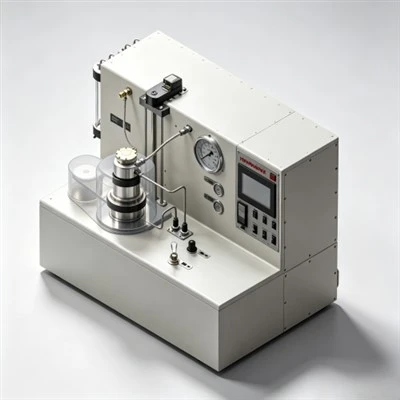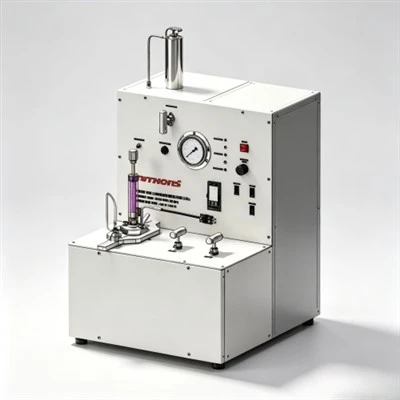

Analyzing the design and structural characteristics of static gel strength tester systems is vital for petroleum laboratory managers selecting standard equipment to address downhole gas migration. Built strictly in compliance with API Spec 10B-6 standards, these specialized analyzers evaluate how cementing slurries transform from hydraulic fluids into rigid gels. Key technical characteristics of static gel strength tester hardware include high-pressure high-temperature (HPHT) simulation chambers, magnetic drive couplings that eliminate packing friction, micro-rotational vane geometries, and real-time digital transition time logging. Understanding these unique characteristics of static gel strength tester instruments allows engineers to reliably evaluate static gel development from 48 Pa (10 lbf/100 ft²) up to 2400 Pa (500 lbf/100 ft²). Modern operators leverage the high-precision characteristics of static gel strength tester technology to optimize gas-block slurry additives, ensuring long-term well integrity and complete zonal isolation.
Exploring each mechanical and architectural feature illustrates how these instruments deliver reliable static gelation diagnostics.
1. HPHT Chamber Architecture and Magnetic Coupling Seals
The primary physical characteristics of static gel strength tester hardware revolve around robust pressure vessel engineering capable of replicating deep wellbore environments.
Essential vessel engineering features reflecting the essential characteristics of static gel strength tester systems include:
- Extreme HPHT Rating: Standard testing vessels safely operate at continuous temperatures up to 204°C (400°F) and fluid pressures reaching 200 MPa (30,000 psi).
- Magnetic Coupling Drive: Transmits rotational torque into the pressurized chamber without dynamic shaft seals, completely eliminating gland packing friction errors.
- Corrosion-Resistant Alloy Construction: Internal wetted parts utilize Hastelloy and high-grade stainless steels to resist sour gas ($H_2S$) and brine contamination.
- Internal Cooling Coils: Integrated rapid cooling jackets allow safe depressurization and high lab throughput between test cycles.
Related Technical Reading: Examine the foundational physical principles driving gel testing in Physical Mechanics and Operational Principle of Static Gel Strength Testers.
2. Vane Geometry and Micro-Rotational Shear Systems
The unique shear-measurement characteristics of static gel strength tester platforms differentiate them from standard rotational viscometers and continuous consistometers.
The operational characteristics of static gel strength tester shear systems are summarized across core mechanical functions:
| System Feature | Mechanical Component | Operational Mechanism | Analytical Advantage |
|---|---|---|---|
| Four-Bladed Vane Geometry | Precision Machined Vane Bob | Inserts into static slurry to measure shear stress across uniform surface planes. | Prevents slurry slip and wall friction distortion during gelation. |
| Micro-Speed Stepper Control | Digital Pulse Motor | Rotates at ultra-slow speeds (e.g., $0.2^{\circ}/\text{min}$ or intermittent pulses). | Measures yield torque without disturbing delicate hydration bonds. |
| In-Line Torque Load Cell | High-Resolution Transducer | Directly measures rotational resistance force on the vane shaft. | Provides linear voltage conversion with high signal-to-noise ratio. |
| Automated Transition Logging | Data Acquisition Module | Tracks $100 \text{ to } 500 \text{ lbf/100 ft}^2$ transition times automatically. | Eliminates manual calculation errors in gas channeling risk analysis. |
These well-engineered characteristics of static gel strength tester mechanisms guarantee repeatable performance when qualifying complex slurry formulations.
Related Technical Reading: Gain deeper insights into dynamic slurry transition kinetics in The Mechanics of Static Gel Strength Transition: Real-Time Dynamic Slurry Evaluation.
3. Automated Temperature Profiling and Digital Data Processing
Modern software capabilities highlight the software-driven characteristics of static gel strength tester analyzers in advanced oilfield research facilities.
Prominent digital and control characteristics of static gel strength tester instruments include:
- Multi-Segment Thermal Ramping: Microprocessor controllers accurately replicate complex bottomhole circulating and static temperature heating curves.
- Real-Time Static Gel Plotting: Software displays dynamic curves comparing temperature, pressure, time, and static gel strength ($Pa$ or $lbf/100 ft^2$).
- Automated Critical Point Alerts: System automatically flags the 48 Pa (10 lbf/100 ft²), 240 Pa (50 lbf/100 ft²), and 273 Pa (100 lbf/100 ft²) threshold milestones.
- Data Export Interoperability: Easily exports test files in standard CSV or PDF formats for integration into well construction databases.
Related Technical Reading: Learn about key performance evaluation criteria in Evaluating the Performance Metrics of Static Gel Strength Testers.
Regional Application Case: Bohai Bay Offshore HPHT Gas Field Operations, China
Case Application: Bozhong HPHT Gas Field Complex, Bohai Bay, China

Regional Cementing Background in Bohai Bay
Offshore gas fields in the Bozhong Block within Bohai Bay feature deep pre-Tertiary metamorphic reservoirs located beneath shallow hazard zones. Drilling offshore production wells involves navigating tight operational pore-pressure windows, bottomhole temperatures exceeding 175°C, and high concentrations of dissolved gas.
Regional Cementing Challenges in Deep Offshore Wells
Cementing long offshore liner strings requires extended placement times followed by rapid static gel strength development to halt gas migration. Early offshore operations suffered from gas intrusion during long slurry transition periods, leading to sustained pressure on production casing strings.
Technical Requirements for Static Gel Strength Diagnostics
Offshore operators mandated rigorous laboratory qualification leveraging the distinct characteristics of static gel strength tester platforms:
- Precise static gel strength measurement under simulated offshore HPHT conditions (175°C, 90 MPa).
- Verification of custom gas-block slurry formulations achieving a transition time ($100 \rightarrow 500 \text{ lbf/100 ft}^2$) under 20 minutes.
- High magnetic drive reliability to ensure uninterrupted continuous testing during multi-day offshore campaigns.
How Advanced Tester Characteristics Resolved Field Gas Migration
Offshore laboratory specialists utilized advanced analyzers showcasing the reliable characteristics of static gel strength tester platforms to evaluate specialized latex slurry blends. The friction-free magnetic torque sensing enabled precise detection of early micro-gelation, allowing chemists to fine-tune retarder and gas-block additive ratios.
Regional Application Case Results
Deploying slurry designs qualified by the structural characteristics of static gel strength tester devices yielded outstanding field results across 10 offshore HPHT wells:
- Successfully eliminated gas channeling across all production liner cementing operations.
- Reduced average static transition time from 65 minutes down to 17 minutes downhole.
- Ultrasonic bond logging demonstrated complete 360-degree zonal isolation across target pay zones.
4. Routine Maintenance for Long-Term Characteristic Integrity
Preserving the high-precision characteristics of static gel strength tester equipment requires systematic maintenance routines in oilfield laboratories.
Essential maintenance practices preserving hardware integrity include:
- Deadweight Calibration Checks: Regularly verify torque sensor linearity using precision calibration arms and certified test weights.
- Vane Geometry Integrity: Clean and inspect the four-bladed vane after every test run to ensure no hardened cement alters blade dimensions.
- Magnetic Drive Bushing Servicing: Lubricate and inspect internal magnetic drive bearings to maintain friction-free operation.
- Pressure System O-Ring Replacement: Replace high-temperature Viton or Kalrez seals periodically to prevent pressure leaks at elevated temperatures.
Frequently Asked Questions (FAQ)
What are the key characteristics of static gel strength tester hardware?
Key characteristics include HPHT pressure vessels, friction-free magnetic drive torque sensors, specialized four-bladed vane geometries, and automated transition software complying with API Spec 10B-6.
How does a static gel strength tester differ from an ultrasonic cement analyzer (UCA)?
A static gel strength tester directly measures mechanical torque resistance using a rotating vane, whereas a UCA infers compressive strength and gelation via non-destructive acoustic pulse velocity.
Why is magnetic coupling critical in static gel testing?
Magnetic coupling transfers motor rotation through a solid pressure wall without dynamic packing seals, eliminating seal friction so the sensor measures only actual fluid gel torque.
What API standard governs static gel strength testing?
API Spec 10B-6 (Recommended Practice on Determining the Static Gel Strength of Cement Formulations) governs equipment standards and laboratory procedures.
Ensuring Cementing Reliability Through Precision Equipment
Understanding the architectural and functional characteristics of static gel strength tester platforms enables petroleum engineers to design robust, gas-tight slurry systems for challenging HPHT environments. By selecting high-precision instruments engineered to API standards, oilfield laboratories ensure accurate data, optimal additive performance, and long-term well integrity.
Equip Your Laboratory with API-Compliant Static Gel Strength Testers
We manufacture advanced static gel strength testers engineered with magnetic drive technology, precision torque transducers, and automated HPHT control software.
Explore Our Testing Equipment PortfolioOptimizing Field Operations with Standardized Testing and Engineering Support
Achieving long-term zonal isolation and maintaining wellbore structural integrity requires a rigorous, data-driven understanding of both chemical additive performance and downhole physical simulation. As global drilling operations push deeper into high-pressure, high-temperature (HPHT) zones, ultra-deepwater plays, and unconventional tight gas formations, standard cement formulations can no longer guarantee success without precise optimization. Whether evaluating slurry thickening time profiles, controlling precise fluid loss, or monitoring early compressive strength build-up, petroleum engineers must rigorously align laboratory protocols with the latest API RP 10B-2 and ISO 10426 industry standards.
Standardized laboratory testing equipment plays a crucial role in bridging the gap between benchtop experiments and actual rig site execution. Utilizing automated consistometers, high-pressure filtration cells, and non-destructive ultrasonic cement analyzers (UCA) provides real-time, repeatable data that directly influences field pumping schedules. Integrating advanced chemical additives-such as thermally stable polymers, organic retarders, and targeted dispersants-with high-precision laboratory verification minimizes operational hazards, eliminates fluid migration risks, and prevents costly casing failures or sustained casing pressure (SCP).
Ultimately, holistic slurry design and strict quality assurance protocols significantly shorten wait-on-cement (WOC) time, allowing operators to transition safely to subsequent drilling or hydraulic fracturing stages. By combining state-of-the-art laboratory testing equipment with customized additive packages, oilfield service companies can maximize operational safety, reduce non-productive time (NPT), and optimize the overall economic performance of oil and gas assets throughout their operational lifecycle.
Need Customized Cementing Equipment or Chemical Testing Solutions?
Our technical engineering team provides high-precision laboratory testing instruments and tailored slurry additive formulations to meet your demanding field requirements worldwide. Contact our specialists today to enhance your cementing performance and wellbore stability.
Contact Our Technical Experts