
Operators can prevent shallow water flow and gas hazards by implementing a rapid-gelling, non-retarding cement slurry design driven by a dry-blended chemical accelerator that drastically compresses the static gel strength (SGS) transition period and maintains hydrostatic pore pressure across vulnerable cold formations. In harsh permafrost and sub-arctic operating theaters-such as the Prudhoe Bay field on the Alaskan North Slope where near-surface temperatures hover between 2°C and 18°C-under-compacted overpressured sands and biogenic gas zones exploit the prolonged liquid-to-solid phase transition of cold Portland cement. Implementing a specialized accelerator powder promotes rapid silicate hydration, tightens pore throats, and shortens the critical zero-support window between 100 lbf/100 sq ft and 500 lbf/100 sq ft SGS, successfully isolating shallow water flow and gas hazards before cross-flow channels propagate to the surface.
Managing shallow water flow and gas hazards is essential during the conductor and surface casing phases because uncontrolled subterranean fluid migration erodes incompetent glacial till, undermines wellpad sub-structures, and causes sustained casing pressure. Standard oil well cement slurries chilled by sub-zero ambient batch water remain chemically dormant for hours downhole. Without rapid hydration catalysis to arrest shallow water flow and gas hazards, formation water washes out unhardened slurry while biogenic methane cuts through the developing matrix. Deploying an engineered accelerator powder establishes early compressive resistance and impermeable microstructural bonding across cold permeable horizons.
Explore advanced chemical accelerators and specialized additive formulations engineered for low-temperature wellbore barriers:
Geological Mechanisms Driving Shallow Water Flow and Gas Hazards
In cold-climate regions and permafrost environments, shallow unconsolidated sands often trap high-pressure artesian aquifers and pockets of biogenic methane within the upper 300 to 1,000 meters of the stratigraphic column. Because these formations lack deep sedimentary overburden and severe compaction, the pore pressure within permeable sand lobes frequently approaches the local fracture gradient.
When an unconditioned cement slurry is circulated across these intervals, it initially exerts hydrostatic pressure sufficient to suppress formation fluid entry. However, as the slurry begins static hydration under near-freezing conditions, a destructive sequence unfolds that allows shallow water flow and gas hazards to breach annular containment:
- Hydrostatic Pressure Decay: As Portland cement particles form initial interlocking structures, static gel strength develops. Once SGS reaches 100 lbf/100 sq ft, the slurry partially supports its own weight against the casing wall and borehole formation. The column ceases to behave as a true liquid, causing transmitted hydrostatic pressure at the sand face to decay rapidly.
- Extended Dormant Gel Transition: In cold wellbores (BHST 5°C to 20°C), unaccelerated cement can take 60 to 120 minutes or longer to progress from 100 lbf/100 sq ft to 500 lbf/100 sq ft. This extended period leaves the wellbore vulnerable to shallow water flow and gas hazards because the internal pore pressure falls below formation fluid pressure while the slurry is still too weak to resist invasion.
- Chemical Hydration Volume Loss: Stoichiometric hydration reactions cause absolute volumetric shrinkage of 2% to 5% within the cement matrix. If interstitial fluid filtration is not tightly controlled, fluid extraction accelerates internal pressure drop, inviting gas bubbles and water fingers into the setting column.
- Channel Propagation and Surface Breaches: Invading water dilutes the cement paste, preventing crystal formation and carving large washouts. Biogenic gas percolates upward, coalescing into continuous micro-channels that generate sustained casing pressure or surface cratering.
How Chemical Acceleration and Slurry Thixotropy Neutralize Influx
Neutralizing shallow water flow and gas hazards in cold wellbores requires a formulation that provides adequate dynamic pumpability during placement, followed immediately by rapid static gelation and quick compressive strength gain once pumping halts. Chemical accelerator powders achieve this through specific catalytic mechanisms:
- Accelerated Alite (C₃S) Phase Dissolution: Inorganic activating components in the accelerator powder sharply increase the dissolution rate of tricalcium silicate under low kinetic energy, forcing rapid saturation of calcium ions (Ca²⁺) into the interstitial pore liquid.
- Rapid Nucleation of Calcium Silicate Hydrate (C‑S‑H): The early ionic supersaturation triggers rapid precipitation of fibrous C‑S‑H gel and calcium hydroxide (Ca(OH)₂). This accelerates early crystal cross-linking, sealing pore throats against water washouts.
- Compression of the Critical Transition Window: By accelerating crystal growth, the chemical additive condenses the critical transition duration (SGS 100 to 500 lbf/100 sq ft) to less than 15 minutes, closing the permeability window before shallow water flow and gas hazards can enter the annulus.
- Exothermic Heat Retention: The concentrated chemical reaction releases hydration heat within hours rather than days, warming the annular column and self-catalyzing subsequent curing across permafrost intervals.
| Barrier Parameter (12°C Static) | Unaccelerated Cold Slurry | Accelerated Slurry with CG910S |
|---|---|---|
| Critical Transition Time (100–500 lbf) | 65 – 110 Minutes (High influx risk) | 10 – 18 Minutes (Gas/water tight) |
| Time to 0.35 MPa (50 psi Initial Gel) | 16 – 24 Hours | 4.0 – 5.5 Hours |
| Time to 3.5 MPa (500 psi Structural Set) | 30 – 48 Hours | 8.0 – 11.0 Hours |
| Free Fluid (API 45° Operating Angle) | 2.0% – 4.5% (Channeling paths) | 0.0% (Zero Free Water) |
| Vulnerability to Gas/Water Channeling | Severe Risk Category | Negligible / Suppressed |
Integrating Fluid Loss Control with Rapid Early Acceleration
In operations threatened by shallow water flow and gas hazards, acceleration alone is only half the engineering solution. If the cement slurry exhibits poor filtration control, pressurized water from the slurry filters rapidly into permeable sand horizons. This desiccation spikes slurry viscosity, causes localized bridging, and leaves void spaces that formation gas immediately occupies.
A robust slurry defense against shallow water flow and gas hazards pairs an active accelerator powder with compatible synthetic fluid loss polymers. This chemical pairing holds API filtration below 40 mL/30 min while driving rapid hydration kinetics. Slurry qualification adhering to testing standards governed by the American Petroleum Institute (API) ensures that the cement retains its mixing water, sustains full hydrostatic pressure across the formation, and cures into an impermeable annular barrier.
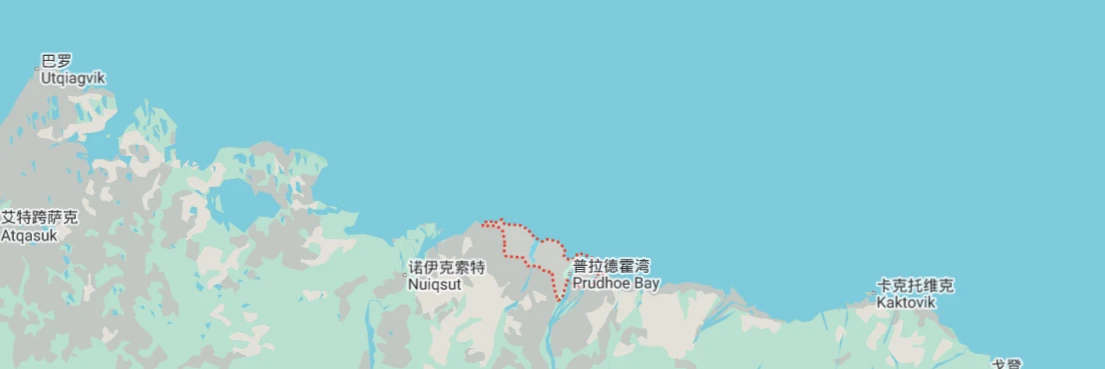
Case Application: Prudhoe Bay Field, North Slope, Alaska, USA
Regional Cementing Background in the Alaskan North Slope
The Prudhoe Bay oilfield on the Alaskan North Slope is one of the most operationally demanding Arctic drilling regions in North America. Surface casing strings typically penetrate 500 to 700 meters of continuous permafrost where formation temperatures range from -10°C in the upper layers to 2°C at the permafrost base, transitioning to 12°C to 18°C directly below the frozen interval. Directly beneath the permafrost base lie high-permeability, weakly consolidated sands charged with pressurized brackish water and pockets of biogenic methane gas, creating a severe operational threat from shallow water flow and gas hazards.
Regional Cementing Challenges in Arctic Surface Intervals
Drilling and cementing conductor and surface casing strings in this sub-arctic environment involves critical technical difficulties:
- Severe Shallow Water Flow Influx: Sub-permafrost sands contain overpressured water tables that wash out unset cement if hydrostatic pressure drops below formation pore pressure during static gelation.
- Biogenic Gas Percolation: Shallow methane migrates rapidly through slow-setting cement, generating sustained annular casing pressure at the wellhead that violates Alaska Oil and Gas Conservation Commission (AOGCC) environmental regulations.
- Near-Freezing Mix Water Constraints: Water sourced from Arctic reserve pits or heated storage often enters batch blenders at 4°C to 8°C. Cold mix water suppresses early hydration kinetics, delaying initial setting times beyond 24 hours in unaccelerated slurries.
Technical Requirements for Sub-Permafrost Barrier Slurries
To successfully mitigate shallow water flow and gas hazards across the North Slope, slurry systems must satisfy stringent engineering benchmarks:
- Critical static gel strength transition time (100 to 500 lbf/100 sq ft) strictly under 15 minutes at 10°C static temperature.
- Attainment of 3.5 MPa (500 psi) compressive strength within 10 hours at 12°C BHST.
- Homogeneous dry-blended powder format to prevent liquid chemical freezing in Arctic sub-zero storage.
- API fluid loss controlled below 40 mL/30 min to prevent slurry desiccation across high-permeability sands.
How CG910S Addresses the Challenge
CG910S Low-Temperature Cementing Accelerator Powder is specifically formulated to mitigate shallow water flow and gas hazards in sub-arctic operating environments. Manufactured as an active dry chemical powder, CG910S dry-blends into bulk API Class G cement without clumping or hygroscopic degradation. Upon mixing with cold water, CG910S rapidly ionizes, catalyzing C₃S hydration and compressing the critical gel strength transition window. It accelerates C‑S‑H matrix formation, eliminating gas percolation and preventing water influx across cold permeable formations.
Regional Application Case
In a representative surface casing cementing operation in the Prudhoe Bay area, a 340 mm (13-3/8 inch) casing string was cemented inside a 444.5 mm (17-1/2 inch) hole to a depth of 780 meters TVD, penetrating through 560 meters of permafrost into sub-permafrost sand packages. Static formation temperature was 11°C, with mix water maintained at 6°C. The slurry was designed at a density of 1900 kg/m³ (15.8 ppg) using Class G Portland cement.
By pneumatically blending CG910S at 2.4% BWOC alongside compatible fluid loss additives and defoamers, the cementing service team achieved superior operational and barrier performance:
- Static Gel Strength Progression: The transition time from 100 to 500 lbf/100 sq ft was completed in 11 minutes at 11°C, effectively sealing the annulus against gas and water migration.
- Thickening Time Stability: Atmospheric consistometer testing verified stable pumpability (< 30 Bc) for 2 hours and 30 minutes, followed by a sharp transition reaching 70 Bc at 3 hours and 05 minutes.
- Compressive Strength Growth (UCA): The slurry attained 0.35 MPa (50 psi) at 4 hours and 40 minutes and achieved 3.5 MPa (500 psi) at 8 hours and 50 minutes under 11°C static conditions.
- Field Outcome: Full slurry returns were circulated to surface with zero fluid cross-flow or water channeling. Subsequent acoustic bond logging verified 100% bonded integrity across sub-permafrost sands, with zero surface casing vent pressure observed.
Laboratory Diagnostic Workflows for Influx Prevention Verification
Formulating slurry systems to eliminate shallow water flow and gas hazards requires structured laboratory testing under API RP 10B-2 testing standards:
1. Static Gel Strength Analysis (SGSA): Utilizing an Ultrasonic Cement Analyzer equipped with static gel strength logging allows engineers to measure the precise time elapsed between 100 lbf/100 sq ft and 500 lbf/100 sq ft. Verifying that this window is under 15 minutes confirms that the slurry will resist gas bubble invasion and water washouts.
2. Low-Temperature Pressurized Consistometry: Slurry components must be conditioned at bottom-hole circulating temperatures using chilled consistometers to ensure adequate pumping safety margins before static gel development begins.
3. Pressurized Fluid Loss and Free Water Verification: Pressurized fluid loss cells verify filtration containment below 40 mL/30 min across 325-mesh screens, while inclined 45° graduated cylinders confirm zero free fluid separation under downhole conditions.
Frequently Asked Questions (FAQ)
Why are cold wellbores especially vulnerable to shallow water flow and gas hazards?
Low wellbore temperatures suppress cement hydration kinetics, causing prolonged dormant periods where static gel strength develops slowly. As the column supports its own weight, hydrostatic pressure drops below formation pore pressure, allowing high-pressure shallow water and biogenic methane to invade the fluid cement.
How does compressing the static gel strength transition window prevent gas migration?
Between 100 and 500 lbf/100 sq ft SGS, cement cannot transmit hydrostatic head yet lacks the mechanical shear strength to prevent gas percolation. Compressing this transition to under 15 minutes minimizes the time window during which gas bubbles can enter and coalesce into channels.
What operational benefits does an accelerator powder provide over liquid calcium chloride?
In Arctic and sub-arctic conditions, liquid chemicals can freeze in surface lines or tanks, and improper field batching causes slurry density fluctuations. A dry accelerator powder blends homogeneously into bulk dry cement, ensuring uniform distribution and predictable performance downhole.
Can CG910S be used alongside synthetic fluid loss control polymers?
Yes. CG910S exhibits excellent chemical compatibility with AMPS and non-ionic fluid loss polymers. It does not induce complex coacervation or flash setting, allowing simultaneous fluid loss control below 40 mL/30 min and rapid hydration acceleration.
Key Operational Strategies for Arctic and Cold-Climate Well Isolation
Preventing shallow water flow and gas hazards in cold wellbore environments requires an integrated chemical strategy combining rapid hydration catalysis, controlled static gel strength development, and rigorous filtration control. Relying on unaccelerated slurries in near-freezing strata guarantees extended non-productive time, sustained casing pressure, and compromised structural integrity across shallow horizons.
By implementing a high-performance chemical accelerator powder such as CG910S, cementing engineers compress critical gel transition times to under 15 minutes, eliminate free water separation, and reach 3.5 MPa compressive strength within 9 to 11 hours. This disciplined chemical approach neutralizes shallow water flow and gas hazards, protects surface casing anchors, and delivers durable zonal isolation across challenging cold-climate drilling campaigns worldwide.
Secure Gas-Tight Zonal Isolation in Cold-Climate Wellbores
Consult our technical cementing specialists to evaluate CG910S low-temperature accelerator powder, static gel strength analysis, and customized slurry formulations for your cold-region drilling programs.
Explore CG910S Accelerator SpecificationsBlog Category: Cementing Additives & Chemical Solutions