
A powdered cement accelerator speeds up alite dissolution at low temperatures by chemically disrupting the early passivating hydrate layer that encapsulates unhydrated tricalcium silicate (C₃S) clinker grains and driving rapid calcium ion supersaturation in the pore water. In permafrost, sub-arctic, and cold shallow-well environments-such as the massive gas-bearing permafrost sequences of the Yamal Peninsula in Western Siberia where bottom-hole circulating temperatures regularly range from 2°C to 18°C-low thermal activation energy traps Portland cement in a prolonged induction state. Incorporating a purpose-designed powdered cement accelerator elevates early ionic strength, accelerates the nucleating precipitation of fibrous calcium silicate hydrate (C‑S‑H) gel and crystalline portlandite (Ca(OH)₂), and shortens the setting transition window without inducing chemical flash set or destructive slurry flocculation.
In oil well cementing, the dissolution rate of alite represents the primary rate-determining step for early gel strength development and mechanical structural hardening. When wellbores are drilled through chilled formations, low kinetic energy suppresses the hydrolysis of anhydrous silicates, creating extended waiting-on-cement delays and leaving casing strings vulnerable to formation water dilution and shallow gas kicks. A finely graded powdered cement accelerator addresses this kinetic limitation by altering surface electrical potentials and coordinating with silicate tetrahedra during initial batch mixing, ensuring consistent chemical activation and early compressive strength gain.
Explore advanced chemical accelerators and specialized additive formulations engineered for low-temperature wellbore barriers:
The Kinetics of Alite (C₃S) Hydration and the Low-Temperature Energy Barrier
Portland cement clinker consists of four primary crystalline phases: tricalcium silicate (C₃S, or alite), dicalcium silicate (C₂S, or belite), tricalcium aluminate (C₃A), and tetracalcium aluminoferrite (C₄AF). Among these components, alite accounts for 50% to 70% of the total cement mass and controls initial slurry setting, early consistency growth, and the development of compressive strength over the first 24 to 72 hours downhole.
Under typical hydration pathways, alite dissolution progresses through five discrete stages: initial pre-induction hydrolysis, the dormant induction period, the acceleration period, the deceleration stage, and steady diffusion-controlled hydration. When dry cement contacts water, C₃S releases calcium ions (Ca²⁺), hydroxide ions (OH⁻), and monomeric silicate species ([H₂SiO₄]²⁻) into the aqueous phase. Within minutes, a metastable, calcium-depleted silicate film forms over the clinker surface. This nanometer-scale passivating boundary restricts water access to the anhydrous core, creating the dormant induction period during which the slurry remains fluid and pumpable.
At standard circulating temperatures (40°C to 90°C), thermal kinetic motion facilitates the dissolution of this passivating film, allowing rapid crystallization. However, in cold wellbores (0°C to 20°C), low thermal activation energy imposes severe thermodynamic constraints on alite dissolution:
- Extended Chemical Induction Periods: At near-freezing temperatures, the rate of ion diffusion across the passivating boundary slows exponentially, stretching the dormant stage beyond 18 to 28 hours in unconditioned slurries.
- Suppressed Ionic Saturation: Low kinetic energy impedes calcium ion accumulation in the pore liquid, preventing the solution from attaining the critical supersaturation ratio required to initiate spontaneous C‑S‑H nucleation.
- Prolonged Structural Vulnerability: While the cement remains in an unset, plastic state, it cannot transmit hydrostatic pressure or resist mechanical shear, exposing the annular column to gas migration and formation fluid dilution.
Deploying an engineered powdered cement accelerator overcomes this kinetic inertia. By introducing high-activity catalytic ions directly into the interstitial fluid, the additive promotes rapid membrane breakdown and shifts the chemical equilibrium toward accelerated C‑S‑H gel precipitation.
Specific Chemical Catalysis Mechanisms of a Powdered Cement Accelerator
A high-performance powdered cement accelerator accelerates low-temperature hydration through three synchronized physicochemical mechanisms:
- Permeabilization of the Passivating Hydration Membrane: Inorganic activating ions (such as chloride, nitrate, or formate anions) penetrate the metastable silicate layer coating the C₃S grains. Due to their high ionic mobility and small hydrated radii, these catalytic anions exchange with silicate groups, creating defects and micro-pores within the passivating film. This increased permeability allows mixing water to directly contact the anhydrous alite core.
- Accelerated Ca²⁺ Saturation and C‑S‑H Nucleation: Rapid ionic exchange accelerates the release of calcium ions into the interstitial liquid. Once the ion activity product of calcium and hydroxide exceeds the solubility product of portlandite, crystalline Ca(OH)₂ precipitates. This rapid crystallization reduces aqueous calcium activity, driving further C₃S dissolution and triggering rapid, dense nucleation of fibrous C‑S‑H gel networks across pore voids.
- Exothermic Hydration Energy Trapping: The accelerated dissolution of alite and tricalcium aluminate releases substantial latent heat of hydration. When catalyzed by a powdered cement accelerator, this chemical energy is released within an intensive 4-to-8 hour window. Trapped inside the annular confinement, this localized heat warms the slurry column above ambient formation temperatures, self-accelerating subsequent crystal growth in cold rock formations.
- Homogeneous Pneumatic Dispersion: As a dry powder, the additive can be pneumatically dry-blended into bulk cement silos. This achieves uniform particle distribution around every clinker grain, preventing the localized over-acceleration or under-accelerated pockets often seen with liquid additives mixed in cold batch tanks.
| Hydration Parameter (10°C BHST) | Unaccelerated Class G Slurry | Slurry with Powdered Accelerator (CG910S) |
|---|---|---|
| Dormant Induction Period | 14 – 24 Hours | 1.5 – 3.0 Hours |
| Rate of Alite (C₃S) Dissolution | Extremely sluggish | High catalytic dissolution rate |
| Time to Initial Set (100 Bc Consistency) | 18 – 26 Hours | 3.5 – 4.5 Hours |
| Time to 3.5 MPa (500 psi Compressive Strength) | 32 – 50 Hours (Severe WOC penalty) | 8.0 – 10.5 Hours (Rapid drill-out) |
| Early C‑S‑H Microstructural Density | Sparse, disconnected crystals | Dense, interlocking fibrillar network |
Synergistic Compatibility with Synthetic Fluid Loss Additives
In oil well cementing, accelerating alite hydration must be balanced with filtration control. Low-temperature casing intervals often penetrate unconsolidated sands and porous gravel beds. If an accelerated slurry loses interstitial water across permeable boundaries, rapid dehydration causes localized flash bridging and incomplete cement returns.
Deploying an engineered powdered cement accelerator alongside non-ionic or AMPS-based fluid loss polymers provides balanced performance. The accelerator stimulates rapid alite dissolution without stripping the polymer's hydration shell or inducing premature gelation. Quality laboratory evaluations follow guidelines published by the American Petroleum Institute (API) under API RP 10B-2, confirming that the accelerated slurry maintains API filtration below 50 mL/30 min while developing structural compressive strength.
Case Application: Yamal Peninsula, Western Siberia, Russia
Regional Cementing Background in the Yamal Peninsula
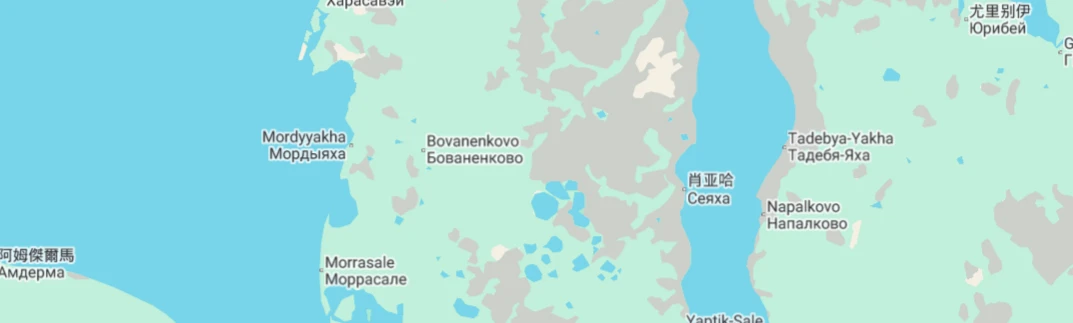
The Yamal Peninsula in the northern part of Western Siberia contains massive natural gas reserves located within sub-arctic tundra environments. Primary drilling operations penetrate thick permafrost intervals extending from the surface down to depths of 350 to 500 meters, where formation temperatures range from -7°C to +2°C. Below the permafrost base, intermediate casing strings are set at depths between 600 and 1,200 meters TVD, where formation temperatures remain between 5°C and 14°C. Mixing water drawn from tundra reservoirs frequently sits at near-freezing temperatures (2°C to 5°C), presenting extreme thermodynamic challenges for slurry hydration.
Regional Cementing Challenges in Permafrost Intervals
Cementing conductor and surface casings across Yamal permafrost strata presents severe technical risks:
- Severe Waiting-on-Cement Costs: Unaccelerated cement systems can take 36 to 48 hours to achieve the mandatory 3.5 MPa compressive strength threshold in cold formations, stalling rig schedules and inflating costs in remote logistics areas.
- Freezing Risk of Liquid Additives: Sub-zero ambient surface temperatures (-35°C to -50°C during winter) cause liquid chemical totes and delivery lines to freeze, making liquid additives impractical for field batching.
- Permafrost Thaw and Annular Channeling: Slow-curing slurries fail to support casing weight and remain vulnerable to shallow gas kicks. In addition, erratic hydration can cause localized ice thawing followed by refreezing, generating structural stress on the casing sheath.
Technical Requirements for Yamal Low-Temperature Slurry Formulations
To address these sub-arctic challenges, cementing formulations must meet specific operational criteria:
- A non-hygroscopic, dry-blended powdered cement accelerator format that can be pneumatically mixed with Portland cement at central bulk facilities without clumping.
- Thickening time controlled between 2.5 and 4.0 hours at 8°C BHCT to ensure safe placement before rapid consistency rise.
- Rapid compressive strength gain reaching at least 3.5 MPa (500 psi) in under 10 hours at 10°C static temperature.
- Zero free fluid separation (0.0% @ 45° angle) to prevent annular micro-channeling.
How CG910S Addresses the Challenge
CG910S Low-Temperature Cementing Accelerator Powder is formulated specifically for cold-climate and permafrost operations. Manufactured as a free-flowing dry chemical powder, CG910S dry-blends into bulk API Class G cement without caking, remaining stable in Arctic storage. Upon contact with cold mix water, CG910S dissolves rapidly, accelerating alite (C₃S) dissolution and triggering early C‑S‑H gel precipitation. It significantly compresses WOC schedules without causing flash setting or slurry rheology spikes.
Regional Application Case
In a representative production well in the Yamal gas province, a 244.5 mm (9-5/8 inch) intermediate casing string was cemented inside a 311.1 mm (12-1/4 inch) hole to a total depth of 880 meters TVD, across the permafrost boundary. The static temperature was measured at 8°C, with surface mixing water at 3°C. The tail slurry design was formulated at 1900 kg/m³ (15.8 ppg) utilizing Class G Portland cement.
By dry-blending CG910S powdered cement accelerator at 2.2% BWOC alongside low-temperature fluid loss control polymers and defoamers, the cementing team achieved outstanding laboratory and field results:
- Controlled Slurry Pumpability: Consistometer testing under simulated Yamal pumping schedules showed a stable rheology below 30 Bc for 2 hours and 40 minutes, reaching 70 Bc at 3 hours and 18 minutes with a sharp transition.
- Compressive Strength Growth (UCA): The slurry achieved initial gelation (50 psi) in 4 hours and 15 minutes, reaching 3.5 MPa (500 psi) at 8 hours and 45 minutes under 8°C static conditions.
- Total WOC Time Reduction: Casing pressure testing and drill-out commenced 11 hours post-cementing, saving over 22 hours of non-productive rig time per well.
- Acoustic Bond Quality: Subsequent ultrasonic logging (CBL/VDL) demonstrated continuous 360-degree bonding across both the permafrost and sub-permafrost sand packages, with zero annular gas leakage detected at the surface.
Laboratory Diagnostic Workflows for Accelerator Evaluation
Validating a powdered cement accelerator for low-temperature applications requires specialized testing workflows in strict compliance with API RP 10B-2 testing protocols:
1. Pre-Chilled Consistometry Conditioning: Atmospheric and pressurized consistometers must use external chillers to pre-cool the dry cement blend and mix water to downhole conditions (2°C to 10°C). Testing accelerators at ambient laboratory room temperatures (20°C to 25°C) fails to replicate real cold-climate field dynamics.
2. Low-Temperature Ultrasonic Cement Analysis (UCA): Pressurized UCA cells measure continuous acoustic pulse velocity through setting cement under static conditions. Identifying the exact elapsed time to 0.35 MPa (50 psi) and 3.5 MPa (500 psi) confirms that alite dissolution catalysis proceeds without extended dormancy.
3. Dry-Blend Segregation and Particle Flowability: Sieve analysis, angle of repose, and aeration testing verify that the particle size distribution of the powdered cement accelerator matches that of the host Portland cement, ensuring uniform distribution during bulk silo handling and pneumatic transfers.
Frequently Asked Questions (FAQ)
Why is alite (C₃S) dissolution the key to accelerating low-temperature cement setting?
Alite (C₃S) constitutes the majority of Portland cement clinker and governs early hydration kinetics. Accelerating alite dissolution quickly saturates the aqueous phase with calcium ions, promoting the formation of interlocking C‑S‑H gel fibers that transform the slurry into a rigid, load-bearing matrix.
What logistical advantages does a powdered cement accelerator offer in Arctic regions?
In Arctic conditions where temperatures drop below -40°C, liquid chemicals freeze, leading to equipment blockages and batching errors. A dry powdered cement accelerator eliminates freezing risks, pre-blends homogeneously into bulk dry cement, and remains chemically stable during long-term field storage.
Does a powdered cement accelerator cause flash setting during placement?
No. Balanced formulations such as CG910S provide a controlled induction plateau. This maintains low slurry viscosity (< 30 Bc) for 2 to 3 hours during mixing and pumping, followed by rapid right-angle thickening once the slurry is placed behind casing.
Can CG910S be utilized in systems containing hollow glass microspheres?
Yes. CG910S dry-blends cleanly into lightened slurries formulated with hollow glass microspheres or lightweight extenders, accelerating clinker hydration without compromising microsphere physical integrity or slurry stability.
Key Chemical Considerations for Cold-Climate Well Cementing
Achieving reliable zonal isolation in permafrost and cold-climate wellbores requires active chemical control over early cement hydration kinetics. Relying on unaccelerated systems in low-temperature intervals leads to extended waiting-on-cement schedules, potential wellbore washouts, and gas channeling risks.
By implementing an engineered powdered cement accelerator such as CG910S, cementing engineers catalyze alite dissolution, shorten the dormant induction period, and reach structural compressive strength within 8 to 11 hours. Dry-blending this chemical additive ensures uniform hydration, protects critical permafrost formations, and delivers dependable wellbore barrier integrity across cold-climate drilling campaigns worldwide.
Optimize Your Low-Temperature Cement Hydration Formulations
Consult our technical cementing specialists to evaluate CG910S powdered cement accelerator, dry-blending procedures, and low-temperature UCA strength development for your cold-region drilling programs.
Explore CG910S Accelerator SpecificationsBlog Category: Cementing Additives & Chemical Solutions