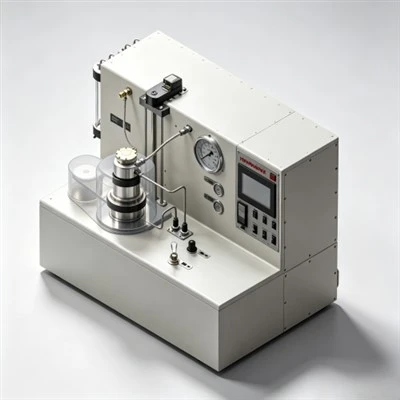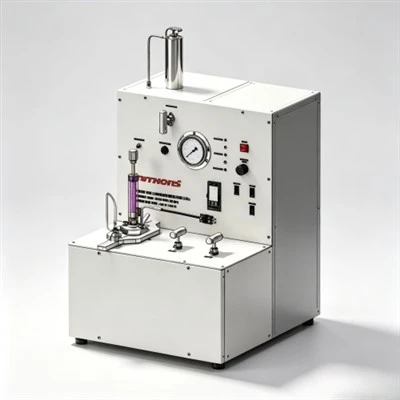

A low-temperature cementing accelerator powder shortens waiting-on-cement (WOC) time in shallow surface casing operations by dramatically accelerating the dissolution kinetics of tricalcium silicate (C₃S), promoting rapid calcium ion saturation in the pore solution, and condensing the dormant induction period under cold bottom-hole static temperatures (BHST 10°C to 35°C). In shallow well environments across cold-climate drilling basins-such as the Western Canadian Sedimentary Basin (WCSB) in Alberta, Canada-low geothermal gradients and cold surface mixing water severely retard Portland cement hydration, frequently stretching non-productive rig standby beyond 24 to 36 hours. Incorporating a purpose-engineered low-temperature cementing accelerator powder overcomes this kinetic barrier, enabling rapid formation of fibrous calcium silicate hydrate (C‑S‑H) gel networks, accelerating initial and final set times, and delivering compressive strength exceeding 3.5 MPa (500 psi) within 8 to 12 hours while strictly maintaining slurry rheological pumpability and displacement efficiency.
Shallow surface casing strings fulfill vital structural functions: anchoring the blowout preventer (BOP) stack, protecting vulnerable potable groundwater aquifers, and stabilizing incompetent upper formations against subsequent drilling vibrations. However, when drilling crews circulate cement slurries through chilled near-surface horizons, low thermal energy limits spontaneous silicate crystallization. Without an active low-temperature cementing accelerator powder, operators face extensive financial penalties from rig day-rate downtime while waiting for the casing shoe to gain structural load-bearing capacity. Establishing rapid hydration through uniform bulk dry-blending ensures predictable setting schedules, complete annular fill, and seamless operational transitions from surface cementing to deeper drilling phases.
Explore high-performance chemical accelerators and engineered additives tailored for low-temperature wellbore integrity:
Thermodynamic Limitations of Shallow Low-Temperature Cement Hydration
The fundamental mechanism governing Portland cement hardening is an exothermal dissolution-precipitation reaction. When standard API Class G or Class A cement contacts mix water, anhydrous clinker phases-specifically tricalcium silicate (C₃S), dicalcium silicate (C₂S), tricalcium aluminate (C₃A), and tetracalcium aluminoferrite (C₄AF)-begin dissolving. Under typical geothermal gradients at depth, high thermal energy accelerates ionic dissociation, swiftly driving the pore liquid toward supersaturation with calcium ions (Ca²⁺) and silicate monomers.
In shallow well intervals, however, bottom-hole circulating temperatures (BHCT) regularly drop below 20°C, and in sub-arctic or high-latitude regions, static temperatures hover between 5°C and 15°C. According to the Arrhenius reaction rate equation, chemical reaction velocity declines exponentially as absolute temperature decreases. Consequently, unaccelerated slurries in cold formations suffer prolonged induction periods where alite grains become passivated by a meta-stable hydrate layer. Until this passivating barrier dissolves and calcium hydroxide (Ca(OH)₂) crystallizes, the slurry remains fluid, unable to generate gel strength or develop compressive resistance.
This suppressed thermodynamic activity introduces several operational hazards in shallow well construction:
- Severe Rig Downtime: Inability to drill out the casing shoe or test the blowout preventer until the tail slurry achieves 3.5 MPa (500 psi) compressive strength, wasting dozens of rig hours per well.
- Hydrostatic Pressure Decay & Gas Influx: Extended transition intervals leave the annular column vulnerable to shallow gas kicks and formation water channeling while the slurry remains in a weak, permeable plastic state.
- Slurry Washout by Cold Aquifers: Unset, slow-gelling cement across permeable freshwater formations can be diluted or eroded by active subterranean groundwater cross-flows before establishing structural coherence.
Integrating a calibrated low-temperature cementing accelerator powder modifies these fundamental thermodynamics. By supplying nucleating agent seeds and catalyzing silicate dissolution, the chemical formulation forces rapid Ca²⁺ saturation even when ambient wellbore temperatures are barely above freezing.
Chemical Catalysis Mechanisms of Low-Temperature Cementing Accelerator Powder
An optimized low-temperature cementing accelerator powder operates through multiple synergistic chemical pathways within the alkaline slurry matrix. Rather than acting as a simple bulk filler, the powdered additive participates directly in early-stage hydration kinetics:
- Accelerated Alite (C₃S) Phase Dissolution: Inorganic activating components in the accelerator powder sharply elevate the chemical potential of the aqueous phase, stripping away the initial protective hydrate envelope covering C₃S grains. This rapid breakdown releases silicate tetrahedra and calcium ions into the bulk mix solution.
- Early Supersaturation and Rapid C‑S‑H Nucleation: By shifting the thermodynamic equilibrium, the low-temperature cementing accelerator powder accelerates Ca(OH)₂ precipitation. Once the aqueous phase reaches critical supersaturation, dense interlocking fibers of calcium silicate hydrate (C‑S‑H) gel rapidly nucleate throughout the capillary void network.
- Exothermic Hydration Heat Trapping: Early clinker hydration releases substantial latent heat. By compressing the reaction window from dozens of hours into a concentrated 4-to-6 hour timeframe, the heat of hydration is trapped inside the annular space, locally warming the cement sheath and self-accelerating the curing process under cold rock temperatures.
- Uniform Inter-Particle Dispersion: Unlike liquid accelerators that may stratify in cold batch tanks, a dry-blended low-temperature cementing accelerator powder is homogeneously distributed across every cement grain during bulk plant pneumatic blending, ensuring uniform hydration kinetics throughout the slurry column.
| Hydration & Operational Metric | Unaccelerated Slurry (20°C BHST) | Slurry with Low-Temp Accelerator (CG910S) |
|---|---|---|
| Dormant Induction Period | 10 – 18 Hours (Excessive delay) | 1.5 – 3.0 Hours (Controlled induction) |
| Time to Initial Set (100 Bc Consistency) | 14 – 22 Hours | 3.5 – 5.0 Hours |
| Time to Reach 3.5 MPa (500 psi UCA) | 26 – 40 Hours (Severe WOC cost) | 7.5 – 10.5 Hours (Rapid drill-out) |
| 24-Hour Compressive Strength | 4.0 – 6.5 MPa | 14.5 – 18.2 MPa |
| Slurry Homogeneity & Mixing Integrity | Baseline | Uniform dry-blend distribution |
Harmonizing Rapid Hydration with Dynamic Filtration Control
In shallow well cementing, accelerating cement hydration must never compromise fluid loss containment. Surface casing strings penetrate highly permeable alluvial gravels, unconsolidated glacial sands, and water-bearing porous formations. If an accelerated slurry loses interstitial mixing water to permeable thief zones, rapid dehydration spikes the slurry density, inducing premature bridging and incomplete casing coverage before the slurry reaches surface returns.
Deploying a compatible low-temperature cementing accelerator powder ensures that early C₃S crystal growth does not trigger flash gelation when combined with synthetic filtration control polymers. Quality formulations maintain balanced zeta potentials across hydrating grain surfaces, allowing fluid loss control polymers to maintain API filtration below 50 mL/30 min while the accelerator drives early compressive strength development. Additionally, rigorous laboratory workflows conform to testing recommendations established by the American Petroleum Institute (API) under API RP 10B-2 specifications to guarantee slurry pumpability schedules.
Case Application: Western Canadian Sedimentary Basin, Alberta, Canada
Regional Cementing Background in Western Canada
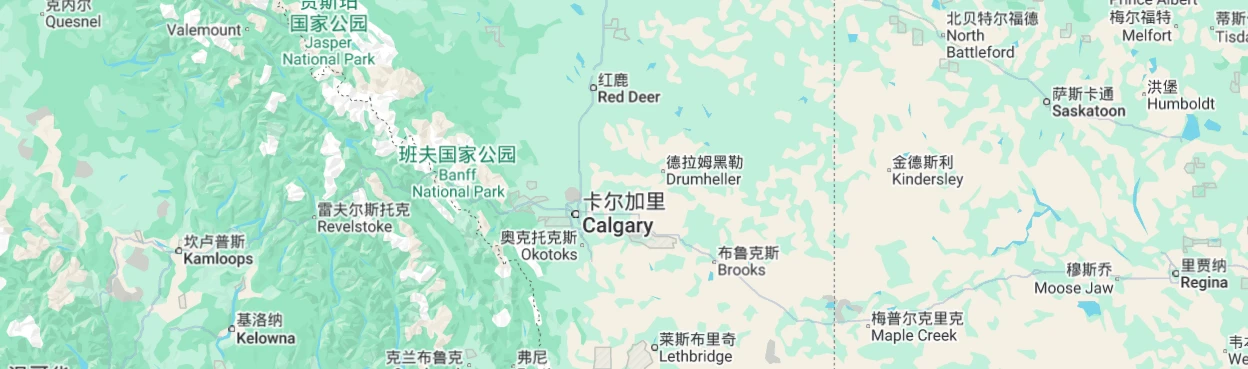
The Western Canadian Sedimentary Basin (WCSB) underlying Alberta features intensive multi-well pad drilling targeting unconventional tight siltstones and oil sands. Surface casing strings across this northern operating basin are typically set between 300 meters and 650 meters true vertical depth (TVD) to anchor heavy rig structures and isolate critical surface aquifers. Due to prolonged sub-zero winter surface temperatures, mixing water stored in mobile tanks frequently drops to 4°C to 8°C, while formation temperatures at setting depths range between 12°C and 22°C.
Regional Cementing Challenges in Cold-Climate Surface Horizons
Operators cementing shallow surface strings in the WCSB encounter acute operational bottlenecks:
- Severe Waiting-on-Cement Costs: Unaccelerated cement systems can take over 30 hours at 15°C to achieve the regulatory 3.5 MPa compressive strength threshold mandated by the Alberta Energy Regulator (AER Directive 010), generating extensive standby costs on pad drilling rigs.
- Near-Freezing Mix Water Retardation: Cold water drastically slows powder dissolution and chemical ionization. Traditional liquid calcium chloride solutions frequently exhibit freezing problems during surface transport and batch handling.
- Porous Glacial Drift Intervals: Upper sections contain poorly consolidated glacial sands with high permeability, necessitating tight slurry stability to avoid annular channeling and loss of hydrostatic containment.
Technical Requirements for WCSB Cold Surface Slurry Formulations
To overcome extreme cold-climate constraints, regional cementing service companies establish rigorous slurry performance criteria:
- Attainment of 3.5 MPa (500 psi) compressive strength within 8 to 10 hours at 18°C BHST.
- Thickening time strictly controlled between 2.5 and 4.0 hours to permit safe surface mixing and casing displacement.
- Dry-blendable low-temperature cementing accelerator powder format ensuring homogeneous distribution in bulk pneumatic tanks.
- Absolute zero free fluid separation (0.0% @ 45° test angle) to protect freshwater aquifers.
How CG910S Addresses the Challenge
CG910S Low-Temperature Cementing Accelerator Powder is specifically engineered to overcome cold-temperature hydration dormancy. Manufactured as a highly active, non-hygroscopic dry powder, CG910S dry-blends smoothly into API Class G cement without clumping. Upon contacting cold mix water, CG910S instantly ionizes, accelerating C₃S dissolution and triggering rapid C‑S‑H gel precipitation. It substantially compresses WOC schedules without inducing premature flash gelation or rheological instability.
Regional Application Case
In a representative shallow pad well in central Alberta, a 244.5 mm (9-5/8 inch) surface casing string was cemented inside a 311.1 mm (12-1/4 inch) borehole to a total depth of 520 meters TVD. Static bottom-hole temperature was measured at 17°C, with surface water tank temperatures recording 6°C. The tail slurry design was formulated at 1900 kg/m³ (15.8 ppg) utilizing standard API Class G Portland cement.
By pneumatically dry-blending CG910S low-temperature cementing accelerator powder at 2.0% BWOC alongside compatible fluid loss control polymers and anti-foaming agents, the cementing team recorded exceptional laboratory and field operational performance:
- Thickening Time Stability: Atmospheric and pressurized consistometer testing verified a pumpable consistency below 30 Bc for 2 hours and 45 minutes, transitioning smoothly to 70 Bc at 3 hours and 20 minutes.
- UCA Compressive Strength Growth: The slurry reached 0.35 MPa (50 psi) initial gel strength in just 4 hours and 30 minutes, and attained the mandatory 3.5 MPa (500 psi) threshold at 8 hours and 15 minutes at 17°C static temperature.
- Total WOC Time Compression: Casing pressure testing and BOP drill-out were initiated at 10 hours post-plug bump, shaving more than 16 hours off the typical regional standby schedule.
- Zonal Integrity: Acoustic Cement Bond Logs (CBL/VDL) run during subsequent drilling phases confirmed 100% circumferential bonding across all shallow sandstone formations, validating the absence of water channeling or formation washouts.
Laboratory Qualification Protocols for Accelerator Powders
Qualifying a low-temperature cementing accelerator powder for shallow casing campaigns requires rigorous testing protocols conforming to API RP 10B-2 testing methodologies:
1. Pre-Chilled Thermal Conditioning: Laboratory atmospheric and pressurized consistometers must pre-cool both dry cement blends and water batches to simulated field temperatures (5°C to 15°C). Testing accelerator powders at ambient room temperature (25°C) produces artificially optimistic thickening times that do not mirror real cold-climate field jobs.
2. Continuous Non-Destructive Ultrasonic Strength Logging: Ultrasonic Cement Analyzers (UCA) equipped with low-temperature chillers must track compressive strength progression continuously from placement to 24 hours. Pinpointing the exact transition from 50 psi to 500 psi confirms rapid structural formation.
3. Dry-Blend Segregation and Flowability Checks: Because the chemical is applied as a powder, bulk plant quality control must verify particle sizing compatibility with Portland cement clinker. Sieve analyses and angle of repose testing ensure the low-temperature cementing accelerator powder does not segregate during pneumatic transport or bulk silo storage.
Frequently Asked Questions (FAQ)
Why does low wellbore temperature delay cement setting times so drastically?
Portland cement hydration relies on thermal activation energy to break down crystalline silicate bonds. At temperatures below 25°C, alite (C₃S) dissolution proceeds very slowly, causing a protracted induction period where the slurry remains liquid, postponing compressive strength development.
What operational advantage does a powdered accelerator offer over liquid accelerators?
A low-temperature cementing accelerator powder can be pre-blended dry into bulk cement silos at the service plant. This eliminates freezing issues of liquid chemical totes during winter transport, avoids batch-tank mixing errors on the rig, and guarantees uniform additive distribution across the entire pumped slurry volume.
How does an accelerator powder affect slurry pumpability and thickening time?
While an accelerator powder accelerates final setting and strength gain, properly balanced chemistries provide an initial induction plateau. This guarantees 2 to 3.5 hours of low-viscosity slurry pumpability (consistency < 30 Bc), allowing safe placement before rapid right-angle thickening occurs.
Can CG910S be co-mixed with fluid loss control additives?
Yes. CG910S is engineered for broad chemical compatibility with synthetic AMPS and cellulosic fluid loss polymers. It does not induce complex coacervation or flash gelation, permitting simultaneous filtration control below 50 mL/30 min and accelerated strength development.
Key Operational Strategies for Maximizing Shallow Casing Efficiency
Minimizing well construction costs while guaranteeing robust annular barrier integrity in cold formations requires active chemical management of cement hydration. Relying on unaccelerated slurries or substandard liquid additives in shallow, cold horizons introduces excessive waiting-on-cement delays, vulnerable gas migration windows, and erratic compressive strength development.
By implementing an engineered low-temperature cementing accelerator powder such as CG910S, cementing engineers compress WOC schedules from 36 hours down to under 10 hours without risking premature slurry thickening or flash setting. Dry blending this high-activity powder ensures homogeneous hydration kinetics, protects critical potable groundwater intervals, and enables swift drill-out of surface casing strings across demanding cold-climate oil and gas basins worldwide.
Optimize Your Low-Temperature Surface Casing Slurry Formulations
Consult our technical cementing specialists to evaluate CG910S low-temperature accelerator powder, pneumatic dry-blending protocols, and low-temperature UCA strength development for your winter and cold-region drilling programs.
Explore CG910S Technical SpecificationsBlog Category: Cementing Additives & Chemical Solutions