
Mitigating Thermal Shear Fluid Loss Degradation in extreme high-pressure high-temperature (HPHT) cementing requires deploying cross-linked synthetic AMPS terpolymers with high molecular weight stability, incorporating steric hinderance functional monomers, and optimizing casing displacement dynamics. When cement slurries traverse narrow wellbore annuli at bottom-hole temperatures exceeding 180 °C, simultaneous mechanical shear and thermal stress sever standard polymer backbones. Preventing Thermal Shear Fluid Loss Degradation hinges on using thermally resilient additives like CG811, which resist main-chain scission, maintain filtrate volumes below 50 mL/30 min, and preserve long-term well integrity in deep gas formations like those in the Rub' al Khali Basin of Saudi Arabia.
Understanding the dual mechanisms of mechanical scission and chemical thermal hydrolysis enables cementing engineers to select chemical formulations built to withstand severe downhole friction.
Understanding Thermal Shear Fluid Loss Degradation in Deep Wellbores
In deep HPHT wells, cement slurries experience a combined environmental stress known as thermo-mechanical degradation. During primary cementing, the slurry is squeezed through surface lines, down thousands of meters of casing, through casing shoes, and back up narrow annular tolerances. When combined with bottom-hole temperatures above 180 °C, these high shear rates cause severe Thermal Shear Fluid Loss Degradation, breaking down additive structures prior to initial setting.
The chemical and physical phenomena causing Thermal Shear Fluid Loss Degradation include:
- Mechanical Polymer Scission: Extreme mechanical shear stresses generated through casing equipment break extended polymer chains, reducing effective molecular weight and hydration capacity.
- Thermal Hydrolysis of Functional Groups: High ambient heat cleaves water-binding side groups from polymer backbones, destroying the chemical hydration shield.
- Synergistic Bond Failure: Mechanical shear weakens chemical bond angles, making the polymer main chain drastically more vulnerable to thermal degradation than under static heating alone.
- Desorption from Solid Surfaces: High thermal kinetic energy causes fluid loss additives to desorb from cement particle surfaces, destroying the protective filter cake.
Preventing Thermal Shear Fluid Loss Degradation requires engineering additive polymers specifically designed to maintain structural integrity under combined shear friction and high heat.
Operational Impacts of Polymer Shear Failure During HPHT Cementing
When additives suffer from Thermal Shear Fluid Loss Degradation during placement, slurry physical properties change rapidly downhole. The resulting fluid loss can lead to costly operational non-productive time (NPT) and severe long-term casing integrity issues.
Related Technical Reading: To understand how fluid loss additives are selected for high temperature wells, read our comprehensive selection guide: Which Fluid Loss Additive Is Suitable for Ultra-High Temperature Oil Well Cementing?
Consequences directly tied to Thermal Shear Fluid Loss Degradation include:
1. Slurry Dehydration and Excessive ECD Spikes
Uncontrolled loss of the liquid phase causes slurry solid volume fraction to rise sharply. Equivalent circulating density (ECD) surges beyond formation limits, inducing severe lost circulation into sensitive reservoir rocks.
2. Formation Gas Influx and Channeling
As Thermal Shear Fluid Loss Degradation reduces hydrostatic column pressure, high-pressure formation gas breaks through the transitioning slurry matrix, forming continuous leak pathways behind the casing string.
Related Technical Reading: Rheological breakdown often accompanies thermal degradation. Learn how temperature alters slurry flow: Why Does High Temperature Cause Rheology Degeneration in Cement Slurries and How to Prevent It?
3. Annular Flash Thickening and Casing Sticking
Severe loss of polymer hydration causes the slurry to develop high yield stress during pumping, leading to premature gelation, blocked circulation, and stuck casing strings.
Chemical Engineering Solutions to Prevent Thermal Shear Fluid Loss Degradation
Overcoming Thermal Shear Fluid Loss Degradation requires advanced polymer synthesis designed for extreme downhole environments. Modern chemical additive development focuses on building robust molecular architectures that withstand both chemical cleavage and mechanical shear.
Key chemical design features that mitigate Thermal Shear Fluid Loss Degradation include:
1. AMPS Terpolymer Structural Design
Incorporating 2-acrylamido-2-methylpropanesulfonic acid (AMPS) into synthetic terpolymers provides strong sulfonic acid side groups attached to a heavy carbon backbone. The bulky AMPS structure resists thermal cleavage up to 230 °C while maintaining strong water-binding capability under severe mechanical shear.
2. Controlled Micro-Crosslinking Technology
Adding controlled micro-crosslinking monomers creates a 3D polymer matrix. When exposed to mechanical shear, these crosslinked networks absorb shear forces without breaking the primary polymer backbone, eliminating Thermal Shear Fluid Loss Degradation.
3. Steric Hindrance Functionalization
Incorporating bulky monomers like N,N-dimethylacrylamide (DMA) or N-vinylpyrrolidone (NVP) alongside AMPS provides steric hindrance. This prevents thermal hydrolysis of adjacent functional groups and stabilizes the hydration shield under continuous fluid circulation.
Regional Application Case: Deep Gas Well Cementing in Rub' al Khali, Saudi Arabia
Case Application: Rub' al Khali Basin, Saudi Arabia

Regional Cementing Background in Saudi Arabia
In the Rub' al Khali (Empty Quarter) basin of Saudi Arabia, deep exploration wells target tight gas sands within Khuff and Pre-Khuff formations at depths exceeding 5500 meters. Bottom-hole static temperatures in these deep gas wells reach 190 °C to 205 °C, with bottom-hole pressures reaching 110 MPa. Primary cementing of production liners requires zero Thermal Shear Fluid Loss Degradation to block gas migration across high-pressure gas zones.
Regional Cementing Challenges in Saudi Arabia
Drilling operations in Rub' al Khali face extreme thermal shear stress. High displacement rates required for efficient mud removal in narrow annuli subject cement slurries to continuous high shear rates for over 4 hours at temperatures above 185 °C. Early field trials using standard synthetic copolymers suffered from Thermal Shear Fluid Loss Degradation, resulting in API fluid loss rising above 140 mL/30 min and causing high pressure gas leaks at the surface.
Technical Requirements for Saudi Arabian HPHT Wells
Aramco-standard technical requirements for deep gas liner cementing included:
- API Fluid Loss maintained strictly below 35 mL/30 min after 4 hours of pre-shear conditioning at 190 °C and 6.9 MPa.
- Zero free fluid separation under 45-degree inclined HPHT testing.
- Plastic viscosity maintained under 80 mPa·s to control surface displacement pressures.
- Zero gas migration during ultrasonic compressive strength testing.
How CG811 Prevented Thermal Shear Degradation
Field engineers addressed these challenges by implementing CG811 Ultra-High Temperature Fluid Loss Additive in a 1.95 g/cm³ (16.2 ppg) heavy cement slurry. CG811 features a high molecular weight AMPS/DMA terpolymer backbone enhanced with shear-resilient micro-crosslinking. This chemical architecture completely eliminated Thermal Shear Fluid Loss Degradation, maintaining hydration control throughout extended dynamic circulation.
Regional Application Case Results
With a 1.8% BWOC concentration of CG811, deep gas liner cementing operations in the Rub' al Khali Basin achieved outstanding success:
- API fluid loss was kept at 26 mL/30 min following 4 hours of dynamic thermal shear pre-conditioning at 190 °C.
- Slurry rheology stayed stable with plastic viscosity at 62 mPa·s and yield point at 7 Pa.
- Cement slurry displacement proceeded smoothly with constant surface pressure profiles.
- Ultrasonic Cement Analyzers (UCA) confirmed rapid compressive strength development (15.5 MPa at 24 hours), and cement bond logs (CBL) confirmed complete gas isolation across target Khuff reservoirs.
Laboratory Screening Methods for Thermal Shear Degradation
Evaluating chemical formulations for Thermal Shear Fluid Loss Degradation requires testing under combined thermal and mechanical conditions simulating field displacement.
Standard laboratory testing methods include:
| Test Method | Equipment Used | Simulated Downhole Condition | Target Stability Parameter |
|---|---|---|---|
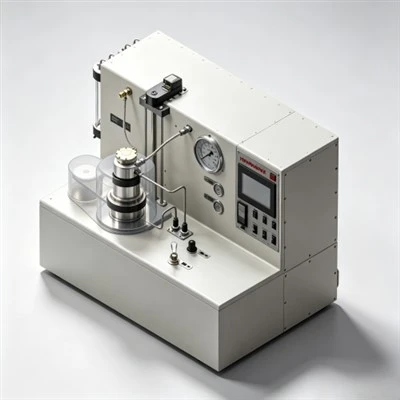
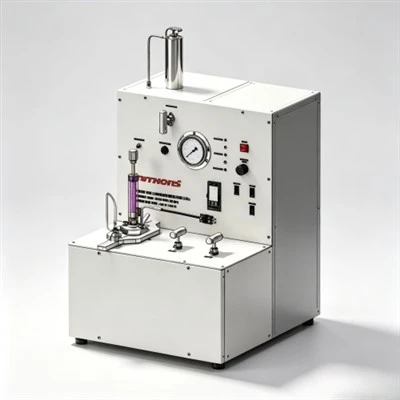
| Pre-Shear HPHT Conditioning | Dual-Cell HPHT Consistometer | Casing displacement friction under heat | Viscosity stability over 4+ hours |
| Dynamic Filtration Testing | Dynamic HPHT Filter Press | Filtrate loss across permeable formations | API Fluid Loss < 35 mL/30 min |
| High-Shear Viscometry | Pressurized Rotational Viscometer | Shear rate transitions in narrow annuli | Flat plastic viscosity profile |
| Sedimentation Density Analysis | Pressurized Curing Chamber & Balance | Static suspension after dynamic shear | Density delta < 0.02 g/cm³ |
Rigorous pre-shear testing ensures that candidate additives selected in the laboratory perform reliably in field applications without experiencing Thermal Shear Fluid Loss Degradation.
Best Practices to Minimize Additive Shear Damage in Field Operations
While chemical additive design provides the primary defense, operational field practices also play a major role in mitigating Thermal Shear Fluid Loss Degradation during slurry mixing and displacement.
Recommended field practices include:
- Optimized Batch Mixing Shear: Avoid excessive shear during surface mixing in recirculating batch mixers. Blend dry additives uniformly prior to liquid addition to minimize pre-pumping mechanical degradation.
- Controlled Pumping Rates: Maintain laminar flow in narrow casing annuli where feasible to avoid generating localized shear rate spikes that accelerate polymer degradation.
- Synergistic Dispersant Dosage: Combine fluid loss additives with high-temperature synthetic dispersants to lower slurry viscosity, reducing shear stress on the fluid loss polymer backbone.
- Thermal Pre-Cooling Spacers: Pump pre-cooling weighted spacer fluids ahead of the cement slurry to reduce dynamic temperatures along the wellbore and lessen thermal shear impact.
Frequently Asked Questions (FAQ)
What is the difference between thermal degradation and thermal shear degradation?
Thermal degradation occurs strictly due to high temperature breaking chemical bonds under static conditions. Thermal Shear Fluid Loss Degradation occurs when mechanical shear stress in narrow wellbores acts alongside high heat, accelerating polymer chain cleavage.
Why do conventional cellulosic additives fail under thermal shear?
Cellulosic additives possess linear ether linkages that break easily under mechanical shear. Above 140 °C, thermal energy rapidly severs these weakened bonds, leading to complete filtration failure.
How does CG811 resist Thermal Shear Fluid Loss Degradation?
CG811 incorporates high molecular weight AMPS/DMA synthetic terpolymers with micro-crosslinked structures. This molecular network absorbs mechanical shear without breaking the main polymer backbone, retaining filtration control up to 230 °C.
Can pre-shearing in the laboratory accurately predict downhole polymer behavior?
Yes. Pre-conditioning slurries in HPHT consistometers under target bottom-hole circulating temperatures and paddle speeds before filtration testing accurately simulates downhole Thermal Shear Fluid Loss Degradation.
Protecting Deep Well Assets with Shear-Resilient Polymers
Preventing Thermal Shear Fluid Loss Degradation is critical for achieving total zonal isolation in deep HPHT oil and gas wells. By utilizing advanced synthetic AMPS terpolymers like CG811, field engineers can ensure fluid loss control below 35 mL/30 min, maintain rheological stability, and protect well integrity under high thermal and mechanical shear. Incorporate thorough pre-shear laboratory screening into your slurry design workflows to ensure field success in challenging HPHT reservoirs.
Need Shear-Resilient Additives for HPHT Cementing?
Our global cementing chemical experts provide specialized additive formulations, pre-shear testing, and field support for extreme downhole conditions worldwide.
Explore CG811 Product Specifications & Technical Data