
When petroleum exploration and operations managers evaluate a Saudi Arabia cementing service, they examine technical capabilities across onshore and offshore plays, including the giant Ghawar, Safaniya, Shaybah, Manifa, and Jafurah unconventional basins operated under the Saudi Aramco umbrella. Selecting an experienced Saudi Arabia cementing service requires navigating demanding downhole environments characterized by depths exceeding 5,000 meters, bottom-hole static temperatures (BHST) above 160°C, extreme sour gas concentrations carrying high hydrogen sulfide (H₂S) and carbon dioxide (CO₂), and narrow equivalent circulating density (ECD) margins across fractured carbonate and sandstone strata. By deploying a specialized Saudi Arabia cementing service adhering to API Spec 10A and API RP 10B-2 testing standards, operators utilize heavy Class G slurries, advanced synthetic polymer additives, and precision HPHT consistometer testing to prevent premature slurry thickening, stop annular gas migration, eliminate sustained casing pressure (SCP), and guarantee multidecade well integrity.

The Operational Significance of Wellbore Cementing Across Saudi Arabian Energy Assets
The Kingdom of Saudi Arabia manages the world's most productive onshore and offshore hydrocarbon fields. Subterranean formations across the Eastern Province-such as the Arab, Khuff, and Jafurah sequences-present steep thermal gradients, severe formation pressures, reactive anhydrite layers, and corrosive fluids. As drilling campaigns expand into deep exploratory gas horizons and massive hydraulic fracturing unconventional plays, primary cementing requirements have become increasingly demanding.
In these high-stakes environments, primary cementing establishes the permanent barrier that anchors casing strings against extreme tectonic and thermal stresses, isolates productive oil and sour gas reservoirs from water-bearing formations, and prevents gas cross-flow into the casing annulus. If a cement slurry dehydrates prematurely downhole or fails to develop adequate static gel strength quickly, high-pressure gas channels through the curing matrix, resulting in sustained casing pressure (SCP) at surface and risking severe environmental and economic losses.
Consequently, securing a top-tier Saudi Arabia cementing service is critical for field operators. Achieving long-term well integrity requires combining high-performance chemical additives-such as AMPS-based fluid loss additives and synthetic high-temperature retarders-with certified laboratory simulation testing. By verifying slurry thickening time, static gel strength transition, and compressive strength on pressurized HPHT consistometers and Ultrasonic Cement Analyzers (UCA), cementing engineers ensure that every slurry placed in the Kingdom delivers complete zonal isolation.
1. Saudi Aramco: National Operator and Technical Benchmark
Saudi Aramco is the national petroleum company and central driving force behind all upstream exploration, drilling, and cementing activities in the Kingdom. Operating onshore mega-fields like Ghawar and offshore developments like Safaniya and Zuluf, Aramco sets global benchmark engineering standards for well construction.
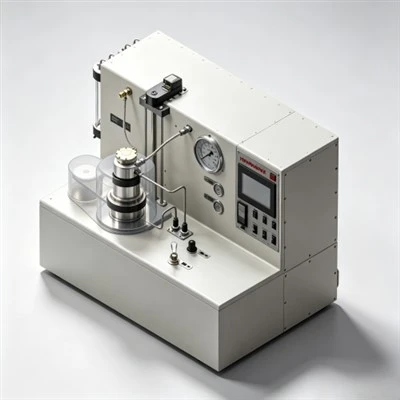
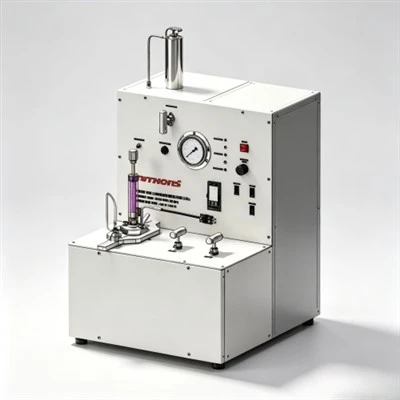
Aramco's drilling programs require specialized cement slurry designs engineered for severe downhole conditions. These formulations incorporate multi-component chemical systems, including synthetic fluid loss additives, high-temperature retarders, dispersants, spacers, defoamers, and anti-gas migration polymers. Every design must be validated through rigorous laboratory testing on calibrated HPHT consistometers to confirm pumpability windows under dynamic circulating temperatures. Technology and material providers such as KELIOIL for high-performance cementing additives and NITHONS for certified laboratory testing instruments provide critical support to meet Aramco's demanding technical standards.
2. Halliburton Saudi Arabia: Primary Pumping and Service Infrastructure
Halliburton has established an extensive cementing infrastructure across Saudi Arabia, operating specialized bulk blending facilities and advanced laboratory testing hubs in Dhahran and al-Khobar. The company serves as a major contractor executing primary and remedial cementing for Aramco's onshore and offshore assets.
Providing an advanced Saudi Arabia cementing service, Halliburton focuses on high-temperature, high-pressure wells where slurry designs require low API fluid loss (<35 mL/30 min) and extended pumpability. Automated batch-mixing units ensure accurate slurry density during displacement, while high-temperature synthetic retarders and anti-gas migration additives protect deep casing strings from premature gelation and gas channeling.
3. Schlumberger (SLB) Saudi Arabia: Integrated Well Construction Solutions
SLB provides integrated well construction and cementing services across Saudi Arabia, supporting deep gas exploration and tight carbonate developments. The company's cementing portfolio focuses on advanced rheology control, optimized mud displacement, and real-time monitoring of downhole pressure dynamics.
In extended-reach horizontal wells and deep gas plays, SLB deploys specialized surfactant washes, weighted spacers, and high-efficiency dispersants that lower plastic viscosity, allowing slurries to be pumped under laminar regimes. Comprehensive pre-job laboratory testing verifies that slurry thickening curves remain stable under simulated well profiles, ensuring safe displacement across narrow hydraulic margins.
4. Baker Hughes Saudi Arabia: Specialized Additive and Completion Technologies
Baker Hughes delivers specialized cementing and completions technologies across the Kingdom, with dedicated technical bases supporting unconventional shale exploration in Jafurah as well as complex offshore drilling projects.
A high-tier Saudi Arabia cementing service executed by Baker Hughes incorporates elastomeric expanders, latex anti-gas agents, and high-temperature stabilizers that enhance cement sheath flexibility. These ductile slurries resist mechanical failure during subsequent high-pressure multistage hydraulic fracturing. HPHT consistometer testing confirms predictable setting behavior under intense thermal loads.
5. NESR (National Energy Services Reunited): Leading Regional Provider
National Energy Services Reunited (NESR) is one of the largest national and regional energy service providers in the Middle East and North Africa (MENA) region. Expanding rapidly across Saudi Arabia, NESR provides agile, localized cementing and well-intervention services.
Operating in full compliance with Saudi Aramco standards, NESR provides primary cementing for production casings and liners as well as remedial squeeze operations. Their technical workflow emphasizes adaptable slurry designs, optimized chemical additives, and local laboratory verification to deliver reliable bonding across varying reservoir conditions.
6. TAQA / Arabian Drilling Company (ADC): Integrated Rig and Pumping Operations
Industrialization and Energy Services Company (TAQA), alongside its drilling affiliate Arabian Drilling Company (ADC), provides integrated drilling, well testing, and well construction services across the Kingdom's onshore and offshore sectors.
In deep gas well construction and extended-reach drilling campaigns, ADC coordinates rig-floor operations with cementing execution. Pumping reliable slurries demands close synchronization between high-pressure pumping manifolds, continuous density recording devices, and certified laboratory simulation. Pre-job testing ensures that the slurry remains pumpable throughout displacement while developing compressive strength rapidly once static in the annulus.
Technical Matrix: Downhole Operating Parameters Across Major Saudi Arabian Plays
The table below provides a systematic overview of primary downhole challenges, operating parameters, and required slurry technologies across the Kingdom's major hydrocarbon basins:
Regional Application Case: Deep Carbonate Sour Gas Production Liner Cementing in Saudi Arabia
Case Application: Deep Khuff Sour Gas Play, Eastern Province, Saudi Arabia

Target Formation: Deep HPHT Khuff Sour Gas Carbonates (5,150 m Depth, 17% H₂S, Narrow ECD Margin)
Regional Cementing Background in Saudi Arabian Deep Gas Plays
In the Eastern Province of Saudi Arabia, deep exploratory drilling targeting the Permian-Triassic Khuff carbonate reservoir penetrates overpressured, gas-bearing strata. Well measured depths regularly exceed 5,000 to 5,400 meters. Downhole conditions are severe: bottom-hole static temperatures (BHST) climb to 160°C to 170°C with reservoir pressures exceeding 11,500 psi (79 MPa). The formations produce sour hydrocarbons containing H₂S (up to 17%) and CO₂ (up to 9%). Cementing 7-inch production liners across the Khuff interval requires heavy Class G slurry systems (2.05 to 2.15 g/cm³) weighted with barite and stabilized by high-temperature polymers.
Regional Cementing Challenges in Extreme HPHT Formations
A Saudi Arabia cementing service executing production liner jobs across these deep Khuff carbonate reservoirs encounters critical operational hurdles:
- Severe Retarder Sensitivity: At temperatures above 150°C, minor variations of 0.05% BWOC in chemical retarder concentration cause large swings in thickening time, risking premature flash setting or multi-day setting delays.
- Narrow Equivalent Circulating Density (ECD) Windows: Close margins between formation pore pressure and fracture breakdown pressure demand low-viscosity slurries that maintain steady rheology without premature gelation spikes.
- Risk of Sour Gas Channeling: An extended transition time during slurry phase changes allows sour gas invasion into the decaying hydrostatic column, creating sustained casing pressure (SCP).
Technical Requirements for Slurry Qualification
To qualify a heavy 2.08 g/cm³ (17.3 ppg) Class G cement system across the Khuff sour gas zone, the operator established strict performance criteria:
- Thickening time validation on an HPHT consistometer confirming a pumpability window of 5 hours and 30 minutes to 70 Bc under simulated dynamic ramp schedules.
- API fluid loss control strictly below 35 mL/30 min at 160°C using an automated high-temperature stirred fluid loss cell to prevent dehydration.
- Static gel strength (SGS) transition window (from 100 to 500 lbf/100 ft²) of less than 30 minutes, with 24-hour compressive strength exceeding 3,500 psi (24.1 MPa).
How Strategic Chemical Engineering Resolved the Field Challenge
To resolve these operational challenges, the central engineering laboratory executed a comprehensive qualification program using NITHONS HPHT consistometers and KELIOIL specialized cementing chemicals. Initial formulations using conventional modified lignosulfonates suffered thermal degradation, showing an erratic thickening curve that spiked past 50 Bc within 2 hours.
The team redesigned the slurry using KELIOIL synthetic AMPS-based high-temperature retarders (0.85% BWOC) paired with KELIOIL salt-resistant fluid loss additives (1.8% BWOC), sulfonated dispersants, and anti-gas migration latex. Testing on the HPHT consistometer confirmed an ideal right-angle set profile, maintaining baseline consistency at 18 Bc for 4 hours and 30 minutes before rising sharply to 70 Bc at 5 hours and 38 minutes. Ultrasonic testing on a UCA verified that the slurry reached 500 psi compressive strength in 9 hours and surpassed 3,850 psi at 24 hours.
During field execution, the Saudi Arabia cementing service pumped and displaced the slurry across the 1,020-meter liner without surface pressure surges or ECD spikes. Post-job radial acoustic cement bond logs (CBL-VDL) confirmed 100% circumferential bonding across the sour gas reservoir. Subsequent pressure testing recorded zero sustained casing pressure, demonstrating that rigorous laboratory qualification and advanced chemical design eliminate cementing failures in deep carbonate reservoirs.
Laboratory Standards and Pre-Job Quality Assurance
Achieving reliable field execution across Saudi Arabia's oil and gas fields requires adhering to standardized API RP 10B-2 laboratory workflows prior to job mobilization:
- Pressurized Consistometer Profiling: Slurries must be tested on calibrated HPHT consistometers using actual rig mix water and delivered cement batches to ensure thickening time repeatability.
- High-Temperature Stirred Fluid Loss: Filtration is measured under 1,000 psi differential nitrogen pressure across a 325-mesh screen to verify that API fluid loss remains strictly below 35 mL/30 min.
- Static Gel Strength Analysis: Measuring gel strength buildup confirms that the transition time between 100 and 500 lbf/100 ft² is minimized, preventing gas percolation.
- Acoustic Compressive Strength Testing: Slurry samples cured in an Ultrasonic Cement Analyzer (UCA) under static temperature must achieve 500 psi strength within 12 to 16 hours to prevent excessive waiting-on-cement time.
Frequently Asked Questions (FAQ) Regarding Saudi Arabian Cementing Operations
1. Why is sour gas cementing in Saudi Arabia technically demanding?
Deep gas reservoirs in the Kingdom (such as the Khuff formation) contain significant concentrations of H₂S and CO₂ alongside temperatures exceeding 160°C. These conditions accelerate slurry hydration, degrade conventional biopolymers, and create severe corrosion risks. Cement slurries must be engineered with synthetic AMPS polymers, latex, and silica flour to achieve high chemical resistance and gas tightness.
2. How do unconventional plays like Jafurah impact cementing design?
Unconventional shale wells in Jafurah feature long horizontal laterals subject to dynamic cyclic stresses during multi-stage hydraulic fracturing. Cement sheaths require flexible, non-shrinking additives that lower Young's modulus, preventing sheath cracking and preserving zonal isolation during stimulation.
3. What is the role of HPHT consistometer testing in Saudi Arabian field projects?
An HPHT consistometer simulates dynamic bottom-hole circulating temperature (BHCT) and hydrostatic pressure ramps, verifying that the cement slurry remains pumpable (<30 Bc) throughout multi-hour displacement while confirming an engineered 90 to 120-minute safety cushion before reaching the 70 Bc pumpability limit.
Strategic Collaboration for Safe Well Construction
As exploration across the Kingdom expands into deeper, hotter, and higher-pressure reservoirs, achieving multidecade well integrity depends directly on selecting a qualified Saudi Arabia cementing service supported by robust laboratory testing and specialized chemistry.
Through the combination of KELIOIL high-performance cementing additives and NITHONS laboratory testing instruments, operators and service companies across Saudi Arabia gain access to reliable chemical solutions and certified testing systems that ensure successful slurry placement, protect subterranean environments, and maximize long-term asset productivity.
Equip Your Operations with KELIOIL Additives & NITHONS Laboratory Systems
Our technical specialists provide customized slurry formulation designs, API Spec 10A laboratory testing equipment, and bulk chemical supply of premium cementing additives tailored to demanding onshore and offshore drilling operations across the Kingdom of Saudi Arabia.