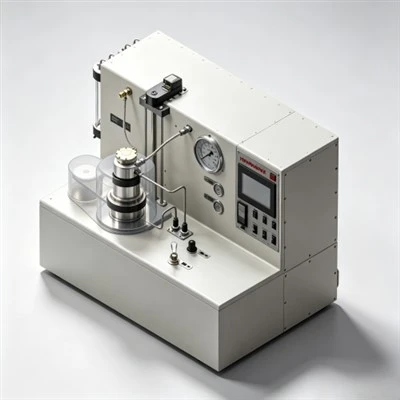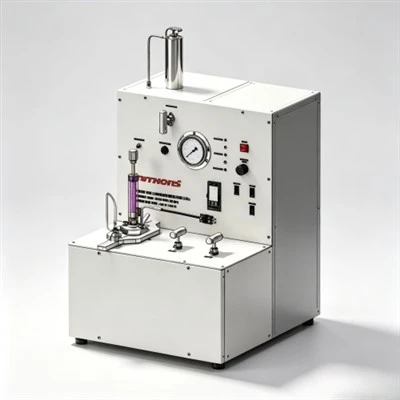

Understanding how well cementing, cement slurry and additives function cohesively is essential in oil and gas operations because basic Portland cement slurries cannot withstand the harsh thermodynamic conditions, narrow fracture pressure gradients, and aggressive gas migration risks encountered across major drilling basins in the Middle East, the Gulf of Mexico, and offshore frontiers. By systematically integrating well cementing, cement slurry and additives-including synthetic AMPS fluid loss control polymers, high-temperature retarders, non-retarding dispersants, and surfactant-weighted chemical spacers-cementing engineers optimize slurry rheology, control downhole filtration, prevent annular bridging, and accelerate compressive strength development, securing the casing string against lifelong mechanical failure and environmental leakage.

The Operational Foundation of Well Cementing in Hydrocarbon Well Construction
Well cementing represents the critical transition between drilling a borehole and completing a producing well. Though conceptually described as pumping a cement mixture into the subterranean void between the casing and the open formation rock, field execution is an intricate engineering discipline governed by chemical kinetics, fluid mechanics, and thermodynamics. When the slurry hardens in place, it forms a permanent hydraulic barrier that anchors the casing pipe, isolates porous formations, prevents hydrocarbon fluids from cross-flowing into freshwater aquifers, and shields steel tubulars from aggressive formation brines.
A flawed cementing operation threatens the entire economic viability of the well. Poor slurry displacement leaves residual drilling mud channels behind, compromising the annular barrier. If the slurry column loses hydrostatic pressure during the static transition period, pressurized formation gas percolates through the setting matrix, causing sustained casing pressure (SCP) at the surface. In severe downhole environments, such as deep high-pressure high-temperature (HPHT) reservoirs, optimizing well cementing, cement slurry and additives ensures that placement operations proceed without premature gelation, high equivalent circulating density (ECD) pressure surges, or casing collapse.
To establish durable barriers, petroleum engineers must analyze every operational variable-from bottom-hole circulating temperature (BHCT) and pore pressure profiles to fluid compatibility and mechanical casing standoff. Formulating slurry designs in strict compliance with API Specification 10A and API Recommended Practice 10B-2 testing protocols guarantees that the engineered fluid provides an adequate operational pumping window while establishing high compressive strength once static downhole.

Operational Classifications: Primary vs. Secondary Remedial Cementing
In petroleum field development, well cementing is categorized into two fundamental operational methodologies based on timing and downhole objectives:
1. Primary Cementing Operations
Primary cementing is executed immediately following casing installation while drilling the wellbore. The cement slurry is pumped down through the casing bore, exits through the float shoe, and flows upward into the annular space. The primary technical objectives include structurally anchoring casing strings, providing hydraulic zonal isolation between distinct geological strata, sealing off depleted low-pressure loss zones, and protecting casing tubulars from external corrosive fluid degradation.
2. Secondary (Remedial) Squeeze and Plug Cementing
Secondary or remedial cementing takes place after initial completion to repair barrier anomalies, seal casing micro-leaks, or isolate water-producing perforations. During squeeze cementing, a tailored cement slurry is forced under high differential hydraulic pressure through casing perforations or channels into micro-fractures. Remedial operations require ultra-low viscosity, exceptionally low API fluid loss, and controlled thickening times to ensure the fluid penetrates fine void channels without prematurely bridging off in the wellbore.

The Chemistry of Cement Slurry: Mineral Clinker and Hydration Phases
Oil well cement is manufactured by calcining finely ground limestone (calcium carbonate) and argillaceous clay in rotary kilns at temperatures between 1,400°C and 1,550°C (2,600°F to 2,800°F), producing clinker nodules that are subsequently interground with gypsum. The resulting API Class G and Class H oil well cements consist of four primary crystalline mineral phases:
- Tricalcium Silicate (C₃S): Constitutes 50% to 65% of the clinker, governing early hydration and rapid compressive strength development over the first 7 to 28 days.
- Dicalcium Silicate (C₂S): Hydrates at a slower rate, responsible for steady, long-term compressive strength development and ultimate matrix density.
- Tricalcium Aluminate (C₃A): Reacts violently with mix water upon contact, causing immediate rheological stiffening. In oil well cement, C₃A content is strictly capped below 3% (in High Sulfate Resistant cements) to prevent premature setting and sulfate attack.
- Tetracalcium Aluminoferrite (C₄AF): Contributes to sulfate resistance and imparts the characteristic gray coloration of oilfield cement.
When mixed with water, these clinker minerals dissolve and re-precipitate as interlocking calcium silicate hydrate (C-S-H) gel fibers alongside crystalline calcium hydroxide [Ca(OH)₂]. However, at bottom-hole temperatures exceeding 110°C (230°F), standard C-S-H gel undergoes a mineralogical transition into porous alpha-dicalcium silicate hydrate (α-C₂SH), causing severe compressive strength loss and a massive increase in matrix permeability. In high-temperature operations, formulating well cementing, cement slurry and additives with 30% to 40% BWOC silica flour (SiO₂) is mandatory to shift the hydration path toward crystalline tobermorite and xonotlite, preserving structural durability up to 260°C.

Functional Classification of Chemical Additives in Slurry Engineering
Unmodified cement slurries cannot satisfy the complex operational demands of deep drilling. Chemical additives serve as the molecular levers that tailor slurry performance to downhole geothermal and mechanical conditions. Key categories include:
1. Fluid Loss Control Polymers
Filtration reducers prevent water loss from the slurry into permeable sandstones and carbonates. Uncontrolled fluid loss dehydrates the cement column, inducing premature viscosity spikes and flash setting. High-performance synthetic AMPS (2-acrylamido-2-methylpropane sulfonic acid) copolymers form a low-permeability polymer film across the formation face, maintaining API fluid loss below 50 mL/30 min even under HPHT differential pressures.
2. High-Temperature and Deep-Well Retarders
In deep wellbores, elevated bottom-hole circulating temperatures accelerate cement hydration. Retarders temporarily adsorb onto hydrating mineral crystal faces, delaying the nucleation of C-S-H gel. Synthetic AMPS terpolymers, organic phosphonates, and modified calcium lignosulfonates provide linear, predictable thickening times, ensuring a safe operational placement window of 4 to 6 hours without abrupt gelation spikes.
3. Polymeric Dispersants and Friction Reducers
Dispersants impart negative electrostatic charges and steric hindrance onto cement grains, breaking up agglomerations. This reduces apparent slurry viscosity, enabling slurries with low water-to-cement ratios to be displaced in efficient plug or turbulent flow regimes at reduced surface pressures, preventing equivalent circulating density (ECD) spikes that could fracture weak formations.
4. Chemical Spacers, Preflushes, and Washing Agents
Drilling mud and cement slurries are chemically incompatible; intermixing causes severe viscous fingering and channeling. Weighted chemical spacers and surfactant washing agents establish a rheologically stable buffer that scours non-aqueous mud filter cakes, leaving casing steel and rock formations completely water-wet to ensure 100% circumferential bonding.
Technical Specifications of Primary Cementing Additive Systems
To achieve predictable placement downhole, formulating well cementing, cement slurry and additives requires matching chemical functionality with downhole temperature, pressure, and mix water chemistry. The table below summarizes key active chemistries, operational parameters, and technical features:

Regional Application Case: Deep Production Liner Cementing in the Fahud Basin, Sultanate of Oman
Case Application: Fahud Basin, Ad Dhahirah Governorate, Sultanate of Oman

Target Formation: Deep Ara Group Carbonate Stringers Encased in Massive Halite and Anhydrite Beds
Regional Cementing Background in Oman Deep Gas Plays
In the Sultanate of Oman, exploration and development in the Fahud Basin targets the prolific Ara Group carbonate stringers encased within thick, impermeable rock salt (halite) and anhydrite formations. Well depths frequently exceed 4,800 to 5,400 meters (15,700 to 17,700 feet), where bottom-hole static temperatures reach 150°C to 165°C (302°F to 329°F) and formation pressures climb up to 13,000 psi (89.6 MPa). The reservoir fluids contain high concentrations of corrosive sour gas (H₂S up to 15% and CO₂ up to 8%), representing a premier benchmark for high-performance cementing operations.
Regional Cementing Challenges in Extreme HPHT Salt Formations
Operators in the Fahud Basin encounter severe technical hurdles when cementing deep 7-inch production liners:
- Severe Salt Dissolution and Slurry Contamination: Drilling through thick halite and carnalite sections causes rapid electrolyte leaching into the slurry, precipitating standard cellulose fluid loss additives and triggering severe slurry gelation.
- Narrow Mud Weight Operating Window: Weak shale beds adjacent to overpressured carbonate intervals leave narrow equivalent circulating density (ECD) margins, demanding low-viscosity slurries with high anti-settling stability.
- High Risk of Sour Gas Channeling: As hydrostatic pressure decays during slurry setting, high formation gas pressures exploit any micro-annulus, resulting in sustained casing pressure at the wellhead.
Technical Requirements for High-Salinity Slurry Qualification
To secure permanent zonal isolation across the Ara stringers and salt beds, the cementing program established strict laboratory criteria:
- Slurry formulation utilizing saturated salt (18% to 22% NaCl BWOW) maintaining API fluid loss below 35 mL/30 min at 160°C.
- Thickening time validation on an HPHT consistometer confirming 5.5 hours of pumpability to 70 Bc with a mandatory 120-minute safety cushion.
- Static gel strength (SGS) transition window (from 100 to 500 lbf/100 ft²) of less than 30 minutes on an Ultrasonic Cement Analyzer.
How Advanced Chemical Solutions Addressed the Challenge
Collaborating with specialized chemical manufacturers, the operating team formulated an advanced 2.05 g/cm³ (17.1 ppg) Class G slurry integrating KELIOIL salt-resistant fluid loss additives (AMPS-copolymer chemistry), high-temperature synthetic retarders, sulfonated dispersants, and 35% BWOC silica flour. The formulation was pre-screened on an API Spec 10A compliant HPHT consistometer, confirming a stable thickening time of 5 hours and 40 minutes with zero viscosity spikes.
When pumped across the 1,150-meter deep liner in Oman, the salt-saturated cement slurry displaced drilling fluids cleanly without pressure surges. Subsequent ultrasonic radial cement bond logs (CBL-VDL) confirmed 100% circumferential bonding across both the salt beds and the sour gas carbonate stringer. Zero sustained casing pressure was recorded at the wellhead, proving that the systematic integration of well cementing, cement slurry and additives drives operational success across complex high-temperature formations.
Pre-Job Laboratory Testing and Field Blending Protocols
Achieving consistent field performance requires rigorous quality control and standardized laboratory testing workflows prior to wellsite execution:
- Testing with Field Mix Water and Cement Samples: Always evaluate well cementing, cement slurry and additives using actual rig mix water and representative samples of delivered Class G cement. Dissolved mineral variations and pH shifts in local mix water significantly alter polymer hydration and retarder adsorption.
- API Dynamic Conditioning in Atmospheric Consistometers: Pre-condition cement slurry samples in an atmospheric consistometer at BHCT for 20 to 30 minutes before transferring them to fluid loss cells to simulate dynamic wellbore shear.
- Continuous Ultrasonic Compressive Strength Logging: Verify that the cement formulation transitions rapidly through the static gel strength transition window (100 to 500 lbf/100 ft²) in under 30 minutes, achieving 500 psi compressive strength in under 12 hours.
- Pneumatic Bulk Blending Homogeneity: When utilizing dry powdered additives, verify uniform bulk silo aeration and multi-stage transfer cycles to prevent chemical segregation during transport.
Frequently Asked Questions (FAQ) Regarding Well Cementing and Slurry Additives
1. What is the difference between neat cement slurry and an additive-modified slurry?
A neat cement slurry consists solely of Portland cement and water. It exhibits high fluid loss, uncontrolled setting kinetics under elevated temperatures, and susceptibility to gas migration. An additive-modified slurry incorporates functional polymers and chemicals that regulate filtration, viscosity, setting time, and density to withstand downhole wellbore conditions.
2. Why is silica flour required in high-temperature well cementing?
At temperatures above 110°C (230°F), Portland cement undergoes compressive strength retrogression due to the transformation of C-S-H gel into porous alpha-dicalcium silicate hydrate (α-C₂SH). Blending 30% to 40% BWOC silica flour prevents this degradation by promoting crystalline tobermorite and xonotlite phases that preserve high strength and low permeability.
3. How do chemical spacers improve cement bonding against casing steel?
Chemical spacers contain mutual solvents and surfactants that strip away residual synthetic or oil-based mud (OBM) filter cake. By removing oil residues and changing the casing surface from oil-wet to water-wet, spacers ensure that the subsequent cement slurry forms a direct, high-strength shear bond against the pipe.
Strategic Chemical Selection for Long-Term Hydrocarbon Asset Integrity
As exploration programs target deeper, hotter, and operationally more demanding reservoirs, achieving reliable zonal isolation is paramount. The successful placement of an impermeable cement sheath rests fundamentally on the chemical synergy between well cementing, cement slurry and additives.
KELIOIL remains dedicated to manufacturing high-performance oilfield cementing additives under strict ISO 9001 and API Spec 10A standards. By integrating cutting-edge polymer synthesis with extensive laboratory testing support, KELIOIL provides drilling operators and cementing service contractors worldwide with dependable chemical solutions that ensure well integrity, protect the environment, and maximize asset productivity across global energy frontiers.
Optimize Your Well Cementing Formulations with KELIOIL Additives
Our technical chemical specialists provide customized slurry formulation designs, API Spec 10A laboratory testing verification, and reliable bulk supply of premium cementing additives tailored to demanding onshore and offshore drilling operations.