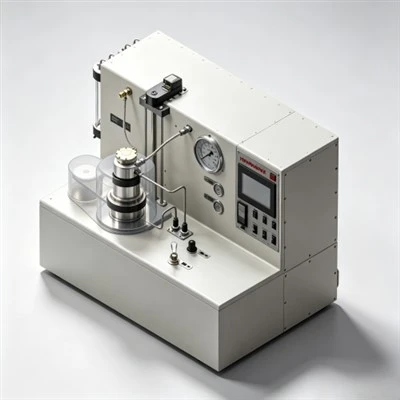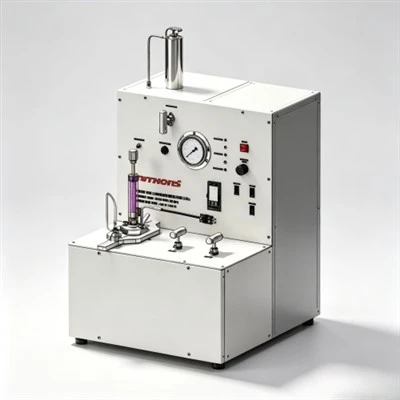

When drilling engineers evaluate what are the additives in cementing, they focus on specialized chemical compounds designed to modify slurries for extreme downhole environments across the Middle East, the Gulf of Mexico, and offshore deepwater plays. Determining what are the additives in cementing involves classifying chemicals into distinct functional groups: fluid-loss additives, retarders, accelerators, dispersants, chemical spacers, washing agents, anti-gas migration polymers, extenders, weighting agents, and lost circulation materials (LCM). Applying tailored formulations based on what are the additives in cementing ensures precise control over slurry density, rheology, thickening schedules, and fluid loss, preventing premature flash setting, annular gas channeling, and casing failure throughout well construction.

The Operational Significance of Chemical Additives in Primary Well Cementing
In oil and gas well construction, primary cementing serves as the structural pillar safeguarding long-term zonal isolation, preventing cross-flow between subsurface formations, protecting freshwater aquifers, and structurally supporting casing strings. However, neat Portland cement slurries formulated solely with water and Class G or Class H clinker lack the adaptability required to navigate complex downhole conditions. Downhole environments subject cement fluids to severe thermodynamic fluctuations, high confining hydrostatic pressures, permeable thief zones, and corrosive reservoir fluids like hydrogen sulfide (H₂S) and carbon dioxide (CO₂). Under these rigorous conditions, defining what are the additives in cementing becomes a vital operational priority for drilling and completion specialists.
Without engineered chemical modifiers, neat cement slurries lose free mix water rapidly to permeable rock faces, causing early slurry desiccation, rapid viscosity increases, and annular bridging. Furthermore, high geothermal gradients cause tricalcium silicate (C₃S) and tricalcium aluminate (C₃A) mineral phases to hydrate violently, triggering premature slurry setting inside the casing string. This catastrophic event, known as flash setting, causes stuck pipe, surface manifold overpressurization, and lost well sections. By systematically defining what are the additives in cementing and implementing them according to API Specification 10A and API Recommended Practice 10B-2 standards, engineers control every physical transition of the slurry, from surface mixing and laminar annular displacement to final compressive strength development.
Achieving total well integrity requires continuous interaction between fluid rheology, filtration limits, and thickening schedules. Understanding what are the additives in cementing enables laboratory chemists to design stable slurry systems that maintain an engineered pumping safety cushion-typically 90 to 120 minutes beyond planned placement times-while guaranteeing rapid strength development once placed across the target formation.
Primary Functional Classes of Oilfield Cementing Chemical Additives
To answer comprehensively what are the additives in cementing, one must examine the specific chemical families that govern slurry behavior across the wellbore lifecycle:
1. Fluid Loss Control Additives (Filtration Reducers)
Fluid loss additives prevent the loss of aqueous filtrate into permeable sandstones and carbonates under differential hydrostatic pressure. By utilizing synthetic 2-acrylamido-2-methylpropane sulfonic acid (AMPS) copolymers, modified polyvinyl alcohol (PVA), and high-purity cellulose derivatives, these additives form a compact, micro-impermeable polymer filter cake across the borehole face. This action maintains API filtration loss below 50 mL/30 min, preventing slurry dehydration, keeping viscosity stable, and ensuring steady hydrostatic pressure transmission during setting.
2. High-Temperature and Deep-Well Retarders
Chemical retarders delay the hydration kinetics of cement clinker phases when downhole temperatures exceed 60°C (140°F). Acting through surface adsorption and calcium chelation, refined calcium lignosulfonates, hydroxycarboxylic acids, organophosphonates, and synthetic AMPS terpolymers extend the dormant hydration induction period. This provides an engineered pumpability window of 4 to 6 hours, allowing slurries to reach planned depths in deep and ultra-deep wellbores safely.
3. Setting Accelerators for Surface Casings and Low Temperatures
In shallow conductor casings, surface strings, and cold seabed environments where temperatures remain below 40°C to 50°C, hydration proceeds slowly. Accelerators such as calcium chloride (CaCl₂ at 1% to 3% BWOC), sodium silicate, and aluminum sulfate accelerate calcium silicate hydrate (C-S-H) nucleation. This promotes early strength development, enabling set cement to achieve 500 psi compressive strength in under 6 to 8 hours and sharply cutting rig downtime.
4. Polymeric Dispersants and Friction Reducers
Dispersants break up electrostatically attracted cement grain agglomerates through steric hindrance and negative charge repulsion. Utilizing sulfonated naphthalene formaldehyde (SNF) condensates, polycarboxylate ethers, and sulfonated melamine polycondensates, dispersants lower plastic viscosity and yield point. This allows dense slurries to be displaced in efficient laminar or turbulent flow regimes at lower pump pressures, reducing equivalent circulating density (ECD) to avoid formation fracturing.
5. Chemical Spacers and Surfactant Washing Agents
Drilling mud and cement slurries are chemically incompatible. Mixing them results in severe fluid gelation, leaving un-displaced mud channels along the wellbore wall. Weighted chemical spacers and surfactant washing agents establish a rheologically stable buffer that scours non-aqueous mud (NAF) and oil-based mud (OBM) filter cakes. This action alters casing steel and rock surfaces from oil-wet to water-wet, ensuring 100% circumferential bonding.
6. Anti-Gas Migration and Gas-Channeling Blockers
During the slurry phase transition from liquid to rigid stone, static gel strength (SGS) rises from 100 to 500 lbf/100 ft², causing effective hydrostatic pressure transmission to decay. High-pressure formation gas can penetrate this porous gel structure, creating gas micro-channels to surface. Anti-gas migration additives-such as styrene-butadiene latex emulsions and sub-micron colloidal silica-cross-link within interstitial pore spaces, sealing micro-passages and preventing sustained casing pressure (SCP).

7. Density Modifiers: Lightweight Extenders and Heavyweight Agents
Balancing subsurface hydrostatic pressure gradients requires precise density modifications. In low fracture gradient zones, extenders like ceramic microspheres, hollow glass beads, and bentonite lower slurry density down to 1.15 to 1.45 g/cm³ (9.6 to 12.1 ppg) to avoid lost circulation. Conversely, in overpressured formations, heavyweight weighting materials such as micronized barite, hematite, and manganese tetroxide elevate slurry density up to 2.40 g/cm³ (20.0 ppg) to preserve well control overbalance.
8. Lost Circulation Materials (LCM) and Expanding Agents
When cementing across naturally fractured vugular formations, lost circulation materials (LCM)-including graded calcium carbonate, resilient graphite, and synthetic fibers-bridge fracture apertures, preventing whole slurry loss. Meanwhile, expanding agents like calcined magnesium oxide (dead-burned MgO) compensate for autogenous hydration shrinkage, generating radial compressive pre-stress against the casing steel to eliminate micro-annuli.
Technical Matrix: Additive Chemistries and Operational Parameters
Evaluating what are the additives in cementing requires aligning chemical functions with downhole temperature, pressure, and brine conditions. The table below summarizes primary cementing additives, active chemistries, and operational design ranges:
Regional Application Case: Deep Carbonate Sour Gas Well Cementing in the Ahwaz Oilfield, Khuzestan, Iran
Case Application: Ahwaz Oilfield, Khuzestan Province, Southwestern Iran

Target Formation: Deep HPHT Khami Sour Gas Carbonates (High H₂S, CO₂ & Elevated Salinity)
Regional Cementing Background in Khuzestan Carbonate Plays
In the Ahwaz field of southwestern Iran, drilling operations penetrate deep, overpressured gas-bearing carbonate reservoirs within the Cretaceous-Jurassic Khami Group. Well depths regularly exceed 4,900 to 5,300 meters (16,000 to 17,400 feet). Downhole conditions are severe, with bottom-hole static temperatures reaching 165°C to 175°C (329°F to 347°F) and formation pressures exceeding 12,000 psi (82.7 MPa). These deep formations produce high concentrations of sour gas (H₂S up to 6% and CO₂ up to 8%). Cementing 7-inch production liners across the Khami interval requires heavy Class G slurry systems (1.98 to 2.10 g/cm³) formulated with advanced chemical modifiers.
Regional Cementing Challenges in Extreme HPHT Formations
Operators in the Ahwaz field encounter demanding operational challenges during deep liner cementing:
- Severe Retarder Over-Sensitivity: At temperatures above 160°C, slight variations of 0.05% BWOC in chemical retarders cause massive swings in thickening time, risking either premature flash setting or severe 24-hour setting delays.
- Narrow Equivalent Circulating Density (ECD) Windows: Close margins between formation pore pressure and fracture breakdown pressure demand low-viscosity slurries that maintain steady rheology without premature gelation spikes.
- Risk of Sour Gas Channeling: An extended transition time during slurry phase changes allows sour gas invasion into the decaying hydrostatic column, creating sustained casing pressure (SCP).
Technical Requirements for High-Temperature Slurry Qualification
To qualify a heavy 1.98 g/cm³ (16.5 ppg) Class G cement system across the Khami gas zone, the operator established strict performance criteria:
- Thickening time validation on an HPHT consistometer confirming a pumpability window of 5 hours and 30 minutes to 70 Bc under simulated dynamic ramp schedules.
- API fluid loss control strictly below 35 mL/30 min at 165°C using an automated high-temperature fluid loss cell to prevent dehydration.
- Static gel strength (SGS) transition window (from 100 to 500 lbf/100 ft²) of less than 30 minutes, with 24-hour compressive strength exceeding 3,500 psi (24.1 MPa).
How KELIOIL Chemical Additives Addressed the Regional Challenge
Addressing these operational constraints required applying precise knowledge of what are the additives in cementing. Using KELIOIL synthetic AMPS-copolymer fluid loss additives, high-temperature synthetic retarders, sulfonated dispersants, and 35% BWOC silica flour, cementing specialists developed an optimized Class G slurry. Consistometer testing confirmed an exact thickening time of 5 hours and 38 minutes to 70 Bc, providing a reliable 120-minute safety cushion over planned displacement operations. Viscometer modeling proved the slurry maintained stable laminar rheology without excessive gelation spikes.
Ultrasonic cement analyzer (UCA) logging verified that the slurry passed through the critical gas migration period in 24 minutes and reached 3,750 psi compressive strength under simulated reservoir curing conditions. When pumped across the 1,050-meter liner in Ahwaz, the slurry displaced drilling fluids cleanly without pressure surges. Post-job radial acoustic cement bond logs (CBL-VDL) confirmed 100% circumferential bonding and zero sustained annular pressure, proving that precision chemical formulation resolves complex downhole drilling challenges.
Pre-Job Laboratory Testing and Field Quality Assurance Protocols
Translating chemical theory into field success requires rigorous laboratory verification prior to wellsite execution:
- Testing with Field Mix Water and Cement Batches: Always evaluate what are the additives in cementing using actual rig mix water and representative samples of delivered Class G or Class H cement. Dissolved sulfate, magnesium, and pH variations in local water sources significantly shift polymer hydration kinetics and retarder adsorption.
- Dosage-Response Curve Optimization: Additive performance exhibits non-linear response curves. Testing facilities must generate multi-point dosage curves for thickening time, plastic viscosity, yield point, and fluid loss to identify optimal chemical concentrations.
- Synergistic and Antagonistic Interaction Screening: Screen multi-additive packages on rotational viscometers and consistometers to verify that combinations (such as dispersants paired with fluid loss reducers) do not trigger unexpected gelation spikes.
- Pneumatic Bulk Blending Homogeneity: When deploying dry powdered additives, ensure uniform bulk silo aeration and multi-stage transfer cycles to prevent chemical segregation during transportation.
Frequently Asked Questions (FAQ) Regarding Well Cementing Additives
1. Why are synthetic polymer fluid loss additives preferred over cellulosic derivatives in HPHT wells?
Cellulose derivatives (such as CMHEC and HEC) possess ether linkages that break down thermally at temperatures above 115°C to 125°C and precipitate in saturated brine. Synthetic AMPS-based polymers maintain thermal chain stability up to 230°C (446°F) and remain completely soluble in high-salinity and divalent calcium environments.
2. How do dispersants improve mud displacement efficiency in narrow annuli?
Dispersants impart negative electrostatic charges onto cement grains, deflocculating particle clusters. This reduces plastic viscosity and yield point, allowing slurries to be pumped at higher annular velocities within turbulent or efficient plug flow regimes without exceeding formation fracture gradients.
3. What is the role of silica flour in high-temperature cement formulations?
At temperatures exceeding 110°C (230°F), Portland cement undergoes compressive strength retrogression due to the transformation of C-S-H gel into porous alpha-dicalcium silicate hydrate (α-C₂SH). Blending 30% to 40% BWOC silica flour prevents this degradation by promoting crystalline tobermorite and xonotlite phases that preserve high strength and low permeability.
Strategic Chemical Selection for Long-Term Hydrocarbon Asset Integrity
As well construction programs navigate deeper horizons, narrower hydraulic margins, and higher thermodynamic gradients, achieving reliable zonal isolation is paramount. The successful placement of an impermeable cement sheath rests fundamentally on understanding what are the additives in cementing and selecting the proper chemical formulation for downhole environments.
KELIOIL remains dedicated to manufacturing high-performance oilfield cementing additives under strict ISO 9001 and API Spec 10A standards. By integrating cutting-edge polymer synthesis with extensive laboratory testing support, KELIOIL provides drilling operators and cementing service contractors worldwide with dependable chemical solutions that ensure well integrity, protect the environment, and maximize asset productivity across global energy frontiers.
Optimize Your Wellbore Cementing Formulations with KELIOIL Additives
Our technical chemical specialists provide customized slurry formulation designs, API Spec 10A laboratory testing verification, and reliable bulk supply of premium cementing additives tailored to demanding onshore and offshore drilling operations.