
When well construction engineers evaluate what cementing retarders are used in cementing project designs, they classify chemical delay agents into calcium/sodium lignosulfonates, hydroxycarboxylic acids, modified biopolymers, synthetic AMPS terpolymers, and inorganic borate intensifiers tailored for operations across the Middle East, the Gulf of Mexico, and the Tarim Basin. Exploring what cementing retarders are used in cementing project applications reveals that operational bottom-hole circulating temperatures (BHCT) ranging from shallow 40°C regimes to ultra-deep geothermal frontiers surpassing 200°C require distinct molecular thermal stabilities and chelation mechanics. By examining what cementing retarders are used in cementing project workflows under API Spec 10A and API RP 10B-2 testing standards, cementing specialists formulate slurries that maintain stable Bearden consistency (Bc), establish an engineered 90 to 120-minute pumpability safety buffer, eliminate flash setting inside casing strings, and secure lifelong annular zonal isolation.

The Operational Imperative of Chemical Retarder Diversity in Primary Well Cementing
In modern petroleum well engineering, primary cementing provides the structural anchor and hydraulic seal that isolates high-pressure hydrocarbon formations, protects shallow potable water aquifers from drilling fluid contamination, and shields casing tubulars from corrosive subterranean gases like hydrogen sulfide (H₂S) and carbon dioxide (CO₂). However, after a cement slurry is mixed on surface batching units, it must travel through thousands of meters of narrow tubulars and circulate up the subterranean annulus. Throughout this transit, bottom-hole circulating temperatures (BHCT) and hydrostatic confining pressures increase continuously.
Uninhibited Portland cement minerals-predominantly tricalcium silicate (C₃S) and tricalcium aluminate (C₃A)-hydrate through rapid dissolution and precipitation mechanisms. Elevated temperatures accelerate these chemical reactions exponentially. Without targeted chemical delay, premature slurry gelation causes equivalent circulating density (ECD) to spike beyond formation fracture breakdown limits. This induces severe lost circulation, leaves production casing strings un-cemented, and risks locking casing tubulars off-bottom, resulting in multimillion-dollar well sidetracks.
To mitigate these risks, drilling engineers must analyze what cementing retarders are used in cementing project operations. Because geological environments range from shallow low-temperature surface intervals to ultra-deep HPHT carbonate reservoirs exceeding 180°C to 220°C, no single retarder chemistry functions universally. Selecting the proper chemical retarder ensures that the cement slurry maintains low initial consistency, provides an engineered placement safety window, and transitions sharply into a high-strength impermeable barrier once static in the annulus.
Primary Chemical Families of Oilfield Cementing Retarders
Evaluating what cementing retarders are used in cementing project programs requires reviewing the four foundational chemical families used across modern drilling:
1. Lignosulfonate-Based Retarders (Calcium and Sodium Salts)
Lignosulfonates are water-soluble anionic polymers derived as by-products of the sulfite wood pulping process. Composed of cross-linked phenylpropane units with abundant sulfonate (–SO₃⁻), carboxyl (–COOH), and phenolic hydroxyl (–OH) groups, they represent the most common retarders for surface and intermediate casing strings. Operating up to 120°C (248°F), lignosulfonates adsorb onto hydrating C₃S and C₃A phases while acting as mild dispersants to lower plastic viscosity. However, at temperatures above 135°C, their organic structure undergoes thermal decomposition, leading to erratic consistency curves.
2. Organic Hydroxycarboxylic Acids and Carbohydrates
Hydroxycarboxylic acids-including citric acid, tartaric acid, gluconic acid, and sodium glucoheptonate-function primarily through strong calcium chelation. The multiple hydroxyl and carboxylate groups form stable coordination ring complexes with free calcium ions (Ca²⁺) in the alkaline pore water. By suppressing Ca²⁺ saturation, these acids delay the precipitation of crystalline calcium hydroxide (Ca(OH)₂) and C-S-H gel. They perform effectively in high-salinity brines and lightweight slurries up to 140°C (284°F).
3. Synthetic AMPS-Based Copolymers and Terpolymers
For deep HPHT wells and production liners, synthetic polymers synthesized from 2-acrylamido-2-methylpropane sulfonic acid (AMPS), acrylic acid (AA), and maleic acid represent the benchmark technology. These polymers feature a carbon-carbon backbone that resists thermal hydrolysis up to 230°C (446°F). Synthetic retarders provide linear dosage-thickening responses, do not cause early gelation spikes, and show excellent compatibility with synthetic fluid loss additives.
4. Inorganic and Organophosphonate Intensifier Blends
In extreme deepwell applications exceeding 160°C to 200°C+, standard polymers are often combined with inorganic intensifiers such as sodium tetraborate (borax) or synthetic organophosphonates (such as amino tri(methylene phosphonic acid), ATMP). Borate anions cross-link organic polymer coils, forming an interconnected protective coating around cement particles that extends retarder performance into ultra-deep horizons.
Comprehensive Technical Matrix: Retarder Chemical Architectures and Operational Envelopes
To clarify selection criteria, the table below compares the active chemistry, operational temperature ranges, typical dosages, and operational applications across core retarder systems:

Regional Application Case: Deep Carbonate Sour Gas Production Liner Cementing in the Ahwaz Field, Khuzestan Province, Iran
Case Application: Ahwaz Oilfield, Khuzestan Province, Southwestern Iran

Target Formation: Deep HPHT Khami Sour Gas Carbonates (High Pressure, High H₂S & Narrow ECD Window)
Regional Cementing Background in Khuzestan Carbonate Plays
In the Ahwaz field of southwestern Iran, drilling operations penetrate overpressured gas-bearing carbonate reservoirs within the Cretaceous-Jurassic Khami Group. Well measured depths regularly exceed 4,900 to 5,300 meters (16,000 to 17,400 feet). Downhole conditions are severe: bottom-hole static temperatures (BHST) climb to 165°C to 175°C (329°F to 347°F) with formation pressures exceeding 12,000 psi (82.7 MPa). The formations produce sour gas containing H₂S (up to 6%) and CO₂ (up to 8%). Cementing 7-inch production liners across the Khami interval requires heavy Class G slurry systems (1.98 to 2.10 g/cm³) weighted with barite and stabilized by high-temperature polymers.
Regional Cementing Challenges in Extreme HPHT Formations
Operators cementing deep production liners across the Khami formation encounter critical technical hurdles:
- Severe Retarder Sensitivity: At temperatures above 160°C, minor variations of 0.05% BWOC in chemical retarder concentration cause large swings in thickening time, risking premature flash setting or multi-day setting delays.
- Narrow Equivalent Circulating Density (ECD) Windows: Close margins between formation pore pressure and fracture breakdown pressure demand low-viscosity slurries that maintain steady rheology without premature gelation spikes.
- Risk of Sour Gas Channeling: An extended transition time during slurry phase changes allows sour gas invasion into the decaying hydrostatic column, creating sustained casing pressure (SCP).
Technical Requirements for Slurry Qualification
To qualify a heavy 1.98 g/cm³ (16.5 ppg) Class G cement system across the Khami gas zone, the operator established strict performance criteria:
- API fluid loss control strictly below 35 mL/30 min at 165°C using an automated high-temperature stirred fluid loss cell to prevent dehydration.
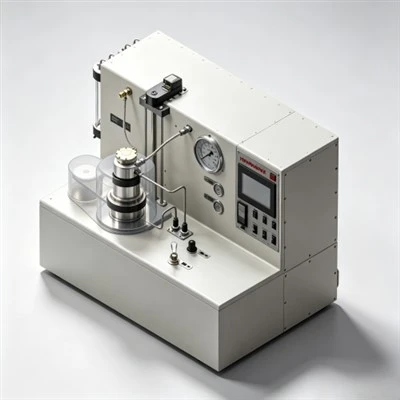
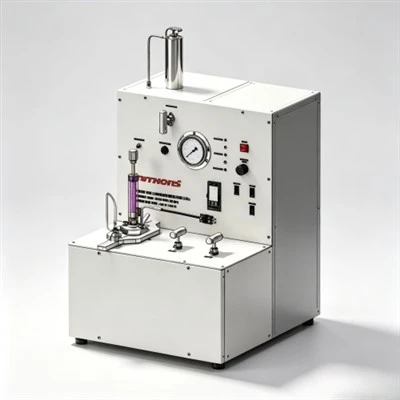
- Thickening time validation on an HPHT consistometer confirming a pumpability window of 5 hours and 30 minutes to 70 Bc under simulated dynamic ramp schedules.
- Static gel strength (SGS) transition window (from 100 to 500 lbf/100 ft²) of less than 30 minutes, with 24-hour compressive strength exceeding 3,500 psi (24.1 MPa).
How Selecting Synthetic AMPS Retarders Resolved the Field Challenge
Addressing these operational constraints required applying an exact engineering understanding of what cementing retarders are used in cementing project designs for HPHT wells. The operator's central laboratory evaluated pilot formulations on HPHT consistometers. Standard lignosulfonate retarders degraded thermally at 165°C, exhibiting rapid viscosity spikes above 45 Bc within 2 hours. To achieve reliable placement, the laboratory formulated a system utilizing KELIOIL synthetic AMPS-based high-temperature retarders (0.85% BWOC) paired with salt-resistant fluid loss additives, sulfonated dispersants, and 35% BWOC silica flour.
Consistometer test curves confirmed a stable right-angle set profile, maintaining a flat baseline consistency of 18 Bc for 4 hours and 30 minutes before rising cleanly to 70 Bc at 5 hours and 38 minutes. This provided an engineered 120-minute safety cushion over planned displacement operations. Ultrasonic testing on a UCA verified that the slurry developed 500 psi compressive strength in 9 hours and surpassed 3,800 psi at 24 hours, proving that the retarder did not impair final mechanical strength.
During field execution at Well Ahwaz-412, the slurry was pumped continuously and displaced across the 1,050-meter liner without surface pressure surges or ECD spikes. Post-job radial acoustic cement bond logs (CBL-VDL) confirmed 100% circumferential bonding across the Khami sour gas pay zone. Subsequent negative pressure testing recorded zero sustained annular casing pressure, proving that establishing what cementing retarders are used in cementing project programs provides the empirical precision required to eliminate cementing failures in extreme HPHT plays.
Laboratory Evaluation Standards and Additive Balancing Protocols
Achieving reliable field performance requires adhering to standardized API RP 10B-2 laboratory workflows when formulating chemical retarders:
- Testing with Actual Field Mix Water Batches: Dissolved salts, divalent calcium (Ca²⁺) and magnesium (Mg²⁺) ions, and sulfates in rig mix water alter retarder chelation efficiency and surface adsorption. Always test retarders using actual rig water samples rather than laboratory deionized water.
- Consistometer Thickening Time Profiling: Measure thickening time on calibrated HPHT consistometers under simulated geothermal temperature and pressure ramp schedules in strict accordance with API RP 10B-2. Verify that consistency remains flat (<30 Bc) throughout dynamic placement.
- Compressive Strength Development on UCA: Evaluate strength development non-destructively using an Ultrasonic Cement Analyzer (UCA) under bottom-hole static temperature (BHST). Verify that the retarder does not prevent the slurry from reaching 500 psi within 12 to 16 hours.
- Chemical Addition Sequence in Batch Mixing: Liquid retarders should be thoroughly homogenized into mix water prior to introducing dry cement powder. This ensures uniform chemical distribution and prevents localized flash setting during surface mixing.
Frequently Asked Questions (FAQ) Regarding Oilfield Cementing Retarders
1. Why cannot lignosulfonate retarders be used in ultra-deep HPHT wells?
Lignosulfonates possess organic phenylpropane polymers that undergo thermal degradation at temperatures exceeding 120°C to 135°C (248°F to 275°F). Thermal decomposition breaks the molecular chain, causing the slurry to lose retardation and flash set downhole. HPHT wells require synthetic AMPS-based terpolymers that resist thermal breakdown up to 230°C.
2. How does bottom-hole circulating temperature (BHCT) differ from static temperature (BHST)?
Bottom-Hole Static Temperature (BHST) is the undisturbed thermal state of the formation, whereas Bottom-Hole Circulating Temperature (BHCT) is the cooler dynamic temperature experienced by the slurry during pumping due to fluid circulation. Thickening time is tested at BHCT on an HPHT consistometer, whereas static compressive strength curing is conducted at BHST on a UCA.
3. What causes sudden consistency spikes (false setting) during consistometer testing?
Transient consistency spikes often result from competitive adsorption between chemical retarders and fluid loss polymers, or uninhibited early tricalcium aluminate (C₃A) hydration. Selecting compatible synthetic AMPS-based additive packages eliminates early gelation peaks, ensuring a smooth, pumpable rheology profile.
Strategic Chemical Selection for Reliable Slurry Placement
As drilling campaigns push into deeper, hotter, and higher-pressure reservoirs, understanding what cementing retarders are used in cementing project designs enables drilling and completion teams to formulate reliable slurries, optimize chemical additive packages, and eliminate downhole cementing failures.
KELIOIL remains committed to manufacturing high-performance oilfield cementing retarders under strict ISO 9001 and API Spec 10A quality control standards. By combining state-of-the-art polymer synthesis with comprehensive laboratory testing support, KELIOIL provides operators and cementing service contractors worldwide with dependable chemical solutions that guarantee wellbore integrity, environmental safety, and maximum asset productivity.
Optimize Your Slurry Pumping Windows with KELIOIL Cement Retarders
Our technical chemical specialists provide customized retarder formulation design, HPHT thickening-time laboratory testing verification, and reliable bulk supply of premium cementing additives tailored to demanding onshore and offshore drilling operations.