
When petroleum drilling engineers analyze what is the purpose of a cementing retarder, they define it as extending the operational pumpability window and controlling the hydration kinetics of Portland cement slurries under downhole temperatures exceeding 200°C and pressures surpassing 120 MPa across challenging plays in the Middle East, the Gulf of Mexico, and the Tarim Basin. Exploring what is the purpose of a cementing retarder reveals that without chemical retardation, high bottom-hole circulating temperatures (BHCT) accelerate tricalcium silicate (C₃S) and tricalcium aluminate (C₃A) dissolution, triggering premature flash setting inside casing strings. By designing slurry formulations around what is the purpose of a cementing retarder under API Spec 10A and API RP 10B-2 testing protocols, technical teams avoid annular bridging, mitigate equivalent circulating density (ECD) surges, prevent sustained casing pressure (SCP) caused by gas channeling, and achieve dependable, life-of-well zonal isolation.

The Operational Significance of Hydration Control in Well Construction
In hydrocarbon well construction, primary cementing represents the structural and hydraulic barrier that anchors casing strings, isolates permeable hydrocarbon zones, protects shallow potable water aquifers from drilling contamination, and shields tubular steel from corrosive downhole fluids such as hydrogen sulfide (H₂S) and carbon dioxide (CO₂). However, after a cement slurry is mixed at surface ambient conditions, it must be displaced down thousands of meters of casing tubulars and circulated upward into the narrow subterranean annulus. Throughout this dynamic transit, the slurry encounters harsh geothermal heating and high hydrostatic confining pressures.
Under downhole thermal conditions, Portland cement clinker minerals hydrate according to Arrhenius reaction kinetics. As temperature rises, the rate of calcium and aluminate ion dissolution into the pore fluid accelerates, promoting early crystallization of calcium silicate hydrate (C-S-H) gel fibers. If an un-retarded or under-retarded slurry is pumped downhole, its apparent viscosity surges. This sudden gelation increases frictional pressure drops, causing equivalent circulating density (ECD) to exceed the formation fracture breakdown gradient. The resulting hydraulic fracturing triggers severe lost circulation, leaves large intervals un-cemented, and risks freezing casing strings off-bottom, resulting in stuck pipe and multimillion-dollar sidetracking operations.
Investigating what is the purpose of a cementing retarder demonstrates how chemical retardation provides well construction teams with operational control. By selectively adsorbing onto mineral surfaces and chelating dissolved calcium ions, a retarder extends the dormant induction period. Knowing what is the purpose of a cementing retarder allows operational engineers to engineer a predictable pumping window-typically incorporating a 90 to 120-minute safety cushion beyond planned displacement schedules-ensuring safe placement across deep vertical, horizontal, and high-pressure high-temperature (HPHT) wellbores without premature flash setting.
1. How a Cementing Retarder Operates During Slurry Placement
During primary displacement, cement slurry experiences intense dynamic shear and thermal ramping as it travels from surface pits toward total depth. Without chemical intervention, heat accelerates the dissolution of tricalcium aluminate (C₃A) and tricalcium silicate (C₃S), causing rapid flocculation and early gelation.
A cementing retarder delays this chemical cascade through surface adsorption, calcium ion chelation, and nucleation poisoning. Organic functional groups-such as hydroxyl (–OH), carboxyl (–COOH), and sulfonate (–SO₃⁻)-bind to hydrating grain surfaces, creating a steric and electrostatic boundary layer that restricts free water access to unhydrated clinker cores. This allows the slurry to maintain a flat, low-viscosity consistency (typically 15 to 25 Bearden units of Consistency, Bc) throughout casing transit and annular ascent, ensuring clean mud displacement without surging surface pumping pressures.
2. Regulating Thickening Time Under Simulated Downhole Conditions
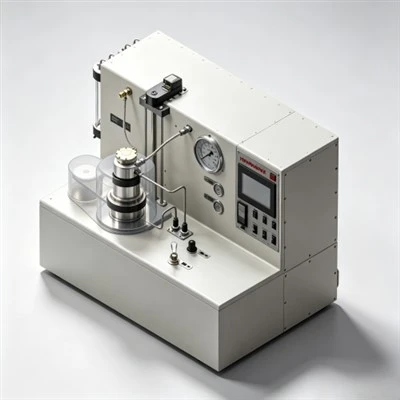
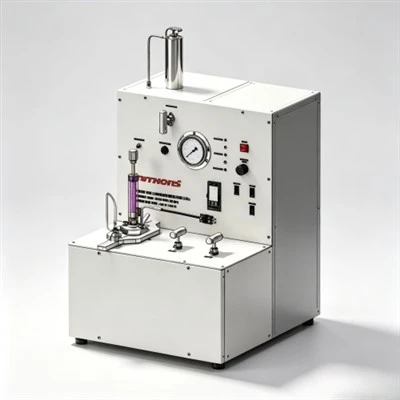
Downhole circulating temperature and confining hydrostatic pressure govern the rate of cement setting. At temperatures exceeding 100°C (212°F), neat cement slurries can thicken in less than 45 minutes, making safe placement impossible. Adding an engineered retarder transforms this erratic reaction into a predictable curve on an HPHT consistometer.
The table below demonstrates how chemical retarders alter slurry thickening profiles across varying downhole well conditions:
3. Operational Risks Prevented by Cementing Retarders
The direct operational utility of chemical retarders lies in risk mitigation. Incorporating a well-calibrated retarder prevents five major cementing failure modes:
- Premature Slurry Gelation During Pumping: Uncontrolled hydration causes sudden consistency spikes that overwhelm surface triplex pumps, forcing emergency shutdowns before slurry reaches the planned top of cement (TOC).
- Casing Tubular and Annular Blockages: Flash setting inside casing collars, float collars, or casing shoes traps drill pipe and logging tools, resulting in expensive fishing and milling jobs.
- Equivalent Circulating Density (ECD) Pressure Surges: Thickening slurries generate high frictional pressure losses in narrow annular clearances, driving ECD beyond the formation fracture breakdown pressure and inducing massive lost circulation.
- Incomplete Mud Displacement: Slurries that gel prematurely develop non-uniform velocity profiles that channel through drilling mud rather than displacing it, leaving contaminated mud channels along the casing wall.
- Micro-Annular Gas Channeling: An erratic setting transition allows hydrostatic pressure to decay before the cement develops impermeable compressive strength, permitting high-pressure formation gas to migrate to surface.
4. Laboratory Evaluation Suite for Retarder Qualification
Prior to field pumping, every retarder formulation must undergo standardized laboratory screening adhering to API RP 10B-2 testing standards. The table below outlines the core diagnostic tests used to qualify cementing retarders:

Regional Application Case: Deep Carbonate Sour Gas Production Liner Cementing in the Ahwaz Field, Khuzestan Province, Iran
Case Application: Ahwaz Oilfield, Khuzestan Province, Southwestern Iran

Target Formation: Deep HPHT Khami Sour Gas Carbonates (High Pressure, High H₂S & Narrow ECD Window)
Regional Cementing Background in Khuzestan Carbonate Plays
In the Ahwaz field of southwestern Iran, drilling operations penetrate overpressured gas-bearing carbonate reservoirs within the Cretaceous-Jurassic Khami Group. Well measured depths regularly exceed 4,900 to 5,300 meters (16,000 to 17,400 feet). Downhole conditions are severe: bottom-hole static temperatures (BHST) climb to 165°C to 175°C (329°F to 347°F) with formation pressures exceeding 12,000 psi (82.7 MPa). The formations produce sour gas containing H₂S (up to 6%) and CO₂ (up to 8%). Cementing 7-inch production liners across the Khami interval requires heavy Class G slurry systems (1.98 to 2.10 g/cm³) weighted with barite and stabilized by high-temperature polymers.
Regional Cementing Challenges in Extreme HPHT Formations
Operators cementing deep production liners across the Khami formation encounter critical technical hurdles:
- Severe Retarder Sensitivity: At temperatures above 160°C, minor variations of 0.05% BWOC in chemical retarder concentration cause large swings in thickening time, risking premature flash setting or multi-day setting delays.
- Narrow Equivalent Circulating Density (ECD) Windows: Close margins between formation pore pressure and fracture breakdown pressure demand low-viscosity slurries that maintain steady rheology without premature gelation spikes.
- Risk of Sour Gas Channeling: An extended transition time during slurry phase changes allows sour gas invasion into the decaying hydrostatic column, creating sustained casing pressure (SCP).
Technical Requirements for Slurry Qualification
To qualify a heavy 1.98 g/cm³ (16.5 ppg) Class G cement system across the Khami gas zone, the operator established strict performance criteria:
- Thickening time validation on an HPHT consistometer confirming a pumpability window of 5 hours and 30 minutes to 70 Bc under simulated dynamic ramp schedules.
- API fluid loss control strictly below 35 mL/30 min at 165°C using an automated high-temperature stirred fluid loss cell to prevent dehydration.
- Static gel strength (SGS) transition window (from 100 to 500 lbf/100 ft²) of less than 30 minutes, with 24-hour compressive strength exceeding 3,500 psi (24.1 MPa).
How Precision Retarder Technology Resolved the Field Challenge
Addressing these operational constraints required applying an exact engineering understanding of what is the purpose of a cementing retarder. The operator's technical team evaluated pilot formulations on HPHT consistometers. Standard lignosulfonate retarders degraded thermally at 165°C, exhibiting rapid viscosity spikes above 45 Bc within 2 hours. To achieve reliable placement, the laboratory formulated a system utilizing KELIOIL synthetic AMPS-based high-temperature retarders (0.85% BWOC) paired with salt-resistant fluid loss additives, sulfonated dispersants, and 35% BWOC silica flour.
Consistometer test curves confirmed a stable right-angle set profile, maintaining a flat baseline consistency of 18 Bc for 4 hours and 30 minutes before rising cleanly to 70 Bc at 5 hours and 38 minutes. This provided an engineered 120-minute safety cushion over planned displacement operations. Ultrasonic testing on a UCA verified that the slurry developed 500 psi compressive strength in 9 hours and surpassed 3,800 psi at 24 hours, proving that the retarder did not impair final mechanical strength.
During field execution at Well Ahwaz-412, the slurry was pumped continuously and displaced across the 1,050-meter liner without surface pressure surges or ECD spikes. Post-job radial acoustic cement bond logs (CBL-VDL) confirmed 100% circumferential bonding across the Khami sour gas pay zone. Subsequent negative pressure testing recorded zero sustained annular casing pressure, proving that understanding what is the purpose of a cementing retarder provides the empirical precision required to eliminate cementing failures in extreme HPHT plays.
Frequently Asked Questions (FAQ) Regarding Cementing Retarders
1. How do engineers prevent retarder-induced waiting-on-cement (WOC) delays?
Preventing excessive WOC time requires testing retarder dosages iteratively in 0.05% BWOC increments on HPHT consistometers and Ultrasonic Cement Analyzers (UCA). Engineers select synthetic polymers that deliver right-angle set profiles-slurries that remain pumpable during placement but hydrate rapidly once static downhole conditions are established.
2. Can a cementing retarder cause gas migration in gas-bearing zones?
If a retarder is overdosed or poorly matched to well temperature, it can create a sluggish setting profile with an extended static gel strength transition time (100 to 500 lbf/100 ft²). During this window, hydrostatic pressure transmission decays while the cement matrix remains porous, allowing gas to channel upward. Well-designed retarders provide rapid transition times (<30 minutes) to block gas invasion.
3. Why must field mix water be used when testing retarders in the laboratory?
Dissolved hardness ions (divalent Ca²⁺ and Mg²⁺) and sulfates in rig mix water alter the chelation efficiency and surface adsorption of retarder molecules. Testing with deionized water in the laboratory yields inaccurate thickening time predictions that can lead to downhole flash setting during field execution.
Strategic Chemical Selection for Reliable Slurry Placement
As well drilling programs navigate deeper formations, narrower hydraulic margins, and higher geothermal gradients, achieving permanent zonal isolation depends directly on recognizing what is the purpose of a cementing retarder. Precision chemical design prevents catastrophic premature setting, protects weak formations from hydraulic pressure surges, and ensures complete annular displacement across demanding well trajectories.
KELIOIL remains dedicated to manufacturing high-performance oilfield cementing retarders under strict ISO 9001 and API Spec 10A quality control standards. By combining advanced polymer synthesis with comprehensive laboratory testing support, KELIOIL empowers operating companies and service contractors worldwide to optimize chemical additive packages, eliminate downhole cementing failures, and maximize hydrocarbon asset longevity.
Optimize Your Slurry Pumping Windows with KELIOIL Cement Retarders
Our technical chemical specialists provide customized retarder formulation design, HPHT thickening-time laboratory testing verification, and reliable bulk supply of premium cementing additives tailored to demanding onshore and offshore drilling operations.