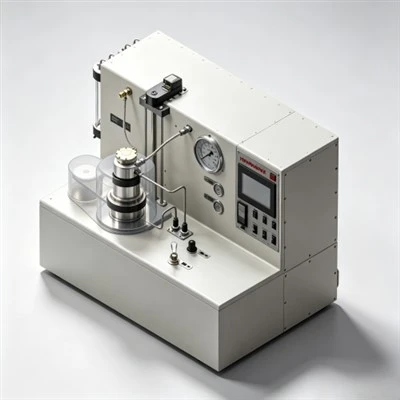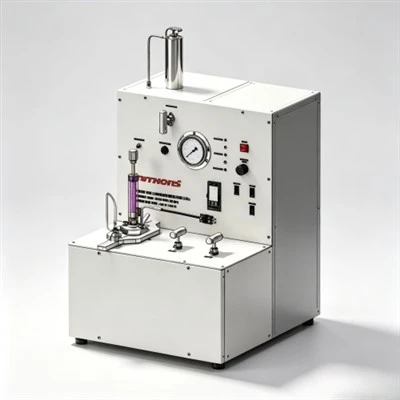

When well construction teams evaluate when should you use retarders in cementing projects, they identify operational thresholds where high bottom-hole circulating temperatures (BHCT), extended displacement schedules, high slurry densities, and complex lateral trajectories threaten premature slurry gelation across demanding plays in the Middle East, the Gulf of Mexico, and the Tarim Basin. Exploring when should you use retarders in cementing projects reveals that whenever downhole geothermal heating accelerates tricalcium silicate (C₃S) and tricalcium aluminate (C₃A) dissolution, an uninhibited cement slurry risks setting inside casing strings before reaching target depths. By establishing engineering criteria for when should you use retarders in cementing projects under API Spec 10A and API RP 10B-2 testing standards, operators engineer a predictable 90 to 120-minute pumpability safety buffer, eliminate equivalent circulating density (ECD) pressure surges, prevent sustained casing pressure (SCP) caused by gas channeling, and achieve dependable annular zonal isolation.

The Operational Imperative of Pumping Window Design in Primary Well Cementing
In petroleum exploration and completion engineering, primary cementing represents the primary physical barrier required to anchor casing strings, prevent subterranean hydrocarbon cross-flow, isolate porous formations, protect shallow potable water aquifers from contamination, and shield casing steel from corrosive formation brines and acid gases such as hydrogen sulfide (H₂S) and carbon dioxide (CO₂). However, after a cement slurry is mixed on surface batching equipment, it must be displaced down thousands of meters of casing tubulars and circulated upward through narrow annular clearances. Throughout this dynamic displacement, the slurry column is subjected to harsh thermodynamic and hydrostatic environments.
Portland cement clinker minerals hydrate according to Arrhenius chemical kinetics. As temperatures climb above 60°C (140°F), the dissolution of calcium ions (Ca²⁺) and aluminate complexes into the aqueous pore solution accelerates rapidly. Without targeted chemical delay, premature nucleation of interlocking calcium silicate hydrate (C-S-H) gel networks triggers a sudden surge in slurry viscosity. This premature thickening elevates frictional pressure losses, driving equivalent circulating density (ECD) beyond formation fracture breakdown limits. The resulting hydraulic fracturing causes massive lost circulation, drops the top of cement (TOC) far below designed depths, and frequently locks casing tubulars off-bottom. In severe scenarios, setting cement inside casing tubulars traps drill pipe and bottom-hole assemblies, resulting in multimillion-dollar well abandonment and sidetracking operations.
Understanding when should you use retarders in cementing projects provides well engineers with the diagnostic foundation required to avoid these operational extremes. By selectively adsorbing onto mineral surfaces and chelating dissolved calcium ions, chemical retarders delay the dormant induction phase. Establishing clear operational criteria for when should you use retarders in cementing projects allows engineers to design an engineered pumping window-typically providing a 90 to 120-minute safety cushion beyond total displacement duration-ensuring safe, unhindered placement across deep vertical, extended-reach horizontal, and ultra-HPHT wellbores.
1. High-Temperature Wellbores: Bottom-Hole Thermal Thresholds
The primary trigger for incorporating a chemical retarder is elevated wellbore temperature. While surface casings operating below 50°C (122°F) rarely require retardation, intermediate and production intervals penetrating deeper formations require precise chemical delay:
- Moderate Temperature Formations (60°C to 110°C / 140°F to 230°F): At these temperatures, conventional neat Class G or Class H slurries exhibit thickening times of less than 90 minutes. Lignosulfonate-based retarders or organic hydroxycarboxylic acids (e.g., citric or gluconic acid) are introduced at 0.1% to 0.4% BWOC to extend pumpability to 3 to 4 hours.
- High-Temperature Horizons (110°C to 150°C / 230°F to 302°F): Standard lignosulfonates begin to suffer thermal degradation in this window. Modified lignin blends and low-molecular-weight synthetic polymers must be deployed to prevent premature aluminate gelation.
- Ultra-HPHT and Geothermal Frontiers (150°C to 230°C+ / 302°F to 446°F+): In ultra-deep gas wells and geothermal reservoirs, un-retarded cement can flash set in less than 20 minutes. Advanced synthetic polymers based on 2-acrylamido-2-methylpropane sulfonic acid (AMPS) and maleic anhydride terpolymers are mandatory to resist thermal hydrolysis, maintaining consistent Bearden consistency without early viscosity peaks.
2. Long Pumping and Extended Displacement Durations
Operational pumping duration is a decisive factor governing retarder deployment. Total placement time is calculated by summing surface batch mixing time, casing displacement duration, and plug bumping operations. Whenever calculated displacement time exceeds 90 minutes, retarders become necessary to maintain slurry fluidity:
3. High-Density Slurry Formulations and Narrow ECD Windows
Deep overpressured hydrocarbon formations require heavy cement slurries ranging from 1.90 to 2.25 g/cm³ (15.8 to 18.8 ppg) weighted with micronized barite, hematite, or manganese tetroxide. In these dense slurries, the water-to-cement ratio is reduced to 0.35–0.40, significantly increasing the solid volume fraction.
Because clinker particles are closely packed, any early hydration crystallization rapidly bridges inter-particle voids, causing instantaneous viscosity surges. Furthermore, the margin between formation pore pressure and fracture breakdown pressure in deep reservoirs is frequently less than 0.5 ppg equivalent mud weight. Under such narrow hydraulic operating envelopes, adding a high-efficiency retarder is critical: it prevents premature gelation peaks, maintains low plastic viscosity, and keeps annular pumping pressures safely below the formation breakdown threshold.
4. Application Across Complex Geological and Operational Settings
A comprehensive understanding of when should you use retarders in cementing projects requires evaluating specialized drilling environments where chemical delay is operationally indispensable:
Regional Application Case: Deep Carbonate Sour Gas Production Liner Cementing in the Ahwaz Field, Khuzestan Province, Iran
Case Application: Ahwaz Oilfield, Khuzestan Province, Southwestern Iran

Target Formation: Deep HPHT Khami Sour Gas Carbonates (High Pressure, High H₂S & Narrow ECD Window)
Regional Cementing Background in Khuzestan Carbonate Plays
In the Ahwaz field of southwestern Iran, drilling operations penetrate overpressured gas-bearing carbonate reservoirs within the Cretaceous-Jurassic Khami Group. Well measured depths regularly exceed 4,900 to 5,300 meters (16,000 to 17,400 feet). Downhole conditions are severe: bottom-hole static temperatures (BHST) climb to 165°C to 175°C (329°F to 347°F) with formation pressures exceeding 12,000 psi (82.7 MPa). The formations produce sour gas containing H₂S (up to 6%) and CO₂ (up to 8%). Cementing 7-inch production liners across the Khami interval requires heavy Class G slurry systems (1.98 to 2.10 g/cm³) weighted with barite and stabilized by high-temperature polymers.
Regional Cementing Challenges in Extreme HPHT Formations
Operators cementing deep production liners across the Khami formation encounter critical technical hurdles:
- Severe Retarder Sensitivity: At temperatures above 160°C, minor variations of 0.05% BWOC in chemical retarder concentration cause large swings in thickening time, risking premature flash setting or multi-day setting delays.
- Narrow Equivalent Circulating Density (ECD) Windows: Close margins between formation pore pressure and fracture breakdown pressure demand low-viscosity slurries that maintain steady rheology without premature gelation spikes.
- Risk of Sour Gas Channeling: An extended transition time during slurry phase changes allows sour gas invasion into the decaying hydrostatic column, creating sustained casing pressure (SCP).
Technical Requirements for Slurry Qualification
To qualify a heavy 1.98 g/cm³ (16.5 ppg) Class G cement system across the Khami gas zone, the operator established strict performance criteria:
- Thickening time validation on an HPHT consistometer confirming a pumpability window of 5 hours and 30 minutes to 70 Bc under simulated dynamic ramp schedules.
- API fluid loss control strictly below 35 mL/30 min at 165°C using an automated high-temperature stirred fluid loss cell to prevent dehydration.
- Static gel strength (SGS) transition window (from 100 to 500 lbf/100 ft²) of less than 30 minutes, with 24-hour compressive strength exceeding 3,500 psi (24.1 MPa).
How Strategic Retarder Application Resolved the Field Challenge
Addressing these operational constraints required applying an exact engineering understanding of when should you use retarders in cementing projects. During initial formulation trials, the laboratory tested standard lignosulfonate retarders. Due to the extreme 165°C circulating temperature, the lignosulfonate suffered thermal degradation, showing an erratic thickening curve that spiked past 50 Bc within 2 hours.
Recognizing the failure risks of thermal degradation, the engineering team re-designed the slurry using KELIOIL synthetic AMPS-based high-temperature retarders (0.85% BWOC) paired with salt-resistant fluid loss additives, sulfonated dispersants, and 35% BWOC silica flour. The AMPS terpolymer provided exceptional thermal stability, resisting hydrolysis and maintaining a stable consistency of 18 Bc for 4 hours and 30 minutes before rising sharply to 70 Bc at 5 hours and 38 minutes. This provided an engineered 120-minute safety cushion over planned displacement operations. Ultrasonic testing on a UCA verified that the slurry developed 500 psi compressive strength in 9 hours and surpassed 3,800 psi at 24 hours, proving that the retarder did not impair final mechanical strength.
During field execution at Well Ahwaz-412, the slurry was pumped continuously and displaced across the 1,050-meter liner without surface pressure surges or ECD spikes. Post-job radial acoustic cement bond logs (CBL-VDL) confirmed 100% circumferential bonding across the Khami sour gas pay zone. Subsequent negative pressure testing recorded zero sustained annular casing pressure, proving that understanding when should you use retarders in cementing projects provides the empirical precision required to eliminate cementing failures in extreme HPHT plays.

Laboratory Qualification Criteria and Field Operational Guidelines
Achieving reliable field execution requires confirming retarder performance in an API-certified laboratory prior to job sign-off:
- API RP 10B-2 Thickening Time Verification: Test slurry samples on pressurized HPHT consistometers under simulated geothermal temperature and pressure ramps. Thickening time to 70 Bc must equal planned placement time plus an engineered 90 to 120-minute safety cushion.
- Testing with Actual Rig Mix Water and Delivered Cement Batches: Dissolved salts, calcium ions, and sulfates in rig water alter retarder chelation efficiency. Never qualify retarders using deionized laboratory water when the field uses seawater or municipal water.
- Compressive Strength Monitoring on UCA: Evaluate static strength development non-destructively using an Ultrasonic Cement Analyzer (UCA) under bottom-hole static temperature (BHST). Confirm that the slurry develops 500 psi in less than 16 hours to minimize rig waiting-on-cement (WOC) time.
- Slurry Homogenization and Chemical Mixing Order: Liquid retarders must be introduced into the mix water and thoroughly agitated before adding dry cement powder, ensuring uniform chemical distribution and preventing localized flash setting.
Frequently Asked Questions (FAQ) Regarding Cementing Retarder Deployment
1. What are the operational consequences of an under-dosed cementing retarder?
An under-dosed retarder fails to provide an adequate pumping window. The slurry begins to gel prematurely while still in transit, causing surface pumping pressures to spike, inducing lost circulation downhole, and potentially freezing the casing string off-bottom.
2. How does bottom-hole circulating temperature (BHCT) differ from static temperature (BHST)?
Bottom-Hole Static Temperature (BHST) is the undisturbed thermal state of the formation, whereas Bottom-Hole Circulating Temperature (BHCT) is the cooler dynamic temperature experienced by the slurry during pumping due to fluid circulation. Thickening time is tested at BHCT on an HPHT consistometer, whereas static compressive strength curing is conducted at BHST on a UCA.
3. Can high dosages of retarders cause formation gas channeling?
Yes. If a retarder is excessively overdosed, it causes sluggish setting where static gel strength develops slowly from 100 to 500 lbf/100 ft². During this extended window, hydrostatic pressure transmission decays while the cement matrix remains porous, allowing high-pressure gas to invade the slurry column. Retarders must be optimized to deliver a right-angle set profile.
Strategic Chemical Selection for Reliable Slurry Placement
As well drilling programs navigate deeper formations, narrower hydraulic margins, and higher geothermal gradients, achieving permanent zonal isolation depends directly on recognizing when should you use retarders in cementing projects. Precision chemical design prevents catastrophic premature setting, protects weak formations from hydraulic pressure surges, and ensures complete annular displacement across demanding well trajectories.
KELIOIL remains dedicated to manufacturing high-performance oilfield cementing retarders under strict ISO 9001 and API Spec 10A quality control standards. By combining advanced polymer synthesis with comprehensive laboratory testing support, KELIOIL empowers operating companies and service contractors worldwide to optimize chemical additive packages, eliminate downhole cementing failures, and maximize hydrocarbon asset longevity.
Optimize Your Slurry Pumping Windows with KELIOIL Cement Retarders
Our technical chemical specialists provide customized retarder formulation design, HPHT thickening-time laboratory testing verification, and reliable bulk supply of premium cementing additives tailored to demanding onshore and offshore drilling operations.