
Introduction
In modern oilfield cementing operations, maintaining stable cement slurry performance under complex downhole conditions is essential for achieving reliable zonal isolation and long-term well integrity. A high-performance Oil Well Cement Additive must not only provide effective fluid loss control, but also improve slurry stability and prevent particle sedimentation during pumping and placement. CG214 is a specialized anti-settling fluid loss additive designed to help cement laboratories and oilfield service companies optimize cement slurry performance under demanding conditions. This article explains why CG214 is considered an ideal Oil Well Cement Additive for fluid loss control and slurry stability, including its working principles, performance advantages, application scenarios, and operational benefits in modern cementing systems.

1. What Is an Oil Well Cement Additive and Why Is It Important?
An Oil Well Cement Additive is a specialized chemical material added to cement slurry to improve performance during oilfield cementing operations. Different additives are used to modify slurry properties such as thickening time, rheology, density, fluid loss, free water, strength development, and slurry stability.
In modern oil well cementing, cement slurries must operate under increasingly complex conditions, including:
- High temperature wells
- High pressure environments
- Deepwater cementing operations
- Long horizontal sections
- Gas migration risk zones
- High-permeability formations
Without a suitable Oil Well Cement Additive, cement slurry may experience excessive fluid loss, unstable rheology, sedimentation, dehydration, or early gelation. These problems can cause poor cement placement and long-term well integrity failures.
This is why selecting the correct Oil Well Cement Additive is essential for successful cementing quality control. CG214 is specifically developed to address two major challenges simultaneously: fluid loss control and slurry stability.
2. What Is CG214 and What Makes It Different from Traditional Cementing Additives?
CG214 is a multifunctional anti-settling fluid loss additive designed for oilwell cement slurry systems. Unlike conventional fluid loss additives that focus mainly on filtration reduction, CG214 also improves particle suspension stability inside the slurry.
Traditional Cementing Additives may reduce fluid loss effectively but still allow solid particle sedimentation during pumping or static placement. This sedimentation can lead to density variation, uneven cement sheath quality, and poor zonal isolation.
CG214 combines fluid loss reduction capability with anti-settling performance, making it a more advanced Oil Well Cement Additive for modern cementing applications.
Key characteristics of CG214 include:
- Effective fluid loss reduction under pressure conditions
- Improved slurry suspension stability
- Reduced cement particle sedimentation
- Better compatibility with common cementing additives
- Stable performance in high-temperature slurry systems
- Improved slurry homogeneity during pumping operations
Because of these combined properties, CG214 is widely suitable for challenging cementing environments where both filtration control and slurry stability are critical.
3. Why Is Fluid Loss Control Critical in Oil Well Cementing?
Fluid loss control is one of the most important requirements in oilwell cementing operations. When cement slurry is exposed to differential pressure against permeable formations, liquid filtrate can escape into the formation. Excessive fluid loss creates multiple operational risks.
Major problems caused by poor fluid loss control include:
- Premature slurry dehydration
- Rapid viscosity increase
- Loss of pumpability
- Poor displacement efficiency
- Increased gas migration risk
- Weak cement bonding strength
- Incomplete annular filling
- Formation damage due to filtrate invasion
A high-quality Oil Well Cement Additive such as CG214 helps reduce filtrate invasion and maintain proper slurry consistency throughout the cementing process.
By controlling fluid loss effectively, CG214 supports:
- Better slurry placement
- More stable rheological behavior
- Improved cement hydration conditions
- Better long-term cement sheath integrity
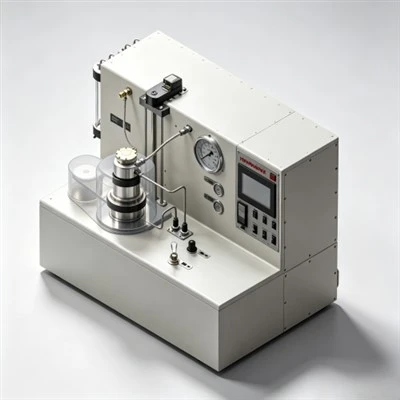
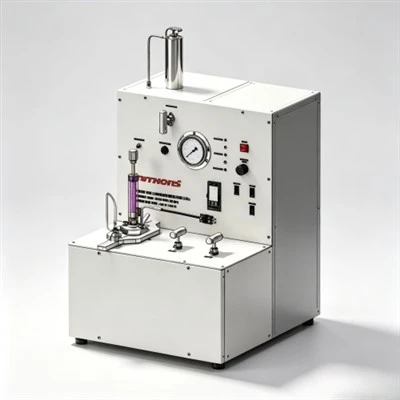
In modern cementing quality control, fluid loss performance is usually verified using HTHP Fluid Loss Tester equipment according to API procedures. CG214 is specifically designed to perform effectively under these demanding testing conditions.
4. How Does CG214 Improve Fluid Loss Control in Cement Slurry Systems?
CG214 improves filtration control by modifying the liquid phase behavior inside the cement slurry and helping form a low-permeability filter cake structure during pressure exposure.
When pressure is applied in a formation environment, filtrate movement occurs through pore channels. CG214 helps reduce this filtrate movement by:
- Increasing liquid retention inside the slurry
- Improving filter cake compactness
- Reducing permeability of the filtration layer
- Stabilizing slurry particle distribution
- Controlling fluid mobility under differential pressure
As a professional Oil Well Cement Additive, CG214 is particularly effective in high-temperature systems where conventional additives may degrade or lose performance.
In laboratory testing, cement slurries containing CG214 typically demonstrate:
- Lower API fluid loss values
- Improved filtrate control consistency
- Better repeatability under HTHP conditions
- More stable rheology after conditioning
This makes CG214 suitable for advanced cement slurry designs requiring reliable fluid loss performance under complex downhole environments.
5. Why Is Slurry Stability Important for Cementing Operations?
Slurry stability refers to the ability of cement slurry to maintain uniform particle distribution during mixing, pumping, and static placement. Poor slurry stability may result in solid particle settling, free water separation, and density variation along the cement column.
Unstable slurry systems can create serious cementing problems such as:
- Density segregation inside the annulus
- Weak cement sections
- Poor compressive strength distribution
- Channeling risk
- Gas invasion pathways
- Uneven additive distribution
A high-performance Oil Well Cement Additive should help maintain slurry homogeneity during the entire cementing operation. This is one of the key strengths of CG214.
By improving suspension stability, CG214 helps ensure:
- Uniform cement particle distribution
- Stable density profile
- Reduced sedimentation risk
- Better additive dispersion consistency
- Improved cement sheath integrity after setting
For long horizontal wells and extended pumping operations, slurry stability becomes even more important. In these applications, CG214 provides major operational advantages compared with conventional fluid loss additives.
6. How Does CG214 Prevent Cement Slurry Sedimentation?
Sedimentation occurs when heavier cement particles settle downward while lighter liquid phases move upward. This process becomes more severe under static conditions or long placement times.
CG214 reduces sedimentation through optimized rheological modification and improved particle suspension behavior. As an advanced Oil Well Cement Additive, CG214 helps create a more stable internal slurry structure that supports particle suspension.
Key anti-settling mechanisms include:
- Improved slurry viscosity balance
- Enhanced particle suspension capability
- Reduced solid-liquid separation tendency
- Better hydration distribution during placement
- Stabilized rheological profile under static conditions
In laboratory sedimentation tests, slurries containing CG214 usually show:
- Lower density variation from top to bottom
- Reduced free water separation
- More uniform slurry consistency
- Improved static stability performance
This makes CG214 especially valuable for high-density cement slurries and extended pumping operations where sedimentation risks are higher.
7. What Types of Wells Can Benefit from CG214 Oil Well Cement Additive?
CG214 is suitable for many types of cementing projects where fluid loss control and slurry stability are both important. Different well conditions create different operational challenges, and multifunctional Cementing Additives are increasingly preferred.
CG214 can provide benefits in:
Deep wells
Deep wells usually involve higher temperature and pressure conditions. CG214 helps maintain stable slurry performance under these environments.
Horizontal wells
Long horizontal sections increase sedimentation risk during slurry placement. The anti-settling capability of this Oil Well Cement Additive improves slurry homogeneity.
High-temperature wells
High temperature accelerates hydration and may weaken conventional additive performance. CG214 is designed for better high-temperature stability.
Gas migration risk wells
Stable slurry rheology and controlled fluid loss help reduce gas invasion risk.
High-permeability formations
Fluid loss control is critical in permeable zones. CG214 helps minimize filtrate invasion into the formation.
Extended pumping operations
Long pumping durations increase slurry instability risk. CG214 supports stable slurry behavior throughout the operation.
Because of its multifunctional design, CG214 is a highly flexible Oil Well Cement Additive suitable for a wide range of cementing applications.
8. How Does CG214 Perform Under High-Temperature Cementing Conditions?
High temperature is one of the most difficult challenges in oilwell cementing. Many conventional fluid loss additives experience thermal degradation, viscosity instability, or reduced filtration control effectiveness at elevated temperatures.
CG214 is designed to maintain stable performance under high-temperature conditions. This makes it a reliable Oil Well Cement Additive for deep wells and HPHT cementing systems.
Under high-temperature laboratory testing, CG214 typically demonstrates:
- Stable fluid loss control performance
- Consistent slurry stability behavior
- Reduced rheology fluctuation
- Improved compatibility with retarders and dispersants
- Lower risk of additive thermal breakdown
Temperature stability is essential because unstable additive performance can lead to unpredictable cementing behavior in the field. By maintaining stable fluid loss control at elevated temperatures, CG214 improves confidence in slurry design reliability.
For cement laboratories performing HTHP testing, CG214 often provides better repeatability than standard low-temperature fluid loss additives.
9. How Does CG214 Improve Cementing Quality Control?
Quality control is one of the most important goals in cement slurry design and additive manufacturing. Cement laboratories must ensure that slurry properties remain consistent from batch to batch and under varying downhole conditions.
CG214 improves cementing quality control by helping stabilize multiple slurry properties simultaneously.
Benefits include:
- More repeatable fluid loss test results
- Improved slurry stability consistency
- Better rheological control during testing
- Reduced sedimentation variation
- Lower risk of field performance deviation
Because CG214 combines multiple performance functions into one Oil Well Cement Additive, cement laboratories can simplify slurry formulations while maintaining stable testing performance.
This also helps improve operational efficiency by reducing the complexity of additive optimization during slurry design development.
10. What Laboratory Tests Are Commonly Used to Evaluate CG214?
Several laboratory tests are commonly used to evaluate the performance of CG214 as an Oil Well Cement Additive.
Typical tests include:
HTHP Fluid Loss Test
Measures slurry filtrate volume under high-temperature and high-pressure conditions.
Free Water Test
Evaluates liquid separation tendency under static conditions.
Rheology Test
Measures slurry viscosity and flow behavior using atmospheric or pressurized consistometers and viscometers.
Sedimentation Stability Test
Checks density variation from top to bottom after static conditioning.
Thickening Time Test
Verifies pumpability duration under simulated downhole conditions.
Compressive Strength Test
Measures cement strength development after curing.
Using these tests together allows cement laboratories to evaluate the overall performance contribution of CG214 in different slurry systems.
11. How Does CG214 Compare with Conventional Fluid Loss Additives?
Conventional fluid loss additives mainly focus on reducing filtrate volume. While effective in some applications, many traditional products do not adequately address slurry sedimentation and stability challenges.
Compared with standard fluid loss products, CG214 offers:
- Combined fluid loss and anti-settling functionality
- Better slurry homogeneity
- Improved density stability
- More reliable high-temperature performance
- Better compatibility with modern slurry systems
- Reduced risk of free water separation
This multifunctional performance makes CG214 a more advanced Oil Well Cement Additive for demanding cementing projects.
In complex wells where slurry stability is critical, using separate additives for fluid loss and suspension control may increase formulation complexity and compatibility risks. CG214 helps simplify slurry system design while maintaining strong performance.
12. What Are the Main Operational Advantages of Using CG214?
CG214 provides several operational advantages during real cementing operations.
Key operational benefits include:
Improved pumping stability
Stable slurry behavior reduces operational fluctuation during placement.
Reduced sedimentation risk during long pumping periods
This is especially important for horizontal wells and deep cementing operations.
More reliable fluid loss control
Helps maintain slurry hydration and pumpability.
Better cement sheath quality
Uniform slurry distribution improves final cement integrity.
Reduced operational risk
Lower risk of gas migration, channeling, and density segregation.
Improved laboratory repeatability
Stable additive performance simplifies slurry optimization work.
Because of these operational advantages, CG214 is increasingly used as a professional Oil Well Cement Additive in advanced cementing systems.
13. How to Select the Proper Dosage of CG214 in Cement Slurry Design?
The proper dosage of CG214 depends on several factors, including:
- Cement type
- Slurry density
- Bottom hole circulating temperature
- Pressure conditions
- Formation permeability
- Compatibility with dispersants and retarders
- Required fluid loss target
Cement laboratories should optimize dosage through laboratory testing rather than using fixed universal values.
Recommended evaluation methods include:
- HTHP fluid loss testing
- Rheology measurement
- Sedimentation stability testing
- Thickening time evaluation
- Compatibility testing with other additives
As a professional Oil Well Cement Additive, CG214 should always be tested under simulated field conditions before final slurry approval.
Careful dosage optimization helps achieve the best balance between fluid loss control, slurry stability, and pumping performance.
14. Checklist Table: Key Benefits of CG214 Oil Well Cement Additive
| Performance Area | CG214 Advantage | Operational Benefit |
| Fluid Loss Control | Reduces filtrate invasion | Improves slurry hydration stability |
| Anti-Settling Performance | Prevents particle sedimentation | Maintains uniform slurry density |
| High-Temperature Stability | Stable under elevated temperatures | Suitable for HPHT wells |
| Slurry Homogeneity | Improves particle suspension | Better cement sheath quality |
| Compatibility | Works with common additives | Simplifies slurry formulation |
| Repeatability | Stable laboratory performance | Improves quality control consistency |
| Operational Reliability | Reduces slurry instability risks | Supports successful cement placement |
15. Conclusion: Why CG214 Is a Reliable Cementing Additive Solution
Modern cementing operations require more than simple fluid loss reduction. Cement slurries must remain stable, homogeneous, and reliable under increasingly demanding downhole conditions. This is why multifunctional products such as CG214 are becoming more important in advanced cement slurry systems.
As a professional Oil Well Cement Additive, CG214 provides both effective fluid loss control and strong anti-settling performance. By reducing filtrate invasion while maintaining slurry stability, CG214 helps improve cementing quality control, reduce operational risks, and support long-term well integrity.
Whether used in deep wells, horizontal wells, high-temperature projects, or complex cementing environments, CG214 offers a practical and reliable solution for modern oilwell cementing applications. For cement laboratories and oilfield service companies seeking stable slurry performance and improved operational reliability, CG214 is an ideal Oil Well Cement Additive choice.
Checklist
Laboratory Evaluation Checklist for CG214 Oil Well Cement Additive
Perform HTHP fluid loss testing under simulated field temperature conditions
Evaluate slurry sedimentation stability after static conditioning
Verify compatibility with retarders and dispersants
Measure rheology before and after conditioning
Record free water separation behavior
Confirm thickening time meets operational requirements
Compare density variation from top to bottom sections
Document repeatability across multiple slurry batches
Field Application Checklist for CG214 Cementing Additives
Confirm slurry formulation before field mixing
Maintain proper additive blending sequence
Monitor slurry density during mixing operations
Verify pumping time compatibility with thickening time
Ensure fluid loss targets meet well requirements
Monitor temperature conditions during cementing operations
Check slurry homogeneity during circulation
Record operational performance after cement placement
Quality Control Checklist for Oil Well Cement Additive Performance
Inspect additive storage conditions regularly
Verify additive batch consistency through laboratory testing
Maintain calibration of Fluid Loss Tester equipment
Standardize slurry mixing procedures
Use consistent API testing protocols
Keep detailed test records for traceability
Train laboratory operators on sedimentation evaluation methods
Replace damaged testing accessories and seals promptly