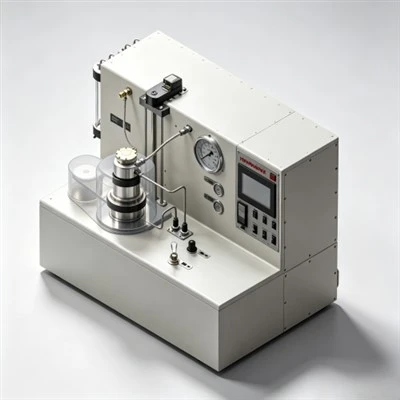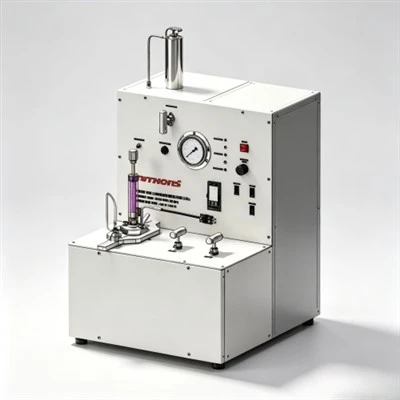

High-temperature cement dispersant compatibility is critical for preventing slurry flash setting and fluid loss failure because chemical dispersants and synthetic fluid loss control polymers compete directly for the same electropositive adsorption sites across hydrating clinker surfaces, where competitive desorption or excessive ionic charge displacement destroys the protective polymeric hydration barrier. In extreme high-temperature and high-pressure deep wells-such as deep carbonate and sour gas plays across the Tarim Basin in Northwest China, where circulating temperatures reach 150°C and formation pressures demand high-density slurries-incompatible dispersant chemistries strip fluid loss additives from mineral grain boundaries, causing instantaneous filtrate escape, severe particle agglomeration, and premature slurry flash setting inside casing strings. Utilizing an engineered powdered additive such as CF410S provides verifiable high-temperature cement dispersant compatibility by harmonizing electrostatic zeta-potential repulsion with steric hindrance, ensuring that fluid loss additives remain anchored while slurry plastic viscosity is reduced to safe hydraulic operating margins.
Managing complex downhole rheology in deep-well cementing requires simultaneous control over particle deflocculation and interstitial water containment. When designing weighted slurry columns that must remain pumpable under elevated thermal gradients, cementing engineers frequently increase chemical dispersant concentrations to suppress equivalent circulating density (ECD) and avoid fracturing narrow-margin formations. However, without validated high-temperature cement dispersant compatibility, introducing aggressive deflocculating agents destabilizes synthetic terpolymers, triggering rapid fluid loss spikes, slurry dehydration, and abrupt bridging. Achieving a balanced formulation ensures that deflocculation does not compromise filtration control, allowing fluid slurries to be displaced safely to total depth while maintaining rapid transition kinetics upon placement.
Explore advanced high-temperature powdered dispersants and fluid loss solutions engineered for deep-well slurry stability:
Competitive Adsorption Mechanisms Between Dispersants and Fluid Loss Polymers
In an unhydrated Portland cement suspension, anhydrous clinker minerals-primarily tricalcium silicate (C₃S), dicalcium silicate (C₂S), tricalcium aluminate (C₃A), and tetracalcium aluminoferrite (C₄AF)-develop heterogeneous surface charge distributions upon contact with mix water. The early hydration of C₃A generates positively charged ettringite and calcium aluminate crystal faces, which serve as primary docking targets for anionic chemical admixtures. Both synthetic fluid loss control polymers (such as AMPS-based copolymers) and high-temperature dispersants rely on anionic ligands to adsorb onto these positive sites.
When high-temperature cement dispersant compatibility is compromised, destructive competitive dynamics occur at the solid-liquid interface:
- Competitive Desorption and Site Exclusion: Small, highly charged dispersant molecules exhibit high diffusion rates compared to long-chain fluid loss polymers. If an incompatible dispersant possesses excessive charge density, it saturates available C₃A and ettringite adsorption sites, excluding the high-molecular-weight fluid loss polymer from the grain boundary and degrading high-temperature cement dispersant compatibility.
- Collapse of the Polymer Micro-Gel Filter Cake: Fluid loss additives control filtration by forming a hydrated, compressible micro-gel meshwork across formation pore throats. When an aggressive dispersant strips these polymers from mineral surfaces, the filter cake disintegrates, causing dynamic API fluid loss to spike from under 40 mL/30 min to catastrophic levels exceeding 250 mL/30 min.
- Slurry Dehydration and Premature Flash Setting: Rapid water evacuation into porous formation rock rapidly increases slurry solid volume fraction. As free water is lost, unadsorbed clinker grains collide and interlock, triggering sudden slurry flash setting and catastrophic casing lock-up.
- Destabilization of Retarder Kinetics: Because high-temperature retarders also compete for clinker coordination sites, an imbalance in high-temperature cement dispersant compatibility alters retarder uptake, resulting in either unpredicted runaway setting or severe over-retardation.
Resolving these competitive surface interactions requires maintaining strict high-temperature cement dispersant compatibility, ensuring that deflocculating agents lower plastic viscosity without displacing the protective polymer barrier required for filtration containment.
Electrostatic Zeta-Potential Repulsion Versus Steric Hindrance Dynamics
The fundamental science behind high-temperature cement dispersant compatibility lies in balancing electrostatic and steric stabilization mechanisms. Conventional low-molecular-weight dispersants, such as unmodified polynaphthalene sulfonates (PNS) or calcium lignosulfonates, rely almost exclusively on electrostatic repulsion. They impart a negative zeta-potential to cement particulates, causing mutual repulsion between like charges.
However, under bottom-hole conditions exceeding 120°C, high concentrations of divalent calcium (Ca²⁺) and sulfate (SO₄²⁻) ions compress the electrical double layer, diminishing zeta-potential repulsion. To overcome this thermal thinning failure, field operators often over-dose standard dispersants, which inadvertently triggers fluid loss failure and destroys high-temperature cement dispersant compatibility.
In contrast, an advanced high-temperature cement dispersant powder such as CF410S provides true high-temperature cement dispersant compatibility through a tailored molecular architecture combining moderate sulfonate charge density with thermally stable non-ionic side chains. This dual functionality provides:
- Controlled Electrostatic Deflocculation: The sulfonated segments of CF410S supply calibrated electrostatic repulsion, breaking up particulate agglomerations and lowering slurry yield point without oversaturating mineral crystallites or dislodging fluid loss additives.
- Resilient Steric Stabilization: Extended polymer side chains project into the interstitial pore solution, creating physical steric barriers that prevent mineral grain re-agglomeration even when high downhole ionic strength compresses electrical double layers.
- Preservation of Fluid Loss Micro-Networks: Because CF410S exhibits controlled adsorption affinity, it coexists harmoniously with AMPS-based fluid loss additives (such as CG811), allowing both polymers to maintain optimal surface coverage without mutual interference.
| Slurry Behavior & Rheological Metric | Incompatible Dispersant System (PNS Over-Dosed) | CF410S Compatible Dispersant System |
|---|---|---|
| High-Temperature Cement Dispersant Compatibility | Poor (Adsorption site competition) | Verified Excellent (Coordinated adsorption) |
| HPHT Fluid Loss (150°C, 6.89 MPa Differential) | > 180 – 320 mL (Polymer desorption) | ≤ 35 – 45 mL (Stable filter cake) |
| Slurry Plastic Viscosity (PV) Reduction | Erratic / Severe early thinning then flash thickening | Stable 35% – 50% viscosity reduction |
| Free Fluid Separation (API Spec 10A) | > 3.5% (Severe water breakout) | ≤ 1.0% (Zero settling channeling) |
| Risk of Slurry Flash Setting Downhole | Extremely High (Filtration dehydration) | Negligible (Stable pumping plateau) |
Synergistic Integration with High-Density Fluid Loss Formulations
In weighted cementing slurries designed for high-pressure reservoirs, the volume of solid particulates-including API Class G cement, silica flour, and dense weighting minerals like barite or hematite-often exceeds 45% of total slurry volume. In such dense suspensions, achieving high-temperature cement dispersant compatibility is critical to maintaining adequate particle spacing without inducing barite sag or free water channeling.
When cementing engineers select CF410S high-temperature cement dispersant powder, the optimized copolymer structure preserves high-temperature cement dispersant compatibility across all mixing stages. The dispersant does not interfere with the hydration film generated by AMPS fluid loss polymers, ensuring that dynamic API filtration remains strictly below 50 mL/30 min. Slurry qualification testing conforming to standards published by the American Petroleum Institute (API) under API RP 10B-2 confirms that verified high-temperature cement dispersant compatibility prevents localized particle flocculation, restricts consistency step jumps to under 10 Bc, and preserves uniform fluid rheology under continuous high shear.
Case Application: Tarim Basin, Northwest China

Regional Cementing Background in the Tarim Basin
The Tarim Basin in western China contains some of the world's deepest and most hostile onshore carbonate and sandstone reservoirs. Exploration and production wells frequently penetrate ultra-deep strata between 6,800 and 8,000 meters TVD, encountering bottom-hole circulating temperatures reaching 145°C to 155°C (BHST exceeding 175°C) and formation pore pressures demanding heavy mud weights. Deep production liners routinely traverse intervals with narrow margins between pore pressure and fracture pressure gradients, requiring high-density cement slurries formulated at 2.15 to 2.25 SG (17.9 to 18.8 ppg) to maintain borehole stability. Under these extreme conditions, high-temperature cement dispersant compatibility is vital to executing successful casing cementing.
Regional Cementing Challenges in Deep High-Pressure Intervals
Executing primary liner cementing across deep Tarim carbonate plays introduces severe operational hazards:
- Narrow Drilling Hydraulic Margins: The narrow window between reservoir pressure and fracture breakdown permits minimal friction tolerance. Slurries must maintain exceptionally low plastic viscosity to avoid exceeding fracture pressure during displacement.
- Severe Chemical Adsorption Incompatibility: Previous offset wells utilizing legacy naphthalene dispersants suffered from inadequate high-temperature cement dispersant compatibility. The dispersant stripped fluid loss polymers from cement grain surfaces, causing HPHT fluid loss to surge past 160 mL/30 min.
- Premature Slurry Dehydration and Flash Setting: Rapid dynamic water loss into micro-fractured carbonate pay zones caused severe annular bridging, triggering pump pressure spikes and risking drill string lock-up during liner placement.
Technical Requirements for Deep High-Density Slurry Formulations
To address these demanding conditions, regional operators established strict engineering specifications:
- Demonstrated high-temperature cement dispersant compatibility, reducing 300 RPM rheology readings by at least 40% without compromising fluid loss control.
- API HPHT fluid loss strictly held below 45 mL/30 min at 150°C and 6.89 MPa differential pressure.
- Slurry thickening time controlled between 260 and 320 minutes at 150°C BHCT, with consistency step jumps restricted to ΔBc ≤ 10 Bc.
- Free fluid separation held below 1.0% to prevent high-side channeling, with 24-hour compressive strength exceeding 14.0 MPa at 150°C.
How CF410S Addresses the Challenge
CF410S High-Temperature Dispersant Powder is engineered specifically to ensure exceptional high-temperature cement dispersant compatibility in severe deep-well environments. Formulated as a high-purity dry powder that dissolves rapidly during dry blending or water batching, CF410S provides thermal stability up to 150°C BHCT. Its molecular configuration provides controlled deflocculation via balanced electrostatic and steric forces, lowering plastic viscosity without desorbing AMPS fluid loss polymers or altering retarder hydration kinetics.
Regional Application Case
In an ultra-deep production liner operation in the Tarim Basin, a 177.8 mm (7-inch) casing liner was cemented inside a 215.9 mm (8-1/2 inch) hole across an interval from 5,600 meters to 7,150 meters TVD (total liner length 1,550 meters). Bottom-hole circulating temperature was measured at 148°C (BHST 172°C), with a formation pore pressure gradient of 2.12 SG. The tail slurry was formulated at a high density of 2.20 SG (18.3 ppg) utilizing API Class G high sulfate resistant cement, 35% silica flour, micronized barite, and anti-gas migration additives.
By dosing CF410S high-temperature cement dispersant powder at 1.2% BWOC alongside compatible AMPS fluid loss additives and polymer retarders, the cementing engineering crew recorded superior laboratory and operational results:
- Verified Chemical Compatibility: CF410S achieved full high-temperature cement dispersant compatibility, reducing slurry plastic viscosity from 92 mPa·s to 48 mPa·s while holding HPHT fluid loss stable at 34 mL/30 min at 148°C.
- Elimination of Flash Setting: Consistometer testing confirmed a steady thickening profile lasting 295 minutes at 148°C and 92 MPa, with consistency remaining below 26 Bc throughout displacement and showing zero premature viscosity spikes.
- Hydraulic ECD Control: The significant reduction in plastic viscosity lowered circulating friction pressures, allowing the slurry to be pumped at 1.1 m³/min without exceeding formation fracture thresholds.
- Compressive Strength Development: Autoclave-cured cubes at 148°C and 20.7 MPa achieved a 24-hour compressive strength of 17.8 MPa, with zero free fluid recorded in inclined test cylinders.
- Field Outcome: The production liner was displaced smoothly to depth with 100% full mud returns. Subsequent acoustic variable density logging (VDL/SBL) confirmed continuous 360-degree bonding across all gas-bearing carbonate pay zones, verifying complete zonal isolation.
Laboratory Diagnostic Protocols for Dispersant Compatibility Verification
Confirming genuine high-temperature cement dispersant compatibility prior to field mixing requires rigorous multi-stage laboratory evaluation adhering strictly to API RP 10B-2 testing methodologies:
1. Cross-Additive Fluid Loss Sensitivity Screening: Slurries formulated with the target fluid loss additive must be tested across a range of dispersant dosages (e.g., 0.5%, 1.0%, 1.5%, and 2.0% BWOC) in an HPHT filter press at simulated BHCT. If fluid loss increases sharply with higher dispersant loading, the system lacks high-temperature cement dispersant compatibility and will suffer competitive desorption downhole.
2. Dynamic Viscometry and Gel Structure Evaluation: Using a high-temperature rotational viscometer (e.g., Fann 77 or Grace M7500), rheological readings must be logged at 3, 6, 100, 200, and 300 RPM across simulated heating ramps. Maintaining high-temperature cement dispersant compatibility ensures that 3-RPM readings remain between 4 and 10 lbf/100 sq ft, confirming adequate solids suspension without excessive low-shear gelation.
3. Pressurized Consistometer Mutation Logging: The cement slurry must be conditioned under simulated bottom-hole circulating temperature and pressure schedules. Consistometer charts must be reviewed to verify that the slurry exhibits a flat pumping plateau (≤ 30 Bc) without sudden consistency jumps (ΔBc > 10 Bc) that indicate thermal degradation or additive antagonism.
Frequently Asked Questions (FAQ)
Why does high-temperature cement dispersant compatibility impact fluid loss control?
Chemical dispersants and polymeric fluid loss additives compete for the same positively charged adsorption sites on hydrating clinker minerals. Incompatible dispersants desorb or displace fluid loss polymers, causing immediate filter cake destruction and fluid loss failure.
How does CF410S prevent slurry flash setting in high-temperature wells?
CF410S provides coordinated deflocculation via steric and electrostatic forces, preventing rapid fluid loss and avoiding particle agglomeration. By maintaining water within the slurry matrix, CF410S prevents rapid slurry dehydration and flash setting during pumping.
What is the operational temperature limit for CF410S dispersant powder?
CF410S High-Temperature Dispersant Powder is engineered for circulating temperatures up to 150°C (302°F) BHCT. It maintains thermal stability, dispersant efficiency, and additive compatibility throughout this operational window.
Can excessive dispersant dosage cause slurry sedimentation and free water separation?
Yes. Over-dispersing a cement slurry neutralizes inter-particle friction completely, leading to severe solid settling (barite sag) and free water breakout. Balanced high-temperature cement dispersant compatibility ensures effective friction reduction while preserving structural suspension.
Mastering Slurry Rheology and Filtration Stability Under Downhole Thermal Stress
Achieving reliable zonal isolation across challenging deep-well environments requires moving beyond isolated additive selection. Pumping high-density cement slurries through narrow annular clearances under intense thermal conditions requires an integrated chemical approach where rheology modifiers and filtration control polymers function in complete harmony.
By implementing CF410S high-temperature dispersant powder, cementing engineers establish verified high-temperature cement dispersant compatibility up to 150°C BHCT. With balanced electrostatic deflocculation, steric particle stabilization, and seamless synergy with synthetic fluid loss additives, CF410S provides the operational precision needed to lower circulating pressures, eliminate slurry flash setting, and secure permanent wellbore barrier integrity worldwide.
Optimize High-Temperature Dispersant Compatibility in Your Wells
Consult our technical cementing specialists to evaluate CF410S high-temperature dispersant powder, cross-additive compatibility testing, and customized slurry formulations for your deep drilling campaigns.
Explore CF410S Dispersant Specifications