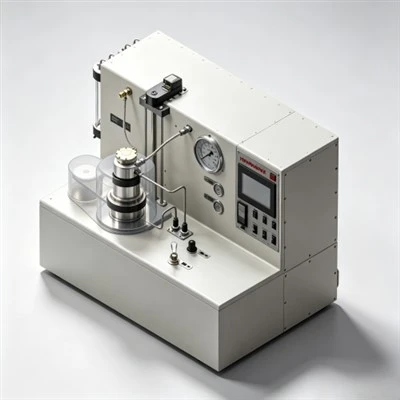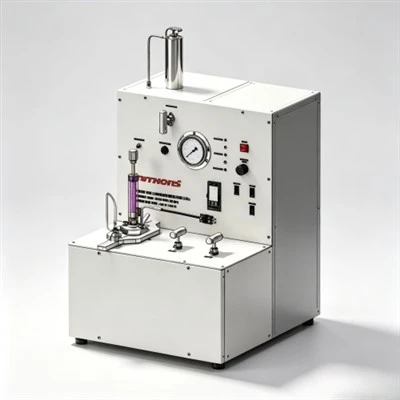

The most common cement testing problems encountered in oilfield laboratories include inconsistent thickening time measurements, erratic static fluid loss readings, acoustic signal attenuation in ultrasonic compressive strength evaluations, and non-uniform slurry shear blending. Resolving these common cement testing problems requires rigorous deadweight potentiometer calibration, routine autoclave seal maintenance, standardized sample conditioning in constant speed mixers, and automated temperature-pressure regulation compliant with API Spec 10A and API RP 10B-2 standards. In high-pressure high-temperature (HPHT) and deep offshore drilling sectors across the Middle East, the North Sea, and North America, systematically diagnosing these common cement testing problems prevents catastrophic wellbore flash setting, lost circulation, and sustained annular gas migration before thousands of sacks of slurry are pumped downhole.
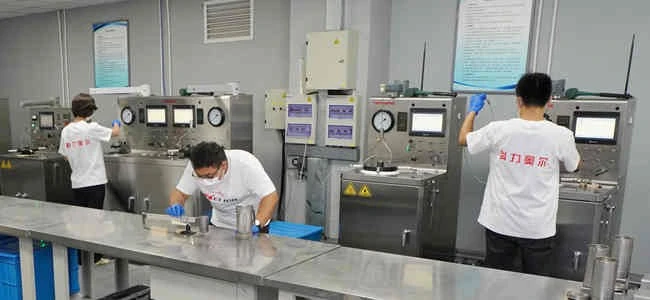
The Operational Impact of Laboratory Measurement Inaccuracies
In petroleum exploration and field development, wellbore cementing provides the permanent structural foundation and zonal containment barrier that prevents hydrocarbon fluids from escaping into adjacent geological formations or freshwater aquifers. Cement slurry qualification in the testing facility represents the first line of defense against downhole disaster. However, when diagnostic procedures face common cement testing problems, the accuracy of critical design parameters is compromised, exposing drilling operations to severe technical hazards.
The consequences of unaddressed laboratory errors are severe. If mechanical wear in a consistometer paddle causes an underestimation of slurry consistency, a cementing formulation may be pumped with inadequate retarder, triggering sudden downhole flash setting. This catastrophic event locks up casing strings, plugs drill pipe, and leads to expensive well abandonment. Conversely, when common cement testing problems cause false readings that lead engineers to over-retard slurries, the extended fluid state downhole causes hydrostatic pressure decay, permitting high-pressure formation gas to channel through the setting matrix.
Eliminating these operational hazards requires oilfield testing facilities to establish a deep technical understanding of common cement testing problems. By deploying robust analytical equipment, establishing preventive maintenance schedules, and enforcing API Spec 10A testing protocols, laboratory technicians can identify equipment drift early and guarantee reproducible results across every batch of field cement.
Detailed Diagnosis of Primary Cement Testing Failures and Root Causes
Comprehensive laboratory investigations reveal that common cement testing problems generally stem from four primary operational sources: mechanical component wear, sensor calibration drift, seal failure under thermodynamic stress, and operator variation during sample preparation.
1. Inconsistent Thickening Time Curves in HPHT Consistometers
Among the most disruptive common cement testing problems is unexplained variance in slurry thickening time measurements. Identical slurry batches often yield thickening discrepancies exceeding 45 to 60 minutes between consecutive runs. The root causes typically involve:
- Potentiometer Spring Hysteresis: Repeated thermal cycles cause metal fatigue in potentiometer resistance springs, resulting in non-linear torque conversion and erratic Bearden consistency (Bc) readings.
- Paddle Blade Erosion: High-density slurries containing abrasive silica flour or barite gradually erode paddle blade dimensions, altering shear geometry inside the slurry container.
- Thermal Gradient Lag: Mineral scale buildup inside the autoclave oil bath or degraded mineral oil impairs heat transfer, causing thermocouple readings to lag actual bottom-hole circulating temperatures (BHCT).
2. Erratic Fluid Loss Measurements and Cell Micro-Leakage
Filtration testing on static or stirred fluid loss cells frequently exhibits common cement testing problems characterized by sudden filtrate surges or complete test aborts. These irregularities are primarily caused by:
- Defective Filter Media: Utilizing non-certified 325-mesh screens with irregular wire weaving or micro-tears allows whole slurry particles to breach the filter, generating false filtrate volumes.
- Elastomer O-Ring Thermal Extrusion: Operating at differential pressures of 1,000 psi (6.89 MPa) and temperatures above 150°C degrades standard nitrile seals, causing micro-channel gas leaks past the cell cap.
- Inadequate Slurry Pre-Conditioning: Failing to pre-condition the cement slurry in an atmospheric consistometer at BHCT before loading the fluid loss cell alters initial polymer hydration states.
3. Ultrasonic Signal Attenuation and Compressive Strength Anomalies
In Ultrasonic Cement Analyzers (UCA), diagnostic issues represent highly technical common cement testing problems. Technicians frequently observe acoustic signal dropouts or false low-strength plateaus. These anomalies arise from:
- Acoustic Couplant Degradation: High operating temperatures can boil or dry out silicone couplant paste between the ultrasonic transducers and the autoclave cell body, interrupting pulse transmission.
- Entrained Air Micro-Bubbles: Insufficient slurry de-aeration allows microscopic air pockets to disperse through the specimen, scattering acoustic sound waves and creating artificial transit time delays.
- Algorithm Misalignment: Applying default transit-time-to-compressive-strength mathematical algorithms to specialized lightweight or foamed cement systems without empirical calibration curves.
4. Slurry Shear Blending Inconsistencies
Variations in slurry preparation represent pervasive common cement testing problems that undermine every downstream test. If mixing energy deviates from API Spec 10A guidelines (4,000 rpm for 15 seconds followed by 12,000 rpm for 35 seconds), cement grain agglomerations persist. Worn mixer blades with rounded edges fail to impart required mechanical shear, while manual speed adjustments introduce human timing errors that directly alter slurry rheology and hydration kinetics.
Systematic Solutions and Engineering Protocols to Eliminate Testing Errors
To systematically eliminate common cement testing problems, laboratory engineering managers must implement structured troubleshooting workflows, certified component replacements, and automated hardware upgrades:
Regional Application Case: Troubleshooting Deep Gas Well Slurry Failures in South Ghawar, Eastern Province, Saudi Arabia
Case Application: South Ghawar Field, Eastern Province, Saudi Arabia

Target Formation: Deep Permian Khuff HPHT Sour Gas Carbonates (High H₂S, CO₂ & Elevated Salinity)
Regional Cementing Background in Eastern Province Carbonate Formations
In the Eastern Province of Saudi Arabia, deep drilling operations in the South Ghawar concession target prolific sour natural gas reservoirs within the Permian Khuff carbonate formations. Total vertical depths (TVD) regularly exceed 4,800 to 5,200 meters (15,700 to 17,000 feet). Downhole conditions are exceptionally severe, with bottom-hole static temperatures reaching 165°C to 175°C (329°F to 347°F) and formation pressures surpassing 12,000 psi (82.7 MPa). The reservoir fluids contain high concentrations of corrosive H₂S (up to 18%) and CO₂ (up to 10%), requiring high-density, gas-tight Class G cement slurries evaluated under stringent laboratory conditions.
Regional Cementing Challenges and Laboratory Inconsistencies
During pre-job slurry qualification for a critical 7-inch production liner, the regional testing laboratory encountered persistent common cement testing problems:
- Unreproducible Thickening Schedules: Identical Class G cement slurries blended with synthetic polymer retarders yielded thickening times swinging unpredictably between 4 hours and 10 minutes and 5 hours and 45 minutes on older consistometers.
- Severe Temperature Inversion and Thermal Lag: Heating jackets displayed thermal overshoots up to 8°C above planned ramp schedules, artificially accelerating retarder decomposition.
- High Risk of Gas Channeling: Erratic fluid loss measurements between 40 mL and 110 mL/30 min made it impossible to certify whether the slurry would prevent sour gas migration during placement.
Technical Requirements for Laboratory Remediation
To qualify the heavy 1.95 g/cm³ (16.3 ppg) slurry for the deep liner, technical audits were mandated to resolve these common cement testing problems:
- Full calibration audit of consistometer potentiometers using deadweight calibration fixtures across the 0 to 100 Bc scale.
- Replacement of worn slurry cup paddles and thermal bath fluid to eliminate temperature ramp lag.
- Validation of a repeatable thickening time window of 5 hours and 30 minutes (±15 minutes) to 70 Bc under simulated wellbore circulating conditions.
How Standardized Testing Protocols and Modern Hardware Addressed the Challenge
The technical team resolved these common cement testing problems by deploying a modern NITHONS HPHT consistometer equipped with automated touchscreen PLC controls, cast-aluminum rapid cooling jackets, and intelligent software calibration. Replacing the worn potentiometer mechanism eliminated torque measurement drift, while the cast-aluminum heating jacket followed the exact API temperature ramp without thermal overshoot.
Subsequent testing confirmed a highly consistent thickening time of 5 hours and 32 minutes to 70 Bc across three consecutive trials, providing a reliable 120-minute safety cushion over planned displacement operations. Automated high-pressure fluid loss cells confirmed API filtration rates stabilized at 32 mL/30 min at 165°C. When pumped into the deep liner in South Ghawar, the cement slurry displaced smoothly without pressure anomalies. Post-job radial acoustic bond logs (CBL-VDL) demonstrated full 360-degree bonding and zero sustained annular pressure, proving that resolving common cement testing problems provides the empirical precision necessary to ensure well integrity in extreme HPHT plays.

NITHONS Engineering: Building Durable Solutions to Prevent Testing Failures
Since its founding in 2013 as a Sino-Japanese joint venture, NITHONS has focused on engineering testing instruments that systematically prevent common cement testing problems. Rather than relying on fragile analog components, NITHONS integrates industrial-grade digital micro-controllers, precision magnetic drives, and heavy-duty forged alloy pressure chambers into every system.
NITHONS consistometers feature automated software calibration that guides operators through multi-point deadweight verification, eliminating sensor drift. Slurry cups, paddles, and thermocouples are precision-machined to strict API Spec 10A dimensional tolerances and offer complete dimensional interchangeability with legacy Chandler and OFI equipment. By addressing mechanical wear, seal vulnerability, and temperature control lag at the engineering level, NITHONS provides testing facilities worldwide with dependable instruments that eliminate common cement testing problems, lower laboratory maintenance overhead, and enhance data integrity.
Comprehensive Quality Assurance and Preventive Maintenance Protocols
Establishing an API-compliant laboratory requires institutionalizing preventive maintenance workflows that intercept common cement testing problems before they corrupt operational datasets:
- Scheduled Deadweight Potentiometer Calibration: Verify potentiometer springs monthly using calibrated deadweight stands across 10 to 100 Bc increments to ensure linear electrical resistance conversion and eliminate hysteresis.
- Thermocouple Traceability Certification: Check temperature sensors monthly against secondary dry-block calibrators to ensure measurement deviations remain within ±1°C across simulated bottom-hole ranges.
- Mixer Blade Mass and Dimensional Audits: Inspect constant speed mixer impellers monthly using precision calipers and analytical balances; replace blades exhibiting more than 10% mass loss from abrasive slurry erosion.
- High-Pressure Seal and Rupture Disc Inspection: Replace autoclave O-rings and backup rings proactively every 25 high-pressure cycles, and inspect rupture discs before every deep HPHT test cycle to guarantee safety and pressure stability.
Frequently Asked Questions (FAQ) Regarding Cement Testing Troubleshooting
1. What is the most effective way to eliminate thickening time discrepancies between different operators?
The most effective method to resolve operator discrepancies-one of the most common cement testing problems-is deploying programmable constant speed mixers and automated HPHT consistometers. Standardizing automated mixing speeds and automated API temperature-pressure ramp schedules removes human timing variability entirely.
2. Why do fluid loss cells leak even after installing new O-rings?
Persistent micro-leakage in fluid loss cells usually stems from damaged sealing surfaces, overtightened cell caps that gall threads, or utilizing low-temperature elastomer seals in high-temperature tests. Ensure cell cap bevels are free of pitting and utilize high-temperature Viton or FFKM seals paired with anti-extrusion rings.
3. How does mineral oil degradation in an HPHT consistometer affect test accuracy?
Over multiple high-temperature cycles, mineral oil undergoes thermal oxidation, forming sludge and carbon deposits along electrical heating coils. This thermal barrier induces severe temperature lag, causing the slurry specimen to experience slower heating rates than indicated on the controller.
Strategic Recommendations for Upgrading Laboratory Diagnostic Capabilities
Eliminating common cement testing problems is an essential operational investment for oil and gas operators, drilling contractors, and chemical service companies. High-quality laboratory datasets are the prerequisite for flawless wellsite execution, protecting multi-million-dollar drilling assets from catastrophic downhole failures.
By establishing rigorous maintenance routines, training technicians in standardized API procedures, and modernizing testing facilities with precision digital instruments from NITHONS, oilfield laboratories can overcome common cement testing problems permanently. This disciplined approach ensures that every cement slurry formulation is validated with complete confidence, guaranteeing lifelong wellbore integrity and environmental protection across global energy frontiers.
Eliminate Testing Inconsistencies with NITHONS Precision Equipment
Our technical engineering specialists provide comprehensive laboratory audits, automated HPHT consistometer packages, API calibration fixtures, and interchangeable spare parts designed to resolve cement testing challenges.