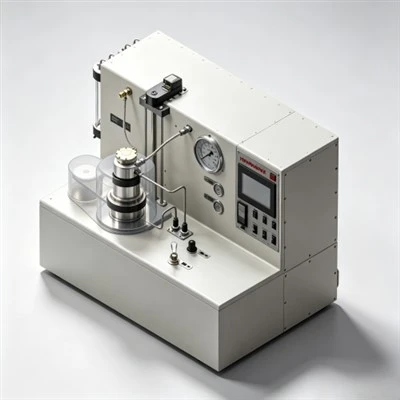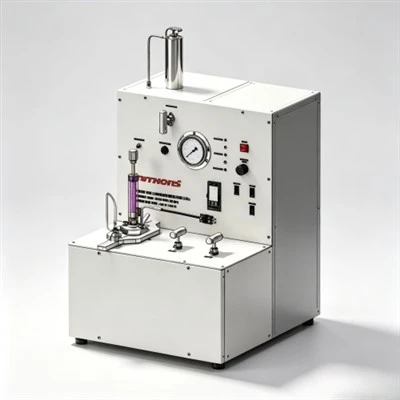

Understanding the essential equipment used in oil cementing testing labs is vital for petroleum testing engineers tasked with designing API-compliant slurry formulations for deep, high-pressure wells. Modern oilfield cement labs do not use standard civil concrete mixers; instead, the specialized equipment used in oil cementing testing labs must strictly adhere to API Specification 10A and API RP 10B-2 standards. This critical equipment used in oil cementing testing labs includes high-speed constant speed mixers, atmospheric and HPHT consistometers, high-pressure fluid loss cells, static gel strength testers, rotational viscometers, and non-destructive Ultrasonic Cement Analyzers (UCA). By utilizing calibrated equipment used in oil cementing testing labs, field operators can accurately predict slurry thickening time, rheology, fluid loss, and early compressive strength development under simulated bottomhole temperature and pressure conditions, preventing catastrophic casing job failures and gas channeling.
Examining each primary testing apparatus reveals how these instrument suites maintain strict quality control across field operations.
1. Primary Slurry Mixing and Conditioning Instruments
The foundational equipment used in oil cementing testing labs begins with precise slurry mixing and pre-test thermal conditioning apparatuses.
Key preparation instruments representing essential equipment used in oil cementing testing labs include:
- API Constant Speed Mixers: Engineered with microprocessor-controlled motors to mix slurries at exact mixing speeds (4,000 RPM for 15 seconds during dry cement introduction, followed by 12,000 RPM for 35 seconds) to ensure repeatable energy shear input.
- Atmospheric Consistometers: Used to condition slurries at surface temperatures (up to 93°C / 200°F) prior to fluid loss or rheology testing, ensuring uniform slurry consistency.
- High-Temperature HPHT Curing Chambers: Provide pressurized water baths up to 207 MPa (30,000 psi) and 260°C (500°F) to cure cement cube specimens under authentic reservoir conditions.
Related Technical Reading: Discover the full suite of specialized hardware in Essential Cement Testing Equipment for Every Oilfield Laboratory.
2. Categorization Matrix of Core Cementing Lab Equipment
A comprehensive overview detailing the essential equipment used in oil cementing testing labs and their respective engineering functions is provided below:
| Instrument Classification | Standard Lab Equipment Name | API Spec / Parameter Measured | Downhole Engineering Purpose |
|---|---|---|---|
| Thickening Time Tester | HPHT Consistometer | API RP 10B-2 / Bearden Units of Consistency (Bc) | Simulates HPHT pumping conditions to measure pumpability hours before flash setting. |
| Filtration Control Tester | HTHP Fluid Loss Cell | API RP 10B-2 / Filtrate Volume (mL/30 min at 1,000 psi) | Evaluates slurry water loss to porous formations, preventing slurry dehydration. |
| Strength Development Tester | Ultrasonic Cement Analyzer (UCA) | API RP 10B-2 / Real-time Continuous Compressive Strength | Measures non-destructive strength gain to determine Wait-on-Cement (WOC) time. |
| Static Gelation Tester | Static Gel Strength Tester (SGST) | API Spec 10B-6 / Gel Transition Window (100–500 lbf/100 ft²) | Quantifies static gel build-up to evaluate anti-gas channeling performance. |
| Rheological Analyzer | Rotational Fann 35 / HPHT Viscometer | API RP 10B-2 / Yield Point (YP) and Plastic Viscosity (PV) | Determines flow behavior for friction pressure drop and mud displacement modeling. |
Deploying this standardized equipment used in oil cementing testing labs ensures strict compliance with international petroleum engineering protocols.
Related Technical Reading: Learn step-by-step calibration methods for consistometers in How to Calibrate an HTHP Consistometer for Accurate Thickening Time Results.
3. High-Pressure Filtration, Strength, and Rheology Instruments
To prevent downhole mud contamination and slurry bridging, sophisticated equipment used in oil cementing testing labs must accurately measure physical dynamic changes.
Core evaluation systems representing key equipment used in oil cementing testing labs include:
- HTHP Fluid Loss Test Cells: Double-ended heating jackets operating with nitrogen differential pressure (1,000 psi / 6.9 MPa) across 325-mesh screens to simulate filtration against permeable sandstones.
- Rotational Viscometers (Fann 35 Style): Multi-speed coaxial cylinder viscometers measuring shear stress across standardized RPM settings (600, 300, 200, 100, 6, 3 RPM).
- Mechanical Crushers & Digital Load Presses: Hydraulic crushing machines designed to break cured 2-inch cement cubes according to API compressive strength testing standards.
- Gas Migration Analyzers: Advanced pressurized test cells measuring gas flow permeability through setting slurry columns during static transition.
Related Technical Reading: Explore operational workflows and consistency curves in Cement Consistometer: A Complete Guide to Thickening Time Testing in Cementing Laboratories.
Regional Application Case: South Sumatra Basin Deep Gas Project, Indonesia
Case Application: High-CO2 Deep Gas Well Cementing, South Sumatra Basin, Indonesia

Regional Cementing Background in South Sumatra Basin
Deep gas development in the South Sumatra Basin involves drilling through high-temperature Baturaja limestone formations (bottomhole temperatures up to 165°C / 330°F) containing significant CO2 gas concentrations. Casing cementing operations require exact slurry performance verification to avoid early gas influx or slurry retardation.
Regional Operational Challenges with Testing Reliability
Early operations encountered severe slurry placement issues due to uncalibrated testing equipment. Discrepancies between field mixing and lab consistency readings resulted in premature slurry setting, stuck drillpipe, and incomplete displacement of heavy synthetic-based drilling muds.
Technical Requirements for Laboratory Setup Upgrade
Operators mandated a full modernization of all equipment used in oil cementing testing labs serving the Sumatra operational hub:
- Installation of dual-cell HPHT Consistometers capable of continuous 200°C testing.
- Integration of real-time UCA ultrasonic strength analyzers to optimize WOC drill-out timing.
- Automated HTHP fluid loss cells with digital temperature regulation within ±1°C.
How Standardized Lab Equipment Solved Field Failures
Using newly calibrated equipment used in oil cementing testing labs, lab technicians identified that previous test mixers were under-shearing retarder-laden slurries. Correcting mixing speeds with API Constant Speed Mixers provided true thickening time plots (4.5 hours pumpability window), while UCA data proved 500 psi compressive strength was reached in just 12 hours.
Regional Application Case Results
Upgrading the full suite of equipment used in oil cementing testing labs yielded major performance milestones across 8 deep gas wells:
- 100% successful casing cementing execution with zero premature setting incidents.
- Reduced WOC downtime by 18 hours per well casing string using UCA continuous strength logging.
- Achieved 95%+ high-quality zonal bonding logs (CBL) across high-pressure gas zones.
4. Laboratory Maintenance and QA/QC Calibration Protocols
Maintaining high accuracy across all equipment used in oil cementing testing labs requires structured routine calibration schedules.
Essential calibration best practices for managing equipment used in oil cementing testing labs include:
- Consistometer Potentiometer Calibration: Calibrate Bearden units (Bc) monthly using certified calibration oil resistor standards.
- Thermocouple and Heater Validation: Verify internal temperature probes against NIST-certified digital reference thermometers quarterly.
- High-Pressure Seal Inspections: Inspect HPHT cell O-rings, rupture discs, and thread caps before every high-pressure run to prevent steam or oil leaks.
- Viscometer Spring Calibration: Perform spring torque checks on rotational viscometers using standard Newtonian fluids to ensure accurate shear readings.
Frequently Asked Questions (FAQ)
What is the main difference between an atmospheric consistometer and an HPHT consistometer?
Atmospheric consistometers operate at surface atmospheric pressure up to 93°C (200°F) for pre-conditioning, whereas HPHT consistometers feature high-pressure vessels (up to 30,000 psi and 260°C) to simulate bottomhole wellbore conditions during pumping.
Why can't standard concrete testing equipment be used for oilwell cement?
Oilwell cement slurries operate downhole under extreme temperatures, pressures, and narrow annular gaps. Standard concrete equipment lacks HPHT simulation capabilities, shear speed control, and micro-torque resolution specified under API RP 10B-2.
What is an Ultrasonic Cement Analyzer (UCA) used for in a cement lab?
An UCA continuously measures the velocity of ultrasonic sound waves passing through a setting cement sample under HPHT conditions, converting acoustic velocity into real-time compressive strength without destroying the sample.
How often should API constant speed mixers be calibrated?
Mixer rotational speed (RPM) should be checked monthly using an optical tachometer to guarantee compliance with API RPM parameters (4,000 ± 200 RPM and 12,000 ± 500 RPM).
Building an API-Compliant Oilfield Cementing Laboratory
Investing in reliable, high-precision equipment used in oil cementing testing labs is essential for ensuring zonal isolation, slurry stability, and operational safety in complex oil and gas wells. By adhering to API Spec 10A standards and maintaining strict QA/QC calibration routines, field laboratories deliver precise testing data that protects multi-million dollar well assets.
Equip Your Laboratory with API-Certified Cementing Instruments
We manufacture a complete line of API-compliant oilwell cement testing equipment, including HPHT consistometers, fluid loss cells, UCAs, and constant speed mixers.
Explore Our Testing Equipment PortfolioOptimizing Field Operations with Standardized Testing and Engineering Support
Achieving long-term zonal isolation and maintaining wellbore structural integrity requires a rigorous, data-driven understanding of both chemical additive performance and downhole physical simulation. As global drilling operations push deeper into high-pressure, high-temperature (HPHT) zones, ultra-deepwater plays, and unconventional tight gas formations, standard cement formulations can no longer guarantee success without precise optimization. Whether evaluating slurry thickening time profiles, controlling precise fluid loss, or monitoring early compressive strength build-up, petroleum engineers must rigorously align laboratory protocols with the latest API RP 10B-2 and ISO 10426 industry standards.
Standardized laboratory testing equipment plays a crucial role in bridging the gap between benchtop experiments and actual rig site execution. Utilizing automated consistometers, high-pressure filtration cells, and non-destructive ultrasonic cement analyzers (UCA) provides real-time, repeatable data that directly influences field pumping schedules. Integrating advanced chemical additives-such as thermally stable polymers, organic retarders, and targeted dispersants-with high-precision laboratory verification minimizes operational hazards, eliminates fluid migration risks, and prevents costly casing failures or sustained casing pressure (SCP).
Ultimately, holistic slurry design and strict quality assurance protocols significantly shorten wait-on-cement (WOC) time, allowing operators to transition safely to subsequent drilling or hydraulic fracturing stages. By combining state-of-the-art laboratory testing equipment with customized additive packages, oilfield service companies can maximize operational safety, reduce non-productive time (NPT), and optimize the overall economic performance of oil and gas assets throughout their operational lifecycle.
Need Customized Cementing Equipment or Chemical Testing Solutions?
Our technical engineering team provides high-precision laboratory testing instruments and tailored slurry additive formulations to meet your demanding field requirements worldwide. Contact our specialists today to enhance your cementing performance and wellbore stability.
Contact Our Technical Experts