
Copy HTML Content
Introduction - Fluid Loss Additive
In oil and gas well cementing operations, fluid loss additives play a vital role in controlling the filtration rate of cement slurries. Their primary purpose is to prevent excessive water loss into permeable formations during cement placement, which could otherwise cause premature dehydration, high annular viscosity, poor bonding, or catastrophic well integrity issues. A high-performance fluid loss additive ensures optimal slurry rheology, reliable zonal isolation, and improved long-term well stability across diverse geothermal gradients.

Filtration Mechanics: Static vs. Dynamic Fluid Loss in Well Cementing
During primary and remedial cementing operations, cement slurries undergo filtration under two distinct downhole regimes: static filtration and dynamic filtration. Static filtration occurs when the slurry is stationary in the wellbore annulus after pumping has ceased, such as during the initial static gel strength development phase or wait-on-cement (WOC) period. Dynamic filtration takes place while the slurry is actively pumped down the casing string and displaced upwards through the narrow annular space under turbulent or laminar flow conditions.
Without effective filtration control agents, the aqueous phase (mix water containing dissolved ions) rapidly bleeds off into permeable reservoir rocks, limestone matrices, or micro-fractured sandstones. This localized dehydration leads to a series of severe downhole engineering complications:
- Rapid Slurry Dehydration & Viscosity Spikes: Loss of carrier fluid sharply increases the solid-to-liquid ratio of the slurry, causing premature slurry thickening, excessive frictional pressure losses, and potential bridge formation that chokes off displacement before target casing depth is reached.
- Formational Damage & Skin Effect: Uncontrolled filtrate entry into gas or oil-bearing zones can induce clay swelling, mineral precipitation, and formation skin damage, permanently impairing reservoir productivity.
- Annular Gas Channeling: As mix water leaves the cement matrix under static conditions, hydrostatic pressure transmission drops rapidly below formation pore pressure. High-pressure gas or formation fluids can then break through the hydrating cement sheath, forming micro-annuli and destroying zonal isolation.
Differences Between Different Types of Fluid Loss Reducers
There are three main categories of cementing fluid loss additives commonly used in the oilfield industry: AMPS polymer additives, PVA (polyvinyl alcohol) additives, and cellulose additives. Each chemical family possesses distinct molecular architectures, temperature thresholds, salt tolerance ranges, and impacts on slurry rheology.
| Category | AMPS Polymer Fluid Loss Additives | PVA (Polyvinyl Alcohol) Fluid Loss Additives | Cellulose Fluid Loss Additives |
|---|---|---|---|
| Salt Resistance | Suitable for fresh water to saturated brine | Almost no salt resistance | Resistant to low-concentration brine |
| Temperature Resistance | ≤180°C, excellent thermal stability | ≤95°C, poor thermal stability | ≤120°C, moderate thermal stability |
| Compatibility | Works well with various cements, water qualities, and other additives | Sensitive to water quality, strict requirements, needs careful matching with other additives | 1. CMC causes slurry thickening and severe retardation, now rarely used. 2. HEC has moderate compatibility, limited usage. 3. CMHEC is more common abroad, but rarely produced domestically. |
| Rheology | Has inherent dispersibility, usually no extra dispersant needed | Increases slurry viscosity, must use additional dispersant | High viscosity due to modified cellulose, requires additional dispersant |
| Foaming Tendency | Slight foaming | Prone to heavy foaming, reduced slurry density, requires large amounts of defoamer | Excessive foaming, difficult to defoam, affects slurry density |
| Effect on Strength | Minimal impact on strength development | Reduces strength slightly | Delays strength development |
In-Depth Chemical Analysis of Fluid Loss Additive Families
1. Synthetic Polymer Additives (AMPS-Based Copolymers)
Acrylamido-2-methylpropane sulfonic acid (AMPS) based synthetic copolymers represent the highest technological standard in modern filtration control. The chemical structure of AMPS incorporates a bulky, strongly anionic sulfonic acid group and an amide functionality onto a resilient acrylic backbone.
- Thermal Degradation Resistance: The sterically hindered sulfonic acid side chains protect the polymer backbone against thermal cleavage, maintaining functional integrity at bottom-hole static temperatures (BHST) reaching 180°C or higher.
- Electrolyte & Brine Tolerance: The sulfonic group remains fully ionized even in high-ionic-strength solutions, providing unmatched resistance to mono-valent (NaCl, KCl) and divalent (Ca2+, Mg2+) brines.
- Rheological Dispersibility: AMPS copolymers exhibit strong electro-steric repulsion properties, acting as mild dispersants. They reduce plastic viscosity and yield point without requiring excessive chemical dispersants.
2. Polyvinyl Alcohol (PVA) Additives
PVA additives are synthetic polymers produced via partial or complete hydrolysis of polyvinyl acetate. PVA operates primarily through physical film-forming mechanisms and particle aggregation at low temperatures.
- Limitations in Thermal Environments: PVA polymer chains rapidly hydrolyze and degrade when exposed to temperatures above 95°C, causing sudden loss of filtration control and severe slurry viscosity spikes.
- Sensitivity to Salinity & Crosslinking: PVA is highly sensitive to dissolved salts (such as NaCl or CaCl2) and alkaline metal ions present in mixing water, which cause premature polymer precipitation or phase separation.
- Heavy Foaming Tendency: PVA solutions possess high surface activity, leading to persistent surface foam during batch mixing. High dosages of silicone-based or polyether-based defoamers are mandatory to preserve target slurry mixing density.
3. Cellulose-Based Derivatives (CMC, HEC, CMHEC)
Cellulose derivatives are semi-synthetic polymers modified from natural cotton or wood cellulose. Common types include Carboxymethyl Cellulose (CMC), Hydroxyethyl Cellulose (HEC), and Carboxymethyl Hydroxyethyl Cellulose (CMHEC).
- CMC (Carboxymethyl Cellulose): Highly prone to thermal degradation above 100°C and causes extreme slurry retardation and viscosity build-up. As a result, standard CMC is largely obsolete in modern deep-well cementing.
- HEC (Hydroxyethyl Cellulose): Non-ionic cellulose derivative offering moderate salt tolerance, but prone to high plastic viscosity. It delays cement hydration and compressive strength development under moderate bottom-hole temperatures.
- CMHEC: Combines anionic and non-ionic groups to improve salt resistance and thermal stability up to 120°C. However, high manufacturing costs and complex synthetic routes limit its widespread domestic availability.
Comprehensive Comparative Performance Matrix
To assist cementing engineers and fluid designers in matching additive selection with downhole well parameters, the operational characteristics of these three chemical families are systematically evaluated across core engineering criteria:
1. Thermal Thresholds and High-Temperature Stability
Temperature stability is a primary constraint in High-Pressure, High-Temperature (HPHT) well construction. Polymer structures composed of natural cellulose links suffer rapid hydrolytic glycosidic cleavage above 120°C, causing complete breakdown of filtration control and severe retardation of compressive strength development. Similarly, PVA polymers undergo thermal chain cleavage and unravelling above 95°C. In contrast, AMPS synthetic copolymers utilize temperature-resistant C-C backbone bonds and thermally robust sulfonic acid ring structures that prevent thermal degradation up to 180°C, providing predictable filtration control across deep drilling targets.
2. Salt Tolerance and Dissolved Ion Compatibility
Brine-based slurry formulations are widely utilized to drill through salt beds, reactive shale zones, and offshore environments. When un-modified cellulose or PVA additives are exposed to high concentrations of sodium chloride (NaCl), potassium chloride (KCl), or calcium chloride (CaCl2), ionic shielding suppresses polymer hydration, causing polymer precipitation, slurry flocculation, and immediate filtration failure. AMPS copolymers maintain high ionic charge density and conformational stability even in saturated brine solutions and high divalent calcium environments, ensuring uniform filter cake formation on formation faces.
3. Rheological Behavior and Slurry Friction Pressures
Slurry pumpability is heavily dictated by plastic viscosity (PV) and yield point (YP). Cellulose derivatives significantly increase slurry plastic viscosity due to long-chain molecular entanglements, requiring heavy additions of chemical dispersants to prevent excessive friction pressure during high-rate displacement. PVA additives likewise induce moderate viscosity spikes. Conversely, synthetic AMPS copolymers demonstrate unique self-dispersing behavior, providing steric hindrance and electro-static repulsion between cement particles. This inherent dispersibility improves slurry flowability, optimizes hydraulic efficiency, and lowers Equivalent Circulating Density (ECD) risks in narrow pressure windows.
Representative Application Scenario: Fluid Loss Control in Deep Saturated Salt Formations
Note: The following scenario illustrates typical downhole engineering considerations and decision chains involved when designing slurry filtration control across high-salinity and elevated-temperature reservoirs.
Operating Conditions: A primary cementing operation requires running a 9-5/8 inch intermediate casing string through massive evaporite salt formations and highly permeable, high-salinity limestone pay zones. The target interval features measured depths exceeding 4,800 meters, bottom-hole static temperatures (BHST) reaching 150°C (302°F), and mixing water sourced from high-salinity brines containing high concentrations of dissolved NaCl and divalent calcium ions.
Engineering Challenge: Conventional PVA or cellulose-based fluid loss additives undergo immediate polymer coagulation and thermal degradation under combined heat and saturated salinity. Uncontrolled fluid loss would dehydrate the slurry within minutes, causing differential sticking of casing, unacceptably high circulation pressures, and severe gas migration behind the casing after displacement.
Formulation Strategy & Laboratory Evaluation:
- Chemical Selection: The engineering team formulates a salt-tolerant cement slurry utilizing an AMPS polymer fluid loss additive engineered for extreme brine conditions.
- Filtration Control Objective: The target API fluid loss is set to less than 50 mL/30 min under API HPHT test conditions (1,000 psi differential pressure and elevated temperature).
- Rheological & Stability Verification: Testing confirms smooth transition kinetics, zero free fluid separation, and an operational pumping time window without severe strength retardation or excessive viscosity spikes.
Expected Engineering Outcome: Achieving robust fluid loss control prevents annular dehydration, maintains hydrostatic pressure throughout slurry hydration, and ensures a durable, gas-tight cement bond across both the salt formation and permeable carbonate reservoirs.
Key Laboratory Evaluation Standards for Cement Fluid Loss Control
To ensure field reliability and prevent job failure, cement slurry formulations containing fluid loss reducers must be evaluated in accordance with standard API testing procedures prior to pumping. Key evaluation parameters include:
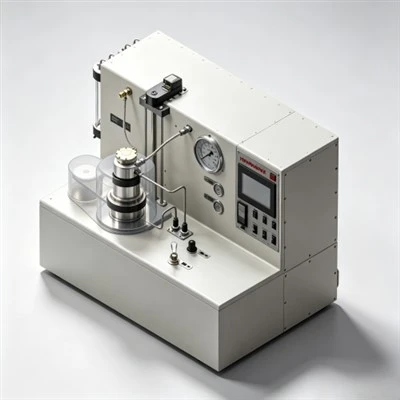
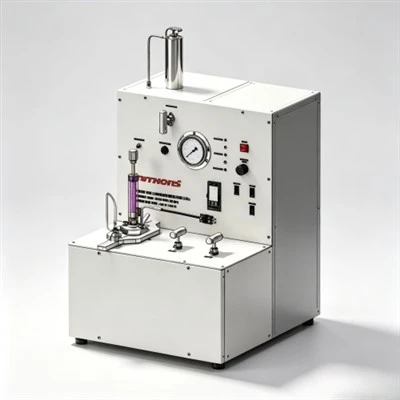
- API HPHT Fluid Loss Test (API Spec 10B-2): Measurement of filtrate volume collected through a 325-mesh screen under 1,000 psi differential pressure at simulated BHCT. Target values range from less than 30 mL/30 min for gas tight cementing to less than 100 mL/30 min for standard intermediate casing.
- Free Water & Sedimentation Testing: Evaluating static slurry stability in a graduated cylinder at well temperature to ensure zero free fluid separation and uniform slurry density from top to bottom.
- Thickening Time & Compressive Strength: Measuring consistometer response curves and Ultrasonic Cement Analyzer (UCA) strength growth curves to confirm that fluid loss additives do not induce unpredictable set retardation or compromise 24-hour compressive strength goals.
Conclusion & Selection Guidelines for Field Operators
From the comparison, it is clear that polymer-based fluid loss additives (especially AMPS copolymers) offer superior performance in terms of salt resistance, temperature stability, compatibility, and minimal negative impact on slurry properties. While PVA and cellulose-based additives may have niche applications, they often present operational limitations in modern oil well cementing projects.
Synthetic AMPS fluid loss control additives deliver non-retarding filtration control, superior thermal endurance up to 180°C, resistance to saturated brines, and excellent rheological dispersibility.
KELIOIL specializes in the production of
high-performance polymer-based fluid loss additives, delivering reliable solutions tailored to the demands of challenging well environments. With advanced formulation technology and strict quality control, KELIOIL's products help ensure safe, efficient, and effective cementing operations.