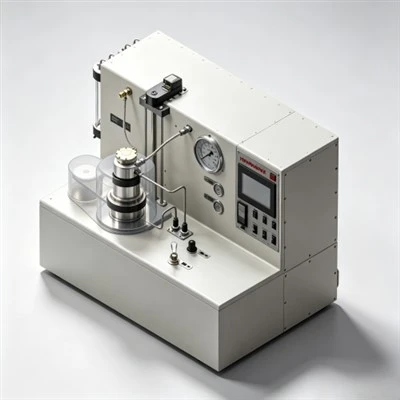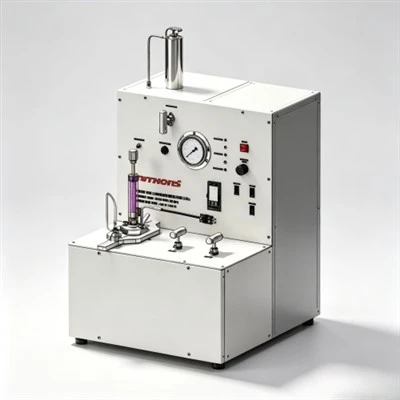

A dual-cell atmospheric consistometer improves testing efficiency and slurry conditioning repeatability in high-throughput cementing laboratories by integrating two independent, microprocessor-controlled slurry test cells within a single standardized footprint, doubling pre-job sample throughput while eliminating thermal gradient discrepancies between duplicate trials. In high-volume regional testing centers-such as major oilfield service base laboratories supporting intensive drilling across the Ghawar and Khurais fields in the Eastern Province of Saudi Arabia-technicians must condition dozens of slurry designs daily up to 93°C (200°F) in strict accordance with API Spec 10A and ISO 10426-1 standards prior to running fluid loss, rheology, and free fluid tests. Utilizing an engineered dual-cell atmospheric consistometer guarantees identical shear and thermal histories across parallel chambers, reducing turnaround times by 50%, eliminating inter-batch consistency errors (ΔBc ≤ 1.5 Bc), and providing dependable quality control for critical well construction campaigns.
Laboratory pre-conditioning of oil well cement slurry is not merely an auxiliary mixing step; it represents the primary physical baseline determining downstream rheological and filtration measurement accuracy. Freshly mixed Portland cement slurries require a standardized dynamic thermal shearing period (typically 20 to 30 minutes at circulating temperature) to break false-set crystal structures and allow chemical admixtures to hydrate fully. If a central testing facility relies on single-cell equipment, the resulting testing bottlenecks force technicians to stagger test schedules or rush preparation cycles, compromising data integrity. Deploying a rugged dual-cell atmospheric consistometer resolves capacity constraints while guaranteeing uncompromised repeatability between twin slurry samples.
Explore advanced laboratory testing hardware and high-throughput slurry consistometry solutions:
The Critical Role of Atmospheric Slurry Conditioning Under API Spec 10A
In oil well cementing laboratory qualification workflows, testing an unconditioned cement slurry immediately after atmospheric blender mixing yields misleading data. During dry blending and water wetting, cement minerals such as tricalcium aluminate (C₃A) and tricalcium silicate (C₃S) release early hydration ions, producing initial thixotropic gel networks and false-set structures. Furthermore, synthetic polymeric admixtures-such as AMPS fluid loss additives and polymer retarders-require thermal energy and mechanical agitation to dissolve and form stable polymer hydration shells.
According to standards set by the American Petroleum Institute (API) in API Spec 10A and API RP 10B-2, slurries designed for wells with bottom-hole circulating temperatures (BHCT) below 93°C (200°F) must be conditioned in an atmospheric consistometer for a specified duration (typically 20 minutes) at test temperature before determining rheology, fluid loss, and free fluid. Skipping or improperly executing this conditioning protocol triggers severe testing anomalies:
- Distorted Fluid Loss Readings: Polymers that have not undergone thermal conditioning fail to build a uniform filter cake in HPHT fluid loss cells, resulting in artificially high filtration values.
- Erratic Rheological Profiles: Unsheared slurries exhibit falsely elevated yield points (YP) and plastic viscosities (PV) when transferred to rotational viscometers, misrepresenting true pumping friction.
- Free Water Discrepancies: Without uniform thermal stirring, free fluid measurements in 45° inclined cylinders show unrepresentative water breakout due to incomplete surfactant and polymer dispersion.
- Inter-Batch Inconsistency: Conditioning twin slurry samples sequentially on a single-cell unit introduces environmental time delays, altering hydration kinetics between comparative samples.
Implementing a high-precision dual-cell atmospheric consistometer guarantees that both slurry samples experience identical mechanical shear at 150 RPM and uniform heating profiles, providing reliable baselines for all subsequent testing.
Engineering Architecture of a Modern Dual-Cell Atmospheric Consistometer
Achieving reliable conditioning and consistency measurement requires precise mechanical and electrical integration. The NCCQ-2220 dual-cell atmospheric consistometer is engineered to meet the operational demands of high-volume industrial laboratories:
- Dual Independent Stainless Steel Water Baths: The dual-cell atmospheric consistometer features dual isolated heating chambers manufactured from corrosion-resistant 304/316 stainless steel. Each bath is equipped with dedicated electric heating elements and circulating impellers, ensuring zero thermal cross-talk between cells.
- Microprocessor-Controlled Digital PID Thermoregulation: Advanced digital PID controllers regulate bath temperatures up to 93°C (200°F) with a precision of ± 0.5°C. Programmable temperature ramp schedules ensure compliance with API pre-heating rates.
- Precision Drive Systems (150 ± 15 RPM): Heavy-duty synchronous drive motors rotate standard slurry containers at 150 RPM. Calibrated potentiometer mechanisms and standardized torsion springs measure torque exerted on stationary paddle assemblies, outputting consistency readings across the 0 to 100 Bc range.
- Real-Time Digital Data Acquisition: Integrated data logging systems display and record temperature and Bearden consistency curves continuously, enabling technicians to identify initial setting thresholds and thickening trends instantly.
| Laboratory Operational Metric | Conventional Single-Cell Consistometer | NCCQ-2220 Dual-Cell Atmospheric Consistometer |
|---|---|---|
| Sample Throughput Capacity | 1 Test / Cycle (Testing bottleneck) | 2 Independent Tests / Cycle (100% Increase) |
| Parallel Sample Conditioning Consistency (ΔBc) | ± 4.0 – 6.5 Bc (Sequential time lag) | ≤ ± 1.5 Bc (Simultaneous execution) |
| Temperature Control Stability | Analog / Basic PID (± 2.0°C) | Digital Microprocessor PID (± 0.5°C) |
| Bench Space Utilization | Requires 2 separate machines for dual testing | Compact single-cabinet dual configuration |
| API Spec 10A / ISO 10426 Compliance | Full compliance (Limited capacity) | Full compliance with dual logging channels |
Impact of Conditioning Precision on Downstream Chemical Evaluation
In oil well cementing research and field quality assurance, laboratory data reliability determines whether a job succeeds or fails downhole. When testing modern liquid polymer retarders or high-temperature fluid loss additives, inaccurate slurry conditioning in the laboratory distorts field performance predictions.
By utilizing a dual-cell atmospheric consistometer, laboratory teams can test baseline cement blends alongside additive-treated test slurries concurrently under identical shear and thermal exposure. This dual-testing capability isolates chemical performance variables from environmental fluctuations, ensuring that fluid loss, free fluid separation, and rheological parameters reflect true downhole behavior.
Case Application: Dammam Base Laboratory, Eastern Province, Saudi Arabia

Regional Laboratory Background in the Eastern Province
The Eastern Province of Saudi Arabia represents the world's most concentrated onshore and offshore drilling hub, supporting massive development across the Ghawar, Khurais, and Safaniya reservoirs. A premier oilfield service base laboratory in Dammam is tasked with qualifying all surface, intermediate, and production liner cement slurries for over 35 active drilling rigs. The laboratory processes upwards of 60 individual slurry formulations daily, requiring rigorous batch testing of Class G cements, lightweight silica blends, and heavy gas-migration slurry systems.
Operational Testing Challenges in High-Throughput Facilities
Managing high sample volume in a centralized regional cementing laboratory presents severe operational hurdles:
- Severe Equipment Bottlenecks: With single-cell consistometers, technicians spent 35 minutes per sample (including pre-heating, 20-minute conditioning, and cleaning), creating extensive delays in issuing approved cement blend sheets to field bulk plants.
- Parallel Testing Discrepancies: Duplicate slurry samples evaluated across two separate, older single-cell machines exhibited consistency differences (ΔBc) exceeding 5.0 Bc due to slight mechanical calibration differences and uneven bath heating.
- Laboratory Bench Space Constraints: Expanding laboratory capacity with individual single-cell units required excessive bench space, electrical wiring, and cooling water connections.
Technical Requirements for Modern Testing Hardware
To address these demanding workflow requirements, the laboratory technical director established strict equipment benchmarks:
- Dual-chamber independent operation meeting API Spec 10A and ISO 10426-1 conditioning specifications up to 93°C (200°F).
- High repeatability between chambers, holding parallel sample consistency variance (ΔBc) strictly below 2.0 Bc.
- Microprocessor PID temperature regulation within ± 0.5°C with real-time digital logging of consistency and temperature.
- Durable stainless steel construction capable of withstanding continuous 24/7 testing cycles without drive motor failure.
How the NCCQ-2220 Addresses the Challenge
The NCCQ-2220 Dual-Cell Atmospheric Consistometer was engineered specifically to solve high-throughput laboratory bottlenecks. By housing two independent, precision-machined slurry containers and drive assemblies in a compact single-chassis footprint, the NCCQ-2220 enables technicians to condition two distinct slurries or run simultaneous duplicate trials under identical thermal conditions. Its microprocessor-controlled PID system delivers precise heating up to 93°C, while calibrated potentiometer assemblies record digital consistency up to 100 Bc with high measurement accuracy.
Regional Application Case
The Dammam Base Laboratory commissioned four NCCQ-2220 dual-cell units to replace eight legacy single-cell consistometers. The equipment was deployed immediately to support an intensive intermediate casing cementing program in the Ghawar field, evaluating API Class G slurries weighted with hematite to 2.15 SG (18.0 ppg) and conditioned at 82°C (180°F).
Integrating the NCCQ-2220 dual-cell atmospheric consistometer delivered immediate workflow improvements:
- 100% Increase in Sample Throughput: Technicians processed 8 slurry samples per hour across four dual-cell units, reducing daily pre-conditioning time from 9 hours to under 4.5 hours.
- Exceptional Parallel Consistency: Parallel duplicate testing of 2.15 SG slurries in Cells A and B showed consistency readings of 18.2 Bc and 18.8 Bc (ΔBc = 0.6 Bc), well below the 2.0 Bc target, confirming unmatched mechanical alignment.
- Improved Downstream Data Accuracy: Slurries conditioned in the NCCQ-2220 exhibited high repeatability in downstream HPHT fluid loss testing, holding test variance within ± 2.5 mL across duplicate runs.
- Bench Space Savings: Replacing standalone machines reduced consistometer bench space requirements by 40%, allowing expansion of automated blenders and UCA units.
- Operational Impact: The turnaround time for issuing approved cement job formulations to field bulk plants was cut by 55%, eliminating rig standby delays and supporting zero-defect cementing operations across the drilling sector.
Standardized Calibration Protocols for Atmospheric Consistometers
Maintaining measurement integrity on a dual-cell atmospheric consistometer requires routine calibration adhering to API RP 10B-2 standards:
1. Monthly Potentiometer and Spring Calibration: Consistency measurement depends on calibrated torsion springs and potentiometers. Using certified dead-weight calibration devices, technicians must apply known torques (e.g., 20, 50, 80, and 100 g·cm) to the paddle shaft, verifying that digital Bearden consistency readings match theoretical values within ± 1.5 Bc.
2. Temperature Sensor Verification: Bath thermocouples must be calibrated monthly against a certified NIST-traceable reference thermometer across multiple temperature points (ambient, 50°C, 75°C, and 90°C). Any sensor discrepancy exceeding ± 0.5°C must be corrected via controller offset adjustments.
3. Drive Motor Speed Verification: Slurry container rotational velocity must be monitored using a digital optical tachometer, ensuring container rotation remains at 150 ± 15 RPM under full fluid load.
Frequently Asked Questions (FAQ)
What is the primary function of an atmospheric consistometer?
An atmospheric consistometer is used to condition cement slurries at temperatures up to 93°C (200°F) under atmospheric pressure per API Spec 10A, and to measure initial consistency, dynamic rheological stability, and atmospheric thickening time.
Why is a dual-cell consistometer preferred over two single-cell units?
A dual-cell consistometer houses two independent test chambers in a single, compact cabinet, halving equipment footprint, reducing capital acquisition costs, and ensuring identical testing environments for duplicate quality control samples.
What is the maximum operating temperature of the NCCQ-2220?
The NCCQ-2220 operates at temperatures up to 93°C (200°F), which corresponds to the atmospheric boiling limit of water at sea level and complies fully with API Spec 10A slurry conditioning protocols.
Can both cells of the NCCQ-2220 be operated at different temperatures?
Yes. The NCCQ-2220 features independent stainless steel baths, individual heating elements, and dedicated digital PID controllers, allowing technicians to run tests at different temperatures simultaneously without thermal interference.
Modernizing Cement Laboratory Quality Control Infrastructure
In an era of intensive drilling schedules and demanding slurry chemistry, cementing laboratories cannot afford testing bottlenecks or measurement uncertainties. Relying on outdated single-cell consistometers risks sample preparation delays, inconsistent duplicate results, and delayed job approvals.
By investing in the NCCQ-2220 dual-cell atmospheric consistometer, laboratory operations achieve double the testing capacity, uncompromised API Spec 10A conditioning compliance, and exceptional parallel measurement repeatability. With digital PID thermoregulation, robust stainless steel construction, and synchronized data logging, the NCCQ-2220 provides the testing precision required to support high-performance well cementing operations worldwide.
Upgrade Your Cement Laboratory Testing Efficiency
Consult our laboratory equipment specialists to evaluate the NCCQ-2220 dual-cell atmospheric consistometer, calibration accessories, and customized instrument packages for your regional testing facility.
Explore NCCQ-2220 Consistometer Specifications