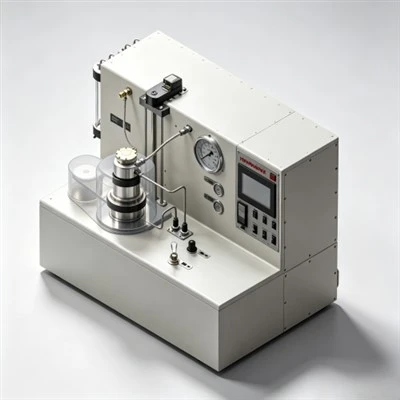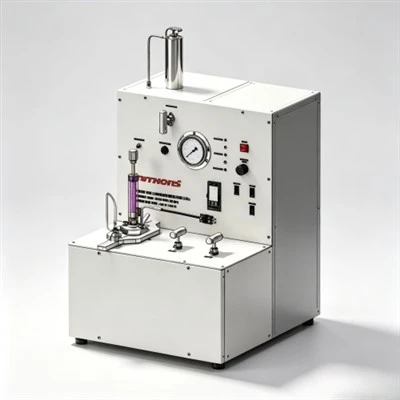

Precise atmospheric slurry conditioning is critical before running API fluid loss and rheology tests because freshly mixed cement slurries contain fragile false-set crystal flocs and incompletely hydrated chemical admixtures that generate artificially high plastic viscosity, false yield points, and uncontrolled filtration rates if tested without standard dynamic thermal shear. In demanding offshore well operations-such as exploration and development drilling across the Northern North Sea off the coast of Norway and the United Kingdom continental shelf, where surface and intermediate casing intervals experience low to medium bottom-hole circulating temperatures below 93°C (200°F)-testing slurries directly from the atmospheric blender introduces severe experimental distortion. Utilizing a standardized atmospheric slurry conditioning consistometer such as the NCCQ-2220 Dual-Cell Flagship System subjects the cement suspension to continuous rotational agitation at 150 ± 15 RPM under precise microprocessor-regulated thermal schedules, breaking transient thixotropic networks, activating synthetic polymer hydration shells, and establishing the exact physical baseline required for compliant API Spec 10A and ISO 10426-1 laboratory evaluations.
Accurate characterization of downhole slurry hydraulics and filtration containment represents the cornerstone of dependable well construction. When drilling crews pump thousands of barrels of cement through narrow annular clearances, fluid loss control additives must form a tight, impermeable micro-filter cake, while dispersants must maintain low friction pressures to prevent fracturing weak formation boundaries. Skipping or improperly executing thermal pre-shearing in an atmospheric slurry conditioning consistometer leaves polymer chains uncoiled or poorly dispersed across clinker minerals. Without an engineered atmospheric slurry conditioning consistometer, subsequent viscometer measurements and high-pressure filter press results reflect transient surface mixing artifacts rather than true downhole performance, risking unexpected flash setting, premature dehydration, and compromised zonal isolation.
Explore advanced laboratory consistometers and automated slurry testing hardware engineered for rigorous API compliance:
The Geochemical Physics of Unconditioned Cement Suspensions
Immediately after dry Portland cement clinker blends contact batch water during high-shear atmospheric blending (typically 35 seconds at 12,000 RPM per API RP 10B-2), the aqueous suspension exists in a highly unstable thermodynamic state. The rapid dissolution of alkali sulfates, free lime, and tricalcium aluminate (C₃A) saturates the pore solution with calcium (Ca²⁺), sulfate (SO₄²⁻), and hydroxyl (OH⁻) ions. This chemical flash reaction triggers the immediate precipitation of colloidal calcium aluminate trisulfate hydrates (ettringite needles) and early calcium silicate hydrate (C‑S‑H) precursor gels.
Without standard thermal shearing inside an atmospheric slurry conditioning consistometer, three primary microstructural phenomena introduce severe testing errors:
- Transient False-Set Agglomeration: Secondary gypsum and ettringite crystals interlock across unhydrated cement particles, creating a weak, electrostatically bound network known as false set. If rheology is evaluated on a rotational viscometer without prior conditioning in an atmospheric slurry conditioning consistometer, the instrument records artificially high dial readings, yielding elevated Bingham plastic viscosity and false yield values.
- Polymer Dissolution and Uncoiling Latency: High-performance synthetic fluid loss additives (such as AMPS copolymers) and high-molecular-weight dispersants require thermal activation and continuous mechanical agitation to achieve full hydration. An atmospheric slurry conditioning consistometer provides the temperature and rotational shear necessary for polymer coils to unroll and adsorb onto clinker surfaces.
- Trapped Entrained Micro-Air Bubbles: High-speed laboratory blending entrains significant volumes of micro-air bubbles within dense cement matrices. Processing the suspension inside an atmospheric slurry conditioning consistometer allows entrained air to escape naturally from the rotating slurry container, ensuring accurate density and filtration measurements.
- Non-Equilibrium Double Layer Potentials: The electrokinetic zeta potential of hydrating cement grains shifts rapidly during the initial 20 minutes of water contact. Dynamic stirring in an atmospheric slurry conditioning consistometer homogenizes ionic concentrations across grain boundaries, stabilizing inter-particle forces.
API Spec 10A and ISO 10426-1 mandate that for all slurries scheduled for wells with bottom-hole circulating temperatures below 93°C (200°F), the slurry must undergo exactly 20 minutes (or specified job ramp intervals) of continuous conditioning inside an atmospheric slurry conditioning consistometer before transferring the fluid to viscometers or fluid loss filtration cells.
How Conditioning in an Atmospheric Slurry Conditioning Consistometer Dictates Fluid Loss and Rheology
The mechanical and thermal environment provided by an atmospheric slurry conditioning consistometer directly controls how downstream testing hardware characterizes slurry behavior:
- Filter Cake Compaction Kinetics: During API fluid loss testing (under 6.89 MPa / 1,000 psi differential pressure across a 325-mesh screen), fluid containment depends on a compressible, low-permeability polymer-particle filter cake. Pre-shearing the slurry in an atmospheric slurry conditioning consistometer ensures that fluid loss polymers have formed uniform hydration shells. Slurries conditioned in an atmospheric slurry conditioning consistometer consistently yield lower, highly repeatable API filtrate values (e.g., ≤ 40 mL/30 min) compared to unconditioned slurries where filtration surges past 120 mL/30 min.
- Rheological Linearity and Friction Modeling: Transferring cement directly from a blender to a rotational viscometer results in erratic shear-stress responses across 300, 200, 100, 6, and 3 RPM rotor speeds. Conditioning the fluid inside an atmospheric slurry conditioning consistometer breaks transient agglomerations, producing smooth shear-thinning Power Law or Herschel-Bulkley flow profiles that reflect true circulating friction downhole.
- Free Fluid Separation Accuracy: Evaluating free water in a 45° inclined graduated cylinder requires complete chemical deflocculation. Agitation within an atmospheric slurry conditioning consistometer prevents localized particle settling, ensuring that free fluid measurements reflect true slurry stability.
- Detection of Premature Gelation: Continuous Bearden consistency (Bc) logging during conditioning in an atmospheric slurry conditioning consistometer identifies chemical incompatibility early. A consistency rise exceeding 30 Bc during the 20-minute cycle alerts engineers to premature hydration risks before field execution.
| Diagnostic Evaluation Parameter | Unconditioned Slurry (Direct from Blender) | Conditioned in NCCQ-2220 Consistometer |
|---|---|---|
| API Fluid Loss at 65°C (mL/30 min) | 85 – 180 mL (Incomplete polymer uncoiling) | 32 – 42 mL (Dense, uniform micro-gel cake) |
| Fann 35 Plastic Viscosity (PV, mPa·s) | 75 – 110 mPa·s (False-set crystal drag) | 38 – 52 mPa·s (True deflocculated rheology) |
| Yield Point (YP, lbf/100 sq ft) | 28 – 45 (Artificially inflated flocculation) | 8 – 14 (Stable Bingham plastic yield) |
| Rotational Speed Precision (RPM) | Uncontrolled / Variable manual stirring | Exact 150 ± 15 RPM synchronous drive |
| Thermal Uniformity During Conditioning | Ambient cooling / Localized hot spots | Dual-bath PID thermoregulation (± 0.5°C) |
| Consistency Measurement Architecture | Mechanical wire wiper (Wear / Drift) | Wireless sensor technology (Zero lead failure) |
Engineering Advances: Dual-Cell Control and Wireless Consistency Sensing
Historically, conventional atmospheric consistometers relied on mechanical slip-rings, external wiring harnesses, and contact potentiometers to transfer torque readings from rotating paddle assemblies to analog meters. In harsh laboratory environments exposed to saline water baths and alkaline slurry spills, contact wipers suffer rapid surface oxidation, mechanical friction drag, and wire fatigue failures.
To address these legacy challenges, the NCCQ-2220 atmospheric slurry conditioning consistometer incorporates specialized hardware innovations:
- Industry-First Wireless Consistency Sensing: The NCCQ-2220 atmospheric slurry conditioning consistometer eliminates all external lead wires and mechanical potentiometers. Utilizing high-precision non-contact torque sensors paired with Swiss Mettler Toledo load measurement cells and German Siemens PLC control architecture, the unit measures paddle deflection with zero mechanical friction, eliminating broken-wire shutdowns.
- Completely Independent Dual-Cell Architecture: Unlike conventional shared-bath machines, the NCCQ-2220 atmospheric slurry conditioning consistometer features two isolated stainless steel baths with dedicated 1200 W heaters. A single apparatus can condition one slurry at 50°C for shallow surface casing while running a parallel test at 88°C for an intermediate liner.
- Replaceable-Thimble Stirring Paddles: To resolve paddle wear, the NCCQ-2220 atmospheric slurry conditioning consistometer features replaceable-thimble paddle shafts (Patent ZL 2020 2 2043654.7). When the cone point experiences mechanical wear from abrasive sand or hematite slurries, technicians replace only the thimble tip rather than the entire paddle assembly.
- Chilled Water Circulation Capability: Integrated cooling water manifolds allow the NCCQ-2220 atmospheric slurry conditioning consistometer to condition slurries below ambient room temperature, enabling accurate testing for deepwater seabed horizons (4°C to 15°C).
All conditioning workflows adhere strictly to laboratory testing standards published by the American Petroleum Institute (API) under API Spec 10A, ensuring that consistency measurements and thermal pre-conditioning meet rigorous quality benchmarks.
Case Application: Northern North Sea Offshore Cementing Laboratories

Regional Laboratory Background in the Northern North Sea
The Northern North Sea basin, spanning maritime sectors offshore Stavanger, Norway, and Aberdeen, Scotland, represents an established offshore operating environment with demanding quality assurance mandates. Drilling programs frequently target complex Paleocene and Jurassic reservoirs from fixed platforms and floating semi-submersible rigs. Surface casing strings (typically 339.7 mm / 13-3/8 inch) and intermediate liners (244.5 mm / 9-5/8 inch) are cemented across intervals where bottom-hole circulating temperatures range from 45°C to 85°C. Rig day-rates require rapid, defect-free laboratory qualification of Class G cement slurries weighted with barite to 1.95 SG (16.3 ppg) and treated with AMPS fluid loss polymers and dispersants.
Regional Testing Challenges in Harsh Offshore Environments
Operating centralized offshore base laboratories in the North Sea involves severe testing hurdles:
- Fluid Loss Discrepancies and Dehydration Failures: In previous drilling campaigns, technicians evaluating slurries without rigorous atmospheric conditioning reported API fluid loss values under 45 mL/30 min. However, when pumped downhole, unconditioned polymer chains failed to develop proper filter cake integrity, resulting in annular dehydration and high displacement pressures.
- Frequent Potentiometer Failures on Legacy Equipment: Saline marine air and high-throughput workloads caused standard consistometer contact wipers to corrode rapidly, leading to erratic consistency signal drops and aborted qualification runs.
- Laboratory Space and Electrical Limitations: Offshore platform laboratories operate within tight space and power constraints, making the installation of multiple bulky single-cell units impractical.
Technical Requirements for Modern Slurry Conditioning Hardware
To address these demanding conditions, regional offshore operators established strict equipment benchmarks:
- Full compliance with API Spec 10A and ISO 10426-1 for slurry conditioning up to 93°C (200°F) at 150 ± 15 RPM.
- Elimination of mechanical contact wipers and external wiring to prevent corrosion-induced signal loss.
- Dual-chamber independent temperature regulation within ± 0.5°C to allow simultaneous multi-temperature testing.
- Real-time digital logging of Bearden consistency (0 to 100 Bc) and temperature via high-resolution touchscreen interfaces.
How the NCCQ-2220 Addresses the Challenge
The NCCQ-2220 Dual-Cell Flagship Atmospheric Consistometer was engineered specifically to resolve these operational bottlenecks. Built with dual isolated 304 stainless steel heating baths, the unit enables simultaneous testing of two distinct slurry formulations across independent thermal schedules. Its wireless torque measurement system eliminates external lead wires, while the Siemens PLC and Mettler Toledo load sensing hardware provide reliable consistency tracking. Large-diameter front drain valves and detachable water tanks simplify routine cleaning between high-density slurry runs.
Regional Application Case
An offshore laboratory supporting platform drilling in the Northern North Sea deployed the NCCQ-2220 atmospheric slurry conditioning consistometer to evaluate slurry systems for a 244.5 mm (9-5/8 inch) intermediate casing string set at 2,450 meters TVD. BHCT was modeled at 68°C. Slurry designs comprised API Class G cement weighted with barite to 1.92 SG (16.0 ppg), treated with synthetic fluid loss polymers, sulfonated dispersants, and non-retarding fluid stabilizers.
Conditioning the slurries inside the NCCQ-2220 atmospheric slurry conditioning consistometer delivered measurable improvements across all laboratory metrics:
- Elimination of Measurement Drift: The wireless non-contact torque sensor recorded a stable initial consistency of 16 Bc, remaining flat at 18 Bc throughout the 20-minute thermal ramp to 68°C, with zero electrical signal noise.
- True Fluid Loss Determination: Slurry transferred directly from the NCCQ-2220 atmospheric slurry conditioning consistometer to an HPHT filter press achieved an API fluid loss of 36 mL/30 min, whereas unconditioned slurry from the blender recorded an erratic 118 mL/30 min due to incomplete polymer hydration.
- Rheology Normalization: Conditioning the slurry reduced Fann 35 plastic viscosity from an unconditioned 86 mPa·s down to 44 mPa·s, confirming that false-set crystal flocs had been completely dispersed.
- Parallel Dual-Temperature Testing: While Cell A conditioned the 68°C intermediate casing slurry, Cell B simultaneously conditioned a 42°C surface casing slurry, doubling sample throughput without thermal cross-interference.
- Field Outcome: Offshore casing placement was completed smoothly with full returns. Cement bond logging verified high-quality acoustic bonding across all permeable sandstones, confirming zero annular channeling.
Standardized Operating and Calibration Protocols for Atmospheric Consistometers
Maintaining measurement integrity on an atmospheric slurry conditioning consistometer requires strict compliance with API RP 10B-2 testing methodologies:
1. Routine Torsion Spring and Load Cell Calibration: The torque sensing assembly of an atmospheric slurry conditioning consistometer must be calibrated monthly using certified dead-weight calibration fixtures. Applying known torque weights (20, 50, 80, and 100 g·cm) to the paddle shaft confirms that the digital Bearden consistency readout aligns within ± 1.5 Bc across the entire 0 to 100 Bc scale.
2. Rotational Speed Verification: Slurry container rotational velocity must be verified monthly under fluid load using an optical digital tachometer. The drive system must maintain 150 ± 15 RPM to provide the exact shear rate required by API specifications.
3. Thermal Sensor and Bath Profiling: Thermocouples submerged in each heating chamber must be checked against NIST-traceable digital reference thermometers across multiple set-points (ambient, 50°C, 75°C, and 90°C). Digital PID offsets must be adjusted to hold bath temperatures within ± 0.5°C of setpoint.
4. Paddle Shaft Thimble Inspection: The cone-point bearing on the paddle shaft must be inspected bi-weekly for physical grooving or abrasive wear. Replacing the thimble tip preserves frictionless rotation and maintains torque measurement accuracy.
Frequently Asked Questions (FAQ)
Why must cement slurry be conditioned in an atmospheric consistometer before fluid loss testing?
Freshly mixed cement contains unhydrated polymer coils and false-set crystal flocs. Conditioning in an atmospheric slurry conditioning consistometer applies standard mechanical shear at circulating temperature, allowing polymers to unroll and form a protective micro-gel network that produces accurate, repeatable fluid loss measurements.
What is the primary advantage of wireless consistency sensing in the NCCQ-2220?
Wireless consistency sensing eliminates external lead wires, slip rings, and mechanical contact wipers. This architecture prevents corrosive chemical failure, reduces frictional drag on the paddle, and provides reliable 0 to 100 Bc digital measurement precision.
What temperature threshold defines the operational scope of an atmospheric consistometer?
An atmospheric slurry conditioning consistometer operates up to 93°C (200°F) under atmospheric pressure per API Spec 10A. For wells with circulating temperatures exceeding 93°C, pressurized HPHT consistometers must be employed to prevent mix-water boiling.
Can the NCCQ-2220 run tests below ambient room temperature?
Yes. The NCCQ-2220 features integrated cooling water circulation connections that permit slurry conditioning and consistency testing below ambient room temperatures, enabling accurate laboratory simulation for shallow deepwater conductor casing intervals.
Standardizing Slurry Conditioning for Reliable Wellbore Zonal Isolation
Executing successful primary cementing in modern oil and gas wells requires absolute fidelity in laboratory simulation. Testing unconditioned slurries directly from mixing blenders introduces misleading rheological and filtration data that can lead to catastrophic downhole dehydration, formation fracture, or gas influx.
By implementing the NCCQ-2220 atmospheric slurry conditioning consistometer, laboratory teams establish verified compliance with API Spec 10A and ISO 10426-1 standards. Featuring dual independent temperature-controlled cells, innovative wireless torque sensing, replaceable-thimble paddle mechanics, and digital PID thermoregulation, the NCCQ-2220 delivers the precision, testing throughput, and measurement repeatability needed to support complex well construction operations worldwide.
Upgrade Your Laboratory Cement Conditioning Hardware
Consult our laboratory instrumentation specialists to evaluate the NCCQ-2220 dual-cell atmospheric consistometer, wireless consistency calibration accessories, and customized equipment configurations for your testing facility.
Explore NCCQ-2220 Consistometer Specifications