
A powdered accelerator supports extended-reach and horizontal surface casing zonal isolation by providing rapid, right-angle static gel strength development and accelerating tricalcium silicate (C₃S) hydration once the slurry is displaced into place, preventing particle sedimentation, free water channeling along the high side of the wellbore, and casing eccentricity-induced micro-annuli. In complex unconventional shale basins characterized by aggressive factory pad drilling-such as the Vaca Muerta shale in the Neuquén Basin of Argentina, where extended-reach horizontal profiles and high build-rate surface build curves are drilled through cold, weakly consolidated upper horizons (15°C to 30°C BHST)-chilled wellbore conditions delay Portland cement hydration. Incorporating a purpose-formulated powdered accelerator shortens the vulnerable liquid-to-solid transition window, halts slurry slumping on the low side of the casing, and delivers compressive strength exceeding 3.5 MPa (500 psi) within 8 to 11 hours, providing durable surface casing zonal isolation and rapid shoe drill-out capability.
Securing surface casing zonal isolation in extended-reach and high-angle surface casing intervals is critical because near-surface casing strings anchor heavy wellheads, protect shallow freshwater aquifers, and stabilize the kickoff point (KOP) for deeper horizontal lateral sections. In high-deviation well trajectories, gravity acts perpendicularly to the wellbore axis, causing dense cement and weighting particulates to sag to the low side while lighter pore water bleeds toward the high side. Without rapid hydration catalysis to achieve robust surface casing zonal isolation, continuous mud channels and free water streaks form along the upper casing boundary, compromising pressure containment and creating sustained casing pressure (SCP). Applying a dry-blended powdered accelerator ensures uniform slurry kinetics across long deviated intervals, preventing fluid segregation and establishing permanent annular barrier integrity.
Explore advanced chemical accelerators and specialized additive formulations engineered for low-temperature wellbore barriers:
Geomechanical and Rheological Challenges of Extended-Reach Surface Casing Zonal Isolation
In modern unconventional multi-well pad drilling, surface casing programs are no longer confined to vertical hole sections. To maximize reservoir exposure and minimize surface environmental footprint, operators increasingly initiate directional kickoff within shallow formations, setting surface casings through build sections reaching inclinations from 30° to over 65°. When a cement slurry is pumped through these high-angle wellbores under cold geothermal gradients, the physical mechanics of fluid displacement and static consolidation diverge sharply from vertical well cementing, threatening surface casing zonal isolation.
The primary geomechanical and physical phenomena destabilizing surface casing zonal isolation in extended-reach profiles include:
- High-Side Free Water Channeling (Boycott Effect): In inclined wellbores, solid particles settle across the short cross-sectional diameter of the hole rather than the total vertical column height. Settling cement particulates slide downward along the low side of the casing, displacing pore water rapidly upward to the high side. This separation creates a continuous, uncemented water channel along the upper casing boundary that destroys surface casing zonal isolation.
- Casing Standoff and Eccentricity Deficits: In deviated surface sections, gravitational forces pull heavy steel casing toward the lower borehole wall. Despite mechanical centralization, achieving 100% standoff is difficult. In the narrow low-side annular clearance, drilling mud displacement efficiency is reduced, leaving residual mud pockets that threaten surface casing zonal isolation unless the tail cement sets aggressively to consolidate the annular space.
- Extended Static Gel Strength Transition Windows: In shallow, cool formations (BHST below 30°C), unaccelerated Portland cement exhibits a prolonged dormant induction period. While the slurry remains in a weak plastic state, annular hydrostatic pressure decays prematurely, inviting shallow biogenic gas or artesian water cross-flows that breach surface casing zonal isolation.
- Cumulative Non-Productive Time (NPT) on Pad Rigs: In factory drilling operations, rig mobilization cannot proceed until the surface casing shoe is drilled out and pressure-tested. A slow-setting cement design wastes 20 to 30 rig hours per well, significantly increasing drilling budgets across multi-well pads.
How Powdered Accelerator Chemistry Secures Inclined Annular Integrity
Overcoming the physical instability of inclined wellbores and securing dependable surface casing zonal isolation requires an engineered chemical acceleration strategy. A high-performance powdered accelerator controls low-temperature hydration kinetics through multiple synchronized mechanisms:
- Permeabilizing the Metastable Silicate Layer: Active inorganic catalytic salts in the powdered accelerator rapidly permeate the early protective hydrate film covering unreacted tricalcium silicate (C₃S) clinker grains. This increases the dissolution rate of silicate tetrahedra and releases calcium ions (Ca²⁺) into the interstitial liquid, establishing the chemical driving force for early surface casing zonal isolation.
- Early Supersaturation and Rapid C‑S‑H Fiber Precipitation: By accelerating calcium ion supersaturation in the pore water, the powdered accelerator drives immediate nucleation of fibrous calcium silicate hydrate (C‑S‑H) gel networks. Interlocking crystal fibers bridge the pore spaces between cement particles, halting particulate sliding along the low side of the hole.
- Compressing the Critical Gel Transition Time: The chemical additive condenses the static gel strength (SGS) transition from 100 lbf/100 sq ft to 500 lbf/100 sq ft to under 15 minutes. This rapid transition locks the annular geometry before gravitational solids settling or gas percolation can compromise surface casing zonal isolation.
- Zero Free Water Immobilization: Combined with balanced water-binding agents, the accelerated hydration traps bulk mixing water within the developing mineral matrix, ensuring zero free fluid (0.0 mL) under high-deviation testing and preventing continuous high-side channel formation.
| Annular Performance Metric (45° Deviation) | Unaccelerated Inclined Slurry | Accelerated Slurry with CG910S |
|---|---|---|
| Free Fluid Separation (API 45° Angle Test) | 2.5% – 5.5% (High-side channel path) | 0.0% (Zero Free Water) |
| Critical Gel Transition Time (100–500 lbf) | 55 – 95 Minutes (High influx risk) | 11 – 16 Minutes (Gas/water tight) |
| Time to 3.5 MPa (500 psi Compressive Set) | 26 – 38 Hours (Costly WOC standby) | 8.0 – 10.5 Hours (Rapid drill-out) |
| Low-Side Particulate Sedimentation (Δρ) | > 0.08 SG (Density stratification) | ≤ 0.018 SG (Homogeneous column) |
| Surface Casing Zonal Isolation Integrity | Vulnerable to sustained casing pressure | Complete 360-degree acoustic bond |
Synergistic Polymer Chemistry and Laboratory Strength Verification
In directional surface casing operations, accelerating hydration must be supported by accurate laboratory compressive strength modeling. Because high-angle wellbores are prone to particulate settling, engineers must verify that the chemical accelerator achieves rapid compressive strength progression without causing flash setting during pump displacement.
Pairing a dry-blended accelerator powder with non-ionic fluid loss polymers ensures that dynamic filtration is controlled below 50 mL/30 min while maintaining smooth pumpability. Standardized testing conforming to American Petroleum Institute (API) specifications under API RP 10B-2 validates that accelerated slurries sustain adequate rheological pumpability, eliminate free water separation, and support durable surface casing zonal isolation across demanding extended-reach trajectories.
Case Application: Neuquén Basin, Vaca Muerta Formation, Argentina
Regional Cementing Background in the Neuquén Basin
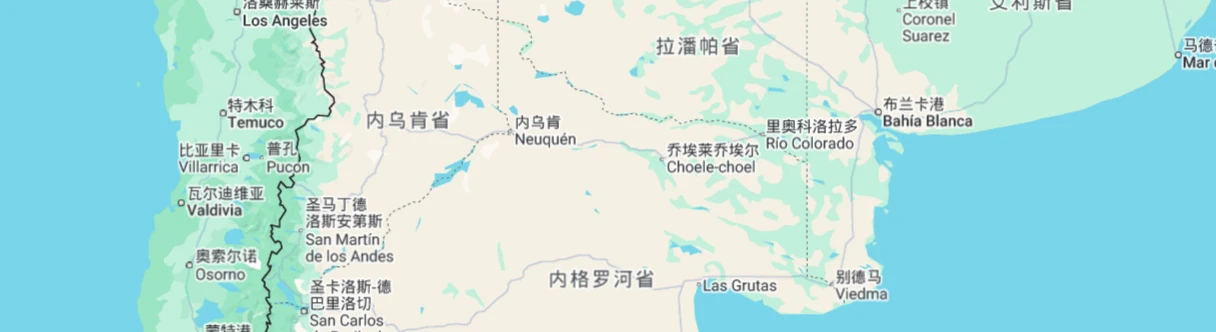
The Neuquén Basin in west-central Argentina hosts the world-class Vaca Muerta shale play, where operators execute intensive factory pad drilling with lateral horizontal sections exceeding 3,000 meters. To avoid surface lease congestion and optimize well pad spacing, surface casing strings (typically 244.5 mm / 9-5/8 inch) are kicked off shallow and drilled directionally to depths between 700 meters and 1,200 meters TVD, achieving inclinations up to 55° before casing point. Formation temperatures across these shallow Tertiary and Cretaceous sandstones range between 18°C and 26°C. Establishing complete surface casing zonal isolation is mandatory to protect potable groundwater aquifers and provide a secure mechanical anchor for aggressive directional drilling into deeper shale targets.
Regional Cementing Challenges in Deviated Surface Intervals
Executing high-angle surface casing cementing in the Neuquén Basin presents critical technical and operational risks:
- Severe High-Side Channeling Across Build Sections: In surface intervals with 45° to 55° hole angles, standard slurries exhibit free water bleeding along the upper annulus. This leaves uncemented streaks that compromise surface casing zonal isolation and allow subterranean fluid cross-flow.
- Slurry Dehydration Across Permeable Sandstone Beds: Highly permeable Rayoso and Neuquén Group sands draw water rapidly from unconditioned cement, causing localized slurry flash dehydration and annular bridging before displacement is complete.
- Rig Day-Rate Overhead in Multi-Well Campaigns: Factory drilling rigs require rapid casing shoe drill-out to maintain tight pad drilling schedules. Unaccelerated slurries take over 28 hours to gain 3.5 MPa compressive strength, generating costly waiting-on-cement delays.
Technical Requirements for Vaca Muerta Directional Surface Slurries
To overcome high-angle wellbore challenges, regional cementing formulations must satisfy rigorous engineering criteria:
- Absolute zero free fluid separation (0.0% @ 45° operating inclination) to guarantee complete surface casing zonal isolation.
- Attainment of 3.5 MPa (500 psi) compressive strength within 10 hours at 22°C static temperature.
- Controlled pumpability with thickening times between 2.5 and 4.0 hours to permit safe casing displacement.
- A dry-blended powdered accelerator format that mixes homogeneously in bulk plant pneumatic facilities without clumping.
How CG910S Addresses the Challenge
CG910S Low-Temperature Cementing Accelerator Powder is specifically formulated to secure surface casing zonal isolation in extended-reach and directional wellbores. Manufactured as a high-purity dry chemical powder, CG910S dry-blends into bulk API Class G cement without particle segregation. Upon contact with mix water, CG910S rapidly dissolves, catalyzing alite (C₃S) hydration and driving rapid C‑S‑H gel precipitation. It provides rapid static gel strength development, eliminates free water separation, and delivers high early compressive strength to anchor directional surface casings securely.
Regional Application Case
In a representative pad well in the Añelo sector of the Neuquén Basin, a 244.5 mm (9-5/8 inch) surface casing string was cemented inside a 311.1 mm (12-1/4 inch) hole to a total measured depth (MD) of 1,050 meters (880 meters TVD), with a maximum hole inclination of 52° through the build section. Bottom-hole static temperature was recorded at 22°C, with surface mixing water at 14°C. The slurry was designed at a density of 1900 kg/m³ (15.8 ppg) utilizing Class G Portland cement.
By pneumatically dry-blending CG910S accelerator powder at 2.0% BWOC alongside low-temperature fluid loss control polymers and defoamers, the service company achieved superior laboratory and field operational performance:
- Zero Free Fluid at 52° Angle: Laboratory testing in a 52° inclined cylinder verified 0.0 mL free water separation, preventing high-side water streak formation and safeguarding surface casing zonal isolation.
- Controlled Slurry Pumpability: Consistometer testing under simulated displacement schedules showed stable consistency below 25 Bc for 2 hours and 40 minutes, reaching 70 Bc at 3 hours and 25 minutes.
- UCA Compressive Strength Growth: Ultrasonic Cement Analyzer testing verified initial gelation (50 psi) at 4 hours and 20 minutes, with the mandatory 3.5 MPa (500 psi) threshold reached at 8 hours and 50 minutes at 22°C static temperature.
- Field Outcome: Full slurry returns were observed at surface with zero lost circulation. Casing shoe drill-out was completed 10.5 hours post-plug bump, saving 18 hours of rig standby time per well. Cement bond logs confirmed complete 360-degree bonding across both the vertical and inclined build intervals, validating robust surface casing zonal isolation.
Laboratory Diagnostic Workflows for Directional Slurry Qualification
Validating slurry formulations to guarantee surface casing zonal isolation in extended-reach and high-angle trajectories requires structured laboratory workflows under API RP 10B-2 standards:
1. Operating Angle Free Fluid Testing: Slurry samples conditioned at test temperature must be placed in sealed 250 mL graduated cylinders inclined to the exact wellbore deviation angle (e.g., 45° to 60°) for 2 hours. True zero free water (0.0 mL) is essential to confirm that high-side channeling will not develop downhole.
2. Static Gel Strength Analysis (SGSA): Continuous acoustic or mechanical gel strength logging measures the time required to progress from 100 lbf/100 sq ft to 500 lbf/100 sq ft. Restricting this transition to under 15 minutes confirms that the slurry will resist gas bubble invasion and particulate settling.
3. Static Curing Column Density Stratification Tests: Curing cement slurries under simulated downhole temperature and pressure inside inclined cylinders allows engineers to cut the hardened column into sections. Verifying that the density variance between top and bottom sections remains below 0.02 SG confirms particulate suspension and homogeneous surface casing zonal isolation.
Frequently Asked Questions (FAQ)
Why is surface casing zonal isolation more difficult to achieve in inclined wellbores?
In inclined wellbores, gravity causes dense particles to settle toward the low side while free water migrates to the high side. This creates a continuous uncemented channel along the top of the casing that breaches surface casing zonal isolation and invites fluid migration.
How does a powdered accelerator eliminate free water separation in deviated holes?
A powdered accelerator accelerates alite (C₃S) hydration and forces rapid C‑S‑H gel precipitation. This swift crystal formation locks free mixing water into the mineral matrix, delivering zero free fluid (0.0 mL) under high-deviation conditions.
What compressive strength is required to anchor directional surface casings?
A minimum compressive strength of 3.5 MPa (500 psi) is required before drill-out. Reaching this threshold rapidly ensures that directional surface casings resist drilling torque and vibrations during deeper horizontal lateral drilling.
Can CG910S accelerator powder be dry-blended into bulk cement at remote plants?
Yes. CG910S is manufactured as a free-flowing, non-hygroscopic powder that dry-blends homogeneously into bulk cement silos, preventing segregation during transit and ensuring uniform downhole performance.
Key Operational Strategies for Deviated Surface Casing Integrity
Securing long-term surface casing zonal isolation in extended-reach and horizontal wells requires active chemical management of cement hydration and particle suspension. Relying on unaccelerated slurries in cold, deviated surface intervals leads to high-side free water channeling, particulate sag, and costly waiting-on-cement delays.
By implementing an advanced chemical accelerator powder such as CG910S, cementing engineers eliminate free water separation, compress static gel strength transition times to under 15 minutes, and achieve 3.5 MPa compressive strength development within 9 to 11 hours. Dry-blending non-hygroscopic accelerator powders delivers predictable slurry kinetics, prevents annular channeling, and guarantees permanent surface casing zonal isolation across demanding unconventional drilling campaigns worldwide.
Optimize Your Extended-Reach Surface Casing Zonal Isolation
Consult our technical cementing specialists to evaluate CG910S low-temperature accelerator powder, high-angle free fluid elimination, and customized slurry formulations for your directional drilling programs.
Explore CG910S Accelerator SpecificationsBlog Category: Cementing Additives & Chemical Solutions