
Introduction to Fluid Loss Mechanisms in Primary Cementing
Primary cementing is one of the most critical phases in well construction. Its primary objective is to provide complete zonal isolation, structural support for the casing, and protection of productive formations from fluid migration. However, achieving these objectives depends heavily on maintaining control over the physical and chemical behavior of the cement slurry during placement and hydration. Among the various parameters governed during slurry design, fluid loss control stands out as a paramount factor directly influencing wellbore integrity, annular hydraulic sealing, and overall reservoir productivity.
When a cement slurry is pumped into the wellbore, it encounters permeable formation zones subjected to differential pressure. Under this pressure differential, the liquid phase of the cement slurry-primarily water containing dissolved chemical ions-tends to filter out into the permeable rock matrix. This phenomenon, known as filtrate loss or fluid loss, leaves behind a dense concentration of solid cement particles on the formation face, forming what is known as a cement filter cake. If uncontrolled, excessive filtrate invasion rapidly alters the rheological properties of the remaining slurry, accelerates hydration kinetics, and severely destabilizes the wellbore environment.
To combat these adverse effects, modern petroleum engineering relies extensively on specialized chemical formulations known as Fluid Loss Control Additives. These specialized agents modify the physical and interfacial properties of the slurry, creating a low-permeability barrier at the formation interface. By restricting filtrate loss to stringent operational limits, high-performance Fluid Loss Control Additives protect vulnerable reservoir formations from invasive damage, stabilize the hydrostatic pressure column, and ensure the successful execution of complex oil and gas well cementing operations.
The Root Causes and Impact of Formation Damage
Formation damage refers to any undesirable reduction in the natural permeability of a hydrocarbon-bearing reservoir rock, usually occurring in the near-wellbore region. During cementing operations, excessive fluid loss is a leading driver of formation damage, causing operational downtime, reduced production rates, and costly remediation treatments. Understanding how filtrate invasion impairs reservoir productivity is essential for designing effective cementing systems.
1. Clay Swelling and Particle Dispersion
Many hydrocarbon reservoirs contain delicate clay minerals such as smectite, illite, kaolinite, and mixed-layer clays within their pore matrix. When alkaline cement filtrate-rich in high pH water and varied ion species-invades these formations, it alters the native chemical equilibrium of the pore fluids. Fresh or incompatible water causes smectite clays to hydrate and swell dramatically, physically choking pore throats. Furthermore, sudden changes in ionic concentration can cause fine particles, such as kaolinite or illite flakes, to detach from grain surfaces and migrate through the pore network until they bridge narrow passages, permanently restricting permeability.
2. Emulsion Blockage and Phase Trapping
Reservoir fluids and invading cement filtrate frequently form tight, highly viscous emulsions upon contact, particularly when heavy crude oil or natural surfactants are present. These stable emulsions become trapped in pore constrictions, requiring excessive drawdown pressures to dislodge-a phenomenon commonly referred to as emulsion blocking. Similarly, the introduction of an aqueous filtrate into gas-bearing or oil-saturated pore spaces increases water saturation in the near-wellbore zone. This localized increase in water saturation dramatically reduces the relative permeability of hydrocarbons, creating a permanent phase trap that hinders production during well completion.
3. Chemical Precipitation and Scaling
Cement aqueous phases are saturated with calcium hydroxide, sulfate ions, and soluble silicates. As this high-pH filtrate penetrates the formation rock, it reacts with native formation waters containing dissolved barium, strontium, bicarbonate, or iron. These reactions produce insoluble mineral precipitates-such as calcium carbonate (CaCO3), barium sulfate (BaSO4), or calcium silicate hydrates-directly inside the pore channels. Once precipitated, these mineral scales are extremely difficult to remove, creating severe skin factors and long-term production impairment.
How Modern Fluid Loss Control Additives Function
To prevent these destructive mechanisms, specialized Fluid Loss Control Additives are incorporated into cement slurry formulations. These additives work through a combination of physical particulate blocking, polymeric film formation, and fluid viscosity modification to restrict liquid movement into permeable formations.
The primary mechanism of modern synthetic Fluid Loss Control Additives involves water-soluble, high-molecular-weight polymers. When dispersed in the aqueous phase of a cement slurry, these long-chain polymers undergo hydration and conformational expansion. As filtrate attempts to flow through the developing cement filter cake on the formation wall, the expanded polymer chains adsorb onto the surfaces of the hydrating cement grains. This adsorption process physically bridges the microscopic interstitial spaces between cement particles, drastically lowering the permeability of the filter cake itself.
In addition to surface adsorption, advanced Fluid Loss Control Additives increase the local viscosity of the interstitial water, decreasing the filtration rate in accordance with Darcy's Law. By reducing both the permeability of the filter cake and the flow rate of the liquid phase, these additives ensure that only a negligible volume of filtrate escapes into the surrounding matrix. This dual mechanism maintains slurry homogeneity, preserves designed pumpability times, and establishes a robust barrier against formation contamination.
Preserving Hydrostatic Pressure and Preventing Gas Migration
Maintaining a stable hydrostatic pressure profile throughout the cementing process is vital for preventing fluid cross-flow, well control events, and gas channeling. When cement slurry experiences uninhibited fluid loss to permeable zones, its volume shrinks, and its solids content consolidates rapidly. This accelerated dehydration leads to premature slurry gelation and a rapid drop in effective hydrostatic pressure exerted against the formation.
When hydrostatic pressure drops below the pore pressure of gas-bearing zones prior to the cement setting, formation gas can invade the slurry column. This phenomenon, known as annular gas migration, creates micro-annuli, gas channels, and void pathways within the set cement sheath. Gas channeling severely compromises zonal isolation, leading to surface casing vent pressures, environmental safety risks, and catastrophic well failures.
The application of high-efficiency Fluid Loss Control Additives plays a decisive role in preventing premature hydrostatic pressure loss. By maintaining strict fluid loss values-typically below 50 mL/30 min for critical gas well cementing or under 100 mL/30 min for standard applications-these additives keep the cement slurry in a fluid, pressure-transmitting state until hydration begins. Consequently, the column exerts continuous, controlled hydrostatic pressure against high-pressure gas zones, preventing gas intrusion and ensuring a gas-tight, durable annular seal.
Techniques for Optimizing Slurry Rheology and Filter Cake Quality
While controlling filtration rate is essential, a well-engineered slurry must also maintain optimum rheology for complete mud displacement and proper displacement hydraulics. Uncontrolled fluid loss increases the local yield point and plastic viscosity of the slurry, leading to uneven displacement fronts, high friction pressures, and potential formation fracturing in narrow margin wells.
Advanced Fluid Loss Control Additives are designed to deliver superior filtration control without imparting excessive low-shear viscosity that could impede pumpability. Synthetic polymers, such as acrylamide-based copolymers and modified cellulose derivatives, provide exceptional thermal stability and salt tolerance, maintaining predictable rheological profiles across wide temperature ranges.
Key Benefits of Optimized Filter Cake Formation:
- Thin and Impermeable Filter Cake: Forms a flexible, low-permeability dynamic barrier on the formation interface, preventing deep filtrate penetration without creating a thick skin that could obstruct casing placement.
- Consistent Slurry Density: Prevents solid-liquid separation, maintaining a uniform density profile along the entire vertical and horizontal well section.
- Enhanced Bonding Integrity: Promotes superior interfacial bonding between the cement sheath, the casing steel, and the formation wall by preventing water pocket formation.
- Friction Reduction: Many polymeric Fluid Loss Control Additives act as mild friction reducers, lowering equivalent circulating density (ECD) during pumping operations.
Performance Evaluation under HPHT Conditions
As oil and gas exploration continues to push into deepwater, ultra-deep, and geothermal reservoirs, cementing formulations face extreme High-Pressure, High-Temperature (HPHT) environments. High temperatures accelerate chemical degradation, hydrolysis, and thermal thinning of traditional water-soluble polymers, leading to sudden loss of filtration control at critical depths.
Modern High-Temperature Fluid Loss Control Additives incorporate thermally resilient monomeric structures, such as 2-acrylamido-2-methylpropanesulfonic acid (AMPS), which provide superior resistance to thermal degradation up to 200°C (392°F) and above. Furthermore, these synthetic copolymers demonstrate robust performance in high-salinity brine mixing water, resisting ion-induced polymer collapse.
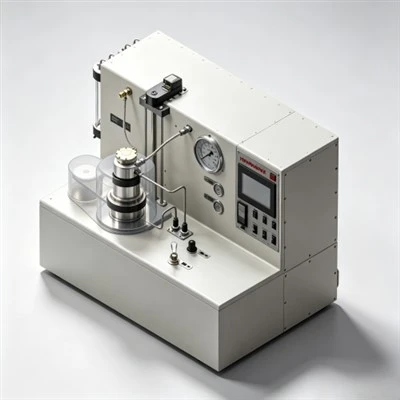
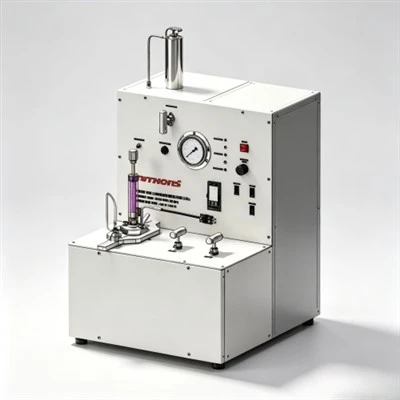
To evaluate additive performance under simulated downhole conditions, API Spec 10B-2 testing procedures are strictly enforced in cementing laboratories. High-Pressure High-Temperature filter presses test the filtration performance under 1,000 psi differential pressure and elevated reservoir temperatures. By rigorously qualifying Fluid Loss Control Additives under these rigorous standards, engineers can design tailored cementing systems that reliably protect sensitive formations in the most demanding drilling environments.
Conclusion and Best Practices for Field Application
Securing long-term well integrity and protecting productive formation zones requires a comprehensive approach to slurry formulation. Fluid loss control is not merely a lab parameter; it is a fundamental requirement for preventing formation damage, avoiding gas channeling, maintaining proper placement hydraulics, and establishing a continuous annular seal.
Integrating high-quality Fluid Loss Control Additives into primary and secondary cementing designs ensures that cement slurries perform predictably from surface mixing to downhole curing. By selecting the appropriate additive based on bottom-hole static temperature (BHST), pore fluid compatibility, and slurry density demands, drilling operators and service companies can maximize wellbore stability, eliminate expensive remediation workovers, and safeguard reservoir performance over the entire life cycle of the well.