
Introduction to HPHT Primary Cementing Challenges
Ultra-deep oil and gas exploration has pushed well drilling into increasingly extreme environments characterized by elevated bottom-hole static temperatures (BHST) and extreme bottom-hole pressures (BHSP). In High-Pressure, High-Temperature (HPHT) regimes, where temperatures often exceed 150°C (302°F) to 200°C (392°F) and hydrostatic pressures scale past 15,000 psi, traditional well cementing chemistries face severe operational limits. Primary cementing in these hostile conditions demands flawless execution. The primary cement slurry must remain fluid long enough to be pumped through thousands of meters of casing and displaced into the narrow annular space, yet set rapidly once in position to deliver permanent zonal isolation, mechanical casing support, and corrosion protection.
The central technical challenge in HPHT cementing is managing the hydration kinetics of Portland cement. High downhole temperatures act as a potent catalyst, accelerating the dissolution of silicate phases, rapid crystal nucleation, and subsequent gelation. Without chemical intervention, unretarded cement slurries subjected to extreme bottom-hole temperatures can undergo premature flash setting within minutes during placement. This catastrophic event can freeze drill pipe or casing in the hole, cause lost circulation due to excessive friction pressures, and result in millions of dollars in non-productive time (NPT) or total well abandonment.
To overcome these harsh thermodynamic barriers, oilfield chemical engineering relies heavily on specialized chemical additives known as High Temperature Cement Retarders. These sophisticated chemical agents temporarily disrupt the hydration process of tricalcium silicate (C3S) and aluminate phases, extending the pumpable fluid life of the slurry under severe thermal conditions. By providing reliable and predictable thickening time control, advanced High Temperature Cement Retarders empower operators to safely cement complex, deepwater, and ultra-deep boreholes while ensuring long-term structural integrity.
Mechanisms of Action: How High Temperature Cement Retarders Control Hydration
Understanding the chemical mechanisms governing retarder performance is vital for designing high-performance cement slurries for HPHT wells. Portland cement hydration is a complex multi-phase process primarily dominated by the reaction of tricalcium silicate (3CaO·SiO2 or C3S) and dicalcium silicate (2CaO·SiO2 or C2S) with water to form calcium silicate hydrate (C-S-H) gel and calcium hydroxide (Ca(OH)2). Under ambient conditions, this reaction proceeds through distinct induction, acceleration, and deceleration phases. However, intense thermal energy rapidly drives the system past the induction period, requiring specialized chemical inhibitors.
Modern High Temperature Cement Retarders utilize several complementary chemical mechanisms to delay cement setting:
1. Surface Adsorption and Complexation
The primary mechanism of inorganic and organic High Temperature Cement Retarders involves strong adsorption onto the surfaces of unhydrated cement particles and newly forming hydration products. Functional molecules-containing carboxyl, hydroxyl, or phosphonic acid groups-bind selectively to calcium sites on the cement grains. This creates a dense molecular barrier that physically blocks water molecules from interacting with the unhydrated mineral matrix, effectively arresting the dissolution rate of silicates and aluminates.
2. Calcium Ion Chelation and Nucleation Inhibition
High-performance organic High Temperature Cement Retarders possess strong chelating properties. These chemical agents form stable water-soluble chelate complexes with dissolved calcium ions (Ca2+) in the pore fluid. By sequestering free calcium ions, the retarder suppresses the supersaturation of calcium in the liquid phase, thereby preventing the nucleation and growth of crystalline calcium hydroxide and C-S-H phases. Without active crystal nucleation, the slurry remains in a stable, fluid state.
3. Crystal Growth Modification
Even when hydration products begin to crystallize, synthetic High Temperature Cement Retarders can adsorb onto the growing faces of hydrate microcrystals. By altering the surface energy and growth lattice of calcium hydroxide and ettringite crystals, the retarder disrupts their ability to interlock and form a rigid, continuous structural matrix. This modification extends the transition time between a pumpable slurry and a solid set mass, providing a wider margin of operational safety.
Chemical Formulations: Lignosulfonates, Hydroxycarboxylic Acids, and Synthetic Polymers
The evolutionary history of cementing retarders has transitioned from simple organic compounds to highly tailored synthetic macromolecules capable of surviving ultra-high thermal stress. Choosing the correct chemical class depends on the specific bottom-hole circulating temperature (BHCT), mixing water chemistry, and slurry composition.
Historically, modified lignosulfonates were the standard choice for mild-to-moderate temperature applications. Derived as byproducts of the wood pulp industry, calcium and sodium lignosulfonates contain aromatic rings with sulfonate and hydroxyl functional groups. While effective up to approximately 120°C (248°F), conventional lignosulfonates suffer from thermal degradation and erratic thickening behavior at higher temperatures. Hydroxycarboxylic acids (such as gluconic acid, citric acid, and tartaric acid) offer strong chelating ability, but their narrow dosage windows can lead to over-retardation or complete non-setting of the cement column if slightly over-dosed.
For modern HPHT and ultra-deep wells exceeding 150°C (302°F), synthetic polymeric High Temperature Cement Retarders represent the state-of-the-art solution. These advanced materials are synthesized via the copolymerization of acrylic acid, maleic acid, acrylamide, and 2-acrylamido-2-methylpropanesulfonic acid (AMPS). The sulfonic acid moieties in AMPS copolymers provide exceptional thermal stability up to 230°C (446°F) and remarkable tolerance to high-salinity mixing waters, including saturated sodium chloride and calcium chloride brines.
To further enhance total slurry performance under these demanding downhole conditions, synthetic High Temperature Cement Retarders are frequently combined with high-performance fluid loss additives, such as CG811 Ultra-High Temperature Fluid Loss Additive. The synergistic interaction between advanced synthetic retarders and specialized fluid loss control polymers ensures that the slurry maintains consistent viscosity, zero free water separation, and minimal fluid movement into porous formations throughout the displacement period.
Precise Thickening Time Control and Compressive Strength Development
Designing a cement slurry for ultra-deep HPHT applications is a delicate balancing act between safety and operational efficiency. The target thickening time-the duration during which the slurry exhibits a consistency below 30 Bearden Units of Consistency (Bc)-must be tailored to account for mixing operations, dynamic pumping through the casing, displacement up the annulus, and a safety margin (typically 1 to 2 hours) for unexpected surface or downhole delays.
However, excessive retardation poses significant operational risks. If High Temperature Cement Retarders are over-dosed, or if the temperature gradient along the wellbore varies dramatically, the cement slurry may exhibit extended transition times. During this prolonged period, the cement remains in a gel-like, non-pressure-transmitting state, creating a severe vulnerability where formation fluids or gas can channel through the setting cement sheath. Furthermore, over-retardation delays early compressive strength development, resulting in extended Waiting-on-Cement (WOC) time and inflated rig operating costs.
Modern High Temperature Cement Retarders address this issue by providing a "right-angle" set profile. Under static downhole conditions, once the retarding agent undergoes thermal breakdown or complete surface saturation, the inhibition mechanism terminates rapidly. This allows the cement hydration reaction to initiate aggressively, leading to swift compressive strength development within a short timeframe after placement. As a result, operators achieve both extended pumpability during displacement and rapid early strength gain once the slurry reaches its target depth.
Synergy with Fluid Loss Control and Rheology Modifiers
A successful HPHT cementing system is never composed of a retarder alone; it is a meticulously balanced chemical system where every additive must work in harmony. The integration of High Temperature Cement Retarders with other critical slurries components-such as fluid loss control agents, dispersants, anti-settling agents, and silica flour-is critical to preventing slurry instability.
1. Fluid Loss Control Integration
Uncontrolled fluid loss accelerates cement dehydration, effectively concentrating the solid phase and increasing the relative concentration of the retarder in the remaining liquid. This localized alteration in chemical concentration leads to unpredictable thickening times and dynamic viscosity spikes. Utilizing robust additives like CG811 Ultra-High Temperature Fluid Loss Additive alongside synthetic High Temperature Cement Retarders maintains a constant liquid-to-solid ratio, preventing localized premature dehydration and preserving designed rheological parameters across the entire hydrostatic column.
2. Rheological Stabilization and Dispersant Compatibility
Polymeric High Temperature Cement Retarders often possess mild dispersing characteristics due to their anionic charge density. When combined with dedicated dispersants (polynaphthalene sulfonates or acetone-formaldehyde condensates), they reduce the slurry's yield point and plastic viscosity. This low-shear fluid state improves mud displacement efficiency in narrow wellbore geometries while lowering Equivalent Circulating Density (ECD) to avoid fracturing fragile, depleted zones during pumping.
3. Prevention of Silica Flour Instability
At temperatures above 110°C (230°F), set Portland cement undergoes thermal strength retrogression, where the load-bearing C-S-H phase converts into permeable, weak alpha-dicalcium silicate hydrate (α-C2SH). To prevent this, 35% to 40% silica flour (by weight of cement) is added to favor the formation of strong, impermeable tobermorite and xonotlite phases. Synthetic High Temperature Cement Retarders must maintain high chemical compatibility with fine silica powders, ensuring that high-density slurries do not experience particle settling or free fluid separation under severe thermal convection.
Laboratory Testing Standards and Field Application Best Practices
Due to the sensitivity of HPHT slurries to minute changes in temperature, pressure, and additive concentrations, rigorous laboratory evaluation under simulated downhole conditions is mandatory prior to field execution. Standardized protocols established by API Specification 10A and API Recommended Practice 10B-2 govern the qualification of High Temperature Cement Retarders.
Key Laboratory Evaluation Procedures:
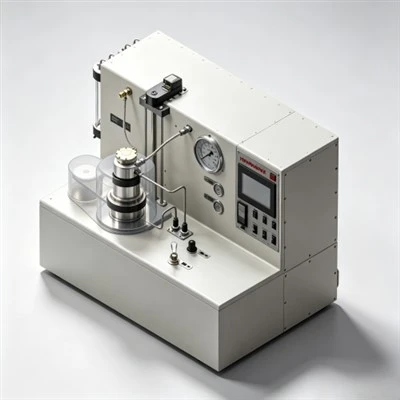
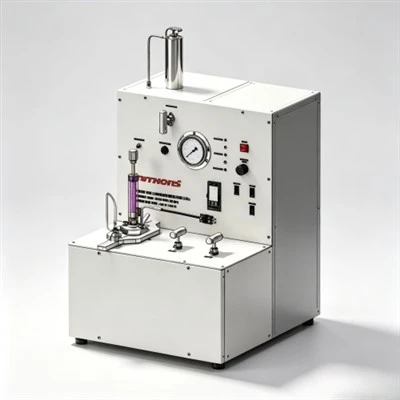
- Pressurized Consistometer Testing: Evaluates thickening time under simulated ramped temperature and pressure schedules representative of actual well injection rates and geothermal gradients. High-temperature consistometers can operate up to 260°C (500°F) and 30,000 psi.
- Ultrasonic Cement Analyzer (UCA) Testing: Measures non-destructive compressive strength development over time under static HPHT conditions, confirming the duration of the transition state and the rate of strength gain.
- High-Pressure High-Temperature Fluid Loss Testing: Verifies that filtrate loss remains under 30 to 50 mL/30 min at 1,000 psi differential pressure when the retarder is mixed with fluid loss control agents like CG811 Ultra-High Temperature Fluid Loss Additive.
- Rheological Characterization: Utilizes rotational viscometers equipped with thermal jackets to measure yield stress and plastic viscosity across a spectrum of shear rates at target temperatures.
Field Application Guidelines:
In field operations, precise batch mixing and quality control of dry blend and liquid additives are essential. Variations in mixing water pH, ion content, or temperature can significantly alter the performance of High Temperature Cement Retarders. Engineers must ensure batch-to-batch consistency, utilize clean mixing equipment, and perform field-matching pilot tests with actual rig mixing water and cement samples immediately prior to the pumping job.
Conclusion
The successful development and production of deep, ultra-deep, and geothermal hydrocarbon resources depend on advanced cementing technologies capable of mastering extreme thermodynamic conditions. High-efficiency High Temperature Cement Retarders are indispensable tools that afford operators precise control over cement hydration kinetics, ensuring adequate pumpability times without compromising early compressive strength development or long-term zonal isolation.
By pairing high-performance synthetic High Temperature Cement Retarders with specialized fluid loss control chemistry-such as CG811 Ultra-High Temperature Fluid Loss Additive-petroleum engineers can formulate resilient, stable cement slurries capable of standing up to the world's most challenging HPHT environments. As drilling frontiers extend deeper into harsher subterranean regimes, continuous innovation in high-temperature retarder technology will remain a cornerstone of well integrity and operational success.