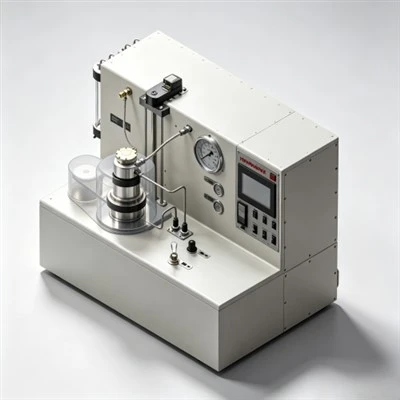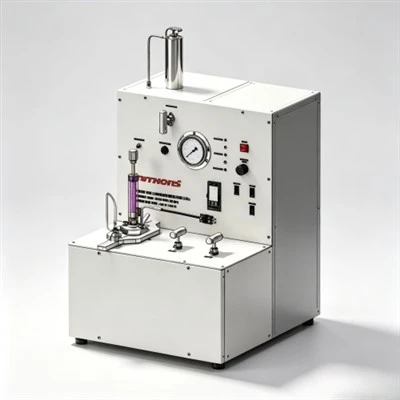

Understanding the fundamental principle of constant speed mixer technology is essential for petroleum engineers and laboratory technicians preparing oilwell cement slurries according to API Spec 10B criteria. Oilwell cement slurries exhibit highly non-Newtonian, shear-sensitive rheological behavior, meaning mixing speed and energy directly dictate thickening time, free fluid ratio, and compressive strength development. The technical principle of constant speed mixer systems relies on a high-torque brushless motor regulated by a microprocessor-based microprocessor closed-loop feedback loop. This mechanism dynamically adjusts voltage to maintain stable rotational speeds at 4,000 RPM (low-speed dry powder loading) and 12,000 RPM (high-speed shear conditioning) regardless of changing slurry viscosity. By maintaining precise rotational velocity under varying motor load, the governing principle of constant speed mixer hardware ensures reproducible shear energy input, delivering consistent laboratory test data that mirrors actual downhole field mixing.
Grasping the mechanical dynamics driving the principle of constant speed mixer equipment allows laboratory supervisors to eliminate human error and achieve repeatable slurry conditioning across complex cementing programs.
1. Theoretical Foundations Governing the Principle of Constant Speed Mixers
Cement hydration is an exothermic chemical reaction initiated during liquid contact. The physical principle of constant speed mixer operation governs how mechanical energy breaks down cement particle agglomerates and disperses chemical additives evenly throughout the aqueous phase.
Key physical mechanisms defining the principle of constant speed mixer performance include:
- Shear Energy Rate Control: Imparting controlled fluid shear breaks up clumped cement clinker grains, exposing fresh surface area for uniform hydration.
- Additive Dispersion Kinetics: Rapidly dispersing polymers, silica flour, weighting agents, and retarders to prevent localized chemical concentration gradients.
- Standardized API Energy Input: Delivering a fixed amount of total kinetic mixing energy per unit volume, as specified under API Spec 10B section 5.2.
- Viscosity-Independent Rotation: Utilizing real-time speed compensation to keep blade rotation perfectly constant as slurry transitions from thin liquid to viscous paste.
Related Technical Reading: Discover how working principles translate into field laboratory advantages: Key Operational Advantages of Constant Speed Mixers in Cement Testing
2. Electromechanical Architecture and Closed-Loop Feedback Control
Analyzing the underlying electronic architecture illustrates how the principle of constant speed mixer designs maintains tight RPM tolerances under extreme fluid resistance.
Closed-Loop Optical Encoder Feedback
The core electronic principle of constant speed mixer machinery incorporates a high-resolution optical encoder attached to the main drive shaft. The encoder continuously measures actual shaft rotation thousands of times per second. If dense dry cement powder added to the mixing cup increases mechanical drag, the controller instantly boosts power output to maintain exact target RPM.
High-Shear Mixing Blade Geometry
Complementing electronic controls, the mechanical principle of constant speed mixer systems relies on a specially engineered hardened stainless steel mixing blade. The blade features angled edges and precision cup clearance designed to pump fluid downward while forcing high-velocity axial shear along the container walls.
Related Technical Reading: Explore key performance indicators and durability standards for field mixers: Evaluating Performance Characteristics of Oilwell Cement Constant Speed Mixers
3. The Two-Stage API Spec 10B Mixing Sequence Explained
Executing standard cement preparation protocols relies directly on automated execution of the principle of constant speed mixer operational phases.
The standard API two-stage mixing sequence following the principle of constant speed mixer system involves:
| Mixing Phase | Target RPM & Duration | Physical Function | Control Mechanism |
|---|---|---|---|
| Phase 1: Low-Speed Addition | 4,000 RPM (±200 RPM) Duration: Exactly 15 sec | Allows uniform addition of dry cement powder into pre-measured mix water without splashing or motor stalling. | Low-shear vortex generation with automatic torque ramp-up. |
| Phase 2: High-Speed Shear | 12,000 RPM (±500 RPM) Duration: Exactly 35 sec | Applies intense kinetic shear to disperse particles, hydrate polymers, and achieve uniform slurry homogeny. | High-power closed-loop current boost maintaining set frequency. |
Adhering to this precise 50-second program through the principle of constant speed mixer programming prevents batch-to-batch variation across cement testing programs.
Regional Application Case: Sichuan Basin Deep Shale Gas Operations, China
Case Application: Luzhou & Changning Shale Gas Blocks, Sichuan Basin, China

Regional Cementing Background in Sichuan Basin
The Sichuan Basin in Southwestern China is a premier hub for deep shale gas development. Production wells target Longmaxi organic-rich black shales situated at depths ranging from 3,800 to 5,500 meters, featuring horizontal lateral lengths exceeding 2,500 meters.
Regional Cementing Challenges in Complex Lateral Wells
Gas migration and slurry settling along long horizontal sections created severe integrity risks. Inconsistent manual mixing in field laboratories resulted in inaccurate thickening time measurements, causing slurries to set early in drill pipes or develop free water channels along horizontal casing roofs.
Technical Requirements for Standardized Slurry Conditioning
Regional guidelines mandating strict implementation of the principle of constant speed mixer standards enforced the following thresholds:
- Strict adherence to API 4,000 RPM and 12,000 RPM mixing cycles within ±1% rotational tolerance.
- Zero free fluid (0.0 mL) measured in 45-degree inclined cylinder tests.
- Consistent slurry density uniformity within ±0.01 g/cm³ across multiple lab batches.
Related Technical Reading: Learn how properly mixed slurries are tested in downstream filtration analysis: Standardized Operation Steps and Practical Uses of Water Loss Meters
How Standardized Mixer Principles Solved Field Challenges
By upgrading central field labs with automated units operating strictly on the principle of constant speed mixer control, technicians eliminated manual timing and RPM fluctuations. The precision mixers enabled accurate slurry formulation containing latex gas-blockers and elastic materials, guaranteeing identical rheology between laboratory design and field displacement.
Regional Application Case Results
Deploying API-compliant mixers governed by the principle of constant speed mixer electronics achieved impressive engineering benchmarks across 32 deep horizontal shale gas wells:
- Eliminated early slurry thickening incidents during 6-hour continuous casing displacement.
- Achieved 100% zonal isolation compliance with zero gas leaks across high-pressure gas horizons.
- Cement bond logging (CBL/VDL) confirmed 95%+ superior hydraulic bond quality in long horizontal laterals.
4. Why Standard Hand Mixers Fail API Cementing Criteria
Comparing industrial constant speed mixers against conventional kitchen or hand-held mixers highlights why understanding the principle of constant speed mixer technology is critical for laboratory compliance.
Deficiencies of conventional non-constant mixers include:
- Speed Sag Under Load: Uncontrolled motors slow down dramatically when heavy dry cement powder enters mix water, dropping shear rates below API requirements.
- Non-Reproducible Shear Energy: Variable motor speeds introduce unpredictable kinetic energy, causing thickening times to vary by up to 40% between identical batches.
- Excessive Air Entrainment: Incorrect blade angles create uncontrolled vortexes, entraining micro-bubbles that distort density readings.
- Manual Timing Errors: Manual speed switching lacks microprocessor precision, violating strict 15-second and 35-second API duration standards.
Frequently Asked Questions (FAQ)
What is the core principle of a constant speed mixer?
The core principle of constant speed mixer design uses a closed-loop feedback motor controller that monitors shaft speed in real-time, automatically adjusting power to maintain exact rotational RPM regardless of slurry viscosity changes.
Why does API Spec 10B require two mixing speeds?
The 4,000 RPM stage ensures smooth dry cement wetting without splashing, while the 12,000 RPM stage applies high shear to fully disperse additives and achieve uniform slurry hydration.
How does mixing speed affect cement thickening time?
Higher shear rates break cement particles into finer sizes, accelerating hydration kinetics and shortening thickening time. Lower shear rates leave clumps intact, prolonging set times and introducing measurement errors.
How often should mixing blade dimensions and RPM be calibrated?
RPM calibration using an optical tachometer should occur every 6 months. Mixing blades should be inspected monthly and replaced when edge wear reduces blade diameter or weight by more than 2%.
Standardizing Cement Preparation for Dependable Well Integrity
Mastering the engineering principle of constant speed mixer hardware represents the first defense against cementing failures. By enforcing standardized rotational speeds, precise shear energy inputs, and closed-loop motor control, oilfield laboratories ensure that cement test results accurately reflect field conditions, enabling safe and successful casing operations in demanding oil and gas reservoirs worldwide.
Equip Your Lab with API Spec 10B Constant Speed Mixers
We manufacture premium heavy-duty, microprocessor-controlled constant speed mixers engineered for exact RPM stability and long-term laboratory durability.
Explore Our Cementing Equipment PortfolioOptimizing Field Operations with Standardized Testing and Engineering Support
Achieving long-term zonal isolation and wellbore integrity requires a comprehensive understanding of both chemical additive performance and precise downhole condition simulation. Whether evaluating slurry thickening time, controlling fluid loss, or monitoring compressive strength development, operators must align laboratory testing protocols with rigorous API RP 10B-2 and ISO 10426 standards. Implementing standardized testing equipment ensures reliable, repeatable data that translates directly to successful field execution in complex HPHT and deepwater environments.
As well geometries become more complex and environmental regulations stricter, customized slurry designs and real-time laboratory verification are essential for preventing fluid migration and casing failure. Integrating high-performance testing instruments with advanced chemical packages minimizes operational risks, reduces wait-on-cement (WOC) time, and optimizes overall well construction economics across the entire asset lifecycle.
Need Customized Cementing Equipment or Chemical Testing Solutions?
Our technical team provides high-precision laboratory testing equipment and tailored slurry additive formulations to meet your specific field requirements. Contact our engineers today to optimize your cementing operations.
Contact Our Technical Experts