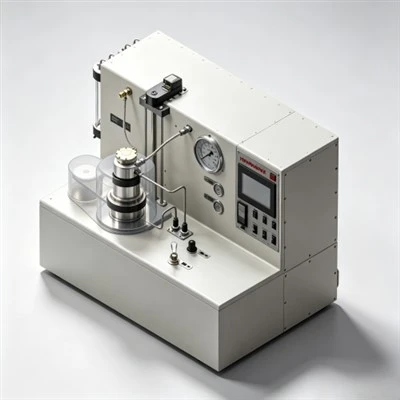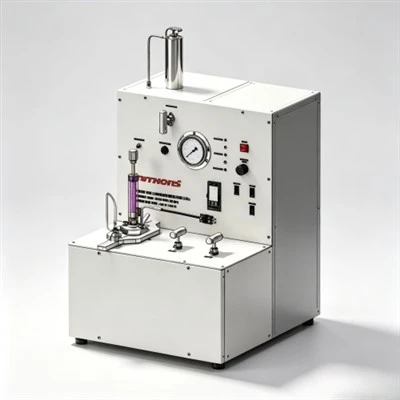

Analyzing the value of water loss meter instrumentation in oilfield operations demonstrates its critical role in preventing catastrophic downhole failures and ensuring long-term wellbore integrity. Modern API-compliant fluid loss testers evaluate cement slurries and drilling fluids under extreme high-pressure high-temperature (HPHT) conditions, measuring liquid filtration rates into permeable rock formations. Key aspects highlighting the value of water loss meter evaluation include optimizing fluid loss additive concentrations, preventing premature slurry flash dehydration, blocking gas migration through annular cement columns, and avoiding multi-million-dollar remedial cement squeeze jobs. By standardizing laboratory pre-job testing according to API Spec 10B criteria, drilling operators maximize the value of water loss meter data to safeguard reservoir permeability and extend the producing life of high-value oil and gas wells.
Recognizing the operational and economic significance defining the value of water loss meter testing enables drilling engineers and completion specialists to design resilient slurry formulations tailored to deepwater and ultra-deep reservoir environments.
1. Engineering Pillars Defining the Value of Water Loss Meters
In high-pressure well construction, uncontrolled liquid loss into porous rock matrices degrades cement slurry performance, disrupts equivalent circulating density (ECD) management, and damages reservoir permeability. Examining technical performance reveals how the value of water loss meter hardware enhances laboratory decision-making.
Primary engineering drivers establishing the value of water loss meter systems encompass:
- Simulation of Real Downhole Conditions: Dual-heating jackets and pressurized nitrogen manifolds allow laboratory technicians to simulate differential pressures up to 14 MPa and temperatures exceeding 230 °C.
- Mitigation of Flash Dehydration Risks: Quantifying liquid filtration rate prevents cement slurries from losing water rapidly during pumping, eliminating localized bridging and stuck casing strings.
- Prevention of Annular Gas Migration: Maintaining aqueous fluid containment within the cement matrix during its transition state stops high-pressure formation gas from forming channels to the surface.
- Optimization of Chemical Additive Formulation: Accurate test readings enable chemists to determine the precise threshold of synthetic polymer or latex additives required for target filtration limits (e.g., < 30 mL / 30 min).
Related Technical Reading: Discover how laboratory filtration testing applies across specific field operations: Key Application Areas of Water Loss Meters in Modern Oilfield Operations
2. Economic ROI and Risk Mitigation in Deepwell Operations
Beyond basic fluid characterization, the economic dimension highlights the value of water loss meter pre-job validation in reducing non-productive time (NPT) and capital expenditure.
Preventing Remedial Squeeze Cementing Operations
When primary cementing fails due to excessive fluid loss, poor mud displacement leaves channels behind the casing, requiring costly squeeze jobs. A single offshore squeeze cementing procedure can exceed $1,500,000 in rig time and materials. Demonstrating the value of water loss meter quality control lies in verifying slurry design prior to pumping, avoiding secondary remediation entirely.
Protecting Hydrocarbon Reservoir Permeability
Filtrate invasion into sensitive hydrocarbon-bearing formations causes clay hydration, fines migration, and pore throat blockage, reducing initial production rates. One of the central financial impacts confirming the value of water loss meter screening is protecting formation skin factors, ensuring maximum long-term oil and gas recovery.
Related Technical Reading: Learn about the core technical purpose driving laboratory filtration analysis: Core Engineering Purpose of Water Loss Meters in Oilwell Cementing
Regional Application Case: Tarim Basin Ultra-Deep HPHT Gas Exploration, Xinjiang, China
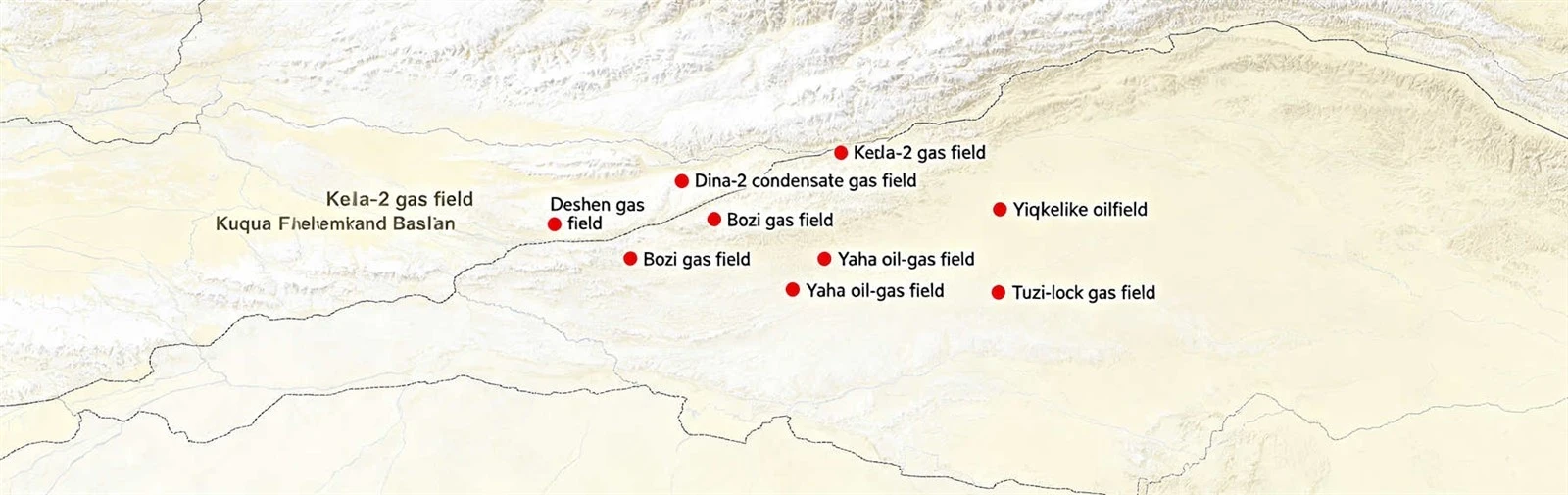
Case Application: Kuqa Foreland Basin, Tarim Field, Xinjiang, China
Regional Cementing Background in Ultra-Deep Tarim Formations
The Tarim Basin in Xinjiang contains complex natural gas reservoirs situated at depths exceeding 7,500 to 8,500 meters. Well construction involves drilling through thick salt-gypsum caprocks into ultra-deep Cretaceous sandstone formations characterized by bottom-hole static temperatures (BHST) above 180 °C and pore pressure gradients reaching 2.30 g/cm³.
Regional Cementing Challenges in Extreme HPHT Environments
Extreme thermal degradation caused conventional fluid loss additives to break down at high temperatures, causing severe slurry dehydration during long liner displacement jobs. Field engineers realized that fully leveraging the value of water loss meter testing was mandatory to design heat-resistant AMPS/humic acid copolymer slurry systems.
Technical Requirements for Standardized Ultra-Deep Testing Protocols
Rigorous regional engineering standards highlighting the value of water loss meter procedures enforced strict compliance targets:
- API fluid loss controlled strictly under 20 mL / 30 min at 175 °C under 6.9 MPa differential pressure.
- Spurt loss maintained below 1.0 mL to prevent formation damage in low-permeability gas sands.
- Zero free fluid (0.0 mL) measured across 2-hour static sedimentation evaluations.
Related Technical Reading: Compare key structural features and design advantages of modern testing units: Key Advantages of Water Loss Meter in Oilfield Cementing Slurry Evaluation
How Rigorous Laboratory Protocols Solved Field Challenges
Field testing facilities utilized high-precision HPHT units featuring pressurized back-pressure receivers and dynamic temperature controllers. Testing validated a tailored nano-silica and high-molecular-weight AMPS formulation, confirming stable 16 mL / 30 min filtration control under simulated 8,000-meter downhole conditions.
Regional Application Case Results
Establishing laboratory testing standards centered around the value of water loss meter verification produced remarkable field performance across 16 ultra-deep wells:
- Production liners successfully cemented to target depth without a single stuck pipe incident.
- Zero sustained casing pressure (SCP) observed across high-pressure gas zones during multi-stage testing.
- Ultrasonic Cement Bond Logs (CBL/VDL) demonstrated superior zonal isolation with 92%+ high-quality hydraulic bonding.
3. Quantitative Value Comparison: Uncontrolled vs. Standardized Fluid Loss
To quantify the financial impact, comparing job outcomes highlights how understanding the value of water loss meter operations directly protects operator capital.
| Slurry Performance Parameter | Uncontrolled Fluid Loss (> 150 mL) | Standardized API Control (< 30 mL) | Value Delivered to Operator |
|---|---|---|---|
| Slurry Dehydration Risk | High (Flash setting in narrow annulus) | Negligible (Stable pumping fluid properties) | Eliminates stuck pipe & prematurely set slurry |
| Gas Migration Prevention | Poor (Rapid hydrostatic pressure loss) | Excellent (Maintains barrier state pressure) | Prevents surface gas leaks & sustained casing pressure |
| Formation Damage (Skin) | Severe (Deep aqueous filtrate invasion) | Minimal (Thin, impermeable filter cake) | Preserves natural reservoir oil & gas productivity |
| Remedial Squeeze Needs | Frequent (30%–40% job failure rate) | Near Zero (< 2% field intervention rate) | Saves $1M–$3M per well in remedial workovers |
This stark comparison reinforces why maximizing the value of water loss meter pre-job validation remains a standard industry practice.
Best Practices to Ensure Accurate Value Generation from Equipment
To capture the full operational the value of water loss meter technology, laboratory personnel must adhere to rigorous maintenance and calibration protocols.
Essential laboratory operational rules include:
- Calibrate Pressure Sensors and PID Controllers: Verify pressure transducers and thermocouple channels against certified reference standards every 6 months.
- Inspect API Filter Screen Integrity: Check 325-mesh stainless steel screens for physical deformation, wire separation, or chemical scale buildup before every test run.
- Maintain Back-Pressure Receiver Assemblies: Clean valve seats and replace internal Viton O-rings to prevent back-pressure drops that allow filtrate steam flashing above 100 °C.
- Follow API Spec 10B Decompression Steps: Cool test cells vertically under residual pressure to safeguard operator health and prevent cell cap ejection.
Frequently Asked Questions (FAQ)
What is the primary value of a water loss meter in cementing operations?
The main the value of water loss meter testing is providing reliable data to prevent slurry flash dehydration, block gas channeling, protect formation productivity, and avoid costly remedial squeeze cementing.
How does a water loss meter protect reservoir formations?
By measuring filtration rates, engineers optimize additive formulations to form a thin, impermeable filter cake on borehole walls, preventing excess aqueous filtrate from damaging permeable gas/oil zones.
Why is API Spec 10B compliance crucial for water loss meters?
API Spec 10B defines standardized screen surface area (45.2 cm²), differential pressure (6.9 MPa), and temperature ramping rules, ensuring test results are repeatable and comparable across global oilfield laboratories.
What financial risks are avoided through water loss testing?
Pre-job testing prevents stuck drill pipe incidents, job failures, sustained casing pressure issues, and remedial squeeze jobs that can cost millions of dollars in rig downtime and workover expenses.
Standardizing Testing for High-Yield Well Construction
Understanding and implementing the value of water loss meter evaluation is a cornerstone of modern petroleum engineering and well completion design. By reliably predicting slurry behavior under high-pressure, high-temperature downhole stress, laboratory technicians enable operators to optimize additive efficiency, guarantee robust zonal isolation, and maximize hydrocarbon production safely and cost-effectively.
Maximize Your Cementing Quality Control with API Water Loss Testers
We supply precision medium-pressure and HPHT water loss meters, multi-cell units, and digital data-logging systems for oilfield laboratories worldwide.
Explore Our Testing Equipment PortfolioOptimizing Field Operations with Standardized Testing and Engineering Support
Achieving long-term zonal isolation and wellbore integrity requires a comprehensive understanding of both chemical additive performance and precise downhole condition simulation. Whether evaluating slurry thickening time, controlling fluid loss, or monitoring compressive strength development, operators must align laboratory testing protocols with rigorous API RP 10B-2 and ISO 10426 standards. Implementing standardized testing equipment ensures reliable, repeatable data that translates directly to successful field execution in complex HPHT and deepwater environments.
As well geometries become more complex and environmental regulations stricter, customized slurry designs and real-time laboratory verification are essential for preventing fluid migration and casing failure. Integrating high-performance testing instruments with advanced chemical packages minimizes operational risks, reduces wait-on-cement (WOC) time, and optimizes overall well construction economics across the entire asset lifecycle.
Need Customized Cementing Equipment or Chemical Testing Solutions?
Our technical team provides high-precision laboratory testing equipment and tailored slurry additive formulations to meet your specific field requirements. Contact our engineers today to optimize your cementing operations.
Contact Our Technical Experts