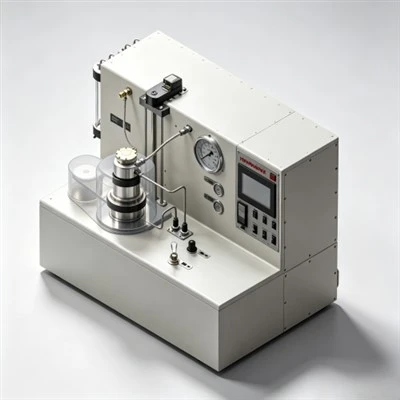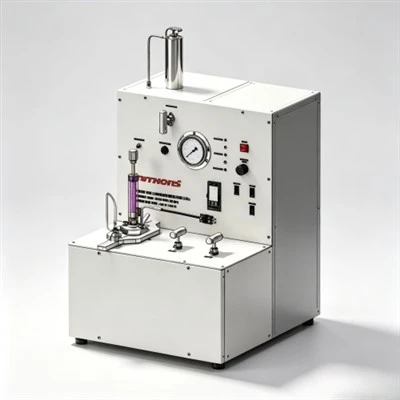

To answer what is accelerator in cementing, drilling engineers define it as a specialized chemical additive that shortens slurry thickening time, accelerates mineral hydration kinetics, and promotes rapid compressive strength development across low-temperature surface casing strings, shallow offshore conductor pipes, and cold-climate wellbores in North America, the North Sea, and Arctic frontiers. Evaluating what is accelerator in cementing reveals that low bottom-hole circulating temperatures (BHCT below 40°C to 50°C) severely retard tricalcium silicate (C₃S) dissolution, resulting in prolonged waiting-on-cement (WOC) downtime and increased risk of shallow water flow or gas channeling. By deploying targeted chemical compounds based on what is accelerator in cementing-such as calcium chloride (CaCl₂), sodium silicate, and alkali metal aluminates-operators achieve 500 psi compressive strength in under 6 to 8 hours, allowing early casing pressure testing and drilling resumption while preserving complete wellbore integrity.

The Operational Significance of Hydration Acceleration in Surface and Conductor Casings
In petroleum exploration and well construction, surface and conductor casing cementing serves as the foundational barrier that anchors subsea wellhead equipment, seals off shallow freshwater aquifers from drilling fluid contamination, and isolates unconsolidated, gas-bearing sands. However, unlike deep production liner jobs where high downhole temperatures accelerate cement setting, shallow well sections operate under cool geothermal gradients. Bottom-hole static temperatures in surface casing intervals frequently range from 15°C to 40°C (59°F to 104°F). In deepwater marine wells, near-freezing mudline seabed temperatures (4°C to 8°C) further suppress mineral hydration.
Under these low-temperature conditions, neat Class G or Class H Portland cement slurries hydrate sluggishly. The dissolution of calcium ions and the nucleation of interlocking calcium silicate hydrate (C-S-H) gel fibers proceed at an exceptionally slow pace. Without chemical modification, a cement column may remain in a fragile, low-strength fluid or gelled state for 24 to 48 hours. This prolonged delay forces expensive drilling rigs to remain idle during extended waiting-on-cement (WOC) intervals, generating substantial non-productive time (NPT) costs that can exceed tens of thousands of dollars per day.
Furthermore, an extended liquid-to-solid transition phase exposes the wellbore to critical geological hazards. As the cement slurry stands static, its internal gel structure begins to support its own hydrostatic column, resulting in hydrostatic pressure decay. If the pressure of the setting cement column drops below shallow formation pore pressure, shallow water flows, biogenic methane gas, or unconsolidated sands can channel through the setting matrix, destroying annular barrier integrity. Understanding what is accelerator in cementing allows operators to compress this dangerous transition period, accelerating structural hardening while maintaining safe pumpability during surface displacement.
Physicochemical Mechanisms: How Accelerators Drive Mineral Dissolution and Gel Formation
To analyze what is accelerator in cementing at the chemical level, one must evaluate the hydration mechanism of Portland cement clinker minerals. Standard oil well cements consist primarily of tricalcium silicate (C₃S), dicalcium silicate (C₂S), tricalcium aluminate (C₃A), and tetracalcium aluminoferrite (C₄AF). In low-temperature environments, the rate-limiting step in strength development is the initial dissolution of C₃S and the supersaturation of calcium ions (Ca²⁺) and hydroxide ions (OH⁻) in the aqueous pore solution. Chemical accelerators intervene through distinct microscopic mechanisms:
1. Enhanced C₃S Dissolution and Rapid Calcium Ion Saturation
Inorganic chloride accelerators, particularly calcium chloride (CaCl₂), operate by increasing the ionic strength of the aqueous phase. Chloride anions (Cl⁻) exhibit high catalytic mobility, penetrating the initial protective hydrate barrier that coats unhydrated C₃S grains. This penetration accelerates the leaching of calcium ions into the pore fluid, rapidly driving the solution to the critical supersaturation threshold required to precipitate amorphous calcium silicate hydrate (C-S-H) gel. By accelerating early silicate hydration, the dormant induction phase of the cement slurry is shortened from several hours to under 60 to 90 minutes.
2. Accelerated Ettringite Crystallization and Aluminate Hydration
Alkali-based accelerators, such as sodium silicate and sodium aluminate, interact directly with the aluminate and calcium phases. Sodium aluminate supplies immediate reactive aluminate ions, accelerating the reaction with interground gypsum to precipitate interlocking needle-like ettringite (AFt) crystals. This rapid crystallization establishes an initial rigid skeletal framework within the slurry, promoting quick setting and providing early mechanical resistance against fluid channeling.
3. Microstructural Densification and Rapid Compressive Strength Development
By stimulating rapid C-S-H gel nucleation, accelerators produce a finer, more dense fibrillar gel morphology that fills capillary pore spaces between hydrating cement particles. This microstructural densification reduces capillary porosity early in the curing process. Consequently, the cement column transitions rapidly through the critical static gel strength window (from 100 to 500 lbf/100 ft²), reaching the standard 500 psi (3.45 MPa) compressive strength threshold required to support casing weight and withstand drilling vibrations in a fraction of standard curing times.

Primary Chemical Classes of Oilfield Cement Accelerators
To answer comprehensively what is accelerator in cementing, one must categorize the chemical agents utilized across onshore and offshore drilling operations:
1. Calcium Chloride (CaCl₂)
Calcium chloride is the most widely utilized and cost-effective accelerator in the petroleum industry. Typically applied at concentrations of 1.0% to 3.0% by weight of cement (BWOC), CaCl₂ is highly soluble in mix water and provides powerful acceleration at temperatures between 10°C and 50°C (50°F to 122°F). It drastically shortens thickening times and accelerates 12-hour and 24-hour compressive strength gains. However, dosages exceeding 4.0% BWOC can induce premature slurry flash setting and excessive slurry thickening, making precise laboratory pilot testing essential.
2. Sodium Chloride (NaCl) at Low Dosages
Sodium chloride exhibits dual chemical behavior depending on its concentration. When blended into mix water at low concentrations (1.0% to 5.0% by weight of water, BWOW), NaCl functions as a mild accelerator, promoting C₃S dissolution and shortening setting times. Conversely, when salt concentrations exceed 10% to 18% BWOW, NaCl shifts into a retarder due to ionic saturation effects. Low-concentration NaCl systems are frequently deployed when cementing surface casings across shallow permafrost or brackish formation waters.
3. Sodium Silicates and Soluble Silicate Salts
Sodium metasilicate (Na₂SiO₃) and liquid sodium silicate solutions act as dual-purpose additives. In low-temperature surface applications, the reactive silicate ions combine rapidly with calcium ions dissolved from the cement, precipitating early C-S-H gel. In addition to accelerating initial set, sodium silicate acts as an extender, allowing the slurry to incorporate higher water ratios without excessive free water breakout, making it ideal for lightweight surface fill slurries.
4. Aluminum Salts and Non-Chloride Accelerators
In applications where chloride-induced stress corrosion cracking on high-grade alloy casing steel is a concern, non-chloride accelerators are mandatory. Chemical agents such as sodium aluminate, aluminum sulfate, calcium formate, and triethanolamine (TEA) provide rapid setting acceleration without introducing corrosive chloride ions. Aluminum-based accelerators trigger rapid flash hydration of aluminate phases, making them widely used in plug-and-abandonment (P&A) operations and rapid-set remedial squeeze treatments.
Comparative Technical Specifications of Core Cement Accelerators
Selecting the appropriate chemical formulation requires matching downhole temperature gradients, casing metallurgy, and operational pumping limits. The table below outlines core accelerator chemistries, operating ranges, and operational features:
Regional Application Case: Conductor and Surface Casing Cementing in the Cold-Water North Sea, UK Continental Shelf
Case Application: Central North Sea, UK Continental Shelf

Target Formation: Shallow Unconsolidated Tertiary Marine Sands & Shallow Biogenic Gas Horizons
Regional Cementing Background in Central North Sea Plays
In the offshore Central Graben and Montrose sectors of the UK North Sea, operators drill platform and subsea development wells penetrating thick sequences of unconsolidated Tertiary marine clays, silts, and water-bearing sands. Water depths range from 90 to 140 meters, where seabed water temperatures remain cold throughout the year (4°C to 7°C). Setting 20-inch surface casing strings at depths between 600 and 1,200 meters exposes cement slurries to low circulating temperatures ranging from 18°C to 26°C (64°F to 79°F). In addition, the shallow overburden contains pressurized biogenic gas pockets, requiring rapid slurry hardening to prevent annular channeling.
Regional Cementing Challenges in Cold-Water Marine Formations
Offshore drilling engineers in the North Sea encounter critical operational hurdles during surface casing cementing:
- Severe Low-Temperature Hydration Retardation: Slurry circulating temperatures below 25°C cause neat Class G cement to remain unhardened for over 24 hours, inflating rig waiting-on-cement costs on expensive offshore jackup rigs.
- High Risk of Shallow Gas Influx: Hydrostatic pressure decay during delayed setting permits shallow biogenic gas from Tertiary sands to breach the cement sheath, creating sustained casing vent flow.
- Narrow Mudline Fracture Margins: Unconsolidated shallow seabed formations exhibit low fracture breakdown gradients, demanding lightweight slurries (1.45 to 1.55 g/cm³) that must develop rapid compressive strength without inducing losses.
Technical Requirements for Accelerated Slurry Qualification
To qualify a lightweight 1.50 g/cm³ (12.5 ppg) Class G lead slurry paired with a 1.90 g/cm³ (15.8 ppg) Class G tail slurry, the operator established strict qualification benchmarks:
- Thickening time validation on an atmospheric and HPHT consistometer confirming a placement pumpability window of 2 hours and 30 minutes to 70 Bearden units of Consistency (Bc) at 22°C.
- Ultrasonic Cement Analyzer (UCA) verification proving the tail slurry reaches 500 psi (3.45 MPa) compressive strength in under 6.5 hours at 24°C curing temperature.
- Static gel strength (SGS) transition window (from 100 to 500 lbf/100 ft²) verified under 25 minutes to permanently block shallow biogenic gas migration.
How Specialized Accelerator Technology Addressed the Challenge
The offshore cementing engineering team resolved these low-temperature challenges by evaluating what is accelerator in cementing and selecting an optimized additive formulation. They formulated an accelerated Class G tail slurry incorporating KELIOIL high-purity calcium chloride accelerator (2.2% BWOC) paired with a low-temperature PVA fluid loss reducer and non-retarding SMF dispersant. The lead slurry utilized sodium metasilicate to extend water ratio while promoting early silicate reaction.
Consistometer testing confirmed a stable thickening time of 2 hours and 28 minutes to 70 Bc, providing a safe 75-minute operational cushion for casing displacement. UCA acoustic logging demonstrated that the tail slurry developed 500 psi compressive strength in exactly 5 hours and 45 minutes at 24°C, compressing the gas migration window to 18 minutes. During field execution, the slurries placed smoothly across the 20-inch casing annulus. The rig completed casing pressure testing ahead of schedule, reducing planned WOC time by 14 hours and recording zero shallow gas flow at surface. This successful operation proved that applying a thorough understanding of what is accelerator in cementing optimizes operational efficiency and ensures structural well integrity in cold marine environments.
Laboratory Evaluation Standards and Field Mixing Guidelines
Ensuring repeatable field results with chemical accelerators requires strict adherence to standardized laboratory testing protocols prior to wellsite execution:
- API Slurry Conditioning at Exact Downhole Temperatures: When testing what is accelerator in cementing, evaluate thickening time on consistometers calibrated to the exact bottom-hole circulating temperature (BHCT) rather than surface ambient temperature. A temperature difference of merely 5°C can shift accelerated thickening times by over 45 minutes.
- Continuous Compressive Strength Logging on UCA: Destructive crush testing of cubes cured in cold water baths is prone to error. Evaluate strength development using an Ultrasonic Cement Analyzer (UCA) programmed with dynamic temperature profiles to determine the exact hour the slurry reaches 500 psi and 1,000 psi compressive strength.
- Dissolution Sequence in Field Batch Mixing: Dry calcium chloride pellets release substantial exothermic heat when dissolved in water. Always dissolve CaCl₂ completely into mix water before introducing dry cement or other chemical additives to prevent localized flash setting.
- Additive Compatibility Screening: Screen accelerators against fluid loss additives and dispersants on rotational viscometers to verify that the accelerator does not cause severe plastic viscosity increases or particle flocculation.
Frequently Asked Questions (FAQ) Regarding Cement Accelerators
1. What happens if an oilfield cement slurry is overdosed with calcium chloride?
Overdosing CaCl₂ (dosages exceeding 3.5% to 4.0% BWOC) causes violent early C₃S and aluminate hydration, drastically shortening thickening time to under 45 minutes. This can trigger premature slurry flash setting inside casing strings or surface lines, resulting in stuck pipe and catastrophic well loss.
2. Can calcium chloride be used in high-temperature deep production liners?
No. In deep wells where temperatures exceed 60°C (140°F), Portland cement hydrates rapidly on its own and requires retarders rather than accelerators. Adding an accelerator under elevated temperatures would cause instant slurry gelation downhole.
3. Why are non-chloride accelerators preferred in certain well completions?
Chloride ions (Cl⁻) can initiate pitting and stress corrosion cracking on high-alloy steel casing tubulars (such as 13Cr or duplex stainless steel). In completions utilizing corrosion-resistant alloy (CRA) casing, non-chloride accelerators like calcium formate or sodium aluminate are specified to protect pipe metallurgy.
Strategic Chemical Selection for Reliable Low-Temperature Well Operations
In shallow, surface, and cold-water well construction, achieving fast, dependable zonal isolation relies fundamentally on recognizing what is accelerator in cementing and selecting the proper chemical formulation. Precise hydration acceleration cuts waiting-on-cement rig time, prevents shallow gas migration, and provides early structural stability for casing strings.
KELIOIL remains dedicated to manufacturing high-performance oilfield cementing additives under strict ISO 9001 and API Spec 10A quality control standards. By combining advanced chemical synthesis with comprehensive laboratory testing support, KELIOIL provides operators and cementing service contractors worldwide with dependable accelerator and additive solutions that maximize operational efficiency, protect the environment, and ensure lifelong wellbore integrity.
Accelerate Your Slurry Setting Times with KELIOIL Cementing Additives
Our technical chemical specialists provide customized low-temperature slurry formulation design, API Spec 10A consistometer and UCA verification testing, and reliable bulk supply of premium cementing chemicals tailored to demanding drilling programs.