
To answer what is washing agent in oil cementing additive, drilling engineers define it as an ultra-low-viscosity, chemically active preflush fluid engineered to break down non-aqueous drilling muds, dissolve oil-wet filter cakes, and alter casing and formation surfaces to a water-wet state before pumping cement slurries across complex wells in the Bohai Bay, the Middle East, and the Gulf of Mexico. Investigating what is washing agent in oil cementing additive demonstrates that pumping cement directly behind synthetic-based or oil-based muds leaves thick oily films that prevent hydration crystals from adhering to steel tubulars, generating micro-annuli and inter-zonal gas leaks. By deploying surfactant-solvent formulations based on what is washing agent in oil cementing additive, well construction teams achieve high turbulence at low pumping pressures, dissolve hydrophobic residues, and establish an optimal surface energy profile that guarantees maximum cement bond logging (CBL-VDL) integrity.

The Operational Imperative of Chemical Washing in Non-Aqueous Mud Environments
In modern upstream petroleum development, drilling extended-reach horizontal laterals, high-pressure high-temperature (HPHT) horizons, and reactive shale formations requires the use of non-aqueous drilling fluids (NAF), including synthetic-based muds (SBM) and invert-emulsion oil-based muds (OBM). While these drilling fluids provide excellent shale inhibition, lubricity, and borehole stability, they pose a major challenge to primary cementing operations. When drilling reaches total depth (TD), the borehole wall and the outer diameter of the casing string remain coated with a tenacious, hydrophobic layer composed of base oils, organophilic clays, asphaltic filtration controllers, and emulsified brine droplets.
Portland cement is fundamentally a hydrophilic hydraulic binder. For cement slurry to develop high mechanical shear bond strength and hydraulic sealing capacity against casing steel and subterranean rock formations, hydration products-primarily calcium silicate hydrate (C-S-H) gel and crystalline calcium hydroxide-must grow directly against clean, water-wet mineral and metallic surfaces. If cement slurry is pumped across an oil-wet wellbore without an effective chemical preflush, the aqueous slurry cannot displace the viscous oily film. The cement fails to bond, leaving an unbonded interface known as a micro-annulus.
Exploring what is washing agent in oil cementing additive illustrates how specialized preflush chemistry resolves this critical vulnerability. Unlike high-density, viscous spacers designed primarily for hydrostatic containment and bulk mud displacement, a washing agent is formulated with high concentrations of organic surfactants, mutual solvents, and penetrating detergents. Pumping an engineered chemical wash ahead of the spacer strips away residual drilling mud films, disintegrates adhered filter cake, and reverses the surface contact angle from oil-wet to water-wet, laying the physical and chemical foundation for permanent zonal isolation.
Physicochemical Mechanisms: How Washing Agents Clean and Alter Wettability
Examining what is washing agent in oil cementing additive requires analyzing the interfacial thermodynamics governing emulsion destabilization and fluid shear. Chemical washes achieve thorough decontamination through four coordinated physical and chemical mechanisms:
1. Emulsion Inversion and Surfactant Solubilization
Non-aqueous drilling fluids rely on powerful fatty acid emulsifiers to disperse internal water droplets into an external continuous oil phase. Chemical washing agents incorporate balanced blends of non-ionic ethoxylated alcohols, alkyl polyglucosides, and anionic sulfonates designed with a specific Hydrophilic-Lipophilic Balance (HLB, typically 10 to 14). When the washing fluid contacts the mud residue, these surfactants penetrate the oily outer shell, breaking down the emulsion structure. The base oil and organophilic solids are solubilized into spherical micelles, turning the immovable mud cake into a low-viscosity, water-dispersible micro-emulsion.
2. Mutual Solvent Dissolution of Viscous Hydrocarbon Layers
Washing agent formulations frequently incorporate mutual solvents-most notably ethylene glycol monobutyl ether (EGMBE) or specialized bio-derived terpenes. Mutual solvents exhibit complete thermodynamic miscibility in both hydrocarbon oils and water. The solvent molecules rapidly dissolve high-viscosity paraffinic chains, asphaltic fractions, and synthetic polymers present in the mud cake, dramatically reducing internal cohesion and allowing the filter cake to disintegrate rapidly under fluid movement.
3. Wettability Reversal from Oil-Wet to Water-Wet
The defining technical goal of a chemical washing agent is wettability reversal. When steel casing or reservoir rock is contaminated with oil-based mud, it displays a contact angle greater than 90°, making it water-repellent. As the washing fluid circulates past the surface, the hydrophobic alkyl chains of the surfactant adsorb onto the thin residual oil film, leaving their hydrophilic polar heads exposed outward into the aqueous fluid stream. This orientation lowers interfacial tension, raises surface energy, and shifts the contact angle to well below 30°. When the subsequent cement slurry enters the annulus, water molecules wet the steel surface immediately, enabling calcium silicate crystals to establish direct chemical bonding with the metal substrate.
4. Turbulent Flow Mechanics at Low Differential Pressures
Because washing agents possess low viscosity-often nearly identical to water (1 to 5 mPa·s)-they achieve high Reynolds numbers ($Re > 4,000$) at standard oilfield pump rates. This fluid turbulence generates high wall shear rates and intense micro-eddy currents across the casing exterior and borehole wall. These turbulent eddies physically scour thin filter cake and mechanical cuttings without generating excessive frictional backpressure that could exceed formation fracture breakdown gradients.

Chemical Formulations: Comparing Washing Agents and Weighted Spacers
In field practice, engineers often ask about the practical differences between chemical washes and spacers. While both fluids serve mud removal purposes, their operational properties and downhole functions differ considerably. The table below compares the physical and chemical distinctions between washing agents and displacement spacers:
Regional Application Case: Deep Extended-Reach Production Casing Cementing in the Caofeidian Field, Bohai Bay Basin, China
Case Application: Caofeidian Concession, Bohai Bay Offshore Basin, China

Target Formation: Deep Shahejie Paleogene Lacustrine Sandstones Drilled with Synthetic-Based Mud (SBM)
Regional Cementing Background in Bohai Bay Offshore Extended-Reach Wells
In the Caofeidian shallow-water oilfields of the Bohai Bay Basin, offshore operators develop stacked lacustrine sandstone reservoirs within the Oligocene Shahejie and Dongying formations. To maximize drainage from offshore platform slots, operators drill extended-reach directional and horizontal wells with total measured depths (MD) reaching 4,200 to 4,800 meters and maximum wellbore inclinations exceeding 68 degrees. The pay intervals are drilled with 12.8 ppg (1.53 g/cm³) high-lubricity synthetic-based mud (SBM) to maintain borehole stability across thick, reactive mudstones. Bottom-hole static temperatures reach 130°C to 142°C (266°F to 288°F) with circulating pressures exceeding 7,500 psi.
Regional Cementing Challenges in Deviated Wellbores
Cementing 9-5/8 inch intermediate and 7-inch production casing strings in the Caofeidian field presents significant operational challenges:
- Persistent Low-Side Mud Channels: In highly deviated wellbores (60° to 70°), gravity causes drilling cuttings and dense synthetic mud cake to settle along the low side of the annulus, resisting displacement by standard cement slurries.
- High Oil-Wet Casing Contamination: The continuous phase of the synthetic mud leaves a resilient paraffinic coating on the casing steel, which prevents cement from developing shear bond strength.
- Narrow Pore-Frac Pressure Margins: The equivalent circulating density (ECD) margin across unconsolidated sandstones is less than 0.7 ppg. Generating sufficient displacement force without exceeding the formation fracture breakdown pressure requires precise rheological balancing.
Technical Requirements for Chemical Wash Qualification
To qualify a wellbore cleaning train ahead of a 15.8 ppg (1.90 g/cm³) Class G cement slurry, the operator established strict qualification criteria:
- Wettability reversal testing demonstrating 100% water-wetting on SBM-coated steel casing coupons within 6 minutes of dynamic contact time.
- Filter cake dissolution efficiency exceeding 90% in high-temperature rotating-cylinder cleaning apparatus at 130°C.
- Fluid compatibility screening confirming zero emulsion gelation when mixed with field synthetic mud and subsequent spacer fluids across all test ratios.
How Specialized Washing Agent Technology Addressed the Challenge
The offshore technical team formulated an advanced preflush train by applying the chemical principles of what is washing agent in oil cementing additive. They deployed KELIOIL concentrated chemical washing agent, formulated with mutual solvents and ethoxylated surfactant cleaners, pumped ahead of a weighted bio-polymer spacer. The washing agent broke the synthetic mud emulsion in under 4 minutes during laboratory wettability tests, converting the steel coupon contact angle from 115° (heavily oil-wet) to 18° (strongly water-wet).
During field execution, 40 barrels of the chemical wash were pumped ahead of 70 barrels of weighted spacer at an injection rate of 6.2 bpm, generating intense turbulent flow across the 1,250-meter openhole interval without exceeding formation fracture pressure. The washing agent dissolved low-side mud residues cleanly, allowing the weighted spacer to establish a sharp, uniform displacement interface. Subsequent radial acoustic cement bond logs (CBL-VDL) confirmed 100% circumferential bonding across both the target pay sands and the casing shoe track, recording bond index values above 0.92. Zero sustained casing pressure was detected, proving that understanding what is washing agent in oil cementing additive ensures reliable zonal isolation in complex extended-reach wells.
Laboratory Evaluation Standards and Quality Assurance Protocols
Validating chemical washing agents requires standardized laboratory screening adhering to API RP 10B-2 guidelines prior to field pumping:
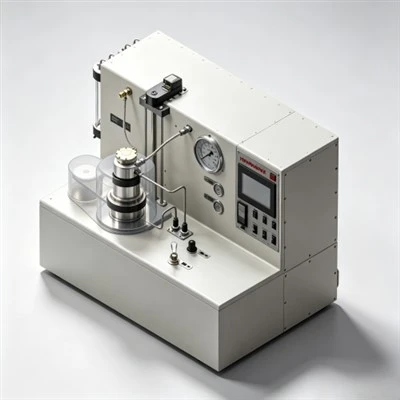
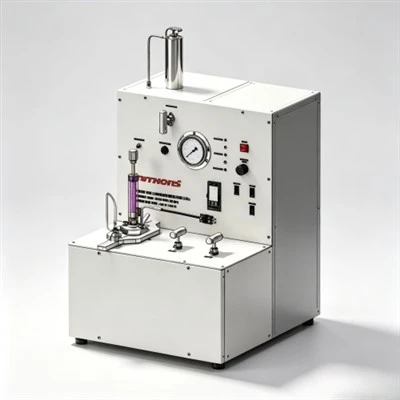
- Rotational Wettability Evaluation: Measure wettability alteration using rotational conductivity cells or contact-angle goniometry. Immerse a clean steel casing coupon into field drilling mud for 10 minutes, transfer it to the agitated washing agent at downhole temperature, and monitor the electrical resistance curve. A sudden rise in conductivity indicates successful stripping of non-conductive oil films and water-wet restoration.
- Dynamic Filter Cake Removal Tests: Build a drilling mud filter cake on ceramic filtration discs in a high-temperature high-pressure (HTHP) filter press. Circulate the chemical wash across the filter cake face for 10 minutes at circulating temperature and quantify cake mass loss to verify dissolution efficiency.
- Multi-Fluid Compatibility Screening: Evaluate mixtures of drilling mud, washing agent, spacer, and cement slurry across standard volumetric ratios (95:5, 75:25, 50:50, 25:75, and 5:95) on rotational viscometers to confirm zero precipitation or sludge formation.
- Minimum Contact Time Sizing: Run 3D displacement simulators to ensure the pumped wash volume provides at least 4 to 6 minutes of turbulent contact time across every annular interval, followed by a minimum of 8 to 10 minutes of weighted spacer contact.
Frequently Asked Questions (FAQ) Regarding Well Cementing Washing Agents
1. Why cannot an unweighted chemical wash be used alone without a weighted spacer?
An unweighted chemical wash has a density near that of water (8.33 to 9.0 ppg). If pumped in large volumes without a subsequent weighted spacer, the loss of annular hydrostatic head can cause well control underbalance, allowing high-pressure formation gas or brine to invade the wellbore. In addition, an unweighted wash lacks the viscosity required to mechanically push heavy, gelled drilling mud out of large washouts.
2. How does a washing agent improve cement bond log (CBL) results?
CBL tools measure acoustic attenuation between casing steel and the surrounding sheath. If oil-based mud films remain on the casing, an acoustic micro-annulus forms, reflecting acoustic energy and registering false poor bonding. Chemical washes strip these oily films, allowing cement hydration crystals to bond directly to the steel, resulting in high acoustic attenuation and superior bond index scores.
3. Are chemical washing agents compatible with water-based mud (WBM) systems?
Yes. While washing agents are essential for non-aqueous fluids (SBM/OBM), specialized formulations containing polyphosphate dispersants and clay thinners are also deployed in water-based muds. They disperse dehydrated bentonitic filter cakes, remove polymer residues, and clean tubular walls prior to cement placement.
Strategic Chemical Selection for Reliable Wellbore Zonal Isolation
Effective wellbore cleaning is a critical engineering prerequisite that directly governs primary cementing success. Understanding what is washing agent in oil cementing additive enables petroleum engineers to remove stubborn non-aqueous filter cakes, eliminate inter-fluid contamination, and ensure complete water-wetting along casing tubulars.
KELIOIL remains committed to manufacturing high-performance chemical washing agents, mutual solvent packages, and specialized spacer additives under strict ISO 9001 and API Spec 10A quality control standards. By combining advanced surfactant chemistry with rigorous laboratory testing support, KELIOIL provides operators and cementing service contractors worldwide with dependable chemical solutions that maximize displacement efficiency, protect the environment, and ensure lifelong wellbore integrity across complex energy horizons.
Optimize Your Wellbore Cleaning and Bonding with KELIOIL Solutions
Our technical chemical specialists provide customized washing agent formulations, API wettability reversal testing, and reliable bulk supply of premium cementing additives tailored to demanding onshore and offshore drilling operations.