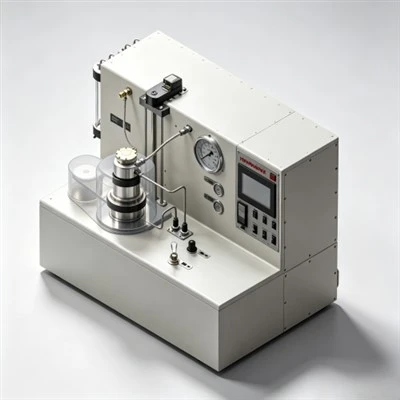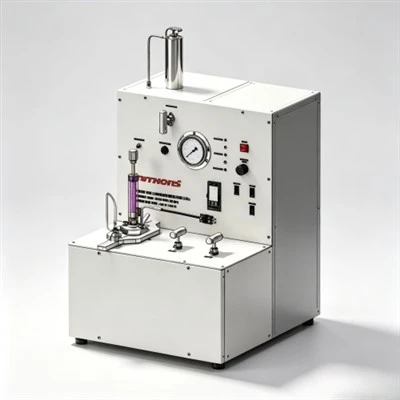

When laboratory managers evaluate what maintenance is required for an hpht consistometer, they establish disciplined operational protocols covering post-test chemical de-scaling, elastomeric seal replacement, deadweight torque calibration, and high-pressure hydraulic inspection across testing facilities supporting deep drilling projects in the Middle East, the Gulf of Mexico, and the Tarim Basin. Exploring what maintenance is required for an hpht consistometer demonstrates that operating under extreme conditions-temperatures up to 315°C and pressures reaching 275 MPa-induces mechanical wear, thermal degradation of mineral oil, and calibration drift in potentiometer springs. By implementing standard maintenance schedules based on what maintenance is required for an hpht consistometer in strict accordance with API Spec 10A and API RP 10B-2, laboratories eliminate mechanical friction artifacts, protect technicians from high-pressure hazards, ensure repeatable thickening time measurements, and prevent catastrophic casing flash setting in field operations.

The Operational Imperative of Preventive Maintenance in Slurry Testing
In petroleum well construction, primary cementing represents the structural and hydraulic barrier that anchors casing strings, prevents hydrocarbon fluid cross-flow, protects shallow freshwater aquifers from contamination, and shields tubular steel from corrosive downhole brines. However, evaluating slurry thickening time requires laboratory instruments to operate under harsh thermodynamic environments. An HPHT consistometer subjects cement slurries to bottom-hole circulating temperatures (BHCT) exceeding 180°C to 220°C and confining hydrostatic pressures surpassing 100 MPa (14,500 psi).
Because cement is an abrasive, reactive suspension containing hydrating calcium silicates and aluminates, testing equipment is exposed to severe chemical and mechanical stresses. Leftover cement residue inside the slurry cup or on the stationary paddle blades alters fluid shear geometry. A worn pivot bearing increases rotational friction, generating false torque resistance that mimics premature slurry gelation. Furthermore, deteriorating elastomeric seals or high-pressure copper gaskets risk explosive pressure releases at elevated temperatures.
Understanding what maintenance is required for an hpht consistometer enables laboratory managers to transition from reactive repairs to systematic preventive maintenance. Rigorous execution of daily cleaning, periodic calibration, seal replacement, and hydraulic fluid servicing preserves instrument accuracy, extends autoclave vessel longevity, and ensures that laboratory thickening curves reflect true downhole slurry performance.
Core Maintenance Domains: Comprehensive Inspection Workflows
A thorough evaluation of what maintenance is required for an hpht consistometer encompasses five critical engineering subsystems:
1. Slurry Cup, Paddle, and Mechanical Pivot Maintenance
Immediately upon test completion, before the slurry hardens, the slurry cup must be disassembled and washed with pressurized water and non-abrasive brushes. Any residual scale on the stationary paddle or internal container wall must be removed using mild inhibited acid washes or ultrasonic cleaning baths. Technicians must inspect the lower pivot pin and upper bushing for mechanical play. If clearance exceeds 0.05 mm or if pitting is detected, components must be replaced to prevent paddle wobble, which distorts Bearden consistency (Bc) torque readings.
2. High-Pressure Seals, O-Rings, and Vessel Closures
The autoclave closure utilizes specialized elastomeric O-rings, PEEK backup rings, and metallic seal rings. Technicians must inspect these components before every test run. High downhole temperatures cause elastomeric hardening, micro-cracking, and permanent compression set. O-rings exhibiting flattening or surface scoring must be discarded immediately. Threaded closure rings and locking bolts must be inspected for galling and lubricated with high-temperature anti-seize compound to ensure specified torque engagement.
3. Hydraulic Oil Reservoir and Intensifier System Servicing
The hydraulic mineral oil inside the pressure vessel serves as both the pressure-transmitting medium and convective heating bath. Over repeated thermal cycles up to 200°C+, mineral oil undergoes oxidative degradation, darkening in color and accumulating suspended carbon particles. Degraded oil impairs convective heat transfer and fouls hydraulic check valves. Oil should be filtered or replaced every 50 to 100 test runs. Concurrently, the air-driven hydraulic intensifier pump, relief valves, and inline strainers must be checked for oil bypass and pressure stability.
4. Heating Band and Thermocouple Verification
Electrical resistance heaters wrapped around the autoclave vessel must be checked quarterly using digital multimeters to verify balanced resistance across elements. Thermocouple probes-particularly the internal probe positioned inside the paddle shaft-must be inspected for physical straightness and calibration accuracy. A bent probe causes measurement lag, while scale accumulation on the sheath introduces thermal offsets that distort automated PID temperature ramps.

Standardized Maintenance and Calibration Schedule
To establish quality assurance under API Spec 10A, cementing laboratories must follow a defined preventive maintenance schedule. The table below details operational frequencies, maintenance tasks, and diagnostic criteria:
Regional Application Case: Deep Carbonate Gas Liner Cementing in the Ahwaz Oilfield, Khuzestan Province, Iran
Case Application: Ahwaz Oilfield, Khuzestan Province, Southwestern Iran

Target Formation: Deep HPHT Khami Sour Gas Carbonates (High Pressure, High H₂S & Narrow ECD Window)
Regional Cementing Background in Khuzestan Carbonate Plays
In the Ahwaz field of southwestern Iran, drilling operations penetrate overpressured gas-bearing carbonate reservoirs within the Cretaceous-Jurassic Khami Group. Well measured depths regularly exceed 4,900 to 5,300 meters (16,000 to 17,400 feet). Downhole conditions are severe: bottom-hole static temperatures (BHST) climb to 165°C to 175°C (329°F to 347°F) with formation pressures exceeding 12,000 psi (82.7 MPa). The formations produce high concentrations of sour gas (H₂S up to 6% and CO₂ up to 8%). Cementing 7-inch production liners across the Khami interval requires heavy Class G slurry systems (1.98 to 2.10 g/cm³) weighted with barite and stabilized by high-temperature polymers.
Regional Cementing Challenges in Extreme HPHT Formations
Operators cementing deep production liners across the Khami formation encounter critical technical hurdles:
- Severe Retarder Sensitivity: At temperatures above 160°C, minor variations of 0.05% BWOC in chemical retarder concentration cause large swings in thickening time, risking premature flash setting or multi-day setting delays.
- Narrow Equivalent Circulating Density (ECD) Windows: Close margins between formation pore pressure and fracture breakdown pressure demand low-viscosity slurries that maintain steady rheology without premature gelation spikes.
- Risk of Sour Gas Channeling: An extended transition time during slurry phase changes allows sour gas invasion into the decaying hydrostatic column, creating sustained casing pressure (SCP).
Technical Requirements for Slurry Qualification
To qualify a heavy 1.98 g/cm³ (16.5 ppg) Class G cement system across the Khami gas zone, the operator established strict performance criteria:
- Thickening time validation on an HPHT consistometer confirming a pumpability window of 5 hours and 30 minutes to 70 Bc under simulated dynamic ramp schedules.
- API fluid loss control strictly below 35 mL/30 min at 165°C using an automated high-temperature fluid loss cell to prevent dehydration.
- Static gel strength (SGS) transition window (from 100 to 500 lbf/100 ft²) of less than 30 minutes, with 24-hour compressive strength exceeding 3,500 psi (24.1 MPa).
How Rigorous Consistometer Maintenance Resolved the Field Challenge
To ensure test accuracy, the operator's central laboratory deployed NITHONS automated HPHT consistometers. Prior to formulating the slurry, technicians reviewed what maintenance is required for an hpht consistometer. Technicians replaced degraded mineral oil in the autoclave vessel, performed deadweight potentiometer calibrations across 0 to 100 Bc, and replaced high-temperature fluoropolymer seals to prevent micro-leaks under 105 MPa pressure.
Testing confirmed that blending KELIOIL synthetic AMPS high-temperature retarders with fluid loss reducers and 35% BWOC silica flour yielded an optimal thickening curve. The slurry maintained a flat consistency of 18 Bc for 4 hours and 30 minutes, before rising sharply to 70 Bc at 5 hours and 38 minutes. During field execution at Well Ahwaz-412, the slurry placed smoothly across the 1,050-meter liner without surface pressure anomalies or ECD spikes. Post-job radial acoustic cement bond logs (CBL-VDL) confirmed 100% circumferential bonding across the Khami sour gas pay zone. Subsequent negative pressure testing recorded zero sustained annular pressure, proving that understanding what maintenance is required for an hpht consistometer provides the empirical reliability required to eliminate cementing failures in extreme HPHT plays.
Digital Record-Keeping, Software Diagnostics, and Laboratory Safety
Modern laboratory accreditation under ISO 17025 and API Spec 10A requires comprehensive documentation and software integrity checks:
- Automated Data-Logging Verification: Verify communication between consistometer hardware transceivers and data-logging software. Test sample acquisition rates (minimum 1 Hz) and ensure consistency curves, temperature ramps, and pressure profiles are archived in secure, audit-traceable digital formats.
- Equipment Service Logs: Maintain detailed maintenance logs tracking part serial numbers, O-ring replacement dates, potentiometer calibration curves, and mineral oil change intervals. Documenting maintenance history enables predictive part replacement before in-test failures occur.
- Laboratory Pressure Safety Protocols: Technicians must wear thermal heat-resistant gloves, safety face shields, and eye protection when servicing pressurized vessels. Confirm that automated overpressure interlocks, electronic limit switches, and physical bursting discs are fully functional before initiating testing.
- Controlled Post-Test Depressurization: Never depressurize the vessel while oil temperatures exceed 60°C (140°F). Engage internal cooling coils to circulate chilled water until the autoclave cools safely, preventing explosive hot oil flashing.
Frequently Asked Questions (FAQ) Regarding HPHT Consistometer Maintenance
1. What causes erratic, jagged consistency spikes during an HPHT consistometer test?
Erratic consistency spikes usually indicate mechanical friction rather than slurry hydration. Common causes include cement residue inside the paddle pivot bearing, a bent paddle shaft, loose potentiometer wiper contacts, or an off-center slurry cup rotating against internal heating walls. Thorough post-test cleaning and pivot clearance checks eliminate these mechanical artifacts.
2. How often should mineral oil be replaced in an HPHT consistometer vessel?
Under continuous testing at temperatures exceeding 150°C, mineral oil should be replaced every 50 to 100 test runs, or whenever visual inspection reveals fluid darkening, particulate sludge, or an acrid burnt odor. Clean mineral oil ensures uniform convective heat transfer and protects hydraulic intensifier valves from fouling.
3. Why is deadweight calibration mandatory for the potentiometer mechanism?
The potentiometer spring operates under repetitive mechanical deflection. Over time, metal fatigue, thermal exposure, and mechanical shock cause spring relaxation, leading to measurement drift. Deadweight calibration with certified API weights applies known mechanical torque to the spring, ensuring that voltage output translates accurately into true Bearden consistency units.
Strategic Recommendations for Cement Testing Laboratory Management
As well construction programs navigate deeper formations, narrower hydraulic margins, and higher thermodynamic gradients, achieving reliable zonal isolation depends directly on empirical laboratory precision. Understanding what maintenance is required for an hpht consistometer enables drilling and completion teams to formulate dependable slurries, optimize chemical additive packages, and eliminate downhole cementing failures.
NITHONS engineers and manufactures high-performance HPHT consistometers, dual-cell testing apparatus, and API-compliant calibration systems under strict Sino-Japanese joint venture quality standards. By integrating robust digital data logging with precision thermal and pressure controls, NITHONS equips operating companies and service contractors worldwide with dependable laboratory hardware that ensures wellbore safety, prevents non-productive rig time, and maximizes hydrocarbon asset productivity.
Upgrade Your Cement Testing Precision with NITHONS Consistometers
Our technical instrument specialists provide complete laboratory equipment audits, automated HPHT consistometer packages, API calibration fixtures, and interchangeable spare parts engineered for high-pressure high-temperature testing operations.