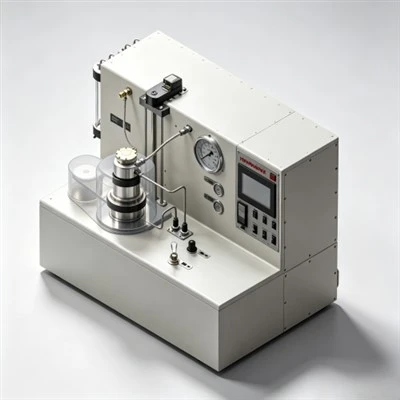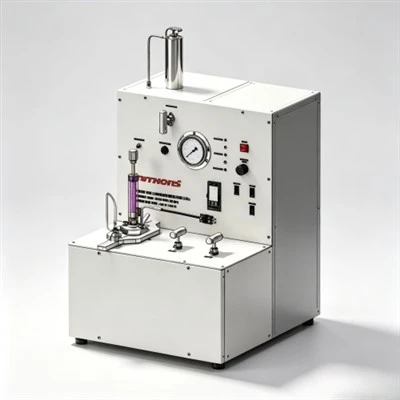

The target cement setting time in oil well cementing typically ranges between 4 and 6 hours under dynamic bottom-hole circulating conditions, ensuring sufficient pumpability for complete annular placement while preventing severe operational delays or gas channeling in deep drilling plays across regions like the Middle East, North America, and offshore basins. Controlling the cement setting time in oil well cementing requires a precise balance of chemical retarders, accelerators, and fluid loss additives tailored to bottom-hole static temperature (BHST), depth, and wellbore pressure. By evaluating slurry hydration kinetics on API-certified high-pressure high-temperature (HPHT) consistometers and ultrasonic cement analyzers, drilling engineers systematically calibrate the cement setting time in oil well cementing to guarantee annular zonal isolation, prevent premature slurry flash setting inside casing strings, and eliminate costly waiting-on-cement (WOC) downtime.

The Operational Significance of Hydration Kinetics and Setting Windows
In oil and gas well construction, cementing is the primary structural operation that creates an impermeable seal between the casing string and the surrounding rock formations. Managing the cement setting time in oil well cementing represents one of the most critical design responsibilities for petroleum engineers. Unlike standard construction concrete, oil well cement must remain in a low-viscosity, pumpable fluid state while traveling through thousands of meters of casing, turning around the casing shoe, and ascending the annular space. Once placed at the target depth, the slurry must transition rapidly from a liquid state into a rigid solid to establish mechanical integrity and block formation gas migration.
Operational failure occurs when the cement setting time in oil well cementing deviates from the engineered design window. If a cement slurry sets prematurely during pumping operations-a catastrophic phenomenon known as flash setting-the mixture locks up inside the casing or drill string. This results in stuck pipe, plugged surface lines, lost well sections, and costly sidetracking procedures. Conversely, if excessive chemical retarder delays the cement setting time in oil well cementing, the extended liquid state prolongs the decay of hydrostatic pressure. This pressure loss permits high-pressure formation gas to channel through the setting matrix, creating micro-annuli, sustained casing pressure (SCP), and compromised zonal isolation.
Consequently, achieving an optimal cement setting time in oil well cementing requires rigorous chemical formulation and laboratory testing. By establishing thickening time schedules aligned with API Specification 10A and API Recommended Practice 10B-2, engineers ensure that cement slurries maintain a mandatory safety buffer-typically 90 to 120 minutes beyond planned displacement times-while achieving rapid early compressive strength development once static downhole.
Key Factors Governing Setting Time Across Different Well Depths
There is no single universal value for the cement setting time in oil well cementing because downhole thermodynamics and physical displacement geometries vary across well classifications:
- Shallow and Conductor Casing Operations: In shallow wells where bottom-hole temperatures remain below 40°C to 50°C (104°F to 122°F), displacement distances are short. In these intervals, a shorter cement setting time in oil well cementing of 2 to 3.5 hours is targeted, often accelerated using calcium chloride (CaCl₂) or sodium metasilicate to minimize rig waiting-on-cement time.
- Intermediate and Extended-Reach Intervals: As measured depth increases, longer displacement times and higher circulating friction require an engineered cement setting time in oil well cementing of 4 to 5 hours, balancing pumpability with slurry stability.
- Deep and HPHT Production Liners: In deep horizons where bottom-hole static temperatures exceed 150°C to 180°C (302°F to 356°F) and pressures exceed 10,000 psi (68.9 MPa), hydration reactions accelerate exponentially. Managing the cement setting time in oil well cementing in deep wells requires advanced synthetic polymer retarders to provide a stable 5 to 6.5 hour window to 70 Bearden units of Consistency (Bc).

The Role of Cementing Additives in Regulating Setting Kinetics
Precise control over the cement setting time in oil well cementing relies on the synergistic action of specialized chemical additives. Unmodified Portland cement cannot provide the predictability required for complex well designs. Key additive categories engineered to govern setting behavior include:
1. High-Temperature and Deep-Well Chemical Retarders
Retarders are the primary chemical agents used to extend the cement setting time in oil well cementing. They function by adsorbing onto the crystal nuclei of hydrating tricalcium aluminate (C₃A) and tricalcium silicate (C₃S), forming temporary protective barriers that delay the nucleation and growth of calcium silicate hydrate (C-S-H) gel. Advanced synthetic AMPS terpolymers and modified lignosulfonates provide linear, predictable extension of the cement setting time in oil well cementing without causing abrupt gelation spikes or slurry sedimentation.
2. High-Performance Fluid Loss Control Additives
Filtration control directly influences the cement setting time in oil well cementing. When slurry water escapes into permeable formations under differential pressure, the local water-to-cement ratio drops rapidly. Slurry dehydration causes artificial premature thickening and flash setting. By incorporating AMPS-based synthetic polymer fluid loss additives, engineers maintain API fluid loss below 50 mL/30 min, ensuring that the designed cement setting time in oil well cementing remains stable throughout the entire displacement interval.

3. Early Strength Accelerators and Dispersants
While retarders extend placement windows, early strength accelerators shorten the cement setting time in oil well cementing when drilling in low-temperature environments or conductor pipe applications. Accelerators increase the rate of calcium ion dissolution, promoting early silicate hydration. Concurrently, sulfonated dispersants optimize particle distribution, ensuring uniform hydration kinetics that support a predictable cement setting time in oil well cementing across wide temperature ranges.
Comparative Technical Specifications of Setting Control Additives
Engineering an accurate cement setting time in oil well cementing requires matching chemical additive functionality with bottom-hole temperature and salinity conditions. The table below outlines core additive categories, chemistries, and operational design limits:
Regional Application Case: Deep Carbonate Gas Liner Cementing in the Ahwaz Oilfield, Khuzestan, Iran
Case Application: Ahwaz Oilfield, Khuzestan Province, Southwestern Iran

Target Formation: Deep Khami Group HPHT Sour Gas Carbonates (Extreme Temperature & Pressure)
Regional Cementing Background in Khuzestan Carbonate Plays
In the Khuzestan Province of southwestern Iran, drilling in the giant Ahwaz and Marun fields targets deep, overpressured gas-bearing carbonate reservoirs within the Cretaceous-Jurassic Khami Group. Well depths regularly exceed 4,900 meters (16,000 feet), where bottom-hole static temperatures reach 165°C to 175°C (329°F to 347°F) with bottom-hole pressures surpassing 12,000 psi (82.7 MPa). These formations contain sour gas concentrations with H₂S and CO₂, demanding dense, gas-tight Class G slurries engineered for exact cement setting time in oil well cementing operations.
Regional Cementing Challenges in Extreme HPHT Environments
Operators in the Ahwaz field encounter critical technical hurdles when cementing 7-inch production liners:
- Severe Retarder Over-Sensitivity: At temperatures above 160°C, slight variations of 0.05% in chemical retarder concentration cause massive swings in the cement setting time in oil well cementing, risking either premature setting or 24-hour setting delays.
- Narrow Hydraulic ECD Tolerance: Close margins between pore pressure and formation fracture breakdown pressure require low-viscosity slurries that maintain steady rheology without premature gelation spikes.
- Risk of Sour Gas Channeling: An extended transition time during slurry phase changes allows sour gas invasion, creating sustained casing pressure at the wellhead.
Technical Requirements for High-Temperature Slurry Qualification
To qualify a high-density 1.98 g/cm³ (16.5 ppg) slurry for the deep liner, the operator established strict qualification criteria for the cement setting time in oil well cementing:
- Thickening time validation on an HPHT consistometer confirming a pumpability window of 5 hours and 30 minutes to 70 Bc under simulated wellbore ramp schedules.
- API fluid loss control below 35 mL/30 min at 165°C using an automated high-temperature fluid loss cell to prevent dehydration.
- Static gel strength (SGS) transition window (from 100 to 500 lbf/100 ft²) of less than 30 minutes, with 24-hour compressive strength exceeding 3,500 psi (24.1 MPa).
How Specialized Additives and Pre-Job Testing Addressed the Challenge
Using KELIOIL synthetic polymer retarder, AMPS-based fluid loss additives, and 35% BWOC silica flour, cementing chemists formulated an optimized Class G slurry. Testing on a NITHONS HPHT consistometer verified an exact cement setting time in oil well cementing of 5 hours and 38 minutes to 70 Bc, providing a reliable 120-minute safety buffer over planned displacement operations.
Ultrasonic cement analyzer logs confirmed that the slurry transitioned through the critical gas migration period in 24 minutes and achieved a 24-hour compressive strength of 3,720 psi (25.6 MPa). During field execution, the cement slurry was pumped seamlessly across the 1,050-meter liner. Post-job radial acoustic bond logs (CBL-VDL) demonstrated superior 360-degree bonding and zero sustained annular pressure, proving that precise chemical control over the cement setting time in oil well cementing eliminates downhole integrity risks.

Pre-Job Laboratory Testing and Verification Protocols
Field success requires that the engineered cement setting time in oil well cementing be verified under standardized laboratory conditions prior to wellsite execution:
- Testing with Field Mix Water and Cement Samples: Always evaluate the cement setting time in oil well cementing using actual rig mix water and representative batch samples of cement. Variations in dissolved minerals, sulfates, and pH significantly shift slurry setting kinetics.
- HPHT Consistometer Schedule Calibration: Simulate exact geothermal heating and pressure ramp schedules matching the well's bottom-hole circulating temperature (BHCT) and bottom-hole circulating pressure (BHCP) to ensure consistency curves reflect actual wellbore transit.
- Static Gel Strength (SGS) Transition Logging: Measure the transition time between 100 and 500 lbf/100 ft² on an ultrasonic analyzer to verify the cement setting time in oil well cementing minimizes exposure to gas migration.
- Compatibility Testing with Drilling Fluids: Conduct multi-ratio contamination tests between cement slurry, chemical spacers, and drilling mud on rotational viscometers to confirm inter-fluid contact does not trigger premature slurry gelation.
Frequently Asked Questions (FAQ) Regarding Cement Slurry Setting
1. What is the standard recommended cement setting time for intermediate casing jobs?
For standard intermediate casing jobs, the recommended cement setting time in oil well cementing is generally 4 to 5.5 hours to 70 Bc on an HPHT consistometer. This window provides ample time for batch mixing, surface pumping, casing transit, and mud displacement, along with a mandatory 90-minute safety buffer for operational contingencies.
2. How does bottom-hole circulating temperature (BHCT) differ from static temperature (BHST) when determining setting time?
BHCT represents the dynamic temperature experienced by the slurry during active fluid circulation and pumping, which is cooler than the static formation temperature (BHST). Thickening time and the cement setting time in oil well cementing are tested on HPHT consistometers at BHCT, whereas long-term compressive strength development is evaluated at BHST.
3. What happens if a slurry is over-retarded?
Over-retardation excessively delays the cement setting time in oil well cementing, keeping the slurry in a fluid state for 12 to 24 hours or longer. This increases rig wait-on-cement (WOC) costs, causes particle settling, and allows formation gas to breach the decaying hydrostatic column.
Strategic Recommendations for Slurry Design and Laboratory Execution
Optimizing the cement setting time in oil well cementing is a fundamental technical priority that safeguards well construction safety, environmental compliance, and long-term asset productivity. Setting time errors carry severe financial penalties, making precise chemical additive design and rigorous laboratory testing non-negotiable operational requirements.
By combining high-performance chemical retarders and fluid loss additives from KELIOIL with API-certified HPHT testing instruments from NITHONS, oilfield operators and cementing contractors can achieve predictable, repeatable control over the cement setting time in oil well cementing. This integrated approach ensures complete zonal isolation, prevents gas migration, and maximizes the operational lifespan of global oil and gas wells.
Optimize Your Slurry Setting Time with KELIOIL and NITHONS
Our technical engineering specialists provide customized chemical additive formulations, HPHT consistometer testing support, and reliable bulk supply of premium cementing chemicals designed for demanding onshore and offshore drilling operations.